
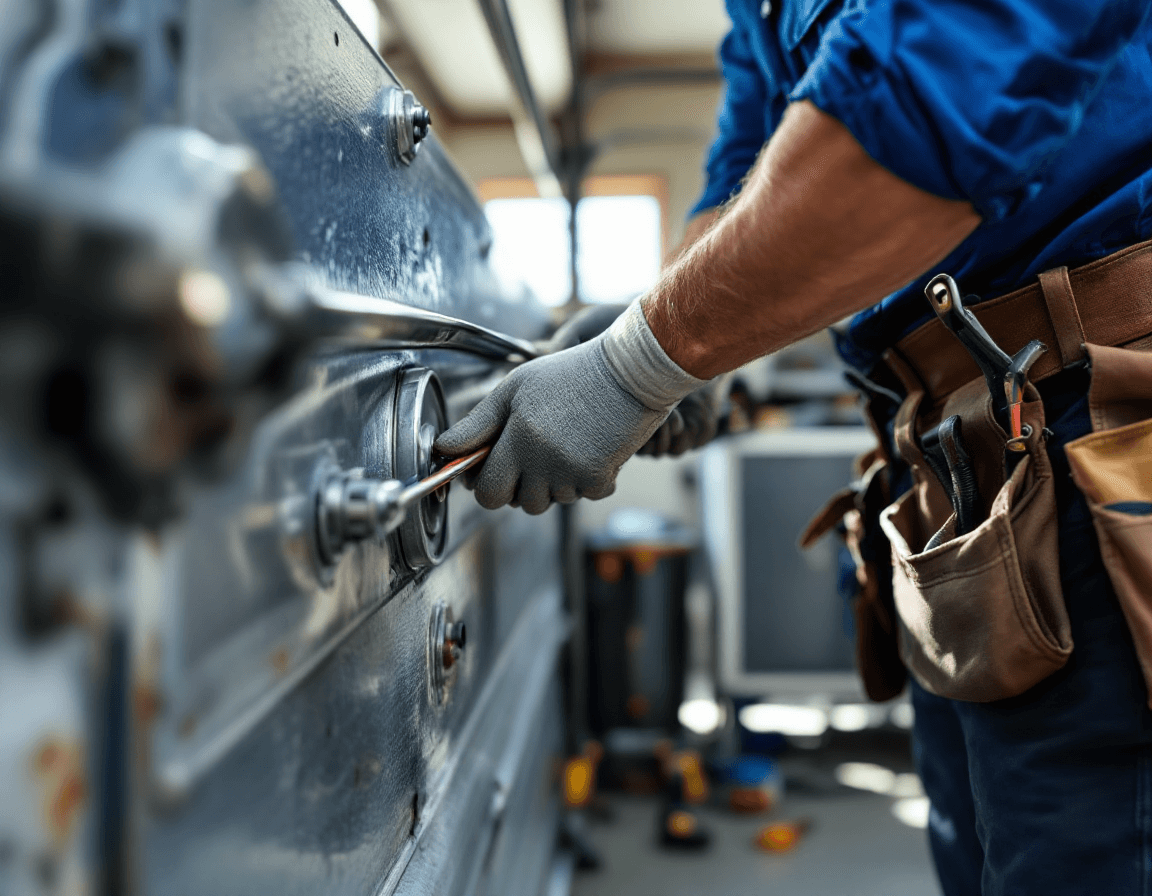
Garage door cable replacement in Everett, WA is one of the most common repairs we handle, and it is also one of the most urgent. The lift cables on a garage door carry the weight of the door as it rises and falls, so when one frays, rusts, or snaps, the door can drop unevenly, jam in its track, or stop partway open. Homes across Everett, from older craftsman bungalows near the downtown core to newer houses on the hillsides above Possession Sound, rely on these thin steel cables every day, often without anyone thinking about them until something goes wrong. This page explains how the cables work, what causes them to fail in our part of the Pacific Northwest, and what a proper repair involves.
Everett sits in a climate that is hard on anything made of metal and anything that moves under tension. Winters bring long stretches of drizzle and damp air, and the summers are mild enough that a garage often stays cool and humid rather than drying out. Add the salt-laden breezes that drift inland from the Sound and you have conditions where galvanized hardware and steel cable slowly accumulate surface corrosion. Our technicians see the effects every week, and this guide is written to help you recognize the warning signs, understand what a cable job costs, and know when to call a licensed professional instead of trying a fix yourself.
Whether you live near Downtown Everett, around Silver Lake, or in the Harbour Pointe area, the principles are the same, but the details of your door and your garage can vary a great deal. Older homes may have doors that have been adjusted many times over the years, while newer builds sometimes come with lighter-gauge hardware that responds differently to moisture. Read through the sections below, and if your door is showing any of the symptoms described, reach out for an inspection before a small problem becomes a stuck door with a damaged drum.
What the Lift Cables Are Doing Every Time You Open the Door
Most residential garage doors use a torsion spring system paired with a pair of lift cables. The springs store the energy that counterbalances most of the door's weight, while the cables are the connection that transfers that lifting force to the door panels as the door travels up its track. Each cable runs from the bottom bracket on the door, up over a pulley near the track, and wraps onto a cable drum mounted on the end of the torsion shaft. As the shaft turns, the drum winds or unwinds the cable in a controlled way, lifting the door evenly from both sides.
Because the cables are constantly bending around pulleys and winding tightly onto drums, they fatigue over time. Every cycle introduces a little stress at the same points, and the individual steel strands gradually work against one another. The cable is designed to handle this, but it is not designed to last forever, and the failure is rarely dramatic at first. Often the first sign is a small change in how the door moves, long before the cable finally parts.
Understanding this basic mechanism helps explain why cable problems show up so differently from spring problems. A broken spring usually produces a sharp bang and leaves the door heavy and difficult to lift by hand. A failing cable, by contrast, may let one side of the door drop before the other, which is why a cable issue often looks like a crooked or binding door rather than a dead one. Knowing the layout gives you a head start when describing the problem on the phone or when a technician asks what you have noticed.
Why Everett's Damp Winters Shorten the Life of Steel Cable
Western Washington's wet season is the main reason cables in Everett tend to show corrosion. Months of rain and high humidity keep the surfaces of the cable and the drum hardware damp, and that moisture collects in the grooves where the strands meet. Once surface rust starts, it gets into the seams between the strands and reduces the cable's ability to flex freely. A rusty cable does not just look bad; it develops stiff spots that can kink or catch when they reach the drum.
The coastal influence adds another layer to the problem. Homes closer to the water, and garages that sit in the path of prevailing breezes off the Sound, may see salt residue settle on exposed hardware, especially on doors that are not regularly cleaned. Salt accelerates corrosion on galvanized and bare steel alike, and it can work its way into the bearings and pulleys that the cable depends on. Even inland homes can see the same effects, because damp air carries enough moisture to keep hardware wet for long periods.
Garages in Everett also tend to be unheated and poorly ventilated, which means condensation can form on the door and its hardware on cold mornings and then dry only partially. That repeated wetting and drying cycle is hard on steel. If you have noticed rust on your door's hinges, rollers, or track, there is a good chance the lift cables have been exposed to the same conditions, and it is worth having them inspected even if they still look usable from a distance.
Recognizing the Early Warnings Before a Cable Lets Go
Cables rarely fail without giving some indication first. The most useful thing a homeowner can do is pay attention to how the door behaves during normal use and notice when something has changed. A door that once rose smoothly and now seems to lean to one side, or that closes with a slight lurch at the bottom, may be telling you that one cable is carrying more load than the other or has started to stretch unevenly.
Visual checks can reveal much of what is happening, but they must be done carefully and from a safe distance. With the door fully closed and the opener disconnected, you can look at the cables along their length and the drum at the top corners of the door. Look for fraying, birdcaging, flattened or kinked sections, and orange or brown rust that has begun to pit the surface. Do not put your hands on the cable while the spring is under tension, and do not attempt to adjust anything near the drum.
- A door that hangs lower on one side than the other when partially opened
- Visible fraying, loose strands, or a cable that looks bunched or birdcaged
- Rust that has spread along the cable or collected near the drum and pulleys
- A cable that appears slack on one side while the other stays taut
- Popping or ticking noises during travel that were not present before
- A door that hesitates or binds at the same point every time it moves
If you notice any of these, the safest step is to stop using the door's automatic opener and schedule an inspection. Continuing to operate a door with a compromised cable can cause the remaining cable to fail as well, and that is when a repair that could have been straightforward becomes more involved.
When a Cable Snaps: The Loud Crack and the Stuck Door
A snapped lift cable is one of the more alarming garage door events a homeowner can experience. Typically it begins with a sharp, loud snap that can sound like a gunshot or a heavy object striking the door. The door may drop a few inches, lurch to one side, or stop abruptly partway up its travel. In many cases the door will look like it is simply stuck, when in fact one of its two support lines has parted.
Once a cable breaks, the door is no longer supported evenly, and the opener is not designed to lift it on a single cable. Attempting to force the door up with the motor can damage the opener, twist the track, or bend the remaining cable and drum. The safest response is to disengage the opener, keep people and vehicles clear of the door's path, and avoid trying to lift the door by hand. A door with a broken cable should be treated as unstable until a technician has secured it.
It is also worth knowing that the spring system itself may still be intact after a cable failure, which is good news for the overall repair. A licensed technician can typically secure the door, inspect the spring and drum, and replace the damaged cable in a single visit. Because a snap can also damage the track, rollers, or the bottom bracket, the technician will check those components before returning the door to service.
Cables Off the Drum: How the Problem Starts and Why It Binds
Sometimes a cable does not break but instead slips off the drum or fails to wind evenly. This often happens when the cable has stretched or when the drum has been worn or misaligned. The first sign is usually a door that closes unevenly, with one corner touching the floor before the other, or a door that rises at an angle and seems to catch in the track. In some cases the cable will visibly sit outside its groove, bunched on the drum's edge.
When a cable comes off the drum, it can jam against the drum's flange or the bracket, which is why the door may bind on one side. The door may still move, but it will do so with resistance and noise, and continued operation can damage the drum, the bracket, or the cable itself. Attempting to pull the cable back onto the drum by hand is dangerous because the spring's tension can release unexpectedly during the process.
This situation is one of the clearest examples of why cable work should be handled by someone trained to release the spring tension safely. The technician will secure the door, relieve the spring load using the proper equipment, reseat the cable correctly, and verify that both sides lift at matching heights. Once the door is balanced, the repair is typically finished with a test of the full travel and a check of the safety reversal system.
Why Replacing the Cable Often Means Servicing the Drum Too
Many homeowners assume that a cable replacement is a single-part job, but in practice the cable, the drum, and the surrounding hardware form a system that works together. A drum that has been grooved unevenly by years of wear can chew up a new cable quickly, and a drum with rust or burrs may catch the cable's crimped end. Because of this, a thorough cable repair usually includes a close look at the drum's condition as well.
Drum service may involve cleaning the drum surface, checking the set screws that hold it to the shaft, inspecting the cable end fitting, and confirming that the drum is properly seated. If a drum shows deep wear, cracking, or stripped set screws, it may need to be replaced rather than reused. Those details are easy to overlook in a do-it-yourself approach, yet they determine whether the new cable will last or start fraying within months.
Our technicians approach each job by checking the whole lift system, not just the broken piece. That means verifying the cable length, the bottom bracket, the pulleys, and the balance of the door. The aim is a repair that lasts through another cycle of Everett winters, rather than a quick fix that leaves the next failure waiting.
Rust, Salt Air, and What Coastal Hardware Needs
Hardware in the Everett area often needs more attention than the same hardware in drier climates. Galvanized components can develop white corrosion, and bare steel can show orange rust within a relatively short period when exposed to damp conditions. Salt residue from coastal air accelerates this process, and it can gather on the bottom of the door, on the bracket, and along the cable where it is protected from rain but still exposed to humidity.
Good maintenance can slow these effects. Wiping down the lift cables and drum area with a dry cloth several times a year removes accumulated moisture and salt, and checking the door's hardware for early rust gives you a chance to address it before it spreads. Avoid spraying heavy lubricants directly on the cables, since they can attract dust and grit; instead, work with a technician who knows which products are appropriate for steel cable and drum surfaces.
When a cable is rusted badly enough to show pitting or stiff spots, replacement is almost always the better choice. Trying to clean deep corrosion from a steel cable can weaken it further, and a cable that looks slightly rusty to the eye may already have lost strength in its inner strands. A professional inspection can tell you whether the cable is still safe or whether it should be swapped out before the next cycle.
What a Professional Cable Replacement Involves, Step by Step
A proper cable replacement follows a sequence that prioritizes safety at every stage. The technician first secures the door so it cannot move unexpectedly, then clamps or braces it at the track to prevent it from dropping. Next, the spring tension is released using a controlled method, which is the most critical part of the job and the reason this work should always be left to a licensed professional. Only after the spring is safe does the technician remove the old cable from the drum and bracket.
Once the old cable is out, the new cable is measured, cut to the correct length, and fitted with the proper end fittings. It is routed through the pulleys, attached to the bottom bracket, and wound onto the drum in the correct groove. The technician then restores spring tension carefully, checks that the door lifts evenly on both sides, and adjusts the cable so the door sits level in the closed position. Finally, the opener's safety reversal system is tested to confirm the door responds correctly to obstructions.
- Securing the door and confirming the track is stable before any work begins
- Releasing spring tension safely using the proper tools and method
- Removing the old cable and inspecting the drum, pulleys, and bracket
- Measuring, cutting, and fitting the replacement cable with correct end fittings
- Rewinding the spring and balancing the door so both sides lift evenly
- Testing full travel, safety reversal, and the door's level position
Each step has its own safety considerations, and skipping any of them can result in injury or further damage. A technician who takes the time to verify each element will leave the door operating smoothly and quietly, which is the real measure of a good repair.
Understanding the $110–$300 Range and What Shapes the Final Bill
For most cable replacements in the Everett area, our pricing falls between $110 and $300. Where a job lands within that range depends on several factors, including the length and type of cable needed, whether the drum or other hardware also requires service, and the condition of the surrounding components. Doors with rusted fittings, damaged brackets, or extra wear on the drum may require more time and parts, which moves the total toward the higher end.
Homeowners sometimes ask why a cable repair costs more than they expected, or why two similar-looking doors receive different quotes. The answer usually lies in what the technician finds once the old hardware is exposed. A cable that appears to be the only problem may reveal a worn pulley or a cracked drum during the inspection, and addressing those issues at the same visit prevents a second service call and a second round of labor.
Keep in mind that a repair estimate should always be based on an actual inspection. Phone conversations can narrow down the likely cause, but they cannot tell you the full condition of the door's lift system. If a technician recommends additional work beyond the cable itself, they should explain why it is needed and what it will prevent, so you can make an informed decision.
Why a Licensed Technician Should Handle Tensioned Lift Components
Garage door cables and springs are under substantial tension, and mishandling them can cause serious injury. A spring that releases unexpectedly can strike with considerable force, and a cable under tension can whip or snap if it is released carelessly. This is why the spring and cable work on a garage door is not a task we recommend for homeowners to attempt, regardless of how handy they may be with other projects.
Licensed and insured professionals are trained to recognize the signs of tension and to work in a controlled manner. They carry the right tools for winding and releasing springs, and they follow procedures designed to protect both the technician and the household. Our company is licensed, bonded, and insured, which means that if something goes wrong during the work, there is a framework in place to address it. That level of accountability matters for a repair that involves stored mechanical energy.
Even when a homeowner is confident in their approach, the risk of an error is real. Incorrect winding, misaligned drums, and improperly seated cable ends can all lead to a door that fails within days or that damages the opener. Choosing a professional is not just about convenience; it is about making sure the repair is done safely and correctly the first time.
Neighborhood Notes: Doors in Downtown Everett, Silver Lake, and Harbour Pointe
Every neighborhood in Everett presents its own set of garage conditions. Downtown Everett includes many older homes and detached garages that have been in place for decades, and their doors often reflect a mix of past repairs and original hardware. Older steel doors may have heavier panels that place greater load on the cables, and detached garages can receive more exposure to weather and moisture on all sides. Technicians working in these areas frequently find that the drum and bracket need attention along with the cable.
Around Silver Lake, many homes have attached garages with doors that have seen steady daily use for years. Families who run in and out frequently may notice cable wear sooner, especially if the door is not regularly inspected. Humidity near the lake can also contribute to condensation on the door hardware during cooler months, which speeds up surface corrosion on the cable fittings and pulleys.
In the Harbour Pointe area, many homes are newer construction, and their doors may use lighter-duty components or specialized designs that require a different approach. Technicians should confirm the exact door model and hardware before ordering a replacement cable, since the proper length and fittings can vary. Whether your home is in Downtown Everett, near Silver Lake, or in Harbour Pointe, the best first step is the same: have a licensed technician look at the door, confirm the cause, and recommend a repair that fits your specific setup.
Homes in ZIP codes 98201, 98203, 98204, and 98208 are all within our regular service area, and our team can schedule an inspection for any part of Everett that falls within those boundaries. If you are not sure whether your door is showing the signs described above, a professional inspection is the quickest way to find out. Catching a frayed or rusted cable early is almost always less stressful and less costly than dealing with a door that has dropped or jammed.
If your garage door is crooked, binding, stuck partway open, or you heard a loud snap, please do not keep trying to run the opener. Call Seattle Garage Door Fix at (888) 799-3819 to schedule a licensed technician who can secure the door, inspect the cables and drum, and recommend the right repair for your Everett home.