
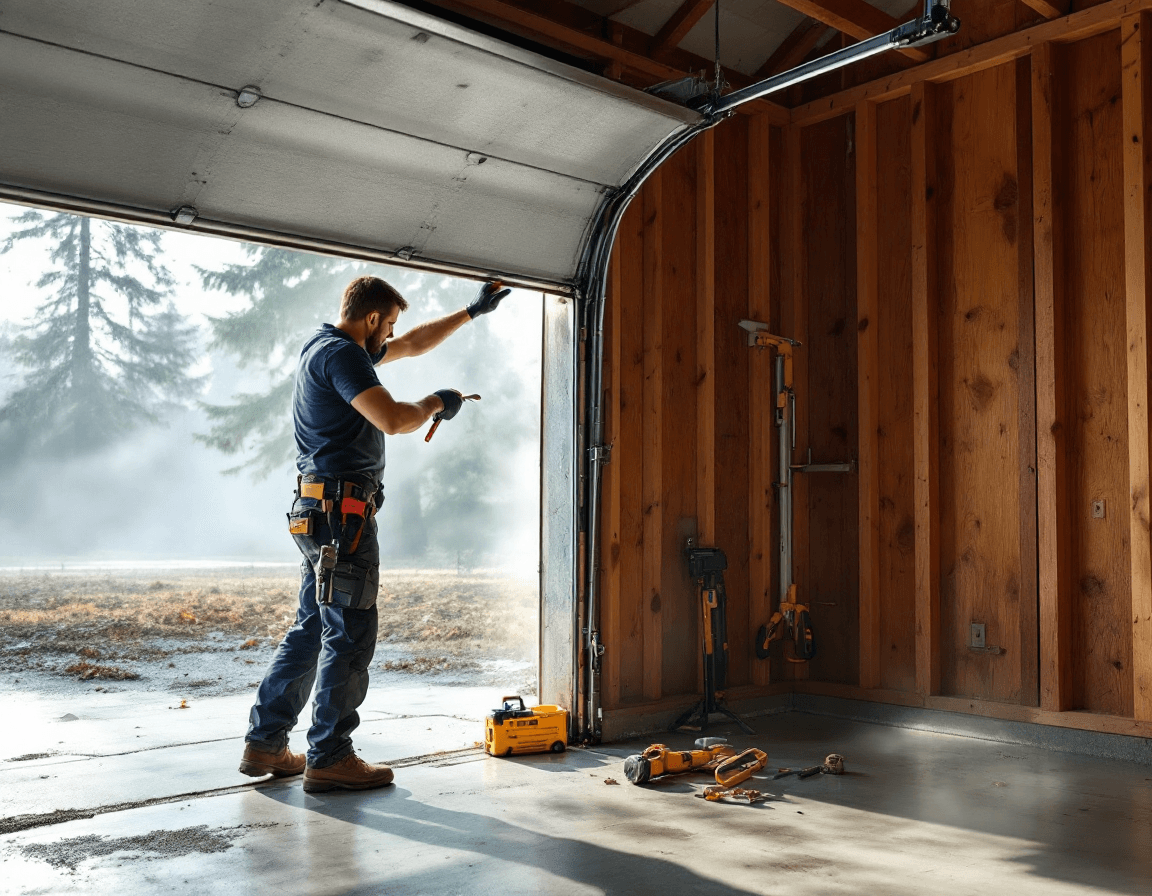
Off-track garage door repair in Everett, WA is one of the most common calls we get, and it is also one of the most important to handle correctly. When a door slips out of its tracks, it can sag, bind, or drop without warning, and the tension in the springs can make a simple-looking problem dangerous. Homeowners in Everett often notice the trouble after a windy night, a heavy rain, or a morning when the door simply refuses to close. This page explains what causes a door to come off track, what the repair involves, what you can safely check on your own, and when you should call a licensed technician. For most off-track repairs, expect a price between $125 and $400, depending on what has been damaged and how much labor the realignment requires. If your door is off track right now, call (888) 799-3819 and we will help you decide on next steps.
Every neighborhood has its own quirks, and Everett is no exception. Our crews work across the city, from the busy blocks around Downtown Everett to the quieter streets near Silver Lake and the newer homes in the Harbour Pointe area. Service in ZIP codes 98201, 98203, 98204, and 98208 follows the same practical approach: find the cause, restore the door to its tracks safely, and check that the hardware will hold. The sections below walk through the details so you can understand what you are looking at and make a sound decision about your door.
What a Derailed Door Looks Like From the Driveway
A door that has come off track rarely fails all at once. Often the first sign is a slight lean, with one side of the door sitting a little lower than the other. You may see a gap at the top corner where the door meets the header, or a strip of daylight along the side where the door no longer seats evenly against the weatherstripping. Some homeowners hear a grinding or scraping sound when the opener runs, and others notice the door pausing halfway up or down as if it has hit something.
Pay close attention to the vertical track on each side of the opening. The rollers that ride inside those tracks should sit neatly in the channel. If you can see a roller sitting outside the track, or the track itself appearing pulled away from the wall, the door has left its intended path. In many Everett driveways the problem is visible from the street, but it is still worth looking at the door from inside the garage with the lights on, because the gap is easier to judge in person.
Be honest with yourself about how far the door has moved. A door that is slightly out of square can often be nudged back into place by a technician in a short visit. A door that has jumped entirely off one track, or has bent a section of track, usually requires more time and a few replacement parts. Describing exactly what you see when you call helps us prepare the right truck and tools before we arrive.
Why Everett Doors Keep Jumping Their Tracks
Western Washington weather is hard on garage doors in ways that people from drier regions may not expect. Our winters bring long stretches of rain, and the moisture can swell wood panels, warp older timber doors, and cause steel sections to shift slightly as temperatures move above and below freezing. Damp conditions also speed up corrosion on track bolts and mounting brackets, which can loosen their grip over several seasons. When the hardware loosens, a door that once tracked perfectly can start to wander.
Wind is another factor. Gusts that roll off Possession Sound and across the open ground near the shoreline can push a lightweight door sideways, especially when it is partly open or when the opener is working against it. A door that gets bumped by a gust while it is moving may have a roller knocked free of its track, and the problem can appear without any obvious impact. Homes near the water also see more salty air, which accelerates rust on exposed metal, so it is worth checking the track hardware more often than you might on an inland property.
Finally, the age and construction of the house matters. Older Everett homes may have garage openings that have settled slightly over the decades, so the tracks no longer sit perfectly plumb. Newer homes can have their own issues, such as door installations done quickly during construction. In both cases, the door was installed to a standard that may have drifted over time, and the cure is usually a careful realignment rather than a complete replacement.
Rollers That Have Popped Out: The Most Common Culprit
When we arrive at an off-track call, the first thing we usually check is the rollers. Most residential doors use a set of rollers on each side, typically with steel or nylon wheels riding on a bearing or stem. A roller can pop out of the track if the stem wears, if the track has a slight bend, or if the door has been forced through a bump. Once a roller leaves the track, the entire door can lean and bind as the other rollers take on extra stress.
Homeowners can often spot a popped roller by looking at the track near the top of the door's travel. If the roller is sitting just outside the channel, it may be possible to see that it has lost its alignment. Do not put your hands near the springs, the cables, or the drum assembly when you investigate, because those components are under high tension even when the door appears still. The safe move is to note what you see and leave the actual repair to a professional.
A roller that has worn flat or has cracked around its stem should be replaced rather than simply pushed back into place. Our technicians typically carry replacement rollers in several sizes and materials, so a popped roller often gets reseated and upgraded in the same visit. The good news is that rollers are one of the least expensive components involved in an off-track call, which helps keep most repairs within the usual range.
Here are common signs that a roller is the source of the problem:
- One corner of the door sits noticeably lower than the other.
- A roller is visible outside the track or sitting at an angle.
- Scrape marks appear on the track or on the edges of the door near the top.
- The opener strains or stops partway through its travel.
- The door tilts or wobbles as it moves up or down.
Gaps, Crooked Panels, and the Warning Signs You Shouldn't Ignore
A crooked door is more than an eyesore. When the panels no longer align, the door can bind against the jamb, the weatherstripping can tear, and the opener can run longer than it should. Over time that extra strain can damage the motor, the drive gear, or the springs. A gap of even an inch or two at the top or bottom corner means the door is no longer sealing properly, which lets in rain, drafts, and pests, and it weakens the security of the garage.
Look for uneven spacing between the bottom of the door and the floor when the door is closed. Check whether the top section sits flush with the header or leans away from it. Listen for a sharp snap or pop when the door starts to move, because that sound can mean a cable or spring component has shifted. If the door was bumped recently by a delivery truck, a car, or a bicycle rack, assume there may be hidden damage until a technician confirms otherwise.
Some warning signs call for immediate attention. If the door has dropped suddenly, if a cable is visibly frayed or hanging loose, or if the door refuses to move in either direction, stop using the opener and keep people and pets clear of the opening. Those conditions can point to a broken spring or cable, which is a job for a licensed technician with the right equipment. Calling promptly is almost always less expensive than waiting until the damage spreads.
Bent, Dented, or Separated Track: When Straightening Is Possible
Tracks are usually made of galvanized steel, and they handle a surprising amount of abuse. Still, they can bend if a door is forced, if a roller jams, or if an object strikes the track near the floor. A slight dent may only cause a roller to catch occasionally, while a sharp bend can stop the door dead. Separation is also common, where a track section pulls away from the wall bracket or from the joint with the next section.
Minor bends can often be straightened carefully and the track reattached to its brackets. That work requires the right tools and a feel for how much pressure the steel can take without cracking. A technician will check the track along its full length, from the bottom roller path up to the curve at the top, because a problem in one section can throw off the entire door. If the track is kinked badly, creased at a seam, or has cracked welds, replacement sections may be the more reliable choice.
Wall brackets and lag bolts deserve attention too. In a masonry or stucco wall, the anchor points may have loosened over time, and simply tightening the existing screws may not hold. A technician may need to relocate a bracket to solid framing or install a longer anchor. Doing this correctly keeps the track true after the repair, which is far better than a quick fix that loosens again the first time the wind picks up.
After a Fender-Bender: Vehicle Strikes in Tight Driveways
Many off-track calls begin with a bump. A car backing out of a tight driveway, a moving van clipping the side of the opening, or a vehicle that misjudges the door while pulling in can knock the door hard enough to shift it. Even a light tap can move a roller or bend a track, and the damage may not be obvious until the door is used again. Some homeowners discover the problem only when the door refuses to close properly a few days after the incident.
If a vehicle has struck your door, take a few minutes to look at the situation before you operate the opener. Check whether the door is level, whether the track is still attached, and whether any panels have buckled. If the door appears to be hanging crooked or if you see any cable slack, avoid running the opener until a technician has taken a look. Running a damaged door can turn a straightforward realignment into a bigger repair involving springs, drums, or the opener itself.
It is also worth documenting the damage with photos, especially if you are dealing with an insurance claim or a conversation with the other driver's insurer. A clear record of the door's condition, the track alignment, and any visible dents can help you when it comes time to discuss the repair cost. Our technicians can describe what we find in plain language so you have an accurate picture for those conversations.
Why You Should Never Pry the Door Back on Yourself
The temptation to fix an off-track door with a pry bar, a ladder, and a bit of muscle is understandable, but it is one of the most dangerous things a homeowner can attempt. The springs on a garage door store a large amount of energy, and when they are under tension, a sudden release can cause serious injury. Even a door that looks stable can shift unexpectedly when you put weight on one side, and a falling panel can crush hands, fingers, or worse.
Forcing a door back onto its track can also cause more damage than the original problem. A bent track can be twisted further, a roller stem can snap, and the panels can be cracked along the hinge lines. The result may be a repair that costs more and takes longer, sometimes with parts that were not needed in the first place. A trained technician knows how to relieve tension safely, set the door on a stable path, and check the components before reloading the system.
We understand that some homeowners want to troubleshoot first, and that is fine as long as the checks stay on the outside of the door. Look at the tracks, note the gaps, and check that nothing blocks the path of travel. Disconnect the opener only if you know the correct procedure for your model, and never stand under a door that is partly raised. For anything involving springs, cables, drums, or the lift mechanism, call a licensed professional.
What a Realignment Visit Involves in Everett
When you schedule an off-track visit with us, the technician will begin by asking about the symptoms and how the problem started. They will then inspect the door, the tracks, the rollers, the hinges, the cables, the springs, and the opener, checking each for signs of wear, bending, or impact damage. This inspection helps us distinguish between a simple roller issue and a deeper problem that could affect the door's safety.
Once the cause is clear, the technician will relieve any dangerous tension using proper methods, reseat the rollers, and carefully work the door back into its track. Track sections may be straightened or reattached, and worn hardware may be replaced. The door is then cycled several times to confirm smooth travel, with the technician watching for binding, uneven movement, or unusual sounds. Finally, we check the balance of the door, because a door that is out of balance can wear out the opener and put stress on the springs.
Before we leave, we explain what we found, what we fixed, and what we recommend for the future. If the track or brackets are in poor shape, we will say so. If a component is near the end of its life, we will tell you what to watch for and when it may need attention. Our goal is to leave you with a door that operates safely and a clear understanding of how it works.
Understanding the $125–$400 Range
Most off-track garage door repairs fall between $125 and $400, but the exact cost depends on several factors. A door that has simply popped a roller out of the track and needs reseating will usually land near the lower end of that range. A door with bent track, replacement rollers, bracket work, and a more involved realignment will typically fall toward the higher end. The condition of the surrounding hardware also plays a role, because a rusty or loose bracket may take extra time to correct.
Several details shape the final number. The size and weight of the door matter, since heavier doors take more care and sometimes more hands during realignment. The type of track, whether standard lift or high lift, can change the procedure, and so can the presence of a damaged section that needs to be replaced. Access to the opening and the condition of the wall anchors may also add time to the job.
We believe it is better to give you a clear picture of what the repair involves than to surprise you with unexpected charges. When we arrive, the technician will explain what they see and provide an estimate before starting work. If the repair reveals a broader issue, such as a worn spring or a damaged cable, we will walk you through the options and the associated costs so you can decide how to proceed.
Keeping the Tracks True Through Wet Seasons
Preventive care can go a long way toward reducing future off-track calls. Start by inspecting the tracks and rollers at least twice a year, ideally once in the late fall before the rainy season sets in and again in the spring. Look for loose bolts, rust spots, and any visible gaps between the track and the wall. Keeping the area around the bottom of the door clear of debris also helps, because pebbles and leaves can jam the rollers.
Lubrication matters, but it should be done correctly. Use a silicone-based or white lithium grease on the rollers, hinges, and the track surfaces where recommended by the manufacturer, and avoid heavy oils that attract dirt. Do not spray lubricant into the opener's motor or the drive chain without checking the owner's manual. A light, consistent maintenance routine is more effective than an occasional heavy application.
Finally, be mindful of how the door is used. Avoid forcing the door by hand while the opener is engaged, and teach everyone in the household to stop the door if it begins to move crookedly. If you notice a change in how the door sounds or moves, schedule an inspection rather than waiting for a complete failure. Catching a small shift early keeps the tracks true, protects the springs, and makes a realignment far simpler when it is needed.
Off-track garage doors can be stressful, but they are usually repairable when you act promptly and leave the dangerous work to trained hands. If your Everett door has come off its tracks, bent a section of rail, or been struck by a vehicle, call Seattle Garage Door Fix at (888) 799-3819. Our licensed, bonded, and insured technicians will inspect the door, explain what they find, and restore smooth, safe operation so you can get back to your day.