
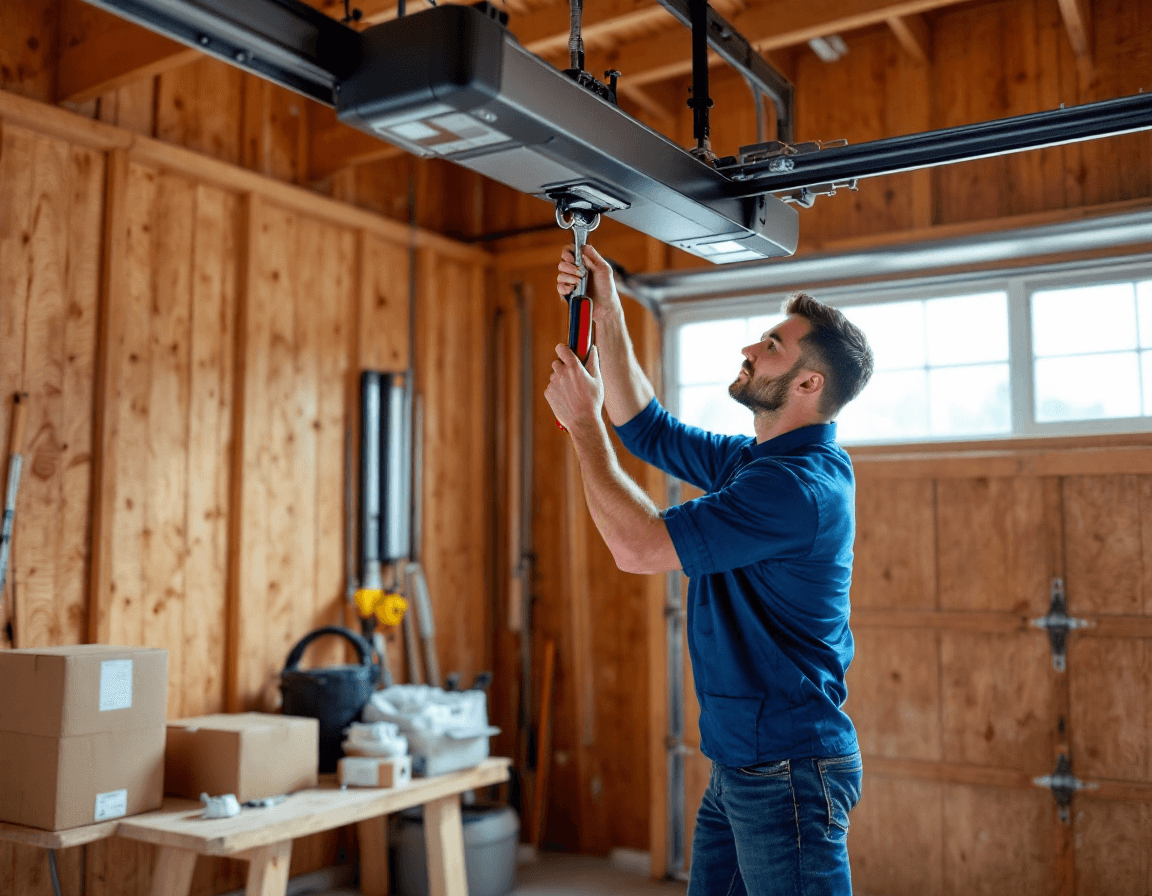
Garage door opener installation and replacement in Snohomish, WA is one of the most practical upgrades a homeowner can make, and it is often more urgent than people expect. The opener is the motor-and-rail assembly that lifts and lowers your door, and it works hard every day. When it starts grinding, stalling, or failing to respond to your remote, the whole garage becomes less convenient and less secure. Our technicians serve homes across Snohomish and the surrounding Snohomish County communities, including the 98290 and 98296 ZIP codes, and we see the same problems come up again and again in these neighborhoods.
Snohomish sits in the Pacific Northwest, where the seasons bring steady drizzle, long stretches of damp air, and the occasional windstorm that knocks out power for hours or even days. Those conditions are hard on electronics, wiring, and metal hardware. A garage opener that was installed a decade or two ago may still run, but it may no longer keep up with what your household needs. This guide walks through the signs that it is time to replace it, how to choose between belt-drive, chain-drive, and wall-mount designs, and what to expect from installation and pricing. Installed costs for our opener work generally fall between $275 and $650, and the final figure depends mainly on the model you select and the complexity of the mounting.
Why Older Openers Struggle in Snohomish's Damp Climate
Moisture is the quiet enemy of garage door equipment in Western Washington. Humid air condenses on cold steel rails, and the drive chain or belt picks up grit and moisture that speeds up wear. Over time, the limit switches, logic board, and wiring connections can corrode or shift, which leads to erratic behavior that is hard to diagnose from the outside. Homeowners often describe the problem as the door "thinking" before it moves, or stopping halfway and reversing for no clear reason. Those symptoms usually point to the opener's electronics or its sensors rather than the door itself.
Snohomish homes also vary a great deal in age and construction. Many houses near Historic Downtown Snohomish have detached or older attached garages that were built long before modern door systems, and the framing may not be perfectly square or level. An opener that was adequate when the house was built can become strained once a heavier insulated door or a glass-panel door is added. When we visit older garages, we check whether the header, the ceiling bracing, and the rail alignment can handle the opener and door combination you want, because a new opener cannot fix a structural limitation.
Finally, many Snohomish households have simply outgrown the features their original opener offered. Families with teenagers, home businesses that use the garage as a workspace, and retirees who want to open the door from the car all have needs that a basic unit from years ago cannot meet. A replacement gives you a chance to match the opener to how your household actually lives, rather than working around an old limitation every day.
Reading the Warning Signs That Your Opener Is Finished
Not every opener problem means replacement. A worn remote battery, a dirty photo-eye sensor, or a misaligned safety cable can cause the door to act up, and those issues are inexpensive to correct. The question is whether the opener itself has reached the end of its useful life or whether a repair will keep it going for a reasonable time. A good technician can tell the difference by testing the motor, inspecting the gear assembly, and checking the logic board for consistent behavior across multiple cycles.
Here are the most common signs that replacement makes more sense than another repair:
- The motor hums loudly, strains, or overheats before the door reaches the top or bottom of its travel.
- The door opens or closes noticeably slower than it did a few years ago, even after the tracks are cleaned and lubricated.
- The unit has repeatedly failed to respond to remotes, keypads, or wall controls, and the problem returns after each repair.
- Replacement parts for the logic board or gear set are no longer available, or the repair quote approaches the cost of a new opener.
- The opener lacks modern safety features such as automatic reversal sensing, obstruction detection, or a sealed lighting system.
If you recognize several of these signs at once, the opener is probably telling you it is time to stop investing in repairs. We are happy to assess your unit, explain what we find, and give you an honest recommendation without pressuring you toward a particular model.
Choosing Between Belt-Drive, Chain-Drive, and Wall-Mount Openers
The drive mechanism determines how the opener moves the door, how loud it sounds, and how much maintenance it needs. Chain-drive openers use a metal chain running along a rail. They are typically the most budget-friendly and handle heavy doors well, but they are louder and transmit more vibration into the house structure. In Snohomish, where many garages share walls with bedrooms or living areas, that noise can become a daily frustration, especially in quiet neighborhoods where sound carries on still evenings.
Belt-drive openers use a reinforced rubber belt in place of the chain. The result is noticeably quieter operation and smoother starts and stops, which makes belt-drive a favorite for homes where the garage sits beneath or beside a bedroom. Belts do not rust the way metal chains can in humid conditions, and they need less lubrication. The tradeoff is that belt-drive units usually cost somewhat more up front, and the belt must be kept properly tensioned to avoid slipping.
Wall-mount openers attach to the side wall rather than the ceiling, which frees up overhead space. They are a strong choice when the garage ceiling is low, when you have a high-lift door that needs extra clearance, or when the ceiling joists are not suitable for a ceiling bracket. Wall-mount designs can be combined with either belt or chain drives, so the decision is often about your ceiling layout and your noise tolerance rather than a single model choice. We walk through the options on site so you can see how each one would sit in your particular garage.
Quiet Operation for Living Spaces Above and Beside the Garage
Noise complaints are among the most common reasons Snohomish homeowners call us about their openers. A garage that sits under a second-floor bedroom will transmit motor vibration upward, and a shared wall with a home office or family room carries sound in the same way. Even a modest chain-drive unit can make early mornings and late evenings uncomfortable, particularly when the door is operated frequently by a busy household.
Quiet operation depends on several factors, not just the drive type. The motor's mounting bracket, the rail's alignment, and the condition of the door rollers all affect how much noise travels into the house. During installation, we check that the rail is level and secured to the header properly, and we look at whether the door's hinges and rollers are working smoothly. A belt-drive opener on a well-aligned rail with fresh rollers will typically run far more quietly than a chain-drive unit installed on a loose or poorly supported system.
If you live in a home where noise is a major concern, tell us that at the start of the conversation. We can recommend a belt-drive model, discuss vibration-isolating mounts, and explain what the final sound level is likely to be. We will also be honest about what cannot be eliminated, because no opener is completely silent, and the door's own weight and spring system will always make some sound.
Rolling-Code Security and Why Older Units Need Replacing
Security is one of the strongest reasons to replace an aging opener. Older openers often used fixed-code remotes, meaning the signal the remote sends is the same every time. A person with inexpensive equipment could potentially record that signal and reuse it to open the door. Modern openers use rolling-code technology, in which the code changes with every use. The opener and remote stay synchronized, but a recorded signal is useless because it will not match the next required code.
For many Snohomish households, the garage is the most vulnerable entry point to the home. A garage door that opens with a copied signal can give an intruder access to tools, vehicles, and an unlocked connecting door into the house. Upgrading to a rolling-code opener closes that gap, and it is one of the most cost-effective security improvements you can make. We recommend replacing any opener that still relies on fixed-code remotes, especially if the unit is more than a decade old and you have not updated it since.
Security is about more than the remote, though. A new installation also includes properly functioning safety sensors, a clear and reliable keypad if you use one, and a sensible plan for who has access. We help customers set up unique remote codes, remove old remotes that were lost or sold with a house, and review whether a keypad or smart control would fit their routine. Keeping track of who can open the door is a simple habit that pays off over time.
Wi-Fi and myQ Control Without the Frustration
Smart garage control has become one of the most requested upgrades in the Snohomish area. Many openers now connect to a home Wi-Fi network and work with smartphone apps such as myQ, which allow you to open or close the door remotely, receive alerts if the door has been left open, and grant temporary access to family members or service providers. For households that come and go at irregular hours, that peace of mind can be valuable.
Before choosing a smart model, it helps to think about your home network. A garage opener needs a stable connection, and the garage is often one of the farther points from the main router. Thick walls, metal framing, and older wiring can weaken the signal. During a visit, we check whether the signal reaches the garage reliably, and we can suggest a simple range extender or mesh node placement if needed. A smart opener that drops offline is more annoying than one without any smart features at all.
Smart control is also a good reason to think about privacy and account security. Set up a strong, unique password for the app, enable two-factor authentication if the platform offers it, and remove access for anyone who no longer needs it. We walk customers through these steps during setup so the convenience of a smartphone opener does not come with unnecessary risk. Smart features are excellent when they are configured thoughtfully, and we are glad to help you get that right.
Battery Backup for Power Outages and Winter Storms
Western Washington winter storms bring wind, heavy rain, and occasional power outages that can last long enough to matter. When the power goes out, a standard opener cannot lift the door, which can leave a household unable to get a car out of the garage during an emergency or trapped inside after a sudden storm. Battery backup is a practical answer, and it is one of the most useful add-ons for Snohomish homeowners who rely on the garage as their main vehicle entry.
A battery backup kit typically provides enough power to open and close the door several times during an outage, depending on the battery capacity and the door's weight. Battery life depends on temperature, age, and how often the door is used, so a backup unit is not a permanent substitute for a working power supply. In a cold, damp garage, batteries can lose capacity over time, which is why we recommend checking them periodically and replacing them according to the manufacturer's guidance rather than waiting for a failure.
We also explain the manual release, which is the emergency handle that disconnects the door from the opener so it can be lifted by hand. Every household should know how to use it safely. Before pulling the release, make sure the door is closed and that no one is underneath it, because a heavy door can drop quickly once it is disconnected. If the door is difficult to lift by hand, or if its springs seem damaged, do not force it. Call a licensed professional instead, because spring and cable work carries serious risk of injury and should never be attempted without training and proper tools.
What a Snohomish Installation Visit Looks Like
A replacement project usually begins with a conversation about how you use the garage, what problems you have experienced, and what features matter most to you. We then inspect the existing door, the tracks, the header, the ceiling or wall mounting area, the electrical outlet, and the condition of the safety sensors. This assessment helps us recommend an opener that fits the door's weight and size rather than selling a unit that is too large or too small for the job.
On installation day, the work includes removing the old opener, confirming that the rail and brackets are sound, mounting the new unit, connecting the door arm and trolley, setting the limits, and programming the travel and force settings. We test the safety reversal feature, verify the photo-eye sensors, and check that the door balances properly before we consider the installation complete. We then program remotes, keypads, or smart features as you request and show you how to use them. Before we leave, we make sure you understand the manual release and the basic maintenance schedule.
Some tasks fall outside a typical opener installation and require separate specialized work. If your door's springs, cables, or drums are worn or damaged, those components should be handled by a licensed professional with the right equipment, and we will tell you if that is the case. Spring and cable work is hazardous because the tension stored in a garage door spring is substantial, and mistakes can cause serious injury. We always recommend that homeowners leave that work to trained technicians.
Price Ranges and What Drives the Final Cost
Installed opener pricing in our service area generally runs from $275 to $650, and the final number depends on several factors. The most significant is the model you choose. A basic chain-drive unit will sit at the lower end of the range, while a quiet belt-drive model with smart features and battery backup will land closer to the upper end. Wall-mount installations can also affect the price because they require different bracket work and sometimes additional hardware to secure the rail properly.
Other factors include the condition of the existing rail and header, whether the electrical outlet needs to be relocated or upgraded, and whether any door hardware needs adjustment before the new opener can operate smoothly. A garage with an older ceiling structure may need reinforcement to safely support a heavier unit, which we will explain before proceeding. We aim to give you a clear quote after assessment so there are no surprises on installation day, and we will explain each line item so you understand what you are paying for.
When comparing quotes, look at what is included. A low price that leaves out the battery backup, the remote programming, the safety testing, or the installation of new mounting hardware may end up costing more in the long run. Ask whether the quote covers the full installation, the warranty terms on the opener, and how to reach the company if you need help after the work is done. A transparent conversation is a sign of a trustworthy installer, and we are glad to answer any questions before you commit.
Permits, HOAs, and Considerations for Older Snohomish Homes
Some Snohomish homeowners live in neighborhoods with homeowners associations that have rules about exterior appearance, door color, or visible equipment. Those rules do not always address the opener itself, but they may affect door replacements or any exterior modifications you plan alongside the opener project. We recommend checking your HOA guidelines before scheduling work, particularly if you are making other changes to the garage at the same time.
Permitting requirements can also vary depending on the scope of work. A straightforward opener replacement with the same mounting arrangement is typically simpler than a project that involves structural changes, new electrical circuits, or modifications to the garage framing. If your project involves any of those elements, we will explain what is required and help you understand the next steps. We recommend confirming current requirements with the relevant local office, since rules can change and each project is different.
Historic homes near Historic Downtown Snohomish and older residences in other parts of town sometimes have unique construction features that influence the installation. Older garages may have uneven slabs, sloping floors, or header beams that were built to different standards than today's. Our technicians take the time to assess these conditions carefully so the new opener mounts securely and operates smoothly. Respecting the character of an older home while still delivering modern performance is a balance we work to achieve.
Keeping Your New Opener Running Well Through Damp Seasons
Once your new opener is installed, a little regular attention will extend its life and keep it performing well through Snohomish's wet winters and mild, humid summers. Wipe down the rails occasionally, keep the moving parts lightly lubricated according to the manufacturer's recommendations, and check that the door balances properly by disconnecting the opener and lifting the door partway to see whether it stays put. If the door drifts or feels heavy, the spring system may need professional attention.
Keep an eye on the safety features as well. Photo-eye sensors can become misaligned or dirty, especially in a garage that collects dust, mud, or road spray from wet tires. Clean the lenses gently, confirm that the sensors face each other, and test the auto-reverse feature periodically by placing an object in the door's path during closing. The door should reverse when it contacts the object. If it does not, stop using the opener and call a technician.
Finally, schedule an inspection every year or two, especially if the opener is heavily used or if your household relies on battery backup during outages. A brief visit can catch loose hardware, worn belts or chains, and battery issues before they turn into emergencies. Preventive care costs far less than an unexpected failure on a cold, rainy morning when you need to leave for work or get to an appointment.
Whether your current opener is loud, unreliable, outdated, or simply no longer worth repairing, our team is ready to help Snohomish homeowners find a quiet, secure, and dependable replacement that fits how they live. Call (888) 799-3819 to schedule an assessment, ask about belt-drive, chain-drive, or wall-mount options, and talk through smart control and battery backup choices. We will explain your options clearly, provide an honest recommendation, and give you a straightforward quote before any work begins.