
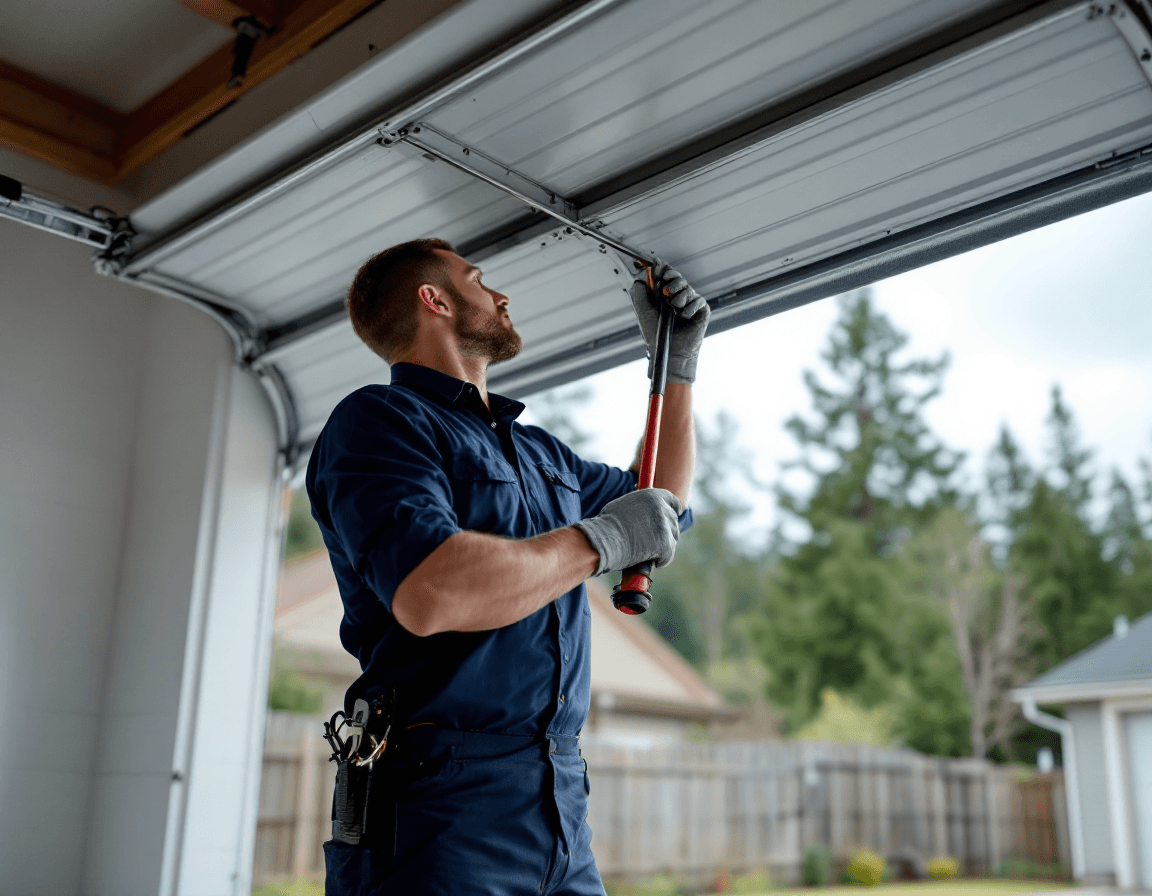
Garage Door Spring Replacement in Snohomish, WA is one of the most common repairs we handle for homeowners across the historic river town and the surrounding neighborhoods. A garage door spring carries the full weight of the door, so when it fails, the problem usually shows up all at once and at the worst possible time, such as early on a school morning or after a long day in the rain. Most Snohomish households rely on that door as their main entry point, so a broken spring quickly becomes more than an inconvenience.
Our crews work throughout Snohomish and Snohomish County, including the older blocks near Downtown Snohomish and the hillside and acreage properties out in Clearview. The homes in these areas vary widely. Some have original 1960s and 1970s detached garages with heavy wooden doors, while newer subdivisions have lightweight insulated steel doors on modern openers. Each setup calls for a slightly different approach to spring selection and balancing, which is why we inspect the whole system before we recommend any work.
This page explains how springs fail, what the warning signs look like, how replacement is handled, what to expect for pricing, and why professional service matters. If you have already heard a loud bang in the garage or your door refuses to lift, you will find practical guidance here. If you are just noticing small changes in how your door moves, the same information can help you decide whether to schedule a visit before a minor issue becomes a larger repair.
Reading the Warning Signs Your Snohomish Door Is Giving You
Most spring failures announce themselves before they happen, though the signals are easy to overlook if you are used to the door's routine. A worn spring often lets the door drift down slightly when it is fully open, or it may make the lift feel sluggish on mornings when the temperature drops. Many homeowners describe the door as suddenly "heavier" than it used to be, which is usually the spring losing tension rather than the opener getting weaker.
The most dramatic sign is a loud bang from the garage, which typically means a spring has snapped and released its stored energy all at once. Other common symptoms include a door that opens a few inches and then stops, an opener that strains or hums while the door barely moves, and a visible gap in the torsion spring coil. Cables that have come loose after a spring break are another frequent finding, and so is a door that closes too fast or sits crooked on its tracks.
- A loud bang from the garage, often followed by a door that will not lift
- A door that opens partway and stops, or refuses to lift at all
- An opener that hums, strains, or clicks while the door barely moves
- A visible gap or stretched section in the torsion spring coil
- Cables hanging loose or sitting unevenly on the drums
- A door that drops quickly, closes too fast, or rides crooked in its tracks
If you notice any of these signs, avoid the temptation to keep cycling the door to see whether it recovers. Repeated operation on a failed spring can damage the opener, bend tracks, or put strain on the rollers and hinges. Shut the door, keep people and pets clear of the area, and call a licensed technician to inspect it.
Why Torsion Springs Give Out Faster in Our Wet Winters
Western Washington winters are not especially cold by national standards, but they are long, damp, and gray for months at a time. Moisture is the real enemy of a garage door spring. Water that gets into the coil can lead to surface rust, and rust weakens the steel fibers over time, creating tiny fatigue points that eventually fail under load. Springs in detached or poorly ventilated garages tend to show this wear sooner than springs in climate-controlled spaces.
Temperature swings also matter more than many people expect. When a cold morning follows a mild afternoon, the steel contracts and expands, adding stress to a spring that is already near the end of its service life. Homes in the lower-lying areas near the river valley can hold moisture longer after storms, while higher properties in Clearview may face wind-driven rain that finds its way under weather seals. Both conditions speed up wear on the hardware around the spring as well.
Torsion springs are rated for a specific number of cycles, typically in the range of around ten thousand, although actual lifespan depends heavily on the door's weight, how often it is used, and how well it has been maintained. A household that uses the door several times a day will reach that rating faster than one that opens the garage only occasionally. Keeping track of how many years a spring has been in service, rather than waiting for a failure, is one of the smartest moves a homeowner can make.
Torsion or Extension: Knowing Which Spring Your Door Uses
Before any replacement begins, a technician needs to identify the spring system your door uses, because torsion and extension springs are built and handled differently. Torsion springs mount on a steel shaft above the door opening, and they wind up to store energy that lifts the door through a cable and drum arrangement. Extension springs run along the horizontal tracks on each side and stretch as the door opens, usually with a safety cable running through the coil.
Torsion systems are more common on modern residential doors, and they are generally considered the more durable option when properly installed. Extension systems appear frequently on older homes and on some lighter doors, and they can be a practical choice where headroom is limited. Each type has its own hazards, which is why identifying the system correctly matters so much. A technician who misidentifies the setup may order the wrong part or attempt a procedure that is unsafe for that particular configuration.
Some Snohomish homes have had a previous repair or an older door replaced, so the hardware may not match what the homeowner remembers. We look at the drum sizes, shaft diameter, cable routing, and bracket placement before quoting replacement parts. This step protects the homeowner from paying for unnecessary components and helps ensure the new spring is rated correctly for the door's weight and height.
What a Typical Snohomish Spring Visit Involves
A professional spring replacement begins with a complete inspection rather than an immediate swap. The technician checks the broken or worn spring, the cables, drums, bearings, center bracket, end brackets, and the opener's connection to the door. The door is tested for balance, and the rollers, hinges, and tracks are examined for wear that could cause the new spring to fail prematurely. A spring is only one part of a system, and replacing it without checking the rest often leads to a second callback.
Once the inspection is complete, the technician removes the damaged spring using specialized winding bars and proper safety restraints. Torsion springs store a tremendous amount of energy, so this is precisely the kind of job where experience and the right tools make a difference. New springs are then installed, cables are reseated on the drums, and the tension is set to match the door's weight. The door is cycled several times to confirm smooth operation before the technician leaves.
Homeowners often ask how long the visit takes. Many standard spring replacements can be finished within a single appointment, although the timing depends on how many springs need replacement, whether cables or drums also need work, and how much balancing the door requires. We walk through the findings with the customer before any additional parts are installed, so there are no surprises on the final invoice.
Pricing Between $180 and $450 and What Shapes the Number
Most garage door spring replacements we perform fall within a range of $180 to $450. That range reflects the typical scope of work for a single-door residential system, but the final cost depends on several factors. The type of spring, its cycle rating, the door's size and weight, and whether one or both springs need replacement all influence the quote. Additional repairs discovered during the inspection, such as a damaged drum or worn cable, will also be listed separately so you can decide what to approve.
Doors in older Snohomish garages sometimes require extra parts because the original hardware is no longer common. A heavier solid wood door or an oversized two-car door can call for a stronger spring setup than a standard single-car steel door. Our technicians explain these variables plainly, and they will tell you when a repair is straightforward and when a little more investment will prevent a repeat failure.
It is also worth weighing the cost of waiting. A door that has already broken a spring may have damaged cables or stressed the opener in the process. Addressing the spring promptly, while the rest of the system is still intact, often costs less than a series of repairs that build up over several months. Asking for a clear written estimate before work begins is always a reasonable request.
High-Cycle Springs for Busy Households and Home Businesses
Standard springs are designed for typical household use, but some homes need more. Families with teenagers who come and go at odd hours, households with multiple drivers, and small businesses operating out of a garage may open their doors far more often than average. For these situations, high-cycle springs offer a longer rated lifespan, which can reduce how often the spring needs to be replaced.
High-cycle options are built with heavier-gauge wire and carefully engineered coil dimensions. They are not a universal upgrade, and they are not always necessary, but they can be a sensible investment for a door that opens and closes many times each day. The decision should be based on how the door is actually used, its weight, and the balance of the system, rather than on marketing claims. A technician who examines the door can tell you whether a high-cycle spring makes practical sense.
We also review the rest of the system when a high-cycle spring is recommended. A stronger spring paired with worn rollers, a tired opener, or misaligned tracks will not deliver the longevity you are paying for. Matching the spring to the entire door assembly is one of the clearest ways to get reliable performance over many years.
Balancing the Door After the New Spring Goes In
A correctly tensioned spring is only part of the job. The door itself must be balanced so it stays put when you release it partway open, and so the opener can lift it smoothly without overworking. A properly balanced door should remain stationary at roughly the halfway point when disconnected from the opener. If it drifts up or down, the tension needs adjustment, and that adjustment should be made by a trained technician.
Balancing matters even more in our region because seasonal humidity can change how a wooden door or a heavily weathered panel behaves over time. Moisture can cause panels to swell slightly, and that additional weight can throw off the original balance. Over a few seasons, a door that was set perfectly may begin to feel heavier on one side, which can accelerate wear on the opener and hardware. Periodic balance checks are a small step that protects the larger investment in the spring.
Balancing is also where safety comes into focus. Adjusting spring tension without the right equipment can cause serious injury, and it can damage the door if it is done incorrectly. Homeowners should never attempt to change tension on their own, even if a video or forum post makes it look simple. Leave that work to someone who has the training and tools to do it safely.
Cables, Drums, and the Damage a Broken Spring Leaves Behind
When a torsion spring breaks, the energy it held does not simply disappear. The sudden release can strain the cables, bend the drums, damage the center bracket, or pull the door out of alignment. This is why a loud bang is often followed by a door that sits crooked, hangs loose on one side, or refuses to lift. The cables may come off the drums entirely, leaving the door hanging unevenly on one side.
Here is what a technician typically checks after a spring break:
- Cable condition, including fraying, kinks, or stretching along the length
- Drum seating, alignment, and whether the cable has jumped out of its groove
- Center and end bearing plates for cracks, bends, or looseness
- Shaft integrity and whether the torsion tube has shifted
- Track alignment and any bent sections caused by the sudden movement
- Opener engagement and whether the trolley or arm was damaged during the event
Many of these parts are inexpensive to replace when they are caught early, but a damaged drum or cable can cause a second failure if it is ignored. Bringing the door back into safe working order after a break means checking every component that was loaded during the event. A thorough inspection now helps prevent a repeat visit a few weeks later.
Protecting Your New Springs Through Historic Downtown Damp Seasons
Once new springs are installed, a few simple habits can extend their life considerably. Keeping the garage ventilated helps reduce the moisture that drives corrosion, especially in detached structures where air circulation may be limited. Wiping down the springs and shaft occasionally with a dry cloth and applying a light lubricant to the moving hardware, as recommended by your technician, can slow wear. Avoid spraying lubricant directly onto the springs themselves, since over-application can attract dirt and grit.
Homeowners in the older neighborhoods near Downtown Snohomish often deal with aging garages that have settled slightly over the decades. Shifting foundations can change how a door sits in its opening, which affects how weight is distributed across the spring and hardware. If you notice new gaps around the frame, tracks that no longer line up, or a door that seems to bind in one spot, ask a technician to check it before the spring is stressed further.
Regular visual checks are simple and valuable. Look at the spring coil for rust or gaps, examine the cables for fraying, and listen for unusual sounds when the door operates. A quick inspection once or twice a year, combined with a professional tune-up when needed, gives you a clear picture of how your system is aging.
Safety Rules Every Snohomish Homeowner Should Follow
Garage door springs are one of the most hazardous components in a home, and safety should guide every decision about this repair. Never attempt to wind, unwind, or remove a spring yourself. Torsion springs under tension can cause severe injury, and extension springs can also release stored energy suddenly. Even a spring that appears broken may still hold residual tension, so it should be treated with caution until a licensed professional has assessed it.
Keep children and pets away from the door while a repair is underway. Disconnect the opener only when it is safe to do so and when you understand the manual release process, and never stand directly beneath a door that is partially open or hanging unevenly. If a door has fallen or is hanging on one side, do not try to lift it manually. Call for professional help instead.
We always recommend licensed, bonded, and insured technicians for spring and cable work. Proper training, safety restraints, and the right tools are essential for doing this work correctly, and they protect both the homeowner and the technician. Choosing a qualified professional is the most reliable way to get your door back in service without putting your household at risk.
If your Snohomish garage door is showing any of the warning signs described above, or if you simply want a professional inspection before the next wet season, our team is ready to help. Call Seattle Garage Door Fix at (888) 799-3819 to schedule spring replacement, balancing, or a full system check for your home in Snohomish, Clearview, or the surrounding Snohomish County communities.