
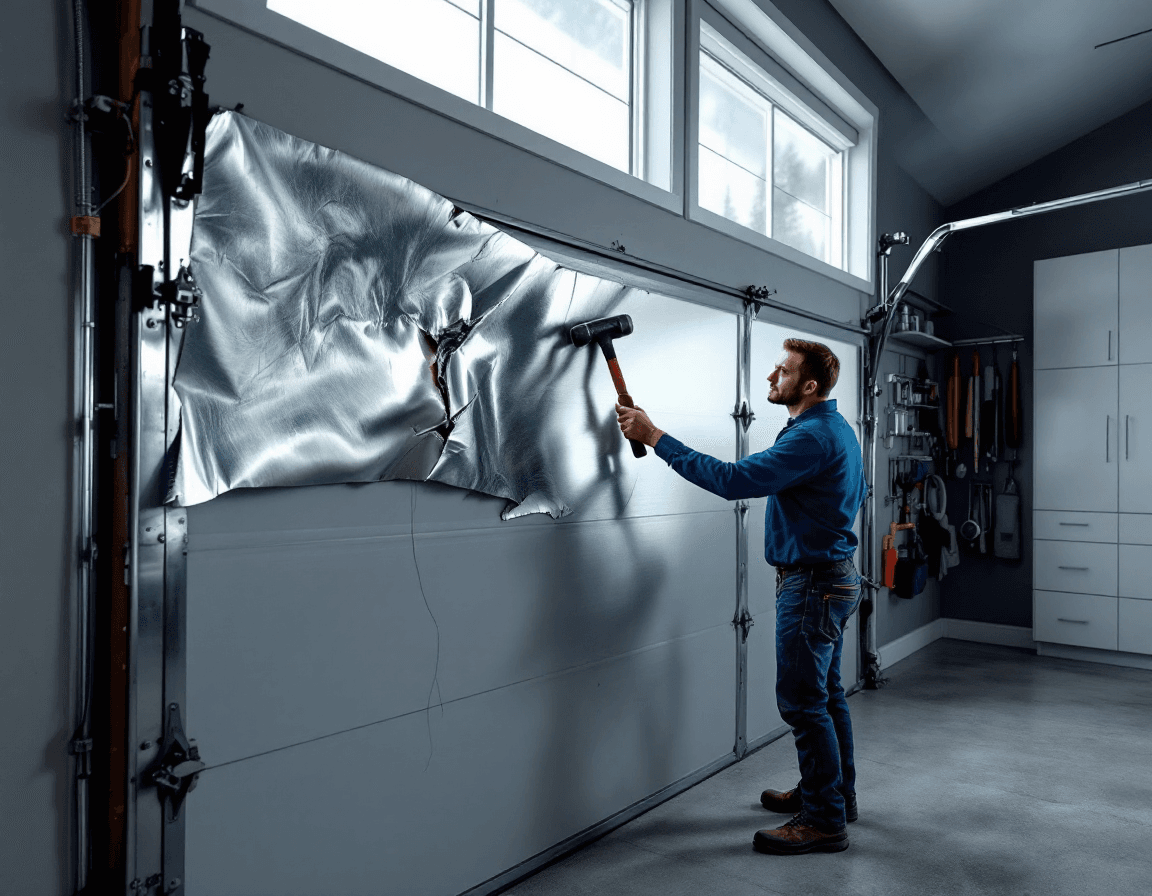
Garage Door Panel Replacement in Snohomish, WA is often the most sensible fix when one section of your door is dented, cracked, or soft from water, while the rest of the system still runs quietly. Homeowners across Snohomish and the surrounding Snohomish County neighborhoods often assume a damaged panel means buying a whole new door. In most cases, that's not true. A single section can usually be swapped out, and the rest of the door, including its tracks, springs, and opener, can stay in service.
The Pacific Northwest adds its own wrinkles. Our long wet seasons, the damp air that settles over the Snohomish River valley, and the freeze-thaw cycles we see on cold winter mornings all put steady stress on garage doors. A panel that looks fine in July can show swelling or rust streaking by February. This page explains how panel damage happens here, how to tell whether a single section can be replaced, what affects the cost, and when you should call a licensed technician instead of attempting the job yourself.
If you're looking at a bent steel panel or a soft bottom section right now, you don't need to make a final decision today. Take a few clear photos, note where the damage sits relative to the tracks and hinges, and read through the sections below. The goal is to help you make a confident call about repair versus replacement, and to know what questions to ask when you talk to a technician.
Reading the Damage Before You Pick a Fix
Start by looking at the damage from both sides of the door, ideally in daylight. A shallow dent in the outer skin may look dramatic but may not affect the panel's structural strength, especially on insulated steel doors where the foam core is well bonded. A crack, on the other hand, tells you the panel's skin or its internal framing has failed, and cracks tend to grow as the metal flexes with temperature changes. Run your fingers along the edges of each dent to feel for sharp creases, which often indicate a more serious bend than a rounded dimple.
Next, check whether the damaged section moves freely when the door operates. Listen for scraping, rattling, or a new grinding noise as the door rises. A bent panel can rub against the track or push a roller out of alignment, and that can cause problems that look unrelated, such as a door that drifts or a roller that wears quickly. If the damage is near a hinge or roller bracket, the panel may have shifted slightly, and that alignment question should be part of the inspection.
Finally, look at the bottom edge and the weatherstripping. A crushed bottom panel often leaves a gap that lets rain, leaves, and cold air into the garage. Many homeowners first notice a damp smell or a puddle line on the floor and assume the problem is the seal alone. Sometimes the seal is fine and the panel underneath is the real issue. Writing down exactly what you see, including the approximate size of each dent or crack, will help a technician quote the job accurately.
How Wet Weather Quietly Destroys Panels Around Snohomish
Western Washington's rain is persistent rather than dramatic, and that persistence is hard on garage doors. Water sits in the bottom edge of a panel after a storm, wicks into any gap or scratch, and slowly works at the paint and metal. On steel doors, a small scratch from a bike pedal or a shopping cart can start surface rust within a season if moisture keeps finding it. On wood or composite doors, the same moisture can swell the panel, loosen its joints, and eventually lead to rot along the bottom rail.
Our climate also makes insulated panels vulnerable in a specific way. Many modern steel doors use a foam core bonded to the outer and inner skins. When water gets into a damaged edge, it can reach the foam and the bond line, and the panel may start to sag or feel spongy when pressed. This is not always visible from the outside, which is why a gentle press test along the bottom section can be useful. A panel that feels soft or flexes more than its neighbors deserves a closer look.
Rust is worth watching most closely near the bottom and along seams where panels overlap. Those areas collect road spray, leaf debris, and standing moisture, and they stay damp longer than the upper sections. If you see orange streaks, bubbling paint, or a flaky crust along a seam, treat it as an early warning rather than a cosmetic problem. Addressing it while the damage is limited to one section is far cheaper than waiting until the rust has spread through several panels.
Knowing When a Single Panel Is Enough
A single-panel replacement makes the most sense when the rest of the door is structurally sound. That means the tracks are straight, the springs and cables are in good condition, the rollers roll smoothly, and the door balances evenly when you lift it halfway. If those systems are healthy and only one or two adjacent sections show damage, replacing the affected panel is usually the most efficient path. You keep the door you already have, and you avoid the expense of a full new installation.
There are situations where a single panel is not enough. If several panels show rust or rot, the damage is probably a sign of long-term moisture exposure across the door, and replacing one section will only address the most visible symptom. If the panel damage came from a severe impact that also bent a track, twisted a hinge, or stressed the spring system, the repair scope grows. Likewise, if the door is very old and parts such as the bottom seal, rollers, and hinges are already worn, spending heavily on one panel may not make sense.
A useful rule of thumb is to ask whether the rest of the door would survive another five years without major attention. If the answer is yes, a panel swap is often the right investment. If the answer is no, the conversation should move toward a broader repair plan or a replacement door. A licensed technician can walk the door, test its balance, and give you an honest picture of what the rest of the system can handle.
Matching a Panel You Can No Longer Buy Off the Shelf
Matching is the part of panel replacement that homeowners worry about most, and it is a real challenge. Garage door styles change over time, paint colors fade in sunlight, and manufacturers do not always keep replacement sections available for older models. A brand-new panel in a crisp color can look out of place beside a faded original, especially on a street-facing door in a historic neighborhood where the house itself has a strong visual identity.
Start by identifying the door manufacturer and model if you can. The information is often on a label near the bottom of a panel, on the inside of a section, or in the owner's paperwork from when the house was built or the door was installed. Knowing the series and section height makes it much easier to source a compatible panel. If the label is missing or unreadable, a technician can often identify the door by its panel profile, the spacing of its grooves, and the style of its hardware.
Color matching is less exact than most people hope. Sunlight fades paint unevenly, and a door that has spent years facing south or west may look noticeably different from its north-facing neighbor. Some technicians can order a panel in a close color or offer a refinishing option, but a perfect match is not always realistic. Be upfront about this when you request a quote. Ask how the new panel will look next to the existing door in daylight, and whether a light refinishing of the surrounding sections is worth considering to reduce the contrast.
Repair Versus Replace: A Practical Decision Guide
Many homeowners want a simple yes or no answer, but panel decisions depend on several factors working together. Use the checklist below to organize your thinking before you call for a quote. It is not a substitute for an inspection, but it will help you describe the situation clearly.
- Damage is limited to one or two adjacent panels, and the tracks and hinges are straight.
- Dents are shallow and do not crease the edges or affect the panel's ability to move freely.
- The door still balances evenly and operates without new scraping or binding.
- The bottom seal and weatherstripping are in reasonable condition after the panel is addressed.
- The door is relatively young, and its other components show little wear.
Replacement becomes the stronger option when several of the following points apply:
- Rust or rot appears across multiple sections, especially along seams and the bottom rail.
- The panel feels soft or spongy, suggesting water has reached an insulated core.
- Impact damage has bent tracks, twisted hinges, or affected the spring or cable system.
- Replacement sections are no longer available, making a consistent appearance difficult.
- The door is old, and its other components are close to the end of their service life.
If you're somewhere in between, a technician's inspection can clarify the picture. Sometimes a single panel swap plus a new bottom seal and a few rollers is the sweet spot, giving the door several more years of reliable use without a full replacement.
What a Single-Panel Swap Involves
A typical panel replacement starts with securing the door and relieving tension from the spring system. This is the step that should never be attempted by an untrained homeowner. Garage door springs store enormous force, and mishandling them can cause serious injury. Once the door is safely supported, the technician removes the hardware that connects the damaged section to its neighbors, including hinges, rollers, and brackets, and then slides out the old panel.
The new panel is fitted into the same position, checked for alignment with the rest of the door, and secured with the original or matching hardware. The technician then rechecks the door's movement along the tracks, confirms that the rollers sit correctly, and tests the balance and the opener's travel. On many doors, a panel swap is completed in a single visit, though timing depends on the door's design, the availability of the replacement section, and whether additional repairs are needed.
Homeowners should expect a short walkthrough at the end of the job. A good technician will explain what was replaced, point out any other wear noticed during the work, and recommend maintenance steps such as lubricating rollers or checking the bottom seal. If the job uncovers spring or cable problems, those items should be quoted separately and handled by a licensed professional, not patched together in the same visit without clear discussion.
Understanding the $250 to $800 Range Per Section
Our panel replacement pricing generally falls between $250 and $800 per section, and the exact number depends on the door. A standard steel panel on a common residential door sits near the lower end of that range, while insulated sections, wood or composite panels, decorative glass or window inserts, and older discontinued designs tend to cost more. Sourcing a matching section can also influence the final figure, particularly if the panel must be ordered from a distributor rather than stocked locally.
The labor involved is part of the price as well. Replacing a panel safely requires equipment, experience with tension systems, and time to align the new section so that it sits flush with the rest of the door. A rushed or improperly aligned panel can lead to rubbing, uneven gaps, or premature wear on rollers and hinges. Paying for careful installation protects the investment in the new panel and the performance of the whole door.
Keep in mind that the range above is a general guide for planning, not a fixed quote. Every door is different, and the accurate figure depends on the size of the section, its material, its finish, and what else the inspection turns up. Ask for an itemized estimate that separates the panel cost from labor and any additional repairs. That transparency helps you compare options and avoid surprises once the work begins.
Backing Accidents, Insurance, and Documentation in Snohomish
A single damaged panel often comes from a backing accident, when a car clips the lower section or a bumper catches the door during a tight maneuver in a driveway. These incidents are common in older Snohomish neighborhoods where driveways are narrow and garages sit close to the street or to a parked vehicle. The damage may look minor at first, but it can crease the panel, bend a hinge, or shift a roller out of its track.
If the accident was caused by another driver, or if it involved a vehicle that is covered by a policy, you may want to document the damage before any repairs begin. Take clear photos from several angles, include a wide shot showing the door and its surroundings, and keep the damaged panel itself if it is removed. Ask the technician to note the damage in a written estimate, which can help with any claim you file. We are not able to advise on insurance coverage, so check with your insurer about what your policy includes.
Documentation also helps when the damage is not from an accident. Dated photos of rust or water damage can show how the problem developed, which can matter for home maintenance records, a home sale inspection, or a conversation with a property manager if you rent. Keeping a simple folder with photos, estimates, and invoices is an easy habit that pays off later.
Choosing a Panel Replacement Technician Who Knows the Job
Panel replacement looks simple from the outside, but it sits at the intersection of several skills. The technician needs to read the damage accurately, identify the door, source a compatible panel, and handle the tension system safely. Anyone you hire should be licensed and insured for garage door work, and should be willing to explain each step of the job in plain language. Ask about their process for matching panels and how they handle situations where the color or profile cannot be matched exactly.
It is also reasonable to ask how the technician plans to address the rest of the door. A good professional will not simply swap the panel and leave. They will check the tracks, rollers, hinges, bottom seal, and balance, and tell you about anything that needs attention soon. If the inspection suggests that a spring or cable is worn, that work should be scheduled and performed by a licensed technician who is trained for high-tension systems. Spring and cable repair is not a do-it-yourself project, and we always recommend a professional for it.
Finally, trust your instincts about communication. A technician who takes time to show you the damage, explains your options, and gives you a clear written estimate is usually one you can work with comfortably for the rest of the door's life.
If your Snohomish garage door has a dented, cracked, rusted, or water-damaged panel, a single-section replacement may be the practical answer. Call Seattle Garage Door Fix at (888) 799-3819 to schedule an inspection, describe what you're seeing, and get a clear estimate for repair versus replacement. We serve homes in the Snohomish area, including the Historic Downtown Snohomish district and the Clearview area, and we'll help you find the most sensible path for your door.