
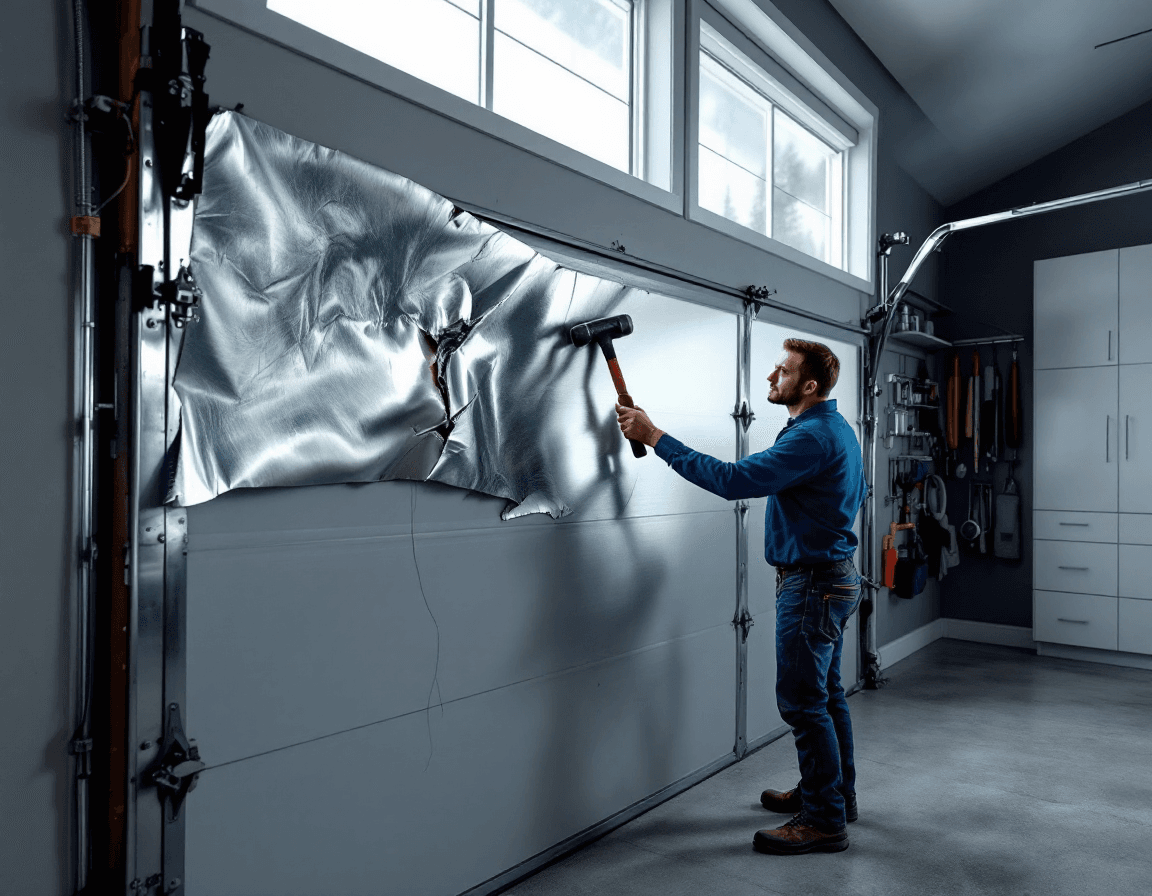
Garage door panel replacement in Monroe, WA is often the most cost-effective fix when a door still runs smoothly but one or more sections look worse than the rest of the door. Panels take a beating from everyday life: a bumped bumper, a stray basketball, a rolling trash bin, or a slow leak that never quite dries out at the bottom. Replacing only the damaged section can bring the door back to a clean, uniform appearance for a fraction of what a full door replacement would cost. Our technicians serve homeowners across Monroe and the surrounding Snohomish County area, including the 98272 ZIP code, and we see these panel problems every week.
Monroe sits in the Skykomish River valley, where the seasons shape how garage doors age. Long, damp winters, frequent drizzle, and summers with strong afternoon sun both play a role in how panels wear out. A door on the west side of a house may fade faster than one tucked under shade, and a garage near a low spot in the yard may hold moisture against the bottom section long after the rain stops. Understanding those local patterns helps you decide whether a panel is simply cosmetically damaged or whether it is a warning sign of something deeper.
This page walks through how panel damage develops, how to tell a repairable dent from a panel that needs to come out, what a replacement job involves, and what you can expect to pay. It also covers the situations where a panel swap is not the right answer and where a licensed technician should look at the door before anything else. If you are staring at a cracked panel right now, the goal is to give you enough information to make a calm, informed call.
Why Monroe Garages Take Panel Damage the Way They Do
Panel damage rarely comes from a single cause, and in Monroe the causes tend to stack up over the years. Many homes in the area have two-car garages with sectional doors that sit close to driveways, where vehicles, bikes, and yard equipment pass within inches of the door every day. Garage doors on older homes often have shallow setbacks from property lines, and a tight turn into the driveway can put a bumper or a side mirror right into the lower panels. Those small, repeated contacts leave micro-dents and paint scuffs long before anyone notices a real problem.
Weather adds a second layer. Our wet-season months bring extended periods of moisture, and the constant cycle of damp and dry can work into seams, hinge points, and the bottom edge of the door. Summer sun does the opposite job: it heats steel and composite panels during the day and lets them cool at night, which slowly stresses paint films and sealants. A panel that has been exposed to that cycle for a decade may look fine from a distance but show hairline cracks or lifted paint when you look closely.
Because so many Monroe homes sit near the fairgrounds and along the main commercial corridors, drivers and delivery vehicles are common on residential streets during busy events and seasons. That is not a reason to worry about any particular street, but it is a reminder that garage doors are exposed to more traffic than people expect. Recognizing the usual sources of damage makes it easier to prevent the next dent instead of simply paying to fix the last one.
Reading the Damage: Dents, Cracks, and Hidden Rust
Not every mark on a garage door panel means the panel needs replacing. A shallow dent in a steel panel with an intact paint film may be cosmetic, especially if it is away from the seams and does not affect the insulation layer. Many homeowners are surprised to learn that a panel with a visible crease can still operate normally, and that the real question is whether the damage has compromised the panel's structure or its ability to sit flush against its neighbors. When a dent is deep enough to stretch the metal or crack the surface coating, moisture can enter and begin corroding the steel from the inside out.
Cracks deserve more attention than dents. A crack that runs along a panel's embossed pattern or across a crease line often signals that the steel or composite has lost its original strength in that area. Cracks near hinge points or roller brackets are especially important, because they can shift how the section tracks and loads during opening and closing. If you see a crack that is widening, or if the panel flexes noticeably when you press on it, the section should be evaluated by a technician promptly.
Rust is the most deceptive form of panel damage. Surface rust on a steel panel may look minor, but it can indicate that the protective coating has failed underneath. Check the back of the panel where possible, and pay attention to the bottom edge and the lower corners, since those areas hold moisture longest. A panel that looks presentable on the outside but shows bubbling paint or a brownish stain along a seam may need replacement even though it still appears intact at first glance.
- Shallow dents with unbroken paint and no flex can often be monitored rather than replaced right away.
- Cracks that run along embossed lines, creases, or hinge points usually call for a closer inspection.
- Rust bubbles, flaking paint, or dark stains at the seams point to hidden corrosion.
- Any panel that flexes, rattles loosely, or sits out of line with its neighbors should be checked before the door is used heavily.
Water at the Bottom Edge and the Wet-Season Problem
The bottom section of a garage door takes the most abuse from moisture, and in the Monroe area that is a persistent issue. Rain and runoff can pool against the threshold, especially where the driveway slopes toward the garage or where gutters discharge close to the door. Water wicks up into the bottom panel and the bottom seal, and over time it can soften the insulation core in insulated panels or rust the lower edge of steel panels. Homeowners often notice the problem first as a musty smell, a damp spot on the garage floor, or a bottom panel that looks swollen or discolored.
Water damage has a particular pattern. It usually shows up first along the bottom rail, around the weatherstrip channel, and at the joints where one section meets the next. You may see staining that runs upward in streaks, or flaking paint that starts at the very lowest edge. If the bottom section has been compromised for a long time, the insulation foam may feel spongy or lose its rigidity, and the panel can start to bow or sag. Replacing the bottom section alone often solves the immediate problem, but the cause of the moisture, whether poor drainage, a worn bottom seal, or a gap at the threshold, should be corrected at the same time.
Monroe's wet months make it wise to check the bottom seal and threshold before the rainy season sets in, and again after it ends. A worn seal lets more water in and makes a panel replacement less durable, so addressing both together usually gives the best result. If you notice that water is running under the door during storms, the panel may not be the only component that needs attention.
Backing Accidents and Single-Panel Losses
A single panel damaged by a backing accident is one of the most common reasons homeowners call about a replacement. A vehicle reversing into the garage can crush one section, bend the edge, and sometimes pull the adjacent section out of alignment. The good news is that many sectional doors are designed so that a single section can be replaced without rebuilding the entire door. The challenge is that the damage often reaches beyond the panel itself, into the roller brackets, hinge connections, or the track near the impact point.
After an impact, look at the whole section and the surrounding hardware before deciding the job is simple. Check the rollers on the damaged section for flat spots or cracked wheels, inspect the hinges for bent plates or loose fasteners, and watch the door operate slowly if it is safe to do so. A door that rubs, binds, or jumps off the track after a collision may have damage to the track or the hardware that a panel swap alone will not fix. If the impact involved a vehicle, it is also worth checking the opener's safety reversal and the photo-eye sensors, since a misaligned door can affect how those systems behave.
Insurance is sometimes a question after a backing accident. If the damage occurred because of a vehicle collision, your homeowner's or auto policy may have provisions for it, depending on how the accident happened. We recommend documenting the damage with photos before any repair begins, and keeping a copy of any estimate you receive. That record helps if you need to discuss the loss with an insurer.
Matching a Panel That Has Faded Out of Production
Matching is where many panel replacement jobs get complicated. Garage door manufacturers update their designs, change paint formulas, and discontinue older profiles, so a replacement section may not look exactly like the rest of the door. Sun exposure makes the problem worse, because even a door that was uniform when installed can develop a visible color gap after years of fading. A new panel that is bright white or a sharper shade of the same color can stand out more than the original damage did.
There are several approaches to matching. Some panels can be ordered from the original manufacturer using the door's model and serial information, and that route gives the closest match when the design is still available. When the exact design is discontinued, a technician may recommend a compatible panel with a similar profile and paint, or may suggest repainting adjacent sections so the door reads as a single unit. For wood-grain embossed finishes or two-tone designs, matching is harder, and a homeowner should expect some compromise in texture or color.
Before ordering anything, bring a clear photo of the door taken in daylight, a close-up of the panel profile, and any label or data plate you can find on the door. Note the door's approximate age and the brand if you know it. Those details help a technician identify the correct section size and finish, which reduces the chance of an expensive return. A good match usually depends on getting the paperwork right at the start.
Repair or Replace: A Practical Decision Path
Deciding between repairing a panel and replacing it is a question of cost, safety, and how the damage will behave over time. A small crack that has not spread, or a dent that does not affect the seam or the insulation, may be a candidate for patching or straightening. Replacement becomes the better choice when the panel is structurally compromised, when corrosion has reached the core or the back surface, or when the damage affects the panel's ability to seal against its neighbors. Trying to patch a badly rusted or water-logged panel usually leads to repeated repairs and a door that looks worse over time.
Several factors should guide the decision. Consider how old the door is and whether other sections show similar wear, because a door near the end of its service life may benefit more from a planned upgrade than from a single-panel swap. Think about how the damage affects operation, since a panel that binds the track or throws off the balance may need more than cosmetic attention. Finally, weigh the cost of a replacement section against the cost of repeated small repairs and the risk of further water intrusion.
- Repair may make sense for a minor surface dent that does not affect the seam, the seal, or the track.
- Replacement is usually the better choice for cracked panels, rust that has reached the core, or sections that no longer seat flush.
- Consider a broader evaluation if several panels show wear, or if the door is showing signs of age in its springs, rollers, or opener.
- Always have a licensed technician confirm the diagnosis before committing to a repair plan.
What a Panel Swap Involves on a Typical Sectional Door
A panel replacement on a sectional door is more involved than most homeowners expect, even when the damaged section is only one or two feet tall. The technician must support the door safely, relieve the load on the section being removed, and disconnect the panel from its hinges and rollers without disturbing the rest of the door. Because garage doors are heavy and the springs store significant energy, this work is not a do-it-yourself project for most people. Attempting to remove a section without proper support can cause the door to shift suddenly, which is a serious injury risk.
Once the damaged panel is out, the technician checks the replacement section against the existing door for size, thickness, and fit. Hinges, rollers, and brackets are inspected and, where needed, replaced so the new section lines up with its neighbors. The weatherstrip and bottom seal are often reviewed at the same visit, since a new panel is only as weatherproof as the seals around it. After installation, the door is run slowly to confirm it tracks smoothly, sits level, and does not bind at the new section's joints.
Spring and cable work is a separate category and should always be left to licensed professionals. A panel replacement can sometimes involve disturbing the balance of the door, and a qualified technician will know whether the springs or cables need attention during the same visit. We never recommend that homeowners attempt spring adjustments or cable repairs on their own, because the tension involved can cause severe injury.
What Panel Replacement Costs Near the Fairgrounds and Downtown
Panel replacement pricing in Monroe generally falls within a range of $250 to $800 per section, depending on the door. The spread reflects real differences between door types: a standard steel panel on a common residential door is usually at the lower end, while insulated panels, wood-grain or custom finishes, and sections that must be matched to a discontinued design tend to cost more. The size and weight of the section also matter, as does how much labor is needed to access the damaged area safely. A panel near the top of a tall door may take more time to remove and reinstall than one at the bottom.
Several other factors can affect the final bill. If the damage has caused problems with rollers, hinges, or the track, those parts may be added to the job. A door that needs significant alignment or that has water damage extending into multiple sections will cost more than a clean, single-panel swap. Homeowners in the downtown area and those living closer to the fairgrounds may notice that scheduling is more predictable on weekdays, but the price itself is driven by the door, not the neighborhood.
We recommend asking for a written estimate that lists the panel, any hardware being replaced, and the labor involved. A clear estimate helps you compare options and avoid surprises. It also gives you a chance to ask whether repairing the damaged area, replacing the single section, or planning a broader upgrade makes the most sense for your home.
Keeping Replacement Panels Looking Right Over Time
Once a new panel is installed, a little routine care helps it blend in and last. Wash the door at least a couple of times a year with a mild soap and water, and rinse the bottom edge carefully to remove road grime and salt residue. Avoid harsh abrasives or solvents that can strip paint or dull the finish. A soft brush and gentle cleaner are usually enough to keep the surface looking consistent with the rest of the door.
Pay attention to the areas where water and debris collect. Clear leaves and dirt from the threshold, check that the bottom seal is still flexible, and look for any new staining along the seams. In a region with long wet seasons, a quick inspection every few months can catch small problems before they become panel replacements. Trim plants and shrubs that rub against the door, and consider a bumper or wall guard if vehicles routinely come close to the garage.
Fading is a slower process, and the best defense is a door that is kept clean and inspected regularly. If you notice a new panel starting to look different from the rest of the door, a technician can advise whether a light refinish, a coordinated repaint, or a plan for future replacement is the better option. Keeping records of the door's model, color, and any previous repairs will make future work faster and more accurate.
When a Good-Looking Door Still Needs Attention
A door can look fine from the driveway and still have problems that affect a panel's longevity. Hairline cracks in the paint, slight gaps along the seams, or a faint musty smell may not be obvious at a glance, but they often point to moisture or movement that has not yet become visible damage. If one panel is damaged, the adjacent sections may be under additional stress, and a closer look can reveal whether the damage is isolated or part of a larger pattern.
Operational signs matter too. A door that is noisy, that jerks during travel, or that stops at odd points may be telling you that a panel, roller, or hinge is misaligned. These symptoms often appear before the cosmetic damage becomes obvious, and addressing them early can prevent a single panel problem from turning into a broader repair. If the door has been struck by something heavy, or if the springs look worn, a professional inspection is a sensible step even if the panels appear intact.
It is also worth thinking about the age of the door as a whole. A door that is approaching the end of its service life may benefit from a planned upgrade rather than a series of single-panel repairs. A technician can help you weigh the cost of continued repairs against the value of a newer, better-insulated door, and that conversation is often more useful than focusing on one dented section.
Choosing a Crew for Panel Work in Monroe
When you are choosing a company for panel replacement, the most important qualities are licensing, insurance, and clear communication. Ask whether the technicians are licensed and bonded, and whether the company carries liability insurance that covers work on your property. A reputable crew will explain the diagnosis in plain language, show you the damaged area, and give you options before any work begins. They will also be transparent about what they can and cannot match, since matching is one of the trickiest parts of panel work.
Look for a company that is comfortable discussing the whole door, not just the damaged section. The best technicians will point out related issues such as worn rollers, failing seals, or a track that needs adjustment, and they will explain why those items matter. They should also be willing to recommend against a panel swap when the damage calls for a different solution. A company that only sells parts without evaluating the door is not offering the kind of guidance a homeowner needs.
Seattle Garage Door Fix provides panel replacement and related diagnostic work for homeowners across Monroe and the surrounding Snohomish County communities, and our technicians are trained to handle the safety and matching challenges that come with sectional doors. Whether your door was damaged by a backing accident, water at the bottom edge, or simple wear, we can explain your options clearly and help you decide what makes sense for your home and budget.
If a dented, cracked, or rusted panel is making your garage look worse every week, call our team at (888) 799-3819 for a straightforward assessment and a clear estimate. We will walk you through repair versus replacement, help you think through matching, and make sure any spring or cable concerns go to a licensed professional. Give us a call and let us take a look at your door.