
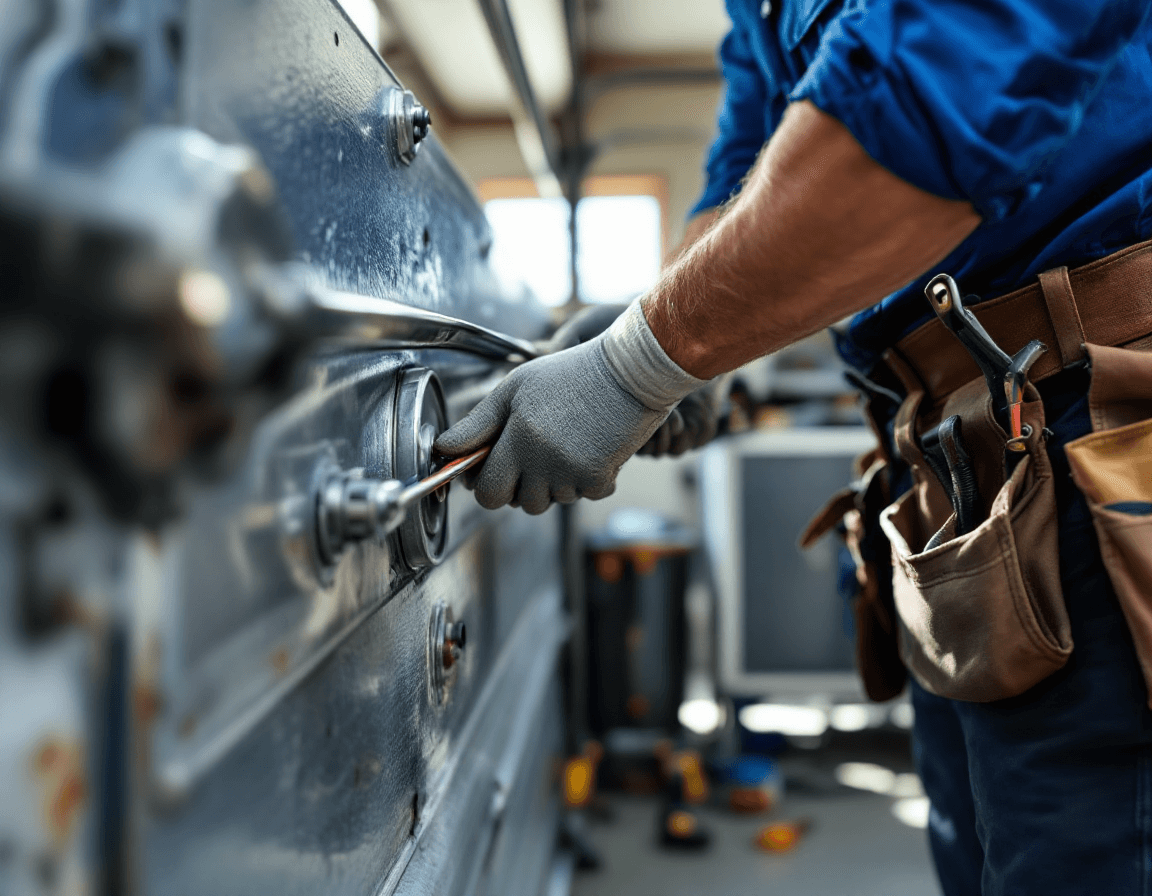
Garage Door Cable Replacement in Monroe, WA is one of the most common repairs we handle for homeowners in the Snohomish Valley, and it is also one of the most important to get right. The lift cables on a garage door carry the full weight of the door, often several hundred pounds of steel panels and hardware, and when one fails the door can drop, twist, or refuse to move at all. Monroe homes range from older ranch houses near downtown to newer subdivisions on the outskirts of town, and the garages in both kinds of neighborhoods see the same weather that wears down cables over time.
If your door has started making a sharp bang, sitting crooked in its tracks, or stopping halfway up, the cable is a likely suspect. Many homeowners wait a few days or weeks before calling, hoping the problem will settle itself, but a cable that is already frayed or off the drum is under uneven load and can fail suddenly. This page explains what usually goes wrong, what the repair involves, what the typical cost range looks like, and why this particular job should be handled by a licensed, insured technician rather than a do-it-yourself project. We serve Monroe and the surrounding communities from our base in Western Washington, and we work on doors of nearly every size, style, and age.
Our goal here is to give you enough information to recognize the problem early, make a sensible decision, and feel comfortable with what happens when you call. Cable work is not a task to rush, but it is also not a mystery once you understand how the system is built. Read through the sections below, and if anything about your door looks like the situations described, call us at (888) 799-3819 so we can take a look.
Why Lift Cables Wear Out Faster in the Snohomish Valley
Western Washington winters bring long stretches of rain, cool temperatures, and humidity that can linger in an attached garage for weeks at a time. Monroe sits in the Snohomish River valley, where the air often stays damp through the colder months, and that moisture finds its way into steel cables and their fittings. Galvanized cable holds up well in dry climates, but in a garage that gets little sun and repeated condensation, surface rust can start on the strands and work its way inward. Once the outer wires begin to corrode, the cable loses strength in ways that are not always visible from the outside.
Garage temperature swings also play a role. A garage that warms during the day and cools sharply overnight produces condensation on metal surfaces, and that moisture sits on the cable and the drum until the next dry spell. Doors that are opened and closed many times a day, such as those used by commuters heading toward Highway 2 or families running errands around town, accumulate more cycles on the cables than a door that is used only occasionally. Each cycle flexes the strands slightly, and over years that flexing contributes to fatigue at the points where the cable wraps around the drum.
Salt and road grime carried in on tires and shoes can also speed up corrosion, particularly during the months when roads are treated. Homeowners often do not think of the garage floor as an environment that affects the cables, but the tracks, rollers, and lower bracket all sit close to the ground, and the cable runs up from that same area. Keeping the garage reasonably dry and ventilated is one of the simplest ways to extend the life of your cables, and it is a point we return to later in this guide.
Reading the Warning Signs Before the Door Quits
Cable problems rarely appear without warning, though the warning can be easy to overlook. Most homeowners notice something unusual in the way the door moves before a cable fails completely. The trick is to pay attention to small changes and to treat them as early indicators rather than minor annoyances. A door that behaves a little differently today may be on the way to a much more serious failure.
Common early signs include the following:
- The door hangs lower on one side than the other when it is partly open.
- You see fraying, bright wire ends, or reddish-brown rust along the length of a cable.
- The door closes unevenly, with one corner reaching the floor before the other.
- A grinding or scraping sound comes from the drum or the cable as the door moves.
- The door seems to bind or catch on one track while the opposite side moves freely.
Once a cable actually fails, the symptoms become more dramatic. Many homeowners describe a loud snap, sometimes compared to a gunshot, followed by the door sagging or stopping in place. If you hear that sound, do not try to force the door open or closed. Keep people and pets clear of the area, avoid standing under the door, and call a professional. A door with a broken cable may still be held up by the opposite cable for a short time, but the load on the remaining hardware is no longer balanced, and that situation can get worse quickly.
What Happens Inside the Drum When a Cable Jumps
Each lift cable on a standard garage door winds onto a drum at the top corner of the door. On a torsion spring system, the drum sits on a shaft that runs across the header. On an extension spring system, the drum sits at the end of the track. In both designs, the cable is supposed to wrap neatly in a single, controlled layer, with each coil seated in the groove that was machined for it. When the cable jumps off that groove or begins to overlap itself, the drum can no longer lift and lower the door evenly.
A cable can come off the drum for several reasons. The door may have been pulled or forced by hand, the track may be slightly out of alignment, a roller may be worn or stuck, or the drum itself may have a damaged groove. Once the cable slips off, it often tangles around the drum or pinches itself between the drum and the bracket. Continued attempts to operate the opener in that condition can fray or kink the cable and turn a minor problem into a broken one.
Our technicians look at the drum as part of every cable job. A drum with worn or cracked grooves may not hold a new cable securely, and that is why cable drum service is often done at the same visit as cable replacement. We inspect the drum for wear, check the set screws and mounting hardware, and make sure the cable seats correctly before we consider the job finished. Replacing a cable without checking the drum is like replacing a tire without checking the rim, and we prefer to take the time to do the job thoroughly.
Why Spring Tension and Cable Work Belong to a Licensed Technician
Lift cables and springs are part of the same system, and they are the most dangerous parts of a garage door to work on. The springs store a great deal of energy, and the cables are under tension whenever the door is in a partly open or closed position. When a cable is removed, the door can shift unpredictably, and when a spring is released improperly, it can cause serious injury. For this reason, we strongly recommend that homeowners do not attempt cable replacement or spring adjustment on their own, even if they have watched a video or own a set of tools.
A licensed, bonded, and insured technician carries the training and equipment to control the door safely during the repair. That includes securing the door, relieving tension in a controlled way, measuring the correct cable length, and reinstalling everything so the door balances properly once the job is done. A properly installed cable also needs to be matched to the door's weight and spring system. Using the wrong size or type of cable can cause the door to run unevenly, stress the opener, and fail again within a short time.
If you are unsure whether your door uses torsion or extension springs, or whether a cable has actually failed, make the call before touching anything. We are happy to explain what we see over the phone, though a physical inspection is always the most reliable way to confirm the problem. Your safety is worth more than the cost of a service visit, and a short conversation can prevent a serious accident.
What a Typical Cable Repair Covers in Monroe
Most lift cable replacements we perform fall in the range of $110 to $300. The exact price depends on the door's size, the spring system, how many components need attention, and whether the drum or other hardware also needs replacement. A standard single-cable repair on a typical residential door generally sits near the lower end of that range, while larger doors, multiple damaged cables, or cases where the drum must be replaced will fall closer to the upper end.
A complete cable service visit usually includes the following steps:
- Securing the door and relieving tension safely before any hardware is removed.
- Removing the damaged cable and inspecting the drum, bracket, and pulley for wear.
- Installing a new cable of the correct length and type for your door.
- Checking that the cable seats properly in the drum grooves and that the door balances evenly.
- Testing the door through several full cycles, including a check on the opener's response.
We will always discuss the scope of work before starting, and we will explain any additional parts that may be needed. If the quote changes once we have inspected the door, we will tell you before we proceed. There are no surprises on our end, and you will know what you are paying for at each stage of the job.
Crooked Doors, Binding Tracks, and the Lopsided Hang
A door that hangs crooked or closes unevenly is one of the most common reasons Monroe homeowners call us about cables. The two lift cables are designed to share the load equally, so when one of them stretches, frays, or comes off the drum, the door begins to lean toward the side with the weaker or looser cable. Over time, the door may start to bind in its track, the rollers may wear unevenly, and the opener may work harder to lift the heavier side.
Binding is sometimes mistaken for a track problem, and in some cases it is. However, if one side of the door consistently lags behind the other when you open or close it, the cable should be checked before anything else. A quick visual inspection from a safe distance can reveal a cable that is loose, slack, or sitting higher than its partner on the drum. Keep in mind that a door that is leaning should not be forced, and continuing to operate it can damage the track, the bottom seal, or the opener.
We often find that a lopsided door has been operating this way for weeks or months before the homeowner noticed. A gradual change is easy to miss, especially when the door is opened from a remote and the garage light is off. If the door has started to look different from the outside, such as a gap at the bottom on one side or a panel that sits slightly off line, it is worth scheduling an inspection sooner rather than later.
Cable Drum Service: Cleaning, Checking, and Replacing Hardware
The cable drum is the quiet partner in every lift cable system, and it deserves regular attention even though most homeowners never see it. The drum is typically mounted on the shaft or at the end of the track, and it carries the full load of the door as it rotates. Over years of use, the drum can accumulate grime, develop worn grooves, or loosen on its shaft. Any of these conditions can cause a new cable to slip or wear quickly.
Cable drum service usually includes cleaning the drum surface, checking for cracks or deep grooves, tightening set screws, and confirming that the drum sits square on the shaft. If the drum shows significant wear, we will recommend replacing it as part of the same visit. A replacement drum is often a more reliable choice than trying to patch an old one, particularly when the door has already experienced a cable failure. Drum replacement is one of the reasons the upper end of our cable price range exists, so we will always explain the difference when we quote the job.
Hardware such as cable clamps, end fittings, and brackets should also be inspected during drum service. Loose or corroded fittings are a common source of new cable problems, and they are inexpensive to replace compared with the cost of repeating the entire job. Our technicians look at each piece of hardware in the system, not just the cable itself, because a repair is only as strong as the weakest component connected to it.
When a Cable Tangles, Jams, or Snaps Loudly
A tangled cable is one of the more alarming situations a homeowner can face. When a cable comes off the drum and wraps around itself, it can pinch, kink, or pull against the opener and the track. Sometimes the door stops in place, and sometimes it tilts sharply. If the cable has tangled in a way that prevents the door from moving, do not attempt to pull, straighten, or force the cable back onto the drum yourself. The tension in the system can release suddenly and cause injury.
After a loud snap, the cable may have broken at a fitting, at the drum, or somewhere along its length. The broken end can whip around, and loose strands can cut skin or damage the door panels. For these reasons, we recommend keeping the garage clear of people and vehicles until a technician arrives. If the opener is still powered, unplugging it may help prevent further movement, but the door should still be treated as unsafe until it has been inspected.
Homeowners often ask whether a stuck door can simply be freed by lubricating the tracks or adjusting the opener. In most cases, the answer is no. A stuck door caused by a cable problem will not respond to lubrication, and attempting to override the opener can make the damage worse. A proper inspection is the only way to know which part has failed and how to repair it safely.
Preparing Your Monroe Garage for a Service Visit
A little preparation makes a cable service visit go more smoothly. Before the technician arrives, clear the space around the door so that the work area is accessible. Move vehicles, bicycles, stored items, and tools away from the door's path and from the tracks. If the door is stuck in a partly open position, do not try to move it further. Leave the door as it is so the technician can assess the exact condition of the cable and the drum.
It also helps to note what you observed before the problem began. Did you hear a noise? Did the door start to lean? Had it been sticking for a few days? These details can help the technician diagnose the issue faster, especially if the failure was caused by a worn cable or a drum that has been slipping gradually. If you have an older opener or a door that has been modified, mention that as well, because it can affect the type of cable and hardware required.
Finally, plan for the visit to take some time. Cable replacement is not a rushed job, and a thorough service includes testing the door through several complete cycles to confirm it runs evenly. We will explain each step as we go and answer any questions you have before we finish. If you are homeowners near the Evergreen State Fairgrounds or downtown Monroe and need a same-week appointment, let us know when you call so we can plan the schedule accordingly.
Protecting Your Cables Through Monroe's Wet Seasons
Preventive care will not stop every cable failure, but it can meaningfully extend the life of your system. The most effective step is to keep your garage as dry as practical during the long, damp months. Ventilation helps reduce condensation, and a dehumidifier can make a noticeable difference in an enclosed garage with little natural airflow. Avoid storing damp items, wet gear, or firewood against the door, since moisture trapped near the bottom of the door can accelerate corrosion on the lower hardware.
Regular visual checks are also valuable. Once or twice a year, look at each lift cable from a safe distance and check for fraying, rust spots, or unusual slack. Watch the door as it opens and closes, and notice whether it moves smoothly and level from side to side. If you see something unusual, schedule an inspection before it becomes an emergency. Keep the tracks clear of debris, and avoid using the door as a counterweight by hanging items from the bottom bar or the tracks.
Lubrication is useful for rollers, hinges, and the track, but it should not be sprayed directly onto lift cables, since many cable lubricants can attract dirt and grit. Instead, rely on regular inspection and a professional tune-up. A technician can check cable condition, drum wear, and overall balance during a single visit, and that information helps you plan for repairs before they become urgent. If your door is more than a decade old or has been used heavily, scheduling a periodic inspection is a sensible way to protect both your vehicles and your household.
Call Seattle Garage Door Fix at (888) 799-3819 to schedule a cable inspection or repair for your Monroe garage. We are licensed, bonded, and insured, and we will explain the problem, outline the repair, and give you a clear price before any work begins. Whether your cable has snapped, your door is hanging crooked, or you simply want a safety check after a cold, wet winter, our team is ready to help.