
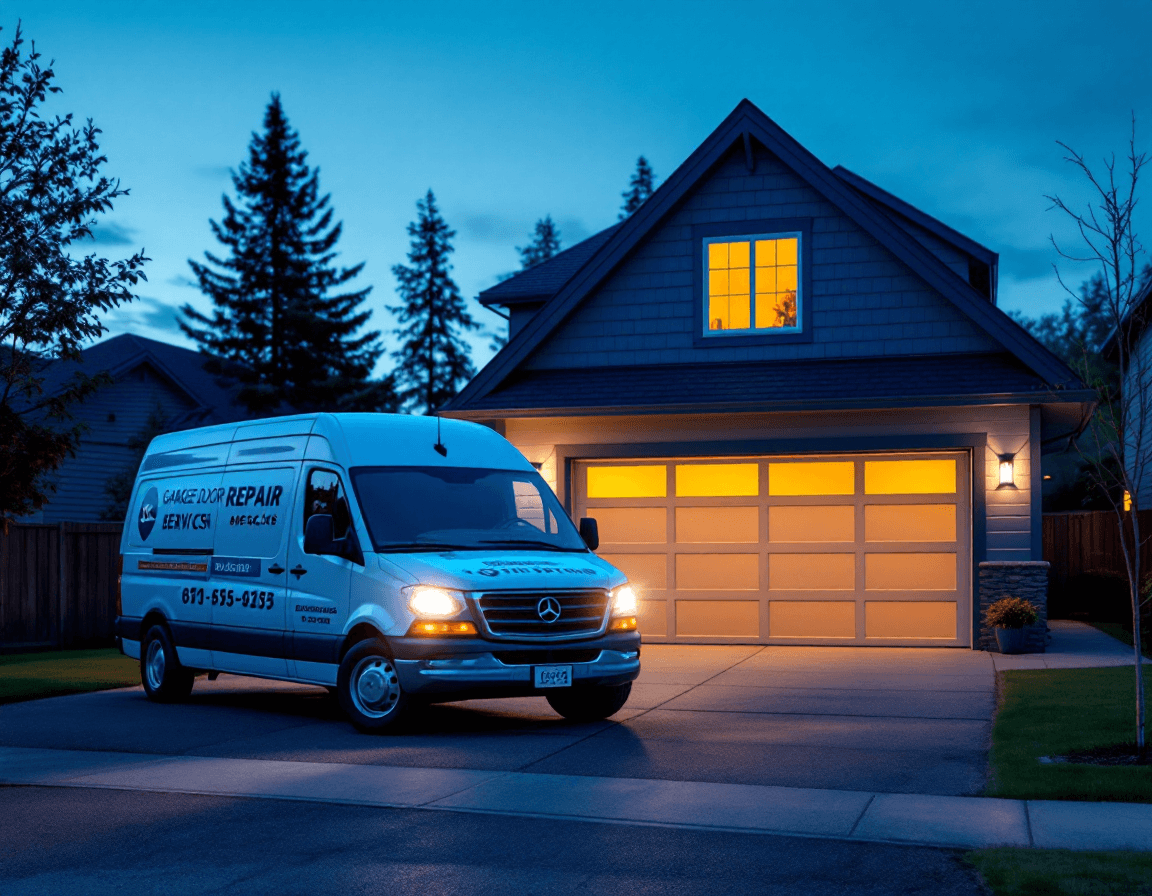
Emergency garage door trouble in Monroe rarely waits for a convenient time. A spring can snap during a February cold snap when the metal is brittle, a car can get locked inside after a dead remote battery, or a gust off the Skykomish valley can knock a panel loose on a Sunday night. Seattle Garage Door Fix provides 24/7 same-day emergency garage door repair in Monroe, WA, and our technicians are licensed, bonded, and insured. We handle trapped vehicles, doors stuck open, broken springs, snapped cables, and panels knocked off their tracks, and we give you upfront pricing before any work begins.
Monroe sits in the middle of Snohomish County, where the Snohomish River and the foothills of the Cascades shape the weather as much as the traffic on US-2 and SR-203 does. Homes here range from older ranch houses near downtown to newer subdivisions on the east and north sides of town, and the garages in each area face different wear. Whatever your situation, the goal of this page is to help you understand what is happening, what you can safely do in the first few minutes, and when to call a technician instead of trying a fix yourself.
Why Monroe Garage Doors Run Into Trouble So Often
Our region's climate is hard on steel, wood, and electronics alike. Long wet stretches from October through April keep door hardware damp, and moisture that gets into hinges, rollers, and the bottom seal invites rust and corrosion. Temperatures that dip below freezing overnight make springs and cables stiffer, and a cold morning is often when a worn component finally gives out. A door that opened smoothly in July can bind in January simply because the metal and lubricant have changed.
Monroe also has its share of wind events and debris. Storms moving through the valley can slam a door against its frame, shake a panel out of its channel, or drive tree limbs and gravel into the track. Many homes near the fairgrounds and the open fields south of town have wider driveways that catch more wind, and garages on those lots tend to see more stress on their door tracks. Recognizing these local patterns helps explain why a technician sees the same emergencies repeat after heavy rain or a windy week.
Many of our emergency calls start with a homeowner who noticed a small sign a few days earlier. A grinding noise, a door that hesitates halfway up, or a slight sag on one side can all be early warnings. Taking those signs seriously before a full failure is almost always cheaper and safer than waiting for the moment the door refuses to move at all.
Car Trapped Inside the Garage: What to Do in the First Few Minutes
Being locked out of your own car while it sits inside the garage is frustrating, and it is especially stressful if you need to leave for work, an appointment, or a hospital visit. The first step is to check whether the problem is the opener or the door itself. If the opener's motor runs but the door will not budge, the door may be locked, binding, or held by a broken component. If the opener does nothing at all, the power, the wall button, or the remote may be the culprit.
Before you call, check a few simple things that do not require climbing ladders or touching springs. Confirm that the power cord is plugged in and that the breaker has not tripped. Try the wall-mounted control instead of the remote, since remote batteries are a common and easy fix. If your opener has a red emergency release cord hanging from the rail, you can pull it to disconnect the door from the opener and attempt a manual lift, but only if the door is closed and the springs appear intact. Do not pull the release cord while the door is open and unbalanced, because a door that drops suddenly can injure anyone standing beneath it.
If you cannot free the vehicle or the door, a same-day technician can diagnose the problem and often restore operation the same visit. We bring the tools to reach the trolley, the lock, and the opener header, and we will explain what failed before doing any repairs. Do not attempt to force a stuck door with your vehicle or a pry bar, because that can bend tracks and turn a simple fix into an expensive replacement.
A Door Stuck Open: The Security Risk You Cannot Ignore
A garage door that will not close leaves your home and everything inside it exposed, and that is a serious concern in any neighborhood. Many Monroe homeowners rely on the garage door as a daily entry point, so an open garage at night can invite theft or unwanted visitors. Even a door that stops partway down can create a gap large enough to reach through, and that gap is an open invitation for anyone walking past.
If your door is stuck open, avoid leaving it that way while you wait for help. Consider blocking the opening temporarily with a sturdy object if the door cannot close, and keep valuables out of sight. Lock the interior access door to the house, and if you have a separate exterior key, use it to secure your entryway. Bring in tools, bicycles, and anything else that could be taken, and let a neighbor know you are waiting for a technician if you feel uneasy.
A door that will not close usually points to one of several causes. The safety sensors near the floor may be misaligned or obstructed, which causes the door to reverse as soon as it starts down. The opener's force or travel settings may have shifted, or a damaged cable or spring may be preventing the door from carrying its own weight. Our technicians check each possibility in sequence so we fix the real cause rather than replacing parts that are working fine.
Broken Torsion Spring: Why a Door Refuses to Lift
Torsion springs are the heavy coils mounted on the horizontal shaft above the closed door, and they do most of the work of lifting it. When one breaks, the door often feels suddenly heavy, and the opener may strain, groan, or stop completely. Many homeowners first notice a loud bang in the garage, followed by a door that sits low and will not rise past a certain point.
This is the repair that homeowners should never attempt on their own. Torsion springs store enormous tension even when they look relaxed, and winding or unwinding one without the proper bars and training can cause severe injury. Our technicians are licensed professionals who handle spring replacement every day, and they use specialized equipment to release tension safely before removing or installing anything. Please do not try to remove a broken spring, adjust the winding cones, or disconnect the spring from the shaft yourself.
After a spring breaks, there are a few precautions to take. Keep everyone, including children and pets, away from the door until a technician arrives. Do not operate the opener repeatedly, since that can strain the remaining components and the door's balance. If you need to move a vehicle, use the manual release only with the door fully closed and never pull it while the door is partially raised. Your technician will confirm whether one spring or both need replacement, since springs of the same age often wear out close together.
Snapped Cable and a Door Hanging Crooked
Lift cables run up each side of the door and connect to the bottom bracket, working with the springs to keep the panels level. When a cable snaps or slips off its drum, one side of the door may drop lower than the other, leaving the door visibly crooked or sagging. You might hear a sharp snap, see a frayed cable hanging from the drum, or notice that the door binds on one track while moving freely on the other.
Cables are under tension too, and a snapped cable can whip unexpectedly. Keep your hands and tools clear of the drum area, and do not try to re-wrap a cable or force a door level with clamps. A door hanging crooked can also stress the opener and the remaining hardware, so the sooner it is secured, the less damage it causes. If the door has dropped and is resting on the floor, do not try to lift it by hand.
Monroe's damp winters can accelerate cable wear, particularly where moisture collects on the bottom bracket and drums. Our technicians inspect cables, drums, and bottom brackets during every emergency visit, because a cable that fails on one side often means the other side has been stretched or weakened. Replacing both sides together usually costs less over time and restores the door's balance more reliably than a single-side patch.
Door Off Its Tracks After an Impact or Gust
A door that jumps out of its tracks is a common result of a vehicle bumping the panel, a child swinging on the door, a loose bolt, or a strong wind gust that pushes the door sideways. Once a roller leaves the track, the door can jam at an angle, and continued attempts to operate it can bend the track further. Many homeowners notice a gap along one edge, a rattling sound, or a door that stops at an odd height.
The safest response is to stop operating the door and secure the area. Do not try to shove the door back into the track while the springs are under full tension, and do not stand under a door that is partly off its track. Note any visible damage, such as dents in the panels or bent tracks, because that information helps the technician prepare the right parts and tools. If the door is still roughly closed, placing a barrier to prevent accidental entry can help until repairs are complete.
Our technicians realign tracks, replace damaged rollers, and check the hinges and end caps for stress. When a track is bent significantly, we straighten or replace the affected section so the door can run smoothly again. Storm-driven damage often involves multiple points of failure, so a thorough inspection is worthwhile before the door returns to regular use.
Slammed Shut and Jammed: Diagnosing a Sudden Bind
Sometimes a door closes hard during a gust or after someone pulls it down forcefully, and then refuses to open again. The panels may have buckled slightly at a joint, a roller may have jumped the track, or a safety sensor may have been bumped out of alignment. These jams can feel alarming because the door seems to have locked itself in place for no clear reason.
Start by looking for obvious causes without forcing anything. Check whether the sensors near the floor have shifted, since a misaligned sensor can make the opener believe something is blocking the door. Look for objects in the tracks or debris along the bottom edge. Listen for the opener's behavior: a single click and no movement often means a logic issue, while a loud strain suggests mechanical resistance.
If the door still will not budge, it is time to call a technician rather than pushing harder. Continued force can break the opener gear, pull the track from the wall, or damage the panels. We check the alignment of the tracks, the condition of the rollers, and the balance of the springs before deciding whether the issue is minor or requires a larger repair. Clear communication and upfront pricing help you understand the options before we begin.
Break-In Damage and Storm Repairs Along Monroe's Roads
Some of the calls we receive involve more than a mechanical failure. A break-in attempt can leave a door pried at the bottom seam, a track bent, or a lock assembly damaged. Storms can send branches against the panels, crack the glass in a window section, or tear weatherstripping away from the frame. Either situation calls for prompt attention, both for security and for protecting the home from moisture.
If you suspect someone has tried to force the garage door, call the police first if the situation feels unsafe or if you believe someone may still be present. Do not go inside alone if you have any reason to think an intruder is there. Once the area is secure and any police report is handled, a technician can assess the damage, reinforce the locking system, and replace compromised components. We can document what we find so you have a clear record for your insurance provider.
Storm damage often appears in stages. Wind may bend a panel slightly, and the stress may not show up until the next time the door runs. Water can seep into the bottom seal and hardware, causing rust weeks later. A full inspection after a storm catches these delayed problems, and our technicians will walk you through what needs immediate repair and what can wait for a scheduled visit.
How Same-Day Upfront Pricing Works on an Emergency Call
Emergency visits can feel uncertain, especially when you are unsure what has failed. We believe you should know what you are paying for before any work begins. When you call (888) 799-3819, our dispatcher will ask about your symptoms, the door type, and your location so we can match you with an available technician. The technician will assess the problem, explain the cause in plain language, and present a quote before performing repairs.
Upfront pricing means you approve the work and the cost before the technician begins. If the issue is simpler than expected, such as a sensor realignment or a remote programming fix, you will hear that right away. If the repair requires a spring, cable set, track section, or opener component, the technician will explain why the part is needed and what it does. You are never obligated to proceed, and you can ask questions at every step.
Emergency service is designed to get your door working safely and reliably. We do not recommend temporary patches that will fail again in a few weeks, and we will tell you honestly when a door needs a deeper repair. Our goal is for you to leave the visit with a working door, a clear explanation, and confidence in what was done.
Preventing the Next Garage Door Emergency
Most emergencies can be reduced with regular attention. Once or twice a year, inspect the door's tracks for debris, look for frayed cables, and check that the rollers move smoothly. Lubricate hinges, rollers, and the lock with a silicone-based or garage-door-specific lubricant, and wipe away any grit that collects on the tracks. Pay attention to the bottom weatherstrip, since it protects against moisture and drafts through the wet months.
Test the door's safety features regularly. Place a flat object in the path of the closing door and confirm that it reverses when it contacts the object. Check that the sensors are aligned and clean, and make sure the auto-reverse force settings on your opener have not drifted. If you hear new grinding, popping, or squeaking, schedule a service visit before the problem becomes an emergency.
Consider a professional maintenance inspection, especially before the rainy season begins and after any winter cold snap. A technician can spot worn springs, weak cables, and loose hardware long before they fail. Preventive care costs far less than an after-hours call, and it helps keep your family and your vehicle safe.
Whether your garage door is trapping your car, stuck open, hanging crooked, or knocked off its tracks, Seattle Garage Door Fix is ready to help across Monroe and the surrounding Snohomish County communities. Our licensed, bonded, and insured technicians offer 24/7 same-day emergency service with upfront pricing, so you know the plan before work begins. Call (888) 799-3819 now and we will get your garage door safe, secure, and working again.