
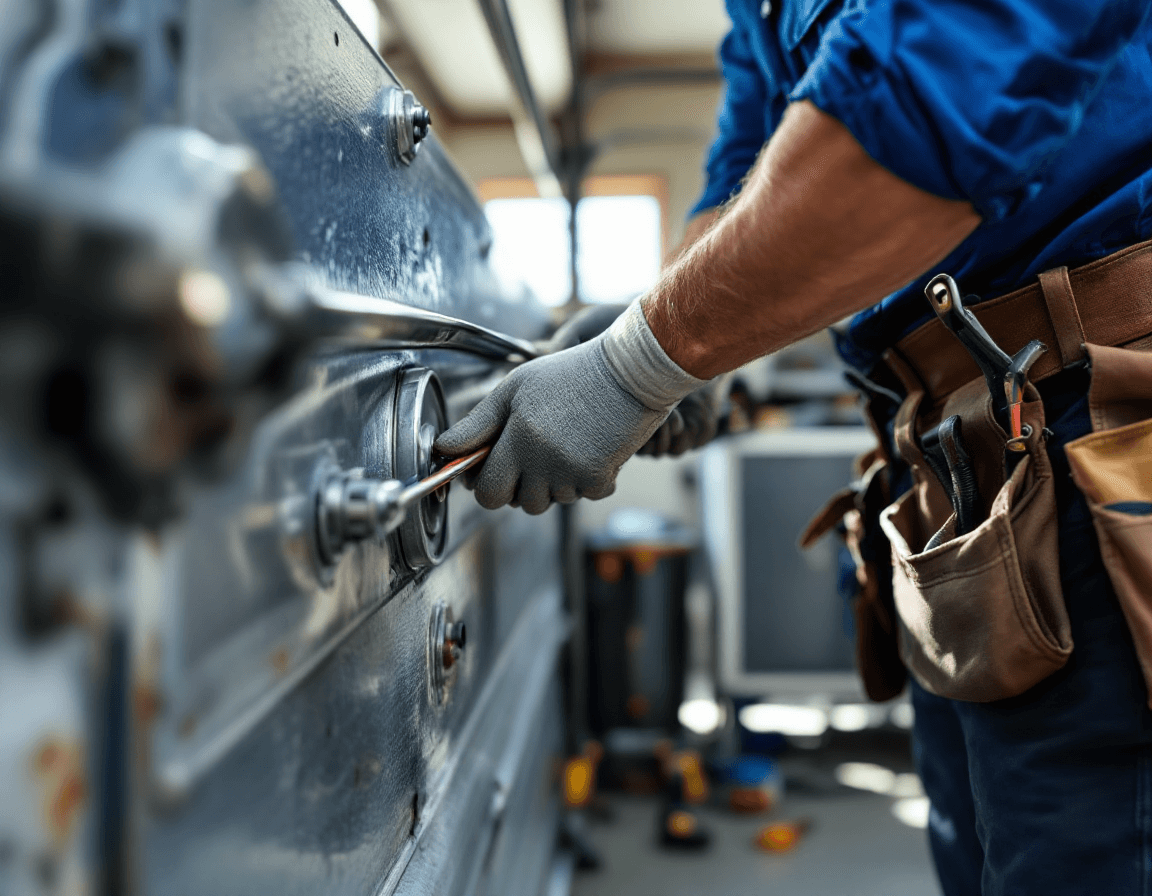
If your garage door has suddenly dropped on one side, started hanging crooked, or fallen silent after a loud bang, a failed lift cable is the likely cause. Garage Door Cable Replacement in Duvall, WA is one of the more common calls we handle for homeowners in the Snoqualmie Valley, from older ranch homes near the downtown core to newer subdivisions out toward Cherry Valley. Most people notice the problem when the opener starts straining, the door stops lifting smoothly, or a cable visibly hangs loose from the drum. Those symptoms are easy to dismiss as a tired opener, but they usually point to cable damage that needs prompt attention.
This page explains how the cable system works, what failure looks like, and why Duvall's wet winters and humid summers accelerate wear. It also covers what a proper repair involves, what homeowners can reasonably expect to pay, and where the line falls between a safe DIY observation and work that belongs in the hands of a licensed technician. Our aim is to give you enough background to recognize trouble early and make a sound decision about your home. Nothing here is meant to replace an on-site inspection, but a clear understanding of the parts involved will help you describe the problem accurately when you call.
Lift cables are not a minor accessory. They carry the full weight of the door, and they work in tandem with the springs to make a heavy panel feel manageable. Because the system stores a great deal of energy, a cable problem is never just an inconvenience, and it deserves the same respect you would give any other high-tension component in your home. Keep that in mind as you read through the sections below.
How Lift Cables Work Alongside the Springs in Your Duvall Garage
Each side of a standard sectional door has a lift cable that runs from the bottom bracket on the door, up through a pulley near the track, and onto a cable drum mounted on the end of a torsion shaft. When the door closes, the cable winds onto the drum, and the spring system above the door stores energy that helps lift the panel when the opener engages. The drum is grooved so the cable spools evenly, and its diameter is calibrated to give the spring the correct mechanical advantage. If the cable slips or fails, the whole balance of the door changes in an instant.
Many Duvall homes built in the last few decades use torsion springs, which are mounted on a shaft above the opening, while some older or lighter doors rely on extension springs running along the horizontal tracks. The cable behaves somewhat differently depending on which system is installed, and technicians need to identify the setup before doing any work. On a torsion system, the cables and drums are typically the parts that wear out first, while the springs themselves can last considerably longer if they are maintained. Knowing which configuration your door uses helps explain why a single cable problem can sometimes reveal a broader balance issue.
Cable diameter, drum size, and the number of lines per side all vary by door manufacturer and door weight. A double-car door, for example, is heavier and carries more load through each cable than a single-car panel. This is one reason we always recommend matching replacement components to the exact door specifications rather than grabbing a generic cable from a hardware shelf. A mismatched cable can seem to work for a while but may fail sooner or put uneven stress on the drum and track.
Warning Signs That a Lift Cable Is Failing
A failing cable rarely gives up without warning, although the warnings are easy to miss if you only use the door a few times a day. Frayed strands, a kinked section, or a patch of rust near the drum are often the first physical clues. Many homeowners also notice that the door seems to drop a few inches before the opener catches it, or that one side lifts more slowly than the other. These symptoms can develop over weeks, especially during the damp months when metal surfaces stay wet longer than they should.
Watch for the following signs during regular use:
- Visible fraying, broken wire strands, or a cable that looks flattened or kinked
- Rust-colored staining or flaky corrosion along the length of the cable or on the drum
- A door that hangs noticeably lower on one side when it is partially open
- A loud snap or bang from the top corners of the garage, followed by sudden sagging
- The opener motor running but the door barely moving, or reversing unexpectedly
Any one of these signs deserves attention, and several together almost always mean the cable needs replacement. Do not wait for a complete failure, because a cable that breaks while the door is at full height can drop the panel quickly and unpredictably. If you see fraying or uneven movement, keep the door closed and schedule an inspection before using it again.
Duvall's Damp Climate and Its Effect on Garage Door Cables
The Pacific Northwest climate is good for lush gardens and bad for exposed steel, and garage door hardware feels that effect acutely. Duvall gets long stretches of gray, wet weather, and the Snoqualmie Valley setting often means moisture lingers in the air and on surfaces well after a rain. Cables made of galvanized steel resist corrosion better than untreated wire, but even coated cables can develop surface rust over several years, especially where they bend around the pulleys and drum. Condensation inside an uninsulated garage can add to the problem during cold nights.
Moisture is not the only factor. Temperature swings between cold winter mornings and warmer afternoons cause metal to expand and contract, which can gradually loosen fittings and fatigue the wire at bends. Homes with garages that open to the outdoors or that have older weatherstripping may also draw in humid air and road grime, both of which speed wear. Many local homeowners are surprised to find that a cable failing in February was actually weakened by corrosion that began the previous fall.
Because of this, we encourage Duvall residents to treat the cable system as a seasonal maintenance item rather than something to ignore until it breaks. A quick visual check every few months, especially after the rainy season, can catch corrosion before it turns into a fraying problem. Keeping the garage reasonably dry and ventilated also helps protect the rest of the door hardware, including the rollers, hinges, and tracks.
What Happens When a Cable Snaps and Leaves the Door Stuck
A snapped cable often produces a sound that homeowners remember clearly: a sharp crack or metallic twang, sometimes followed by the door dropping a short distance and then sitting unevenly. The side with the broken cable loses its lifting support, which means the spring on the opposite side tries to do more work than it was designed to handle. The result can be a door that is stuck partway open, leaning, or jammed in the tracks. In some cases the opener continues to run and strain, which can damage its gears or logic board if you keep pressing the button.
Safety comes first in this situation. Do not stand under the door, and keep children, pets, and vehicles clear of the area. Do not attempt to force the door open or closed by hand, and do not try to adjust the springs or drum yourself. If your opener has a red emergency release cord, pulling it disconnects the door from the opener so you can operate it manually, but the door may still be heavy and unstable, so move it gently and only as far as necessary to secure the garage. Treat the door as unsafe until a technician has assessed it.
Once the door is secured, the repair usually starts with a careful look at the drum, spring tension, and track alignment. A snapped cable can damage the drum, bend the bottom bracket, or pull the track slightly out of square, all of which need to be checked before a new cable goes in. Our technicians handle this sequence in a specific order so that the door is stabilized, the spring is released safely, and the replacement is installed and tested without leaving any part of the system under unnecessary stress.
Cables Off the Drum and Tangled Lines: Understanding the Problem
Sometimes the cable does not break at all. Instead, it slips off the drum groove, often because the drum has worn unevenly, the cable was installed with incorrect tension, or the door was pushed by hand when it should have been operated by the opener. A cable that jumps off the drum may wrap around the shaft, bunch up, or tangle with the adjacent cable. When that happens, the door can appear to work for a few cycles before it binds or refuses to lift on one side. Some homeowners mistake this for a track problem and spend time adjusting rollers that were never the issue.
Tangled cables are especially hazardous because they can snap suddenly when the spring tension shifts. A cable caught under a drum flange or wrapped around the shaft may look intact at first glance, yet it can fail as soon as the door is operated again. Technicians carefully unwind the cable, check each groove for damage, and examine the drum for cracks or deformation. If the drum itself is compromised, it must be replaced rather than patched, since a damaged drum will continue to misfeed new cable.
Cable drum service is therefore a critical part of most repairs. In many cases the drum, cable, and related hardware should be inspected together, because wear on one component often signals stress on the others. This is one reason cable replacement is typically quoted as a service call rather than a simple part swap, and why the scope of work can vary depending on what the inspection reveals.
Diagnosing a Door That Hangs Crooked or Binds on One Side
A door that hangs crooked, closes unevenly, or binds on one side is not always a cable problem, but a worn or stretched cable is one of the most common causes. When one cable has lost tension or length, that side of the door carries less lift, and the panel tilts toward the weaker side. Over time this can bend the bottom bracket, strain the rollers, and push the track out of alignment. The door may bind near the top of its travel or stop short of fully closing, which can also trigger the opener's safety reversal feature.
Before assuming the cable is at fault, a homeowner can perform a few simple observations. Be sure to do these with the opener disconnected and the door closed, and stop immediately if anything feels stuck or heavy:
- Look at both cables from the side of the door to compare tension, fraying, and whether either appears loose or slack.
- Check that the cables sit fully in the drum grooves and do not cross or overlap.
- Measure whether the door hangs level when partially open, using a long straightedge or a level placed across the bottom panel.
- Listen for grinding or scraping at the track during slow manual movement, which may indicate a roller or track problem instead.
If you find a visible difference between the two sides, or if the door still binds after you have checked the basics, the safest next step is a professional inspection. A technician can measure cable length, check spring balance, and determine whether the problem stems from the cable, the drum, the track, or a combination. Attempting to correct the imbalance by adjusting tension on your own can cause serious injury.
What a Professional Cable Replacement Typically Involves
A proper cable replacement follows a sequence designed to protect the technician and the homeowner. The first step is securing the door so it cannot move unexpectedly, which often involves locking the panel with clamps and supporting the weight. The spring tension is then released in a controlled manner, because the energy stored in a torsion spring can cause serious injury if handled carelessly. Only after the system is safe does the technician remove the damaged cable, inspect the drum and pulleys, and prepare the replacement.
The new cable is sized to the door and routed through the bottom bracket, pulley, and drum so that it winds evenly. Where needed, the technician replaces worn pulleys, cracked brackets, or a damaged drum at the same visit, since leaving a worn component in place can shorten the life of the new cable. Once the cable is secured, tension is restored carefully and the door is tested through several full cycles. The technician checks that the door lifts level, closes fully, and does not bind at any point in its travel.
Because torsion spring work carries real risk, this is a job for licensed professionals, not a weekend project. Our technicians are licensed, bonded, and insured, and they carry the tools needed to manage spring tension safely. We recommend that every homeowner in Duvall use a qualified service provider for cable and spring work, regardless of how comfortable they feel with general home repair.
Realistic Cost Expectations for Duvall Cable Replacement
Most cable replacements fall in the range of $110 to $300, depending on the specifics of the door and the work required. A single cable on a standard residential door with no additional damage typically sits near the lower end, while a job involving both cables, a damaged drum, or heavier commercial-grade hardware can move toward the higher end. The door's size, its spring configuration, and whether the repair happens during regular hours or on an urgent basis can also influence the final quote. We always explain what the inspection finds before any work begins, so you know what is included.
Several factors shape the final number. A double-car door typically requires more material and time than a single-car door. If the drum, pulleys, or bottom bracket are also worn, replacing them at the same visit is usually more cost-effective than returning later for a second service call. Access can matter too, since a garage with limited workspace or unusual track geometry may take longer to service safely. Homeowners often find it helpful to ask for a clear breakdown of what is included, including whether the cable, drum, and related parts are part of the quote.
It is also worth weighing the cost of delay. A worn cable that is ignored can damage the opener, the drum, the track, or the door panel itself, turning a modest repair into a larger one. Addressing the problem when the first signs appear generally keeps the scope smaller and the repair more predictable.
Why DIY Cable Work Is Risky and When to Call a Licensed Technician
Some homeowners consider replacing a cable themselves to save money, and it is understandable to want to handle a household repair without outside help. However, lift cables and torsion springs are among the most hazardous components in a residential garage. A spring that releases unexpectedly can cause severe injury, and a cable that is installed incorrectly can fail within days. Improper tension can also damage the opener, the drum, and the track, which means a small DIY attempt can become a much more expensive problem.
We recommend calling a licensed technician whenever a cable is broken, off the drum, tangled, or visibly frayed, and whenever the door hangs unevenly or binds. You should also call a professional before touching any spring component, even if you believe the problem is minor. Simple observation and basic safety steps, like keeping the door closed and clearing the area, are appropriate for a homeowner. Anything involving tension, drum removal, or cable routing belongs in the hands of trained staff who work on these systems regularly.
If you are unsure whether a situation is safe to handle, the answer is to stop and make the call. A short diagnostic visit costs far less than an injury or a damaged door, and it gives you a clear picture of what the repair actually requires.
Protecting Your Cables Through Duvall's Wet Seasons
Good maintenance can extend cable life considerably, especially in a climate that tests metal hardware every winter. A visual inspection every few months is a simple habit that catches fraying, rust, and drum wear before they become emergencies. Look at the cables from the side of the door, check the drum for debris or corrosion, and make sure the cables sit neatly in their grooves. If you notice rust forming, it is worth scheduling service rather than trying to scrub and coat the cable yourself, since the tension must be managed correctly during any adjustment.
Routine lubrication of the moving parts can also help, though it should be done carefully. Rollers, hinges, and the track can usually be cleaned and lubricated with a silicone-based or manufacturer-approved product, but cables should be treated with caution and inspected rather than heavily coated, since some lubricants attract grit and accelerate wear. Keep the garage as dry and well ventilated as possible, and wipe down the door hardware after heavy rain or salt-laden winter weather if your driveway or street is treated. These small steps help the entire door system last longer.
Finally, schedule a professional tune-up every year or two, particularly if your door is more than a decade old. A technician can measure cable condition, check spring balance, and catch small problems while they are still inexpensive to correct. For many Duvall households, that routine visit is the simplest way to avoid an unexpected failure on a cold morning.
Scheduling a Cable Inspection for Duvall Homes and Nearby Neighborhoods
We serve Duvall and the surrounding communities of King County, including homes in the 98019 area near Main Street and the neighborhoods extending toward Cherry Valley. When you call, it helps to describe what you are seeing: whether a cable is visibly broken, whether the door hangs unevenly, whether you heard a snap, and whether the door is currently stuck open or closed. This information lets us plan the visit and bring the right parts. If the door is unsafe, tell us so we can advise you on how to secure it until a technician arrives.
Our team handles cable replacement, drum service, and related repairs for both single-car and double-car doors, including residential sectional doors in a range of sizes and spring configurations. Each visit begins with an inspection so you understand the cause of the problem and the scope of the repair before any work starts. We will explain what we find in plain language and answer your questions about options, costs, and what to expect.
If your garage door shows any sign of cable trouble, do not wait for a complete failure. Keep the door closed, keep people and vehicles clear, and contact us so we can arrange a licensed technician to take a look.
If your Duvall garage door has a broken, frayed, or off-track cable, or it hangs crooked or binds on one side, do not wait for it to fail completely. Call Seattle Garage Door Fix at (888) 799-3819 to schedule a licensed, bonded, and insured technician. We will inspect the cables, drum, and spring system, explain what we find, and give you a clear quote before any work begins. Acting early is the safest and most cost-effective way to protect your home.