
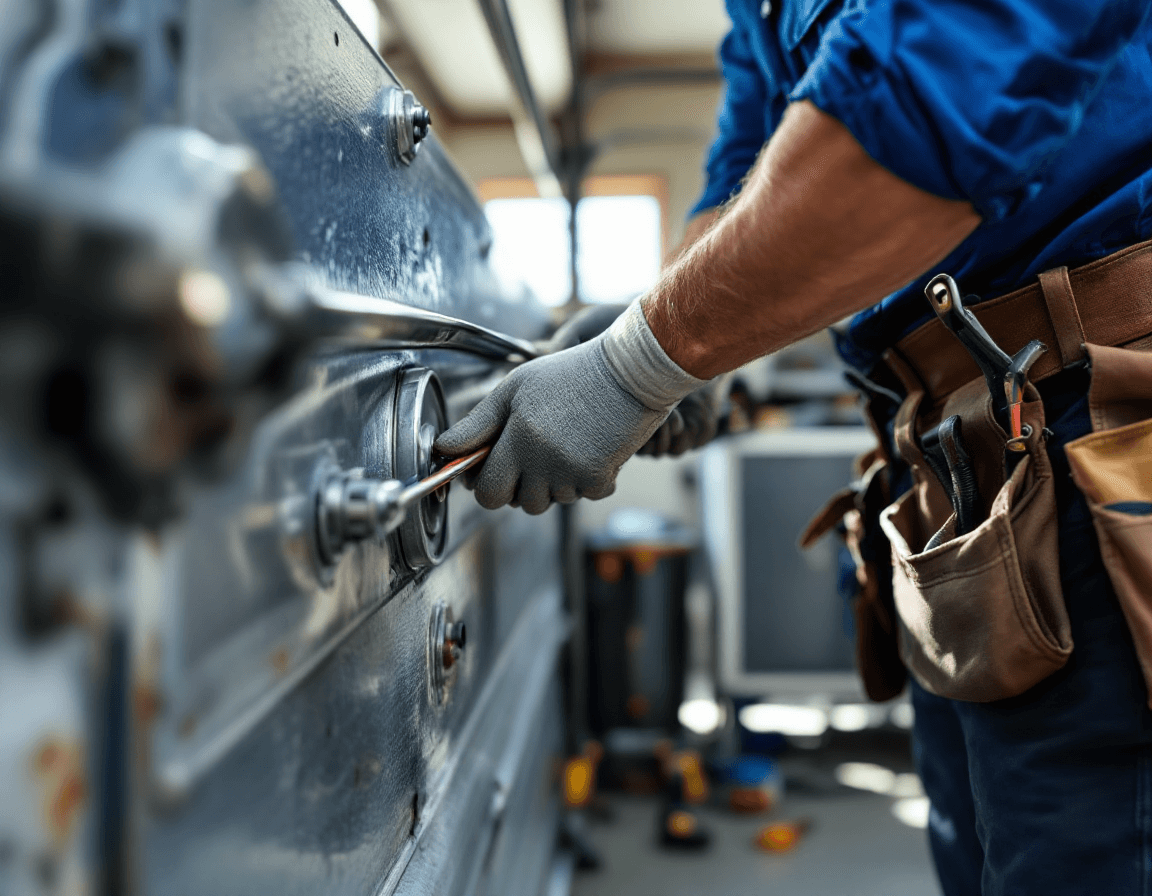
Garage Door Cable Replacement in Carnation, WA is one of the more common repairs we handle for homeowners in the Snoqualmie Valley, and it is also one of the easiest to put off. A garage door that still opens after a cable frays may seem fine for weeks, but the door is quietly relying on one or two damaged strands to hold its weight. Once a cable lets go, the door can drop unevenly, jam in the track, or fall with enough force to damage a vehicle or injure someone standing nearby.
Carnation sits in a climate and landscape that asks more of a garage door than many people expect. Wet winters, morning fog off the Tolt River, and long stretches of damp air from October through April all work on the steel cables that lift your door. Many homes here also have detached shops, older attached garages with original hardware, or pole barns converted into workspaces, and each of these setups places its own stress on the lift system. If you live near Carnation Farms or along the rural roads that wind toward Fall City and Duvall, the odds are good that your door has been working harder than a door in a dry, flat subdivision.
This page explains what lift cables do, how to recognize the warning signs before a failure, why cable work belongs in the hands of a licensed professional, and what homeowners in 98014 can reasonably expect when they schedule a repair. We have written it the way we would explain the situation across a driveway, without sales language and without pretending every door is the same. Most cable replacements fall within a predictable price range, but the right fix depends on what your door is doing and what is happening inside the drum system.
Why Valley Moisture Shortens the Life of Lift Cables
Lift cables are made of braided steel wire, usually galvanized or coated to resist corrosion. That coating works well until it is scratched, worn through at a bend, or exposed to repeated cycles of wet and dry air. In the Carnation area, the humid months of late fall and winter keep the galvanizing damp for long stretches, and any tiny break in the coating can begin to rust. Once rust starts inside the strand, the steel loses strength from the inside out, which is why a cable can look fine from a distance and still fail under load.
Salt and road grime add to the problem for homes that sit close to busy arterials or farm traffic. Dust and fine debris from gravel driveways can settle into the drum groove and grind against the cable every time the door moves. Homeowners with open-sided workshops or garages that are not fully sealed often notice that their hardware shows rust sooner than the same parts on a tightly enclosed garage in a drier neighborhood. None of this means your door is doomed, but it does mean regular inspection is more valuable here than in many other places.
Temperature swings matter too. A steel cable contracts slightly in cold weather and expands in warm weather, and the door's springs respond to those changes as well. Over many seasons, that constant small movement can fatigue a cable that has already been weakened by corrosion. When we look at failed cables in this part of King County, the pattern is often a combination of moisture, age, and years of hard use rather than a single dramatic event.
Warning Signs Your Lift Cable Is Failing
A cable rarely goes from perfect to broken in one moment. Most failures leave clues days, weeks, or even months in advance, and a homeowner who knows what to look for can often schedule a repair before the door is stranded. The most useful thing you can do is walk out to the garage once a month, close the door, and take a careful look at both sides of the track and the cables themselves.
Here are the signs we most often hear described when a homeowner calls us about a suspected cable problem:
- The door hangs lower on one side than the other, or looks visibly tilted when it is halfway open.
- Fraying, kinked strands, or bright wire ends are visible on the cable, especially where it wraps around the drum or the bottom bracket.
- Rust-colored streaks or flaking appear along the length of the cable or on the drum.
- The door closes unevenly, catches on one side, or seems to bind as it descends.
- You hear a loud snap, followed by the door sagging, jerking, or refusing to move in either direction.
- The cable has come off the drum or is wrapped unevenly around it, sometimes with loose loops that look like tangled fishing line.
If you notice any of these signs, stop using the door until a technician has evaluated it. Opening a door with a damaged cable can cause the remaining strands to fail under sudden load, and a door that has come off its track can become unstable without warning. Taking a photo of the problem before you call can also help us prepare the right parts and tools for the visit.
What a Lift Cable Actually Does Inside the Track
Many homeowners assume the cable is the part that holds the door up, but that is only partly true. The lift cable connects the bottom bracket on the door to the cable drum at the top of the track, and it transmits force from the spring system to the door. As the door opens, the cable winds onto the drum and pulls the door upward along the track. The springs, which are mounted on a shaft above the door opening, store and release the energy that makes this lifting action manageable.
On a standard torsion spring system, the cables are the link between the springs' stored energy and the panels of the door. The drums on each side of the door need to turn together, and the cables need to wind evenly so that the door rises level. If a cable is damaged, stretched, or off its drum, the two sides no longer share the load equally, and the door begins to twist, drag, or lean. This is why an apparently small cable problem can produce symptoms that look like track damage or a bad opener.
Extension spring systems use a different arrangement, with the springs running along the horizontal track and cables guiding the door through pulleys. The principle is similar, but the stored energy and the hazard profile differ. Regardless of the system, the cable is a load-bearing component, and treating it as a casual replacement item is a mistake that can injure someone.
Why Cable Work Belongs With a Licensed Technician
Cable replacement is not a weekend job for most homeowners, and we want to be direct about that. The springs on a garage door are under very high tension, and the cables are tied to that tension through the drums. When a cable snaps or comes off, the energy stored in the springs can be released suddenly, and a person standing near the door, a bottom bracket, or a winding bar can be hurt. We have seen the aftermath of improvised repairs, including doors that dropped because someone removed the wrong component first.
A licensed, bonded, and insured technician brings controlled procedures for this work. Before removing or replacing a cable, a trained professional secures the door, releases or manages spring tension according to the specific system, and checks the drum, shaft, bearings, and track for related wear. This is also the stage where we look for conditions that could cause the next cable to fail, such as a worn bearing, a bent track section, or a spring that has lost tension and is forcing the cable to work too hard. Doing the job correctly protects you, your vehicle, and the people who use the garage every day.
We always recommend that homeowners in Carnation leave spring and cable work to a professional, even if they are comfortable with other home repairs. The cost of a careful service visit is much smaller than the cost of an injury or a damaged car, and the peace of mind that comes from knowing the door was handled correctly is worth a great deal.
Typical Failure Patterns We See Along Valley Roads
Every neighborhood tends to develop its own repair patterns, and Carnation is no exception. Homes near the Tolt River and in lower-lying parts of the valley often show more corrosion on hardware, particularly on the bottom brackets and the lower sections of cable that sit close to damp concrete. Properties that have been in the same family for decades may still have original hardware, which can be reliable in some respects but may also have lost its protective coating years ago. Newer homes in the area sometimes have better-sealed doors, yet they can still fail early if the door was installed with mismatched components or a spring system that was not balanced correctly.
Farm and acreage properties present a different set of conditions. A detached shop or outbuilding may have a door that opens and closes far more often than a typical residential garage, especially if it is used for equipment, vehicles, or seasonal storage. Dust, straw, and fine grit can work their way into the drum groove and accelerate wear, and a door that is left partly open during storms may take on moisture and debris on a regular basis. When we visit these properties, we often find that the cable failure was the final symptom of a longer period of uneven wear.
Doors that have been struck by a vehicle, a fallen branch, or a loaded trailer also deserve close attention. Even if the impact seemed minor, it can bend a track section or shift a drum, and that misalignment can wear a new cable quickly. A cable replacement is most successful when the rest of the system is checked at the same time.
Repair Versus Replacement: Making a Practical Decision
Not every cable problem requires a full replacement, and not every frayed strand justifies replacing the entire system. A technician evaluating your door should consider the age of the cables, the condition of the drums, the state of the springs, and whether the door has been experiencing recurring issues. A single cable that has come off its drum without visible fraying may simply need to be re-seated and inspected, while a cable with broken strands or visible rust almost always needs to be replaced.
Cables generally come as matched pairs, and it is usually wise to replace both sides at once. A new cable paired with an old one can cause uneven loading, so the door may still lean or bind after a single-side repair. If one cable has failed from corrosion or age, the other is often close behind, and replacing both during the same visit can save a second service call and reduce the risk of another sudden failure. For that reason, we usually discuss both sides with homeowners before work begins.
The drum itself is another consideration. If the drum is cracked, worn smooth in the groove, or no longer seating properly on the shaft, replacing the cable alone may not hold. In these cases, a drum service or a combined drum and cable repair is often the more durable option. We aim to recommend only the work your door truly needs, and we will explain the reasons in plain terms so you can make an informed choice.
What Happens During a Carnation Cable Service Visit
A typical visit begins with a conversation and a visual inspection. We ask when the problem started, whether the door made any noise, whether anyone tried to operate it manually, and whether the opener has been running hard or reversing unexpectedly. This information helps us narrow down whether the issue is limited to the cables or connected to a spring, bearing, or track problem. We then check the door's balance, the condition of both drums, and the path of each cable through the track.
Once the door is secured and the spring system is managed according to its design, the technician removes the damaged cable and inspects the drum groove, the bottom bracket, and the cable anchor points. The replacement cable is measured and installed to the correct length, routed through the drum, and seated so that it winds evenly. The door is then tested through several full cycles to check level movement, smooth travel, and proper balance. We also look at the opener's force settings and safety reversal, because a door that binds or lifts unevenly can sometimes trigger the opener in ways that stress the rest of the system.
Before leaving, we explain what was replaced, what was inspected, and anything we recommend monitoring. If there are signs of wear that do not need immediate attention, we will tell you so you can plan for them. Our goal is for you to understand the condition of your door, not simply to complete a line item on a repair order.
Pricing Expectations for Cable Repairs in 98014
Most lift cable replacements in the Carnation area fall between $110 and $300, depending on the specific requirements of the door. That range generally reflects the cost of the replacement cable, the labor involved in safely managing the system, and the time needed to test and balance the door afterward. A straightforward cable swap on a common residential door usually lands near the lower end of the range, while more involved work on heavier doors, older hardware, or systems that need additional drum or bracket attention may move toward the higher end.
Several factors can influence the final cost. Doors with multiple damaged components, doors that need both cables and drums addressed, and doors that require specialty parts may fall outside the typical range, and a technician should explain those differences before beginning work. We believe homeowners should know what they are paying for, so we aim to describe the scope of the repair clearly and in advance. If we discover an additional issue during the visit, we will discuss it with you before proceeding beyond what was agreed.
It is also worth remembering that a cheap, rushed repair can cost more in the long run. A cable installed without proper inspection of the drum and bearings may fail again within a season, and a door that is not balanced correctly can wear out the opener, the springs, and the rollers. Investing in a careful, complete repair is usually the more economical path over time.
Keeping Cables in Good Shape Through Valley Weather
Routine care will not prevent every cable failure, but it can meaningfully extend the life of your system and give you early warning when something changes. A few simple habits help homeowners in the Carnation area keep their doors in better condition through the wet months. Because moisture and debris are constant concerns here, a little attention each season goes a long way.
- Once a month, close the door and look at both cables for fraying, kinks, rust streaks, or loose wraps on the drum.
- Wipe the visible cable and drum surfaces with a dry cloth if they feel damp or gritty, especially after storms or heavy fog.
- Keep the track clear of leaves, mud, and gravel, and check that the rollers are moving freely.
- Avoid leaving the door partly open for long periods during wet weather, since moisture and debris can collect on the hardware.
- Listen for new sounds such as popping, grinding, or a sudden change in how the door moves, and schedule an inspection rather than waiting for a failure.
- Avoid using lubricants that attract grit onto the cables; a professional can recommend the right product for your specific system.
Good maintenance also means avoiding the temptation to adjust springs or cables yourself. Even simple-looking tasks can place you in danger, so the safest approach is to inspect and report problems rather than attempting repairs beyond basic cleaning and visual checks.
Serving Carnation and the Snoqualmie Valley With Care
Seattle Garage Door Fix works with homeowners across King County and the wider Western Washington area, and we take pride in being a licensed, bonded, and insured company that treats every cable call as a safety issue first. We understand that a garage door is often the main way vehicles and people enter and leave a home, and when it fails, it disrupts daily life. Our technicians aim to arrive prepared, explain the problem in plain language, and leave your door working smoothly and safely.
We do not promise the same answer for every door, because every door has its own history. Some need a simple cable swap, some need a broader inspection, and some need a more involved drum or spring service. What we commit to is an honest assessment, a clear explanation of the options, and workmanship that respects both your property and the risks involved in this type of repair. Whether your door is in a neighborhood near the Tolt River or on a larger acreage with a detached shop, we want the next trip to the garage to feel uneventful.
If you are dealing with a snapped cable, a door that hangs crooked, or a drum that has come loose, please do not try to force the door open or closed. Keep people and vehicles clear of the area, and call us so a licensed technician can evaluate the situation safely.
For Garage Door Cable Replacement in Carnation, WA, call Seattle Garage Door Fix at (888) 799-3819 to schedule a visit. Describe what your door is doing, mention any sounds or sagging you noticed, and we will help you determine the right next step for your home.