
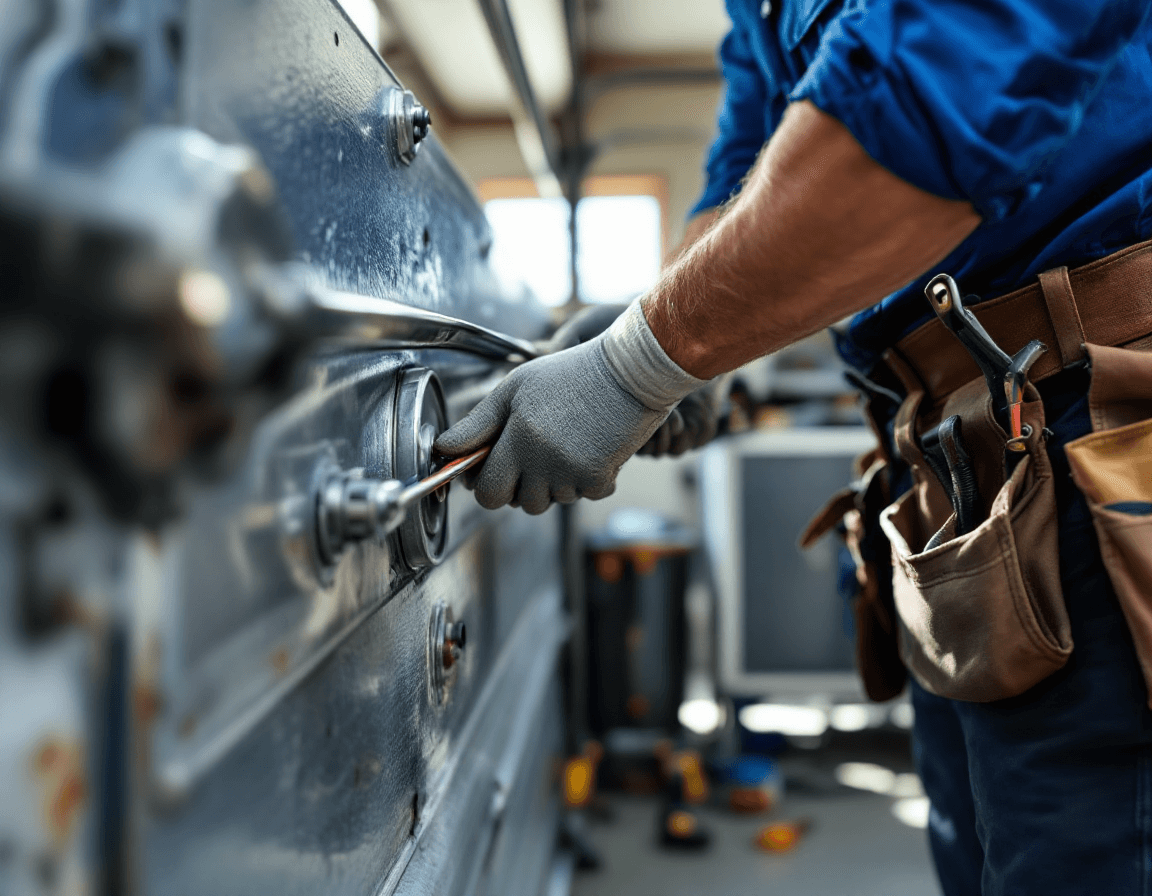
Garage door cable replacement in Sammamish, WA is one of the most common repairs we handle for homeowners across the plateau, and it is also one of the most time-sensitive. A lift cable that has frayed, rusted, or slipped off its drum can leave a heavy door hanging at an angle, binding in the tracks, or stuck halfway open. Most straightforward cable jobs in our service area land between $110 and $300, depending on the door, the drum condition, and whether other parts need attention at the same visit. Our licensed, bonded, and insured technicians serve Sammamish and the surrounding communities, and we would rather you call early than wait for a snap to make the decision for you.
Sammamish homes have their own rhythm of wear. Many houses here sit on lots that see steady rain from October through April, followed by dry, warm stretches in late summer when cars and garage doors are used heavily for trips to the lake, the trails, and school pickups. That combination of moisture and temperature change is hard on steel cable, and it quietly shortens the working life of the hardware that keeps your door balanced. This guide explains what the lift cable does, how to recognize trouble, why our wet climate matters, and what professional replacement involves, so you can make a confident decision about your own door.
Before you read further, one point needs to be clear: cable work involves a lot of stored energy. The torsion spring above the door is under high tension, and the cables are under load even when the door looks still. Please do not attempt to replace a cable yourself, and do not try to wind springs or clamp anything to "reset" a stuck door. Those steps are where serious injuries happen, and they are the reason we always send a licensed professional for this kind of repair.
What the Lift Cable Actually Does Inside Your Track
Every standard sectional garage door relies on a pair of lift cables, one on each side, running from the bottom bracket near the lowest section of the door up to a grooved drum mounted on the end of the torsion shaft. When you open the door, the cables wind onto the drums while the spring unwinds and helps lift the door's weight. When the door closes, the process reverses. The cables do not carry the spring's energy themselves, but they transmit the balance that makes a twelve- or sixteen-foot door feel manageable with a single opener.
Because the two cables work as a matched set, they must be the same length and carry similar tension. If one cable stretches, frays, or comes off its drum while the other holds, the door loses its level. That is why many homeowners first notice a lopsided door before they notice a broken cable. The side with the failing cable drops or lags, and the panels can bind against the track or rub the weatherstripping on one edge.
Drums matter as much as the cable itself. The grooved surface guides the cable in neat, even coils, and it is designed to keep each loop seated while the door travels. Worn or damaged grooves allow cable to ride up, bunch, or tangle, which can cause a replacement cable to fail prematurely even if the new part is correct. A competent technician looks at the drum, the cable termination, the bottom bracket, and the track alignment together, rather than swapping a single component in isolation.
Reading the Warning Signs Before a Cable Lets Go
Cables rarely fail without giving some notice. The most obvious sign is a door that no longer closes smoothly, especially one that seems to pull toward one side or stops partway down. Other signs are quieter and easy to dismiss, which is why it helps to know what to look for during a routine check from the inside of the garage with the door closed and the opener disconnected. Never perform this inspection with the door moving, and never stand under a door that is unsupported.
- Visible fraying, kinks, or bird's-nest bulges along the length of the cable, especially where it passes over the lower roller bracket
- Orange or brown rust spots on the cable, which are common on doors near the Sound or in shaded, damp corners of the garage
- A door that sits lower on one side or shows a gap at the bottom seal that is wider on one end than the other
- Popping, rattling, or a sudden clunk when the door starts to move, which can indicate a cable slipping on the drum
- Panels that appear out of square, or a section that looks like it has shifted up or down in the track
Pay special attention after a wet week or a windy storm, when shaking and moisture can loosen cable seating in the drum grooves. If you notice the door climbing slightly higher on one side than the other when the opener runs, that is a reason to schedule service promptly. The sooner a worn cable is replaced, the less likely the other cable and the drum are to be damaged on the same trip.
How Pacific Northwest Damp Weather Wears Down Steel Cable
Western Washington's climate is gentle in many ways, but it is particularly unkind to exposed steel. Sammamish gets a long run of wet, overcast days in the cooler months, and the humidity seldom falls out of the high range for extended periods even in summer. Garage air is rarely as dry as the living space inside the house, especially in attached garages that take in cold, moist air through a slightly leaky door seal. Condensation forms on metal surfaces overnight, and the film of moisture that results is the perfect starting point for surface rust.
Surface rust on a lift cable does more than discolor the wire. It roughens the strands, creates tiny points of stress, and can gradually reduce the cable's ability to bend smoothly around the drum and roller. Once strands begin to break, the damage tends to spread, because every cycle of opening and closing flexes the affected section. Regular temperature swings, which are common here as the days move between cool mornings and mild afternoons, also cause metal to expand and contract, adding fatigue to already compromised wire.
Salt air is a concern for some homes closer to the lake and for families who live near the western edges of the region where marine air reaches farther inland. Road grime and winter moisture can carry corrosive residue into the garage on tires and shoes. None of this means a Sammamish cable is doomed. It does mean that a cable that would last many years in a dry, climate-controlled storage room may need closer attention here, and that a visual check each season is a sensible habit.
Why a Snapped Cable Rarely Travels Alone
When a lift cable snaps, the first instinct is to treat it as a single broken part. In practice, the failure usually tells a larger story about the system. A cable that has been frayed for a long time often wore unevenly on the drum, meaning the drum groove may be scored or the other cable may have been carrying more load than it was designed to handle. A snap can also throw the door out of balance suddenly, stressing the bottom brackets, the track hangers, and the roller stems.
The sound of a snap is often loud and startling, sometimes like a sharp crack followed by a clatter. After that sound, the door may drop an inch or two, sag on one side, or stop completely in a partly open position. Do not try to force it up with the opener, and do not attempt to pull it by hand. Forcing a door with a broken cable can bend tracks, damage the opener, or cause a panel to fall unexpectedly. Keep people and vehicles clear of the doorway and call for service.
A thorough technician will check the spring as well, because a torsion spring that has been working under strain may show signs of metal fatigue or uneven winding. Replacing only the cable on a spring that has reached the end of its life can lead to a second failure soon after. For this reason, we always look at the complete balance system before recommending a repair plan, and we explain what we found in plain language so you can decide with full information.
When the Cable Jumps the Drum and Leaves the Door Hanging Crooked
Cable coming off the drum is one of the most frustrating situations homeowners face, and it is also one of the most dangerous to handle without training. The cable may be partly unwound, bunched in a loop, or completely separated from its groove. The door may hang at a tilt, with one corner resting lower than the other, or it may be locked in place by the opener's attempt to move a load that is no longer balanced.
Cable tangled around the drum is a related problem, and it often occurs when the door has been operated with a slack or damaged cable. The loops overlap, twist, and pinch, and untangling them without releasing the tension from the spring is not something a homeowner should try. The safe approach is to step back, close the door if it is still moving, disconnect the opener by pulling the emergency release cord, and keep everyone away from the door until a licensed technician arrives. Even a door that seems stable can shift unexpectedly once you begin to touch the components.
Once our technician arrives, the work typically involves securing the door, relieving tension in the correct sequence, removing the damaged cable, inspecting the drum for groove wear, and installing a properly sized replacement cable with the correct termination. The technician will then check the other cable, verify that the door tracks evenly, and test the opener's reversing function. Drum service is often part of this process, especially when the grooves show scoring or the drum has begun to crack or loosen on the shaft.
Local Garage Layouts and What They Mean for Cable Work
Sammamish includes a wide mix of home styles, from older single-level ranches and split-levels to newer two-story homes with three-car garages and tall doors. Each layout presents its own considerations for cable service. A standard sixteen-foot door in a two-car opening carries more weight than a nine-foot single door, and the cable sizing, drum diameter, and spring specification all have to match that load. Using a generic cable without checking the door's dimensions and weight is one of the most common reasons repairs fail early.
Driveways in parts of the plateau are often sloped, and garage floors may not be perfectly level. A slight grade can make one side of the door behave differently from the other, especially if the bottom brackets were installed with minor misalignment. Homes near Pine Lake and in neighborhoods around Klahanie sometimes have garage openings that were modified over the years for wider vehicles or added storage, and any change to the opening can shift how the door loads its cables. During service, we measure the opening, check the track alignment, and look for signs of previous repairs that may have been done without full balance adjustment.
Two-door setups bring another layer of complexity. Each door has its own spring and cable set, and it is tempting to replace only the one that failed. In many cases the companion door has similar wear and will be the next to fail, so it makes sense to inspect both at the same time. Our technicians can review the age and condition of each side and explain whether a single cable replacement is sufficient or whether a pair of cables and a drum service would give you more reliable performance for the coming seasons.
What a Professional Cable Replacement Involves
A professional replacement follows a deliberate sequence designed to protect the technician, the homeowner, and the door. It begins with a safety check, including confirming that the door is closed or secured, that the opener is disconnected, and that no one is in the path of the door. The technician then evaluates the spring tension and the condition of the drums, because the correct procedure for releasing and re-engaging tension depends on what they find. Skipping this step is where accidents happen, which is why we never take shortcuts here.
Once the door is safe to work on, the damaged cable is removed from the drum and bottom bracket. The replacement cable is measured to the correct length and fitted with the proper terminations, and the drum groove is checked to make sure the new cable will seat correctly. If the drum shows wear, we discuss whether it should be replaced or resurfaced as part of the repair. The second cable is then examined for stretch, fraying, or uneven wear, since matched cables should be replaced as a pair whenever possible.
The final stage involves checking the door's balance, alignment, and travel. The technician confirms that the door lifts and lowers smoothly on both sides, that the bottom seal sits evenly, and that the opener reverses properly when the door meets resistance. We walk through what was done, note any items that need future attention, and make sure the homeowner understands how to watch for early warning signs.
- Safety assessment of the door, spring, and opener before any tension is changed
- Inspection of both cables, both drums, and the bottom brackets for wear or damage
- Correct sizing of the replacement cable to match the door's height, weight, and spring setup
- Balance and alignment check, including track straightness and bottom seal contact
- Operational test of the opener, safety reversal, and manual movement of the door
Understanding the $110 to $300 Price Range
Most straightforward lift cable replacements fall in the range of $110 to $300. That range reflects the typical scope of work for a single cable on a standard residential door, with the final figure shaped by several factors. The cable itself, the drum condition, the number of components involved, and whether a second cable should be replaced at the same time all influence the total. A door that needs only one cable and has a healthy drum will usually land near the lower end of the range, while a repair that includes drum service, a matched cable pair, or additional hardware will move toward the upper end.
It is worth asking what is included in any quote. A reliable estimate should cover the cable, the labor to install it safely, the balance and alignment check, and a test of the opener. If a technician quotes a price without explaining what they inspected or what they plan to replace, ask for clarification before you agree. Our goal is to give you a clear answer about what the repair includes and what, if anything, you may need to plan for in the future.
Price should never be the only deciding factor when a cable is involved. A low-cost fix performed without proper tension management or with the wrong cable size can lead to a second failure, which costs more in time and risk. We prefer to explain the options openly, including whether replacing the companion cable now is a sensible investment, so that you can choose the approach that fits your budget and your household's use of the door.
Why Spring and Cable Work Belongs in Licensed Hands
Garage door springs store enough energy to cause serious injury if they are released improperly, and the cables are part of the same high-tension system. Homeowners sometimes attempt cable work after watching a video or reading a forum post, and the results can be disastrous. Winding bolts can slip, drums can rotate unexpectedly, and components can fly loose with force. A licensed professional is trained to recognize these risks and has the tools needed to manage them safely.
Our technicians are licensed, bonded, and insured, which gives you assurance that the people working on your door are accountable for their work and that you are protected if something unexpected occurs. We do not recommend that homeowners attempt spring adjustments, cable replacement, or drum work themselves, even when the repair seems straightforward. The safe path is to keep the door secured, avoid tampering with the spring, and call a qualified service team to handle the job from start to finish.
It is also important to be cautious about any product or repair advice that promises an easy fix without professional tools. Quick-release devices and temporary clamps may be appropriate in some emergency situations when a trained technician directs their use, but they are not substitutes for proper balance and correct component sizing. When in doubt, call us, describe what you are seeing, and let us tell you whether the door can wait until a scheduled visit or needs immediate attention.
Keeping New Cables Lasting Longer Between Visits
Once a new cable is installed, a few simple habits will help it last longer in the Sammamish climate. The most useful is a seasonal visual inspection, ideally in early fall before the heaviest rain arrives and again in late spring after the damp months. Look for rust spots, fraying, or any change in how the door sits when closed. Wipe away visible moisture and grime with a dry cloth when it is safe to do so, and keep the area around the tracks clear of debris that could pinch or bind the door.
Lubrication is another area where good habits matter. Lightly lubricate the moving parts that the manufacturer recommends, such as hinges, rollers, and the lock mechanism, but avoid spraying lubricant directly onto the lift cable itself, because it can attract dust and grit that accelerate wear. If you are unsure which products are appropriate, ask your technician during service, since different door materials and roller types respond differently to various formulas.
Finally, pay attention to how the door behaves in daily use. A door that operates smoothly, closes evenly, and stops at the same height each time is usually in good balance. Any new noise, hesitation, or tilt should prompt a call rather than a wait-and-see approach. Early attention is the single most effective way to avoid the sudden, disruptive failure that brings homeowners to us on a cold, wet morning.
Scheduling Service Across Sammamish and Nearby Neighborhoods
We provide garage door cable replacement and drum service across Sammamish, including the 98074 and 98075 ZIP codes and nearby areas we know well, from the neighborhoods around Sammamish Commons to homes near Pine Lake and Klahanie. Our service area covers more than sixty cities across the greater Seattle and Western Washington region, so if you are in a neighboring community, it is worth calling to confirm coverage for your address. We schedule visits with an eye toward minimizing wait time for urgent problems, such as a door stuck open or a cable that has come off the drum.
When you call, it helps to have a few details ready. Tell us the approximate width and height of your door, whether it is a single or double door, what you are hearing or seeing, and whether the door is currently moving. If the door is stuck or hanging, let us know that first so we can advise you on immediate safety steps. We will ask about the age of the door and any recent repairs, because that information helps us prepare the right parts before we arrive.
Whether your door is making a new noise, sitting crooked, or has already come off its track, a licensed technician can assess the situation and recommend the safest path forward. Keep people and vehicles clear of the doorway, avoid pulling on cables or springs, and call us as soon as you can.
For fast, careful garage door cable replacement in Sammamish, call Seattle Garage Door Fix at (888) 799-3819. Our licensed, bonded, and insured technicians will inspect your cables, drum, and balance, explain your options in plain language, and get your door moving safely again.