
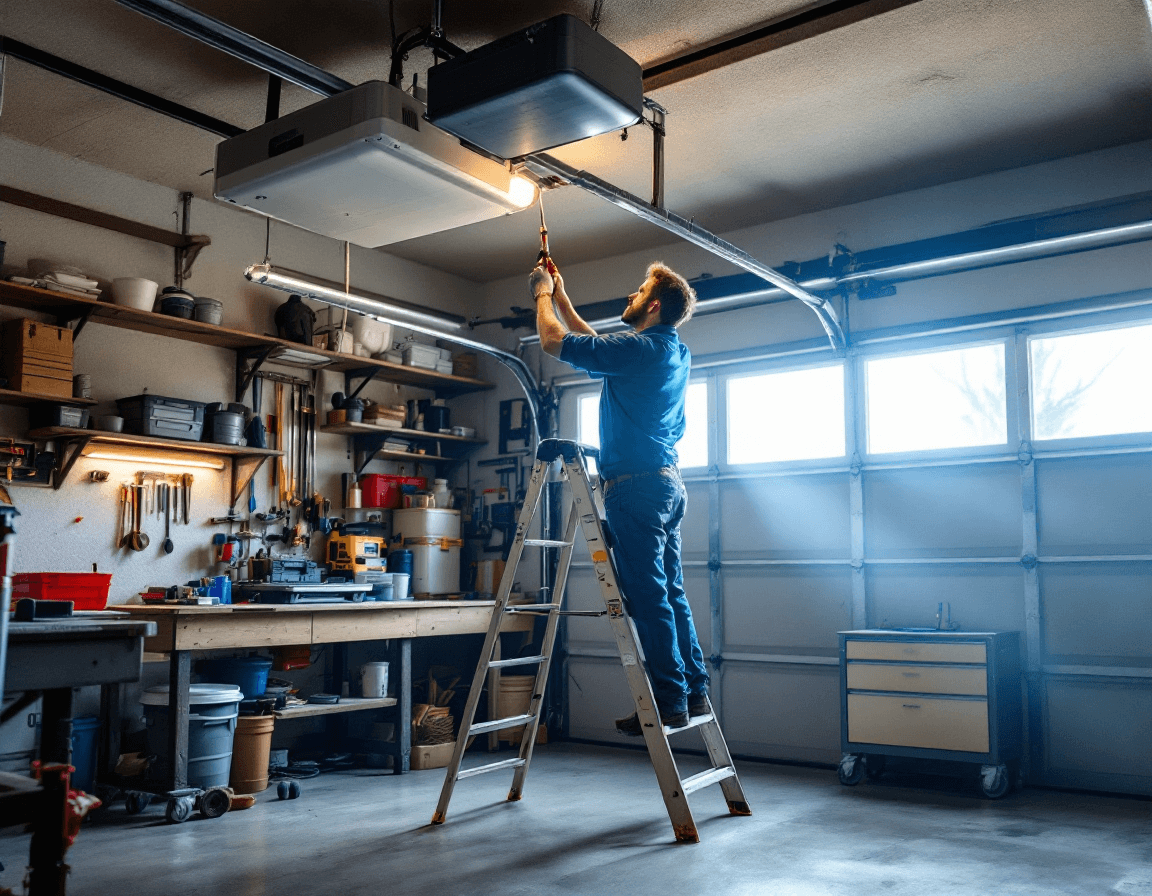
Garage door openers in Sammamish get more wear than many homeowners expect. Our winters bring long stretches of rain, damp air that settles into motor housings and control boards, and the occasional windstorm that knocks out power and sends the opener through a hard reset. Garage Door Opener Repair in Sammamish, WA is one of the most common calls we handle across the Eastside, and the problems range from a dead remote battery to a stripped drive gear that needs a careful replacement. Most opener repairs we perform in the area fall between $95 and $375, depending on the brand, the part involved, and how much diagnostic time the fault requires.
What makes Sammamish homes distinct is the mix of housing styles. You'll find newer builds with wide two- and three-car garages near Sammamish Commons, older ranch-style homes with single-car doors around the Pine Lake area, and large family homes in Klahanie with long driveways and heavier doors. Each setup places different demands on the opener. A heavy insulated door on a long track asks more of the motor, while a light single-car door on a short run may simply need its travel limits tuned after a setting drifts. Knowing the layout of your garage helps narrow down the cause quickly.
This page walks through the symptoms we see most often in ZIP codes 98074 and 98075, explains what is usually happening inside the opener, and describes what a proper repair looks like. We cover every major opener brand, and the general principles apply whether you have a belt drive, a chain drive, or a screw-drive model. Read through the sections that match what your door is doing, and call us if the problem doesn't fit neatly into one of them. A short phone conversation can often tell us whether a repair is a quick adjustment or a parts job.
Why Sammamish Openers Work Harder Than You Think
Pacific Northwest weather is hard on mechanical and electronic equipment in ways that don't always show up right away. Humidity rarely drops far below comfortable levels during the wet months, and the temperature swings between a chilly January morning and a mild afternoon cause condensation to form inside sealed enclosures. Over time that moisture can corrode contacts, weaken solder joints on the logic board, and make the limit switches and safety sensors behave unpredictably. Many of the calls we answer in fall and winter trace back to small amounts of moisture that were building up for months.
Sammamish also sees its share of power flickers during windstorms. When power drops and returns, many openers lose their memory of the door's travel limits, and the door may stop short, reverse early, or refuse to close until the limits are reprogrammed. Some openers also draw enough current on startup that a marginal electrical circuit in an older garage will cause them to hiccup. Understanding these local patterns explains why an opener that worked perfectly in August can suddenly act up in December without any obvious reason.
Finally, the garages themselves age differently across the area. Homes built a few decades ago may have original door hardware, worn rollers, and tracks that have shifted slightly over time. An opener is only as reliable as the door it moves, so a technician looking at an opener problem will usually check the door balance, track alignment, and hinge condition at the same time. A small problem in the door can look exactly like a motor failure from the outside.
When the Motor Runs but the Door Stays Put
One of the more puzzling calls we receive is the opener that hums, clicks, or even seems to strain, yet the door doesn't budge. Homeowners often assume the motor has failed, but in many cases the motor is fine and the problem sits between the motor and the door. The drive system might have a broken or disconnected trolley, the release handle may still be in the manual position, or the door might be binding in the track because a roller has come out or a hinge has seized. In some cases the opener is trying to move a door that is locked from the inside by a slide bolt that was never disengaged.
A quick visual check can rule out several of these causes. Stand in the garage, make sure the emergency release cord is in its normal position and not pulled, and look at the trolley arm where it attaches to the door. Watch whether the door begins to lift at all or whether it sits in place while the motor runs. If the motor hums and nothing else happens, the trolley may have come off the rail or the drive gear may be slipping inside the head. Those conditions need to be addressed carefully, because forcing the door can damage the track or the opener.
Persistent humming without movement also deserves attention because it can indicate a motor overheating. Modern openers have thermal protection, but repeated attempts to force a door can still stress the windings. If your opener is making a sustained noise and the door doesn't respond, stop running it. A licensed technician can measure the current draw, inspect the gear train, and determine whether the fault is mechanical, electrical, or simply a door problem that the opener is being asked to overcome.
Remotes and Wall Buttons That Go Quiet After Storms
A remote that suddenly stops working is frustrating, but the cause is often simpler than it appears. Batteries are the first thing to check, though not every failed remote needs a new battery. Some remotes lose synchronization with the receiver after a power outage, and others have been bumped in a car console until a button sticks. A wall button that doesn't respond may have a loose low-voltage connection, a damaged switch, or a wiring problem that developed after moisture reached the terminal block. Sammamish's damp winter air can make these low-voltage connections corrode more quickly than people expect.
Storms and power interruptions are a frequent trigger in our service area. After an outage, some openers reset their receiver codes or lose their learned settings, which makes the remote appear dead even though it is still transmitting. Antennas on the opener head can also shift during a windstorm, reducing range. If your remote works from the driveway but not from inside the house, or if it only responds when you are standing close to the door, the antenna wire or the wall button wiring may be the culprit.
Repairing remote and wall-button problems is usually straightforward, but it has to be done carefully. Reprogramming a receiver should follow the manufacturer's steps for your specific model, and mixing up the learn button sequence can erase existing codes. If you have a keypad or a smart-home accessory connected to the opener, we check that the device is still paired and that the opener firmware hasn't reverted after the outage. A technician can usually confirm the cause within a single visit by testing each control point in order.
Grinding From the Opener Head: Stripped Gears Explained
A grinding, clacking, or metallic chewing noise from the opener head is one of the sounds that deserves prompt attention. In most chain-drive and screw-drive openers, the drive gear is made from a material designed to wear slowly, but over years of use the teeth can strip or crack. Once that happens, the gear may slip under load, producing a harsh noise and an uneven lift. Some homeowners notice the door moving in jerks or stopping partway through its travel before the grinding begins.
Stripped gears are often accelerated by a door that is out of balance. If the springs are worn or improperly tensioned, the opener has to work much harder to lift the door, and the gear teeth take that extra load every cycle. Ignoring the noise can cause the gear to fail completely, leaving the door stuck in the closed or partially open position. Because the drive gear is tied to the opener's internal alignment, replacing it properly often means checking the motor coupling and the drive shaft as well.
Gear work is one area where we always recommend a careful, professional approach. The opener must be disconnected from power, the door must be secured, and the old components must be removed without stressing the spring system. Our technicians inspect the gear train, the motor, and the mounting bracket to confirm that the grinding is not coming from a loose part somewhere else. If the door is also heavy or sticking, we check the balance before reinstalling a new gear so the replacement doesn't fail for the same reason the original did.
Doors That Stop Short, Reverse, or Won't Close
When a door closes partway and then bounces back open, the most common cause is a safety reverse triggered by the photo-eye sensors near the floor. These small sensors send an invisible beam across the bottom of the door opening, and if the beam is interrupted, the opener is designed to stop and reverse. In Sammamish garages, the sensors are sometimes knocked out of alignment by a broom, a recycling bin, or a bike that leans against the wall. Dust, spider webs, and moisture can also block the lens and produce the same symptom.
A door that won't close all the way, or that reverses immediately on the close cycle, often points to a limit setting that is off or a force setting that is too sensitive. Modern openers include adjustable close-force controls, and when the door's balance changes slightly through seasonal temperature swings, the opener may read normal movement as an obstruction. Track misalignment, a bent section of the door, or a roller that is catching on the track can produce the same result. A technician will check each of these factors in sequence rather than simply turning up the force, because overpowering a safety feature is dangerous.
Setting travel limits correctly is an essential part of the repair. The opener needs to know exactly where the door should stop when fully open and fully closed, and those positions must be programmed according to the manufacturer's procedure for your model. If the limits were set during installation but the door has since settled or the weatherstripping has changed the compression, the door may stop short or press harder than intended. We reset the limits, test the safety reverse with an object placed under the door, and confirm that the door seals properly without forcing it.
Blinking Lights and Repeating Patterns on the Control Panel
Many openers use the light on the motor head to communicate with the homeowner. A pattern of blinks is a diagnostic code, and it can tell you whether the photo eyes are misaligned, the wall button is stuck, a safety circuit has been triggered, or the door has encountered an obstruction. Each brand uses its own pattern, so the safest first step is to check the owner's manual or the label inside the opener cover. We recognize the common codes for major brands, but the exact meaning depends on the model and firmware, so please don't rely on a general guess.
A repeating pattern that continues without any door movement often points to a sensor circuit that is interrupted or a wall button that is held down. Sometimes a child or pet presses a button without anyone noticing, and the opener keeps reporting the fault until the button is released. In other cases, moisture on the photo-eye lens or a wire that has pulled loose from its terminal produces a constant error. Checking for these simple issues first can save time and avoid unnecessary parts.
If the light flashes in a pattern that doesn't match the manual, or if it blinks after a power outage without any obvious cause, the logic board may need inspection. Circuit boards in Western Washington are exposed to more humidity than in drier climates, and over time connectors and components can develop intermittent faults. Repairing a board is sometimes possible, but in other cases replacement is the more reliable option. We explain the findings before any work begins, so you know whether a repair is a fix or a replacement.
Loose Chains, Slipping Belts, and Disconnected Trolleys
A chain or belt that has come off the rail or developed slack can produce a rattling sound, a stuttering door, or a motor that runs without moving the door at all. Chain-drive openers tend to show this problem as a loud clunk when they start, while belt-drive models are often quieter but may slip under load. A chain that sags too far can jump off its sprocket, and a belt that is over-tensioned can stretch or wear prematurely. Both conditions tend to get worse with repeated use, so early adjustment prevents larger damage.
The trolley is the carriage that rides along the rail and connects the opener to the door. If the trolley's arm has disconnected from the door's header bracket, the opener will run freely without lifting anything. In some cases the release cord has been pulled by accident, which intentionally disconnects the trolley for manual operation. Before calling for service, check whether the release handle is in the disengaged position and whether the trolley arm sits firmly on the rail. Never attempt to force the door open or closed while the trolley is disconnected from the opener, because the door can drop suddenly if the springs are not balanced.
Adjusting a chain or belt involves tensioning the rail's take-up hardware and confirming that the drive moves smoothly from end to end. The work is precise, and an over-tightened chain can damage the sprocket while an under-tightened one can jump the rail. We inspect the rail for bends and check the mounting brackets while adjusting the tension, since a loose bracket can allow the entire assembly to shift. If the belt or chain is frayed or stretched beyond the manufacturer's limits, we recommend replacing it rather than adjusting it further.
Intermittent Operation That Comes and Goes With the Weather
Some of the most frustrating opener problems are the ones that appear only sometimes. An opener may work perfectly for a week and then fail to respond on a damp morning, or it may close reliably in the summer and act up after the first cold snap of the year. These intermittent faults are often caused by loose connections, failing capacitors, or sensors that respond differently to temperature and humidity. Because the problem disappears when the technician arrives, diagnosing it requires careful observation and sometimes a few test cycles.
We recommend keeping a simple log when the problem appears. Note the date, the time, the weather, whether the door was operated by remote or wall button, and what the opener did. Patterns often emerge quickly. If failures only happen during rain, moisture may be reaching a connection or sensor. If they happen after the door has been sitting for several hours, the opener's internal components may be drifting as they cool, and the logic board or power supply may need closer inspection. This information makes the visit faster and more accurate.
Intermittent faults also deserve attention because they can become total failures without warning. A connection that works loosely today may open completely during a cold morning and leave the door stuck. Our technicians clean and secure terminals, check the wiring path for pinches or wear, verify the power supply, and test the safety circuits under the same conditions that trigger the problem. When possible, we also check the grounding of the opener and the outlet, since poor grounding can cause erratic behavior in some models.
Safe DIY Checks Versus Work for a Licensed Technician
There are a few checks a homeowner can safely perform before calling for service. You can confirm that the remote batteries are fresh, verify that the photo-eye lenses are clean and aligned, check that the emergency release is in the proper position, and read the blink code in your manual. You can also look for obvious obstructions along the door's path and make sure the wall button is not stuck. These steps take only a few minutes and often reveal a simple cause that can be corrected without tools.
Here are the checks we consider reasonable for most homeowners:
- Replace remote batteries and test each button at the door and from inside the house.
- Wipe the photo-eye lenses and confirm that the two sensors face each other with a clear line of sight.
- Confirm that the emergency release handle is in the locked, engaged position.
- Look up the blink code in the owner's manual and note exactly what the light is doing.
- Check that the track and rollers are free of visible debris, and that nothing is leaning into the door's path.
Some work should always be left to a licensed technician. Spring adjustment, cable replacement, and any work on the door's counterbalance system involve stored energy that can cause serious injury if mishandled. Opener gear replacement, motor removal, and logic board repair also require careful disconnection and reconnection. If you are unsure whether a task is safe, stop and call us. Our technicians carry the tools and training to handle these repairs without putting the household at risk, and we'd rather answer a question on the phone than see someone get hurt.
Opener Brands, Repair Pricing, and What to Expect From a Visit
We service every major opener brand, including the common Chamberlain, LiftMaster, Genie, and Craftsman models found in Sammamish garages, as well as many other makes. Each brand has its own control logic, travel-limit procedure, and replacement parts, so a technician who works across several brands will usually diagnose faster. We try to bring the parts most likely to be needed, but some repairs require ordering a specific component. When that happens, we explain the timeline before the work begins.
Most opener repairs we perform in the area fall between $95 and $375. Simpler fixes such as a travel-limit adjustment, a sensor realignment, or a remote reprogramming tend to sit near the lower end of that range, while gear replacement, logic board work, or motor replacement typically falls higher. Because every garage is different, the final price depends on the diagnosis and the parts required. We walk through the findings and options with you before any repair is performed, so you can decide how to proceed.
When you schedule a visit, it helps to have your opener's brand and model number ready, along with any codes you've noticed on the control light and a short description of when the problem occurs. Please keep the garage clear so the technician can reach the opener head, the rail, and the sensors. A typical visit includes a full check of the door balance, the safety circuits, the travel limits, and the drive system, so the repair addresses the root cause rather than only the symptom you noticed first.
Your opener should lift and lower your door smoothly, quietly, and safely in every season Sammamish throws at it. If the door is stuck, grinding, reversing, blinking an unfamiliar code, or simply acting unpredictably, it's worth getting a licensed technician to take a look before a small fault becomes a bigger repair. Call Seattle Garage Door Fix at (888) 799-3819 to schedule a diagnostic visit for your Sammamish home, whether you're in the Sammamish Commons area, near Pine Lake, or out in Klahanie.