
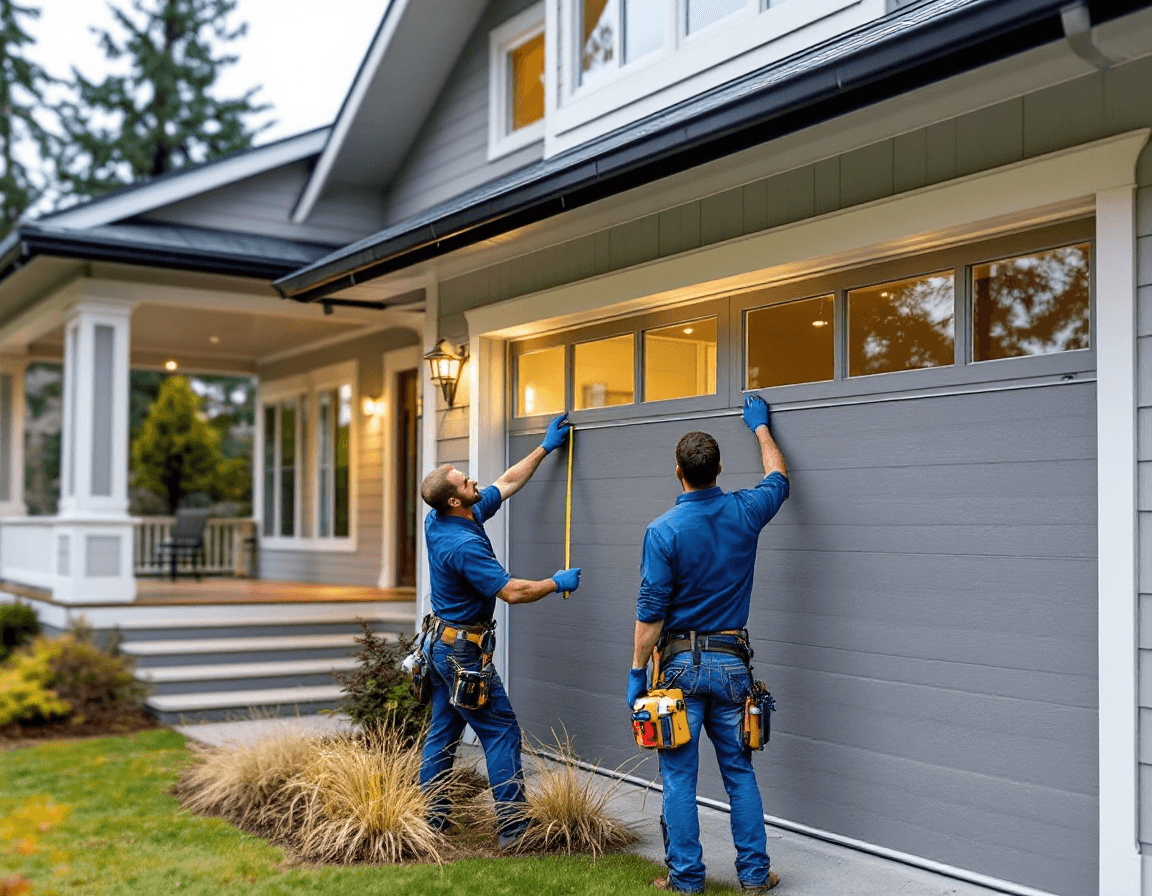
Garage Door Installation & Replacement in Sammamish, WA is a practical decision for many homeowners on the Eastside, whether the old door has finally failed, the house feels drafty above the garage, or a remodel has made the existing opening look out of place. Sammamish sits on the plateau east of Lake Sammamish, where the air stays damp through much of the year and winter storms move through with real force. A door that works fine in a dry climate can struggle here, so replacement is often more about durability and comfort than simply swapping out a broken part.
Our technicians install and replace residential garage doors across Sammamish and the surrounding King County communities, including homes in the 98074 and 98075 ZIP codes. We see the full range of situations, from a dented panel after a windy night to a homeowner who wants a complete curb-appeal upgrade before listing a house. Every project starts with an honest look at the opening, the existing hardware, and what you want the door to do for you over the next fifteen or twenty years. If you are weighing options, call (888) 799-3819 and we will talk through what makes sense for your home.
Installed prices for a new door typically run from about $950 to $3,800 or more, and the spread depends heavily on the door type, the materials, the size of the opening, and whether openers, weatherstripping, or structural adjustments are part of the job. The sections below walk through the most common reasons Sammamish homeowners replace a door, how material choices play out in our local weather, and what to expect from start to finish.
When a Door Has Crossed the Line From Repairable to Replaceable
Most garage doors do not fail overnight. They fade gradually, with a noisy roller here, a bent track there, and a panel that never quite sits flush again. Repairs are often the right call for a single worn part, but there is a point where repeated fixes cost more than a new door would, and the door itself is no longer dependable. Recognizing that tipping point saves money and prevents the frustration of being stuck in the driveway on a cold morning.
Some signs suggest the door has reached the end of its useful life. Watch for these conditions, especially if more than one appears at the same time:
- Panels that are cracked, delaminated, or bowed in a way that does not return to shape
- Sections that have separated at the joints or no longer lock together cleanly
- Frequent breakdowns of the springs, cables, or rollers within a single year
- Rust or rot that has spread into the bottom section or the framing
- A door that feels unbalanced, rises unevenly, or slams down when released
- An opener that struggles with the weight of the door even after adjustments
When damage is structural, such as a panel that has been pushed in by a vehicle or a section that has warped from long-term moisture, replacing the affected panel may not restore the door's integrity. In those cases, a complete replacement tends to be more reliable than piecemeal repairs. We are always willing to evaluate the door before recommending replacement, because a sound door with a worn opener or a single failed roller does not need to be replaced.
Why Insulated Steel Earns Its Place in Sammamish Garages
Insulated steel is the workhorse of the residential market, and for good reason in our climate. A typical steel door has a sandwich construction: two steel skins bonded to a core of polyurethane or similar foam. The insulation reduces heat transfer through the door, which matters in an attached garage where the space sits between the living area and the outdoors. Homeowners who use the garage as a workshop, a gym, or a place to store a freezer often notice a difference in how the adjacent rooms feel during cold snaps.
Steel also handles the persistent dampness of the Pacific Northwest well when it has a quality factory finish and sealed edges. Galvanized steel with a baked-on coating resists the rust that can creep in along scratches or at the bottom edge where road spray collects. Many insulated steel doors can be ordered with embossed patterns that mimic wood grain or with flush panels for a clean, modern profile. The variety of colors and textures has grown considerably, which makes steel a versatile choice for ranch-style homes and newer two-story builds alike.
Insulation ratings vary between products, so compare the specifications rather than assuming all insulated doors perform the same way. Pay attention to the thickness of the panels, the density of the insulation, and the quality of the weatherstripping along the bottom seal and the side jambs. A door with excellent foam but a worn bottom seal will still let cold drafts and wind-driven rain into the garage. We always recommend replacing the perimeter seals during a new installation, since a tight seal makes an insulated door far more effective.
Carriage-Style Looks That Bring Old Houses Into the Present
A plain white sectional door can make an otherwise attractive Sammamish home look like it was an afterthought. Carriage-style doors, which mimic the swinging barn doors of an earlier era with horizontal panels and decorative hardware, have become one of the most popular ways to modernize a garage facade. Many carriage-style designs are sectional doors that roll up on tracks but still show the look of two outward-swinging doors, which keeps the space efficient while adding real visual character.
The right hardware and trim matter as much as the door itself. Faux strap hinges, window grilles, and handles in matte black, bronze, or brushed nickel can shift the entire feel of the house. Coordinating the door color with the trim, front door, and exterior lighting gives the home a cohesive look that buyers and neighbors notice. We often suggest that homeowners bring a few exterior photos to the consultation so we can test color and hardware choices against the siding and roofline before ordering.
Carriage-style doors are not only about appearance. Many models offer the same insulation and wind-load ratings as standard steel doors, and the decorative elements are typically bonded to the panel rather than merely attached to the surface. Ask about the construction details, including the reinforcement inside the panels and the quality of the hardware, so you know the door will age as gracefully as it looks on day one. A well-chosen carriage door can add a sense of craftsmanship without the maintenance demands of traditional wood.
Wood, Glass, and Aluminum: Matching the Material to Your Microclimate
Natural wood carries a warmth that few other materials can match, and custom wood doors are a favorite for homeowners who want a high-end appearance. In western Washington, however, wood requires careful selection and consistent maintenance. Cedar and certain engineered woods resist moisture better than many other species, but every wood door still needs periodic sealing or staining to keep water from penetrating the surface. Homeowners who choose wood should be prepared to refinish the door regularly, especially on exposures that catch wind-driven rain.
Glass and aluminum options offer a different aesthetic. Glass panels, whether frosted, clear, or textured, let natural light into the garage and can make a small space feel larger. Aluminum-framed doors with glass inserts have a clean, contemporary profile that suits modern architecture, and aluminum resists corrosion without needing paint. The tradeoff is that glass offers less insulation than solid steel panels, so glass doors are often best for garages that are used mainly for parking and storage rather than as heated living space. Good weatherstripping and double-pane glazing can narrow the gap, but the thermal performance is still different.
When we help homeowners decide, we look at how the garage is used, how exposed the door is to weather, and how much maintenance the household is willing to commit to. A north-facing door under tall evergreens may see little sun but plenty of moisture, while a west-facing door in an open lot may take the brunt of afternoon rain and wind. There is no single correct material for every house. The best choice is the one that matches your priorities for looks, function, and upkeep over the years you plan to live in the home.
Rot, Rust, and Wet-Season Wear on Local Doors
Moisture is the most persistent enemy of a garage door in Sammamish. Our winters bring long stretches of rain, and even when the weather is not dramatic, the humidity keeps wood swelling and steel surfaces exposed to condensation. Bottom panels suffer the most, because they sit closest to the driveway where water pools, road grime collects, and the seal may be compromised. Over time, this moisture can lead to rot in wood sections or rust that begins at the edges and spreads under the paint.
Storm damage is a separate but related concern. Winter windstorms can push debris against the door, tip over bins, or loosen the top section from its track. When a door takes an impact, the damage is not always visible from the outside. Bent tracks, stressed hinges, and cracked panel seams can make the door unsafe or prone to failure long before the homeowner notices. After any significant storm, it is worth having a technician inspect the door, the tracks, and the springs, even if nothing looks obviously wrong.
Replacement after weather damage offers a chance to choose materials better suited to the site. If rot or rust was the cause of failure, ask about galvanized frames, sealed bottom sections, and finishes rated for coastal or high-moisture environments. We also check the header and the sides of the opening for signs of water intrusion, because a new door will not perform well if the surrounding framing is soft. Addressing the root cause keeps the replacement from becoming a repeat expense.
Double Doors, Sloped Driveways, and Sammamish Lot Realities
Many Sammamish homes were designed with two-car garages, and double-wide doors are common in subdivisions around Pine Lake and the Klahanie area. A double door puts more weight on the tracks, springs, and opener, and the wider span can flex more under wind load. Installing a double door correctly requires attention to the header, the balance of the springs, and the alignment of the rollers. A rushed installation can lead to a door that sags, binds, or wears out prematurely.
Lot topography also affects the project. Some driveways slope toward the garage, which can make the threshold harder to seal and change how water flows toward the door. In those situations, we may recommend a threshold adjustment, a bottom seal designed for uneven surfaces, or a drainage improvement outside the door. Sloped driveways also influence the clearance needed for the door's arc and the placement of the opener rail, so measuring the actual conditions on site matters more than relying on a generic size chart.
Headroom and backroom space are other limits that show up in older garages. Low ceilings may require a low-headroom track configuration, while tight side walls may call for a different track layout. Some homeowners discover that their garage has a beam or duct that complicates the installation. We inspect these details before ordering, so the door you choose fits the opening you actually have, not the opening you assumed was there.
Planning Replacement Alongside a Remodel or Addition
Garage doors often become part of a larger project. A kitchen remodel may prompt a homeowner to upgrade the mudroom entrance, a second-story addition may change the roofline above the garage, or a converted bonus room may require a new door opening entirely. When a door is replaced during a remodel, coordination with the other trades makes a noticeable difference in the final result.
Timing is the first consideration. If framing or siding work is still underway, it may be better to wait until the opening is finished and the exterior is sealed before setting the door. Installing too early can expose the new door to construction dust, debris, and the stress of heavy materials being moved past it. Conversely, if the old door is failing and the remodel will take months, a temporary solution or a prompt replacement may be needed to keep the garage secure and usable.
Design alignment matters as well. The door should complement the new exterior materials, window placement, and rooflines so the addition looks original rather than tacked on. A carriage-style door on a modern addition can look out of place, while a flush steel panel might clash with a craftsman-style front. We encourage homeowners to share architectural plans or photos early so we can recommend profiles, colors, and sizes that integrate with the design. When we work from the same plan as the builder, the final opening tends to look intentional from the street.
How Our Installation Process Unfolds on Installation Day
Installation day is more than a hanging exercise. A careful installation follows a sequence that protects you, the opening, and the new door. Here is the general flow we follow, though the specifics depend on the door type and the condition of the surrounding structure:
- Measure the rough opening, check the header height, and confirm the side and backroom clearances
- Inspect the existing hardware, tracks, and opener, and note any damage to the framing
- Remove the old door safely, with springs and cables handled according to the appropriate procedures
- Prepare the opening, including any needed header reinforcement, seal replacement, or threshold correction
- Assemble and install the tracks, rollers, and hinges, checking for level and plumb throughout
- Mount the new door panels, balance the springs, and confirm smooth operation before fastening the final components
- Connect or adjust the opener, program safety reversing features, and test the photo-eye sensors
- Walk you through operation, maintenance expectations, and warranty information
Every step includes testing. A door that appears to work may still be out of balance, and an opener that runs can still be set with the wrong force limits. We test the door several times, both manually and with the opener, and check the safety reversal before we leave. We also leave you with clear guidance on what to avoid, such as attempting to adjust springs or cables yourself, because spring tension is stored energy that can cause serious injury. Those adjustments and any spring or cable work should always be performed by a licensed professional.
Understanding Installed Pricing From the Entry Level to the Premium Range
Pricing for a new garage door in Sammamish starts around $950 for a basic insulated steel single door with a straightforward installation, and it can exceed $3,800 for a large custom double door, a premium wood or glass design, or a project that requires structural work. Those figures reflect installed pricing, but the final number depends on several factors. Understanding them makes it easier to compare quotes and decide where to invest.
Several variables drive the cost. The main ones include:
- Door type and construction, such as insulated steel versus custom wood or aluminum with glass
- Single versus double width, which affects material volume and hardware
- Insulation rating, panel thickness, and the quality of weatherstripping and seals
- Decorative elements, including carriage hardware, window inserts, and custom finishes
- Opener needs, whether you keep your current opener, upgrade it, or add a new one
- Structural or framing work, such as header reinforcement or track modifications for low-clearance openings
- Removal and disposal of the old door, and any site-specific access challenges
When comparing quotes, look at what is included. A lower number may leave out seals, hardware upgrades, opener programming, or disposal, while a higher number may reflect better materials and a more thorough installation. Ask each company to itemize the door, labor, hardware, and any additional services. We are happy to provide a written estimate that spells out what is covered, so you can compare apples to apples rather than guessing at the difference.
Choosing a Qualified Installer and Protecting Your Investment
A new garage door is a significant home improvement, and the installer you choose will influence how well it performs for decades. Look for a company that is licensed, bonded, and insured, and ask for proof before work begins. Confirm that the technicians are trained on the specific door types you are considering, and ask how they handle site preparation, cleanup, and post-installation support. A reputable installer will answer these questions directly and without pressure.
Warranties deserve careful reading. Manufacturer warranties typically cover the door's materials and finish, while installation workmanship is covered separately by the installer. Ask what each warranty includes, how long it lasts, what is excluded, and how claims are handled. Get the terms in writing, and keep your receipts and documentation together so you have them if a question comes up later. Regular maintenance, such as lubricating moving parts with a garage-door-specific lubricant, checking the weatherstripping seasonally, and inspecting the bottom seal after heavy rain, will help the door perform as designed.
Finally, remember that safety remains the top priority. Springs, cables, and drums carry significant tension, and attempting to adjust or replace them without proper training can cause serious injury. Spring and cable work should always be done by a licensed professional, and any sign of frayed cables, a sagging door, or unusual noises from the springs warrants a call before the door is used again. A well-installed door, backed by clear documentation and professional care, is the best way to protect your home and your household.
Replacing a garage door is a decision that touches curb appeal, energy use, security, and daily convenience all at once. Whether your Sammamish home needs a practical insulated steel door, a carriage-style upgrade, or a custom double door to match a remodel, our team is ready to help you compare options and plan the work. To schedule a consultation or request a written estimate, call Seattle Garage Door Fix at (888) 799-3819.