
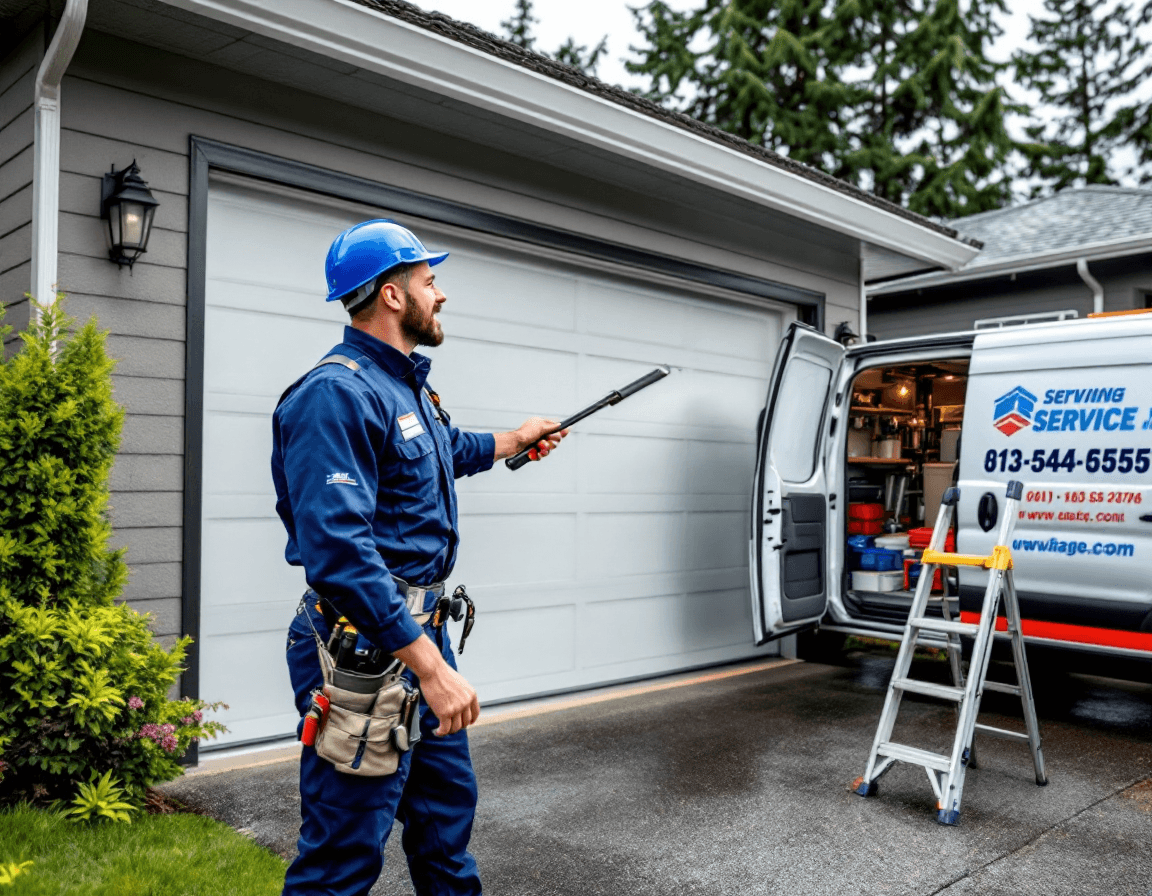
Garage door repair in Sammamish, WA is rarely something homeowners plan for, but a two-car door that stops at knee height on a wet Tuesday morning turns it into an urgent job fast. The door may be the largest moving object in your home, and when it misbehaves it affects your daily routine, your car, and your sense of security. Most problems start small, with a faint squeal, a slightly uneven stop, or a remote that needs an extra press, and those early signs are the cheapest moment to act.
This page explains what we typically see in Sammamish homes, from the plateau neighborhoods near Pine Lake to the newer subdivisions around Sammamish Commons and the established streets of Klahanie. It also covers how to read your door's symptoms, what a repair usually involves, and where the line sits between a reasonable homeowner check and work that belongs to a licensed technician. If you are dealing with a door right now, you can call (888) 799-3819 at any point and we will talk through what you are seeing.
Why Sammamish Garage Doors Face a Different Set of Pressures
Sammamish sits on the plateau east of Lake Sammamish, and the weather here is a big part of why garage doors wear the way they do. Our winters bring long stretches of gray drizzle and frequent rain, and the air often stays humid even when the sky clears. Moisture is the constant companion of a garage door in this region, and it works on steel, wood, and hardware in slow, cumulative ways. Even attached garages that feel dry inside can see condensation on metal tracks during cold mornings.
Steel doors and their hinges, rollers, and tracks are vulnerable to surface rust, especially where galvanized coatings have thinned or where a scratch has exposed bare metal. Wood and composite doors are affected differently. Solid cedar or wood-look panels can swell after a wet season and then shrink during dry summer weeks, which can throw off the alignment between panels and the track. Weatherstripping along the bottom seal also takes a beating, since it hardens in summer heat and collects grit in the damp months.
Many of the homes we see were built during decades when two-car doors and torsion spring systems were standard, so the hardware has had years of cycling. Garages in some Sammamish homes also serve as workshops, storage rooms, or the primary entry from the house, which means doors open and close many times each day. Heavier loads, like cabinets, bikes, and recycling bins stacked against the door, add stress to the opener and the tracks. Understanding these local conditions helps explain why a door that seemed fine last summer can start complaining by November.
When the Door Reverses Before It Reaches the Floor
One of the most common calls we hear is some version of, "It goes down and then just goes back up." A door that reverses before fully closing is usually doing exactly what it was designed to do, which is protect people and objects from being trapped. The opener senses an obstruction or a safety condition and stops or reverses, and the reason is often simpler than it looks. Dirt, leaves tracked in from wet driveways, a child's toy, or a flattened cardboard box can break the photo-eye beam at the bottom of the track.
If the safety sensors appear clear, the next suspect is the force settings on the opener. Over time, a door that has become heavier from moisture or a worn spring can push against limits that were set when it was new. Adjusting these settings is sometimes a simple fix, but it should be done carefully, because an incorrect setting can leave a door that does not respond properly to an obstruction. We recommend that homeowners look for the obvious issues first and then call a technician if the door continues to reverse.
Here are a few quick checks you can safely perform before scheduling a repair:
- Wipe the sensor lenses on both sides of the door with a dry cloth and check that the indicator lights are steady rather than blinking.
- Clear the track and the floor path of debris, including small stones and wet leaves that collect near the threshold.
- Confirm that the two sensors face each other and are mounted at a similar height, roughly six inches above the floor.
If the door still reverses after these steps, stop using it and call a technician. A door that repeatedly reverses can be a sign of a damaged cable, a bent track, or a failing opener motor, and continued use may make the problem worse.
The Grinding, Squealing, and Banging Sounds Worth Listening For
Garage doors are noisy by nature, but there is a difference between the normal rumble of rollers and the harsh grinding or squealing that signals a problem. Squealing often points to dry or dirty rollers, hinges, or bearings. In a damp climate like ours, grit can mix with moisture and form a paste that makes rollers shriek as they travel the track. A grinding noise deserves more attention, because it can indicate worn bearings, a loose bracket, or metal rubbing against metal somewhere along the path.
A sharp bang, especially at the top or bottom of the travel, can mean the door is hitting a stop it should not be reaching, or that a roller has slipped out of its track segment. Loud pops from the spring area are a different matter entirely. Spring noises are a safety signal, and anyone who hears a sudden crack or sees a gap in a spring coil should keep people and vehicles away from the door until a licensed professional has inspected it. Springs under tension can cause serious injury when they fail, and this is one area where homeowners should never attempt repairs on their own.
Lubrication can solve many squeaks, but the choice of product matters. Use a silicone-based or lithium-based garage door lubricant on hinges, rollers, and the lift cables, and avoid heavy grease that attracts dust. Wipe away old residue before applying anything new. If the noise persists after cleaning and lubricating, the cause may be a worn roller, a loose bolt, or an opener that needs adjustment, and those are jobs for a technician.
Doors That Move Unevenly, Look Crooked, or Jump the Track
A door that rises or lowers unevenly is one of the more alarming symptoms, because it often shows that one side is carrying more weight than the other. You might notice one side of the door sitting lower than the other, a gap that widens at one corner, or a door that seems to lean as it travels. In many cases the cause is a broken spring or cable on one side, a track that has shifted, or a roller that has come out of the channel. Each of these conditions puts uneven strain on the rest of the system.
Doors that come off their tracks are a serious problem. If a door has jumped its track, it may be hanging at an angle, and attempting to force it back into position can cause further damage or injury. Keep everyone away from the door, avoid pulling on it manually, and disconnect the opener only if you know how to do it safely. Then call a licensed technician to inspect the track, the rollers, and the cables before anyone attempts to put the door back in service.
Crooked tracks sometimes result from a vehicle clipping the door frame or from a loose mounting bolt that has worked itself free over several seasons. A technician can measure the track alignment, check the level of the header bracket, and tighten or replace hardware as needed. Many of these repairs are straightforward, but they require the right tools and a clear understanding of how the balance system interacts with the track geometry.
Remote and Wall Button Failures That Look Like Bigger Problems
Before assuming the entire door system has failed, it is worth checking the simple controls. A remote that does nothing may simply need new batteries, or it may have lost its programming after a power outage. Wall buttons can fail from a worn switch, a loose wire, or corrosion inside the wall plate, especially in garages where humidity seeps through the wall cavity. Keypads exposed to rain or winter condensation can also stop responding until they dry out.
Opener frequency interference is another common cause. Nearby devices, such as older security systems or certain Wi-Fi equipment, can occasionally disrupt the signal between the remote and the opener. If the remote works from some locations but not others, the issue may lie in the signal path rather than in the remote itself. Replacing the battery in the remote and checking the antenna wire on the opener are good first steps, but a repeat failure usually calls for a closer look at the receiver board.
When a wall button or remote fails and the door still moves, the opener itself may be fine. When nothing responds, including the wall unit that is hardwired into the power system, the problem may be a tripped breaker, a failed power supply, or a worn logic board. Our technicians can test each component so you are not paying to replace a part that was never the source of the trouble. Hardwired controls and openers should be serviced by a licensed professional, not by an untrained homeowner working near electrical connections.
When the Door Stops Halfway or Jams in Place
A door that stops partway up or down can be frustrating, especially when you need to leave for work or get a car out in a hurry. This symptom often points to a safety reversal, a binding track, or a worn cable. The opener may have registered a force increase because the door encountered a slight obstruction, a rough spot on the track, or a roller that is catching on a seam. Sometimes the cause is as simple as a bit of moisture-swollen weatherstripping that is rubbing against the door frame.
Jams can also happen when the balance of the door has shifted. If the door is heavier on one side, the opener may struggle to lift it evenly and then stop. Testing the balance is a standard part of our inspection process, and it is one reason we recommend a professional look at any door that stops in the middle of its travel. A door that is out of balance puts additional strain on the opener motor and can burn it out prematurely.
Please avoid forcing a jammed door by pushing or pulling from the bottom while the opener is engaged. This can damage the cables, bend the track, or injure a hand caught between the door and the frame. If the door is stuck and you need to access the garage, check for the emergency release cord, which is typically a red handle hanging from the opener trolley. Pull it carefully to disconnect the door from the opener, and then lift gently by hand only if the door is light and moves freely. A door that is heavy, uneven, or hanging crooked should not be lifted manually at all.
Slamming, Sagging, and Visible Gaps: What the Door Is Trying to Tell You
Some doors slam shut faster than they should, and this symptom is worth taking seriously. A door that drops quickly may have a worn or failed spring system, a damaged cable, or an opener whose close-speed or force settings have drifted. A door that slams can also jolt the vehicles and people nearby and place extra strain on hinges and panels. When a door closes with unusual force, the safety system may not be functioning as intended, so it deserves a prompt inspection.
Sagging doors and visible gaps are a different kind of warning. A sagging door may have panels that have bowed, hinges that have loosened, or a spring system that no longer provides the lift it once did. Gaps between the bottom seal and the floor let in rain, cold air, rodents, and blowing debris, which is especially unwelcome during our wet months. A gap at the top or sides may indicate that the track is no longer aligned with the door frame, or that a bracket has worked loose.
Weatherstripping is often the simplest fix for a gap, but it only helps if the underlying alignment is sound. A technician will check the door's level, the track's fastening points, and the condition of the panels before recommending a seal replacement. In some cases, a single damaged panel can be replaced without changing the entire door, which can be a practical and cost-conscious option for homeowners in older Sammamish neighborhoods.
Springs and Cables: Why This Work Belongs to a Licensed Technician
Torsion springs and lift cables are the heart of a garage door's balance system, and they store a great deal of energy. Torsion springs wound above the door hold tension that can be dangerous to release, and a failed spring can snap with enough force to cause serious injury. Lift cables run under tension as well and can unravel or snap when worn. Because of these risks, we always recommend that spring and cable work be performed by a licensed, insured professional with the proper winding bars, tools, and training.
Homeowners sometimes ask whether they can replace a spring themselves to save money. Our answer is consistent: this is not a task for a do-it-yourself project. Springs must be measured, matched, and tensioned correctly for the specific door weight and size, and mistakes can cause the door to fail or injure someone. A licensed technician will assess the spring, the cables, the drums, and the bearing plates together, because a problem in one component often reflects wear in the others.
If you see signs of spring or cable trouble, such as a visible gap in a coil, a frayed cable, a door that drops suddenly, or a loud bang from above the door, keep people and vehicles clear and call for service. Do not attempt to adjust the tension bolts, wind the springs, or disconnect the cable drums. Our technicians will explain what they find and provide a clear recommendation, whether that involves a single spring or a complete balance system refresh.
What a Typical Repair Visit Looks Like Across Sammamish
A typical visit begins with a conversation about the symptoms, when they started, and whether the door has been affected by recent weather or a change in use. Technicians then test the door in both directions, observe the track and rollers, check the opener's settings and safety sensors, and inspect the springs and cables from a safe distance. They look at the hinges, brackets, and bottom seal as well, since these small components frequently explain larger symptoms. Clear communication at this stage matters, and you should expect the technician to explain findings before any work begins.
Sammamish homes vary widely in layout and age. Properties near Sammamish Commons often include newer construction with insulated steel doors and modern openers, while older residences near Pine Lake may have wood doors, older track systems, or add-on openers installed years after the house was built. Klahanie homes can present a mix of configurations, including single-car garages converted for storage and two-car bays that carry heavy loads. Our technicians adjust their approach to fit each setup, and they will tell you when a repair is practical and when replacement makes more sense.
We serve homeowners across ZIP codes 98074 and 98075 and surrounding Western Washington communities, and our team is licensed, bonded, and insured. Appointments are scheduled around your household routine, and we aim to get doors working safely as quickly as possible. If a problem needs parts that are not immediately available, the technician will explain the timeline and keep you informed until the repair is complete.
Expected Costs from $95 to $450 and What Shapes the Final Quote
Most residential garage door repairs we perform fall in a range of $95 to $450, depending on the nature of the problem and the parts involved. Simple jobs, such as adjusting an opener's force setting, replacing a sensor, realigning a track, or swapping a remote or wall control, usually land at the lower end of that range. Repairs involving rollers, hinges, weatherstripping, or minor panel work often fall in the middle. Larger repairs, such as replacing a torsion spring system or a full set of cables, can reach the upper end of the range, particularly for heavier or double-wide doors.
Several factors shape the final quote. The door's size and weight matter because heavier doors need more robust hardware. The type of opener, the availability of parts, and the time required to diagnose an intermittent problem also influence cost. Weather and access considerations can play a role too, particularly when a technician needs to work in a tight garage or on a steep driveway. We aim to explain pricing clearly before starting work, so you know what to expect and can make an informed decision.
Some homeowners wonder whether it makes sense to repair an older door or invest in a replacement. As a general guide, a door with a sound structure and reasonable panels can often be repaired economically, even if the hardware is aging. A door with widespread rust, cracked panels, or repeated failures may be a better candidate for replacement. Our technicians can help you weigh these options honestly, without pressure to choose one path over another.
Preparing Your Door for the Next Wet Season
Protecting a garage door in Sammamish is largely about managing moisture and keeping moving parts clean and lubricated. A simple maintenance routine can prevent many of the symptoms described above. Twice a year, ideally before the rainy season and again in late spring, take a few minutes to look over the door and its hardware. Small problems caught early are almost always less expensive and less disruptive to fix than the ones that develop after months of neglect.
Here is a practical seasonal checklist that many homeowners find manageable:
- Wipe the tracks and rollers clean, removing dirt, leaves, and built-up grime that can trap moisture.
- Apply a silicone or lithium-based lubricant to hinges, rollers, and the bearing surfaces, and avoid spraying sensors or the opener motor.
- Inspect the bottom seal and side weatherstripping for cracks, flattening, or gaps, and replace them when they no longer seal.
- Test the auto-reverse feature by placing a flat object on the threshold and confirming the door reverses.
- Check the door's balance by disconnecting the opener and lifting the door partway, then letting go to see whether it stays put.
- Look for rust spots on metal panels and address them with appropriate primer and touch-up paint.
Keep the garage door's control devices dry and check the remote batteries once a year. Trim vegetation that touches the door or sensors, and keep the area in front of the door clear of stored items that could block the path. If you notice any of the warning signs described earlier, schedule a professional inspection rather than waiting for the symptom to worsen. A few preventive steps each season can extend the life of the entire system and keep your garage functioning reliably through the long, gray months ahead.
Garage door trouble rarely fixes itself, and waiting usually makes the repair more involved. If your door won't open or close, reverses before reaching the floor, grinds, squeals, moves unevenly, stops halfway, slams, sags, or has gaps that let in the weather, our licensed technicians are ready to help. Call Seattle Garage Door Fix at (888) 799-3819 to describe what your door is doing and to schedule a visit that fits your day.