
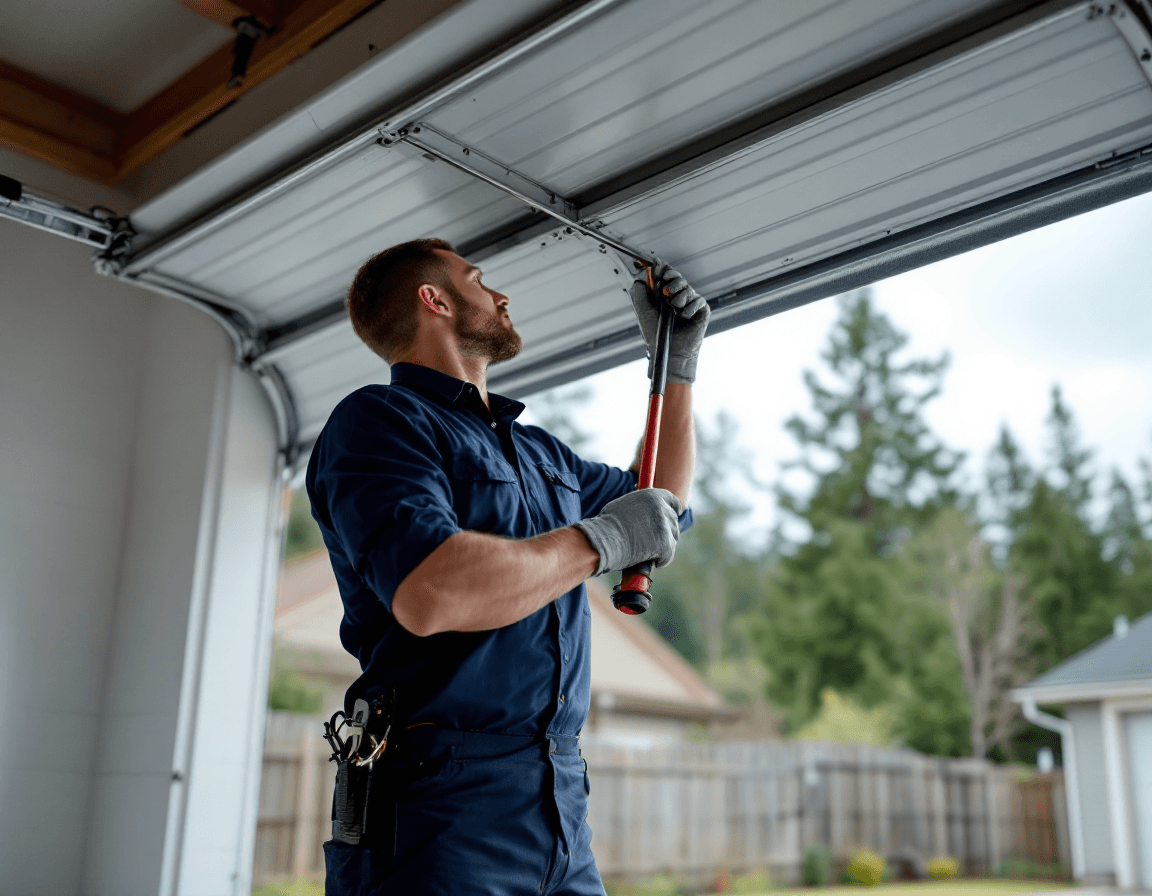
Garage Door Spring Replacement in Sammamish, WA is one of the repairs our technicians handle most often, and it's easy to see why. The springs that counterbalance a garage door carry most of its weight, so when one fails, the door usually stops working or becomes dangerous to operate. Homeowners in Sammamish often notice the problem first as a loud bang from the garage or as a door that suddenly refuses to rise. Either way, the safest next step is a licensed technician who can inspect the system and replace the spring correctly.
Sammamish sits on the Eastside plateau, where the air stays damp through much of the year and the garage door hardware sees more moisture than many homeowners expect. Doors here also tend to be larger than older builds in other parts of the region, with heavier insulated panels and sometimes two-car widths that put extra load on each spring. Those details matter because a spring that was sized for a lighter door will wear out faster, and a mismatched replacement can strain the opener and the track. A good repair starts with understanding the specific door, not just swapping a part.
This page explains how spring failures happen, what the warning signs look like, why cables and balance matter as much as the spring itself, and what a professional replacement involves. It also covers pricing, high-cycle options, and what to expect when you call. If you have a door that is currently stuck, do not try to lift it by hand or work on the tension system yourself. Call (888) 799-3819 and we will talk through what you are seeing.
What a Snapped Spring Sounds Like at Home
Most homeowners describe a broken spring as a sharp crack or a loud bang that seems to come from the ceiling of the garage. The noise is often startling enough that people think something has hit the house or that a vehicle has backed into the door. In many cases the sound happens while the door is closed, which is why some people do not realize the spring has failed until they try to open the door later that day. The bang is the metal coil unwinding under tension, and the moment it gives way the door loses most of its lifting help.
After a break, you will usually notice that the door feels far heavier than before. Some doors will not move at all, while others rise a few inches and then stop because the remaining spring cannot carry the load. If you have an automatic opener, it may hum, strain, or click without moving the door in any meaningful way. Continuing to run the opener in this condition can damage the gear, the belt or chain, and the mounting brackets, so it is best to stop trying as soon as you notice the strain.
Keep the area clear after a spring breaks. Keep children and pets away from the door, and avoid standing directly beneath a door that is partly open. A door that has lost its balance can drop suddenly if the opener disengages or if a cable slips. If the door is hanging open, the safest option is to leave it alone and schedule service.
Torsion Versus Extension Springs: Knowing Which You Have
Before a technician can replace anything, they need to identify the type of spring system your door uses. Torsion springs are mounted horizontally on a steel shaft above the door opening, and they twist to store energy when the door closes. Extension springs run parallel to the horizontal tracks on each side of the door and stretch as the door descends. Many Sammamish homes built in recent decades use torsion systems because they are quieter and more balanced, but plenty of older doors still rely on extension springs.
The distinction matters for both safety and cost. Torsion springs store a large amount of energy in the winding, and they must be adjusted with specialized winding bars and proper equipment. Extension springs also store energy under tension, and they are commonly paired with safety cables that are meant to restrain the spring if it breaks. Replacing either type without the right tools and training is one of the most common ways homeowners get hurt during garage door repairs.
If you are not sure which system you have, look above the door. A solid steel shaft running across the opening with cones at each end usually indicates torsion springs. Thinner springs running along the tracks on each side point toward extension springs. Either way, a technician can confirm the setup in a few minutes during an inspection, and that inspection should include the cables, drums, bearings, and the balance of the door itself.
How Our Damp Winters and Mild Summers Wear on Springs
The Pacific Northwest climate is not extreme in temperature, but it is persistently damp, and moisture is a steady enemy of steel springs. During the long wet stretches that are typical around Sammamish, condensation can settle on the coils and on the hardware, slowly encouraging surface rust. Rust does not always break a spring right away, but it weakens the metal and can make the coils more prone to fatigue over time. Doors that sit in a garage with poor airflow, or near a driveway that holds water, often show these effects sooner.
Temperature swings also play a role. A cold morning can stiffen lubricant and make the door harder to lift, which forces the springs and opener to work harder during the first few cycles of the day. Warmer afternoons loosen things up again, so the door may seem to behave differently depending on the time of day. Over many years, this repeated flexing adds up, and a spring that has been quietly fatiguing can finally let go on a day when the weather is cold and the door is heavy with dew.
Good maintenance helps. Wiping down the springs and shaft a couple of times a year, applying a light lubricant designed for garage door hardware, and keeping the garage ventilated can all slow corrosion. Do not spray lubricant directly into the spring coils in a way that drips onto the floor, and avoid heavy greases that attract dust. A technician can recommend the right product for your specific door and the way your garage is used.
Reading the Warning Signs Before the Door Quits
Springs rarely fail without warning, even though a sudden break can feel that way. One of the most common early signs is a visible gap between coils on a torsion spring, which means the metal has stretched or separated enough that the spring is no longer carrying load evenly. If you look closely at the spring above the door and see a space where the coils should be tightly packed, the spring is close to failure. Treat that gap as a reason to call for service rather than something to monitor.
Another early sign is a door that opens unevenly or one that seems to rise a few inches before pausing. This often happens when one spring is weaker than the other, which shifts the load and forces the opener to compensate. You may also notice the door closing too fast, slamming onto the floor, or sitting crooked in the opening. These symptoms usually point to balance problems, and they deserve prompt attention because an unbalanced door puts extra stress on every component.
Listen for changes in the sound of the door. A faint popping or ticking from the spring area can indicate that the coils are rubbing or shifting, and a grinding noise from the opener may mean the door is working harder than it should. If you notice any of these signs, schedule an inspection before the spring breaks at an inconvenient time, such as when you need to leave for work or when a child is about to walk through the garage.
When Cables Come Loose After a Spring Breaks
Cables do much of the quiet work in a garage door system. They connect the bottom of the door to the drums, and the drums wind the cables as the springs turn, which keeps the door moving smoothly along its tracks. When a spring breaks, the cables can lose tension and slip off the drums, sometimes tangling or kinking in the process. A cable that has come loose can prevent the door from lifting evenly, and it can damage the drum, the bearing plate, or the track if the door is operated in that condition.
Cable problems often show up in predictable ways. A technician will usually look for the signs listed below during a repair, and homeowners can also watch for them after a break. Noticing these details can help you describe the problem accurately when you call.
- The door sits lower on one side than the other, or looks visibly tilted when partly open.
- A cable is hanging loose, frayed, or wrapped unevenly around the drum.
- The drum on one side has shifted or the cable has jumped off its groove.
- Metal shavings, rust flakes, or fresh scrapes appear on the track near the bottom roller.
Do not attempt to rewind a cable or force it back onto a drum. The cable is under tension even when the spring has broken, and a sudden release can cause serious injury. Our technicians inspect the cables, drums, and bearings as part of every spring replacement, because a new spring paired with a damaged cable system will not restore reliable operation.
What a Professional Spring Swap Actually Involves
A proper spring replacement is more involved than most people expect. The technician first confirms the door type, measures the existing springs, and checks the weight and dimensions of the door so the replacement can be sized correctly. They then secure the door in a safe position, release the tension in a controlled way, and remove the broken spring using tools designed for the job. Each step is done in sequence because the energy stored in a torsion spring can be dangerous if the process is rushed.
Once the new spring is installed, the technician sets the tension, checks the cables and drums, and tests the door through several full cycles. They look at the balance of the door, the alignment of the tracks, the condition of the rollers and hinges, and the health of the opener. If anything is worn or out of spec, they explain what they found and recommend a fix, which may include replacing rollers, bearings, or a cable before the door goes back into regular use. The goal is a door that operates smoothly, not just one that moves again.
Licensed and insured service matters for this kind of work. Our technicians are licensed, bonded, and insured, and we treat spring and cable work as a specialized trade rather than a quick fix. If a company offers to replace a spring without checking the rest of the system, ask what their inspection includes and how they handle tension and safety. A careful answer is a good sign.
High-Cycle Springs and When They Make Sense
Standard residential springs are designed for a set number of open-and-close cycles, and a busy household can reach that limit sooner than expected. A family that uses the garage as its main entrance, or a home with multiple drivers who come and go several times a day, may put far more wear on the system than a household that uses the door occasionally. High-cycle springs are built with heavier wire or different tempering so they can handle more repetitions before fatigue becomes an issue.
High-cycle options are not automatically the right choice for every door. The added durability usually comes with a higher price, and the extra strength must be matched correctly to the weight of the door. A high-cycle spring installed on a door that is not properly balanced can still wear unevenly, so the choice should be made alongside a full inspection. Our technicians will talk through your usage, the size and insulation of the door, and your budget before recommending one option over another.
If you are replacing a spring because it broke after only a few years, ask whether the original spring was standard or high-cycle and whether the door's weight has changed. Adding insulation, a heavier panel, or a new opener can shift the balance enough that a spring sized for the old setup is no longer ideal. Updating the spring to match the current door often extends the life of the entire system.
Balancing the Door: The Step Many Quick Fixes Skip
A garage door is balanced when it stays in place at any height without the opener doing most of the lifting. When the springs are correctly tensioned, a door raised halfway should stay there, and a door lowered partway should not drift down on its own. Balance is one of the most overlooked parts of spring work, and an unbalanced door can cause uneven wear on the opener, rollers, and cables even if the new spring itself is fine.
Testing balance takes time and care. The technician disengages the opener, lifts the door by hand to a few different heights, and checks how it behaves. They also watch for signs of binding, uneven movement, or a door that sags on one side. Small adjustments to the spring tension can change how the door performs, and the process is repeated until the door moves smoothly across its full range.
This is also why homeowners should avoid fixing springs with a standalone part purchased online. A spring that is the right physical size but the wrong tension will leave the door unbalanced, and the mismatch may not show up until the opener starts to struggle. A proper installation accounts for the exact door, the opener, and the tracks together.
Pricing a Spring Replacement Around Sammamish
Most spring replacements we perform in the Sammamish area fall in the range of $180 to $450, depending on the type of spring, the size and weight of the door, and whether additional parts are needed. A single torsion spring on a standard double-car door may cost less than a pair of springs on a wider or heavier door, and high-cycle options generally cost more than standard replacements. The final price depends on what the inspection reveals, so we aim to explain the scope of work before any repair begins.
Additional components can change the total. A worn cable, a damaged drum, a bad bearing, or a set of failing rollers may need to be replaced at the same visit to keep the door running safely. Some homeowners prefer to handle only the spring and defer other repairs, and that is a reasonable decision as long as the technician clearly explains the risks. We would rather tell you the truth about what the door needs than leave a hidden problem for later.
Be cautious of unusually low quotes that do not include an inspection, balance check, or safety testing. A replacement spring is only part of the job, and a rushed installation can leave the door unsafe. Ask what is included in the price, whether the cables and drums are checked, and whether the door is tested through several cycles before the technician leaves.
Neighborhood Notes: Pine Lake, Klahanie, and Sammamish Commons
Sammamish is made up of many distinct areas, and the garages we service reflect that variety. Homes near Pine Lake often have a mix of older and newer doors, and some properties sit in shaded, wooded lots where moisture lingers longer on metal hardware. Neighborhoods around Klahanie include a range of single-family homes with attached garages, many of which see daily use by commuters and families, which can accelerate spring wear. Homes within reach of the Sammamish Commons area include both newer builds and established properties, so the door types can differ quite a bit from street to street.
Our crews work across the 98074 and 98075 ZIP codes and throughout the broader Sammamish area, and we understand the traffic patterns, housing styles, and seasonal conditions that come with the Eastside. If you are scheduling a spring replacement, let the dispatcher know your neighborhood and the approximate age of the door so the technician can plan for the right parts. Having that information ready can make the visit faster and more accurate.
If you live near one of these landmarks and are unsure whether your spring or cable issue needs urgent attention, call us and describe what you are seeing. We can often help you decide whether the door is safe to keep using until a technician arrives, and we will tell you plainly if it should stay closed.
Keeping a New Spring Healthy Through Sammamish Seasons
A new spring is only the beginning of a healthy garage door system. Once the replacement is in place, a few simple habits can extend its life and reduce the chance of a surprise breakdown. Keep the garage door closed when you are not using it, since prolonged exposure to damp air and temperature swings can speed up corrosion on the hardware. Avoid slamming the door, and watch for any change in how smoothly it operates after the next few weeks.
Schedule a periodic inspection, especially if your door is more than a decade old or sees heavy daily use. A technician can check the springs, cables, rollers, hinges, and opener settings, and can spot small issues before they turn into emergencies. During these visits, ask about the lubricant that is best for your door and how often it should be applied, since the right product matters in a humid climate.
Finally, pay attention to the sound and feel of the door. Any new bang, grinding, uneven movement, or sudden heaviness deserves a call rather than a wait-and-see approach. Early attention is almost always less expensive and less disruptive than dealing with a full break in the middle of the week.
If your garage door has a broken spring, loose cables, or a door that will not lift, do not wait for it to get worse. Call Seattle Garage Door Fix at (888) 799-3819 to schedule a licensed technician who can inspect your system, explain your options, and replace the spring safely. We serve Sammamish and the surrounding Eastside communities, and we will walk you through what the repair involves before any work begins.