
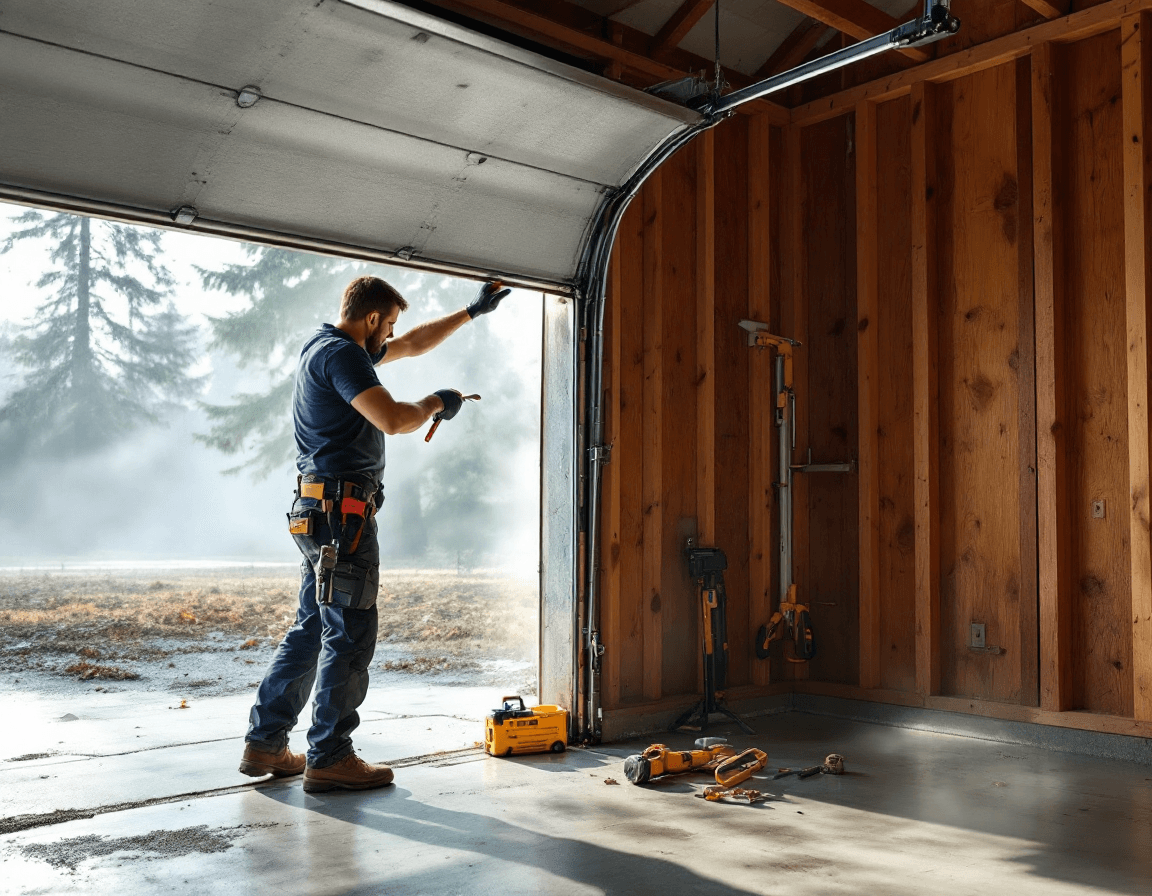
Off-Track Garage Door Repair in Sammamish, WA is one of the most time-sensitive services we provide, because a door that has jumped its rails can trap your car inside, block the only exit from the garage, or hang at an angle that puts strain on every component still attached to it. Homeowners in 98074 and 98075 call us after a door has popped a roller out of the track during a morning commute, after a sudden crack that sounded like a rifle shot, or after a door simply stopped halfway up and refused to budge. Most of the time, the fix is more straightforward than people expect, but only if the door is handled correctly from the first minute.
Sammamish sits on the plateau east of Lake Sammamish, where the ground is often wet from fall through spring and the weather can swing from crisp dry mornings to steady rain within a few hours. Those conditions affect garage doors in quiet ways. Tracks loosen their mounting bolts, wood panels absorb moisture, and steel brackets collect grit that wears down rollers. This page explains what usually causes a door to leave its track in our area, what you can safely check on your own, what a technician does to put it back in service, and how pricing typically works for these repairs.
Whether your home is near Sammamish Commons, along the quieter streets around Pine Lake, or in the older and newer neighborhoods of Klahanie, the underlying mechanics are the same. A garage door is a large, heavy panel riding on steel rollers inside two tracks, lifted by either torsion springs or extension springs and held in balance by cables. When any part of that system shifts, the door tends to show it first at the track. Understanding that relationship will help you describe the problem accurately on the phone and make better decisions while you wait for help.
Why Doors in Sammamish Keep Wandering Off Their Tracks
Many of the off-track calls we hear in Sammamish trace back to the same root cause: the house and the garage floor move slightly over time, and the track system has to follow. Parts of the plateau have clay-rich soils that hold water after heavy rain and then contract as they dry. A garage slab that settles unevenly by even a fraction of an inch can pull the track out of plumb, especially where the track is anchored to the wall framing rather than a solid header. When the track is no longer perfectly vertical or parallel with its partner on the other side, rollers start to ride against the edge of the track instead of rolling cleanly through the channel.
Moisture is the second major factor. Our winters bring long stretches of damp air, and garages are often the least climate-controlled part of the house. Wood door sections, particularly older models with real timber faces, swell in the wet months and then shrink back. That change in width can cause a door to bind against the jamb or push the top roller sideways, and over time it loosens the bolts that hold the track brackets in place. Galvanized steel holds up well, but the constant cycle of wet and dry still encourages corrosion at the bracket screws, which can let a section of track shift just enough to matter.
Seasonal temperature drops add another layer. On cold mornings, lubricant in rollers and hinges stiffens, and the door can resist moving smoothly. If the opener keeps pushing against that resistance, the top roller may hop out of the track, particularly on doors that already had a slightly loose bracket. Homeowners in Sammamish often notice the problem first on the first cold snap of November or the first freezing morning in January, which is why we encourage residents to pay closer attention to how the door moves during those weeks.
Early Warning Signs Before a Full Derailment
A door rarely leaves its track without warning. In most cases, there is a period of days or weeks when the door sounds or looks slightly different before it finally comes off. Recognizing those signs gives you the chance to schedule a repair during normal business hours instead of waiting for a midnight emergency. The most common early indicator is a grinding or scraping noise at the top corners of the door as it travels upward, which often means a roller is starting to ride on the flange rather than inside the track channel.
Visual changes are just as useful. Look at the gap between the top of the door and the header, and compare the gaps on the left and right sides of the door where it meets the jamb. If one side is noticeably wider or the door looks tilted when it is closed, the track on that side may be out of line. Check whether the rollers are sitting neatly inside the track or whether any of them appear to be bulging over the edge. A roller that looks lopsided or has a flat spot is worn and should be replaced at the same visit.
Changes in how the door responds to the opener are also important. If the door reverses for no obvious reason, if it stops partway and then continues with a jerk, or if the opener seems to strain more than it used to, the door is probably binding somewhere along the track. Do not keep running the door through these symptoms, because each cycle can push a roller a little further out of position. A simple call to schedule an inspection costs far less than repairing a bent section after a full derailment.
What Actually Happens Inside a Track When a Roller Jumps
To understand why off-track problems deserve prompt attention, it helps to picture what a roller is doing. Each roller is a small wheel, usually nylon or steel with a sealed bearing, that rides in a channel formed by the track. The track itself is shaped like a flattened C or a U, and the roller is supposed to sit inside that channel while the door moves up and down. Because the door is hinged in sections, the rollers at each section's ends must stay aligned with the track, or the whole door will begin to skew.
When a roller jumps out, it usually lands on the outside edge of the track or on the wall bracket. The door then rests on that edge, which concentrates weight in one small point. Over time that pressure can bend the track flange, open the seam where track sections join, or pull the bracket away from the wall. A door that continues to operate after a roller has jumped can crack a panel or pull a hinge loose, creating damage that goes well beyond the original problem.
This is why our technicians tend to inspect the entire track run rather than only the roller that came out. We look at each vertical and horizontal section, check the curve where the track turns into the horizontal run, and confirm that the mounting brackets are still tight and plumb. If one part is out of shape, the rest of the system will be pulling against it, so correcting only the visible symptom often leads to a repeat call within weeks.
Safe Steps You Can Take Until a Technician Arrives
There are a few things a homeowner can do safely while waiting for a repair visit, and a few things that should never be attempted. Start by keeping everyone, especially children and pets, out of the garage and away from the door's path. A door that is off track can shift without warning, and the springs remain under tension even when the door looks like it has stopped. Do not stand beneath the door, and do not try to lift it by hand to "help it along."
If the opener is still connected and the door is partially open, you can usually disconnect the automatic operation by pulling the red emergency release cord, which is typically hanging from the trolley on the rail. Pull it once, then keep the door closed manually and avoid running the opener again until a technician has inspected the door. Some homeowners are tempted to use the opener to try to force the door back on track, but that can bend the rollers, pull the trolley, or damage the operator.
- Keep people and vehicles clear of the garage opening and the area beneath the door.
- Pull the emergency release cord once to disconnect the opener, then stop using the remote or wall button.
- Take clear photos of the track, the rollers, and any visible gaps so the technician has a head start on diagnosis.
- Do not attempt to pry the door, pull on cables, or adjust springs or brackets yourself.
- If the door is partly open and unstable, use a sturdy prop only if you can do so safely from the side, and never from underneath.
- Call a licensed technician promptly, and mention whether the door was hit, whether it made a loud noise, and whether any cable looks loose.
Make a note of anything unusual you noticed in the days before the derailment. Technicians value that information because it often points directly to the cause, such as a particular bracket that had been loose or a noise that started after a cold snap.
How Our Technicians Re-Seat Rollers and Square the Door
When a licensed technician arrives for an off-track call, the first priority is to make the door safe to handle. That means confirming the spring system is intact, checking the cables and drums, and verifying that the door is not hanging on a single point. Only after the safety assessment is complete does the technician begin the actual realignment. In many cases, this involves carefully lifting or supporting the door, re-seating the affected rollers, and then testing the movement by hand before the opener is involved again.
Re-seating a roller sounds simple, but the details matter. The technician needs to slide the roller back into the track channel, check that it sits fully inside, and confirm that the roller stem or bearing is not cracked or worn. Next, the track is examined for any bend that would cause the roller to pop out again. If the track has a slight distortion, the technician may gently straighten it using hand tools, and then re-secure the brackets so that the track stays plumb and parallel to the opposite side.
After the track and rollers are aligned, the door itself is checked for square. A door that has been off track often develops small misalignments at the hinges or along the bottom seal, and these need to be corrected so the door closes evenly against the jamb. The technician then runs the door through several complete cycles, watching for binding, rubbing, or uneven movement. Only when the door moves smoothly both manually and under opener power is the repair considered complete.
Track Damage From Vehicle Strikes in Driveways and Cul-de-sacs
Vehicle strikes are a surprisingly common reason for off-track service in Sammamish, particularly in households where two or three cars share a garage and driveway space is tight. A reversing car, a delivery van backing up along a cul-de-sac, or a bicycle or lawn trailer caught by a bumper can all push a door sideways hard enough to bend the track or separate a section from its bracket. Even a low-speed impact can crush a track flange or knock a roller out of its channel, and the damage is sometimes hidden behind weatherstripping until the door begins to bind.
When a vehicle has struck the door, look for dents or creases along the track, gaps where sections meet, and any sign that the bracket has pulled away from the framing. Check whether the door panels themselves are cracked near the hinges or bottom edge. A dented track can sometimes be straightened, but a section that is kinked or split usually needs to be replaced. Replacing track sections is a separate job from re-seating rollers, and a technician will usually explain the difference before starting work so you understand what is being repaired.
Insurance and documentation can matter in these cases. Photograph the damage from several angles before anything is moved, and keep any notes about when the incident happened. Some homeowners in our area also have a shared-driveway situation or a neighbor involved, so it can help to save a copy of the license plate or the other party's contact information if it was available at the time. These details are not the technician's responsibility, but they make the paperwork far easier to handle later.
Pricing for Off-Track Repairs Around Sammamish
Most off-track repairs we perform fall in the range of $125 to $400, depending on what the technician finds once the door is open and inspected. A straightforward roller re-seat with a quick bracket tightening sits at the lower end of that range, while a door that needs one or more track sections replaced, multiple rollers swapped, or hinge repairs will land higher. The final price depends on the specific parts involved, the number of sections affected, and whether the door needs additional adjustment after realignment.
Several factors tend to push the cost up. Doors with heavy wood panels or insulated steel sections are heavier and harder to support safely, which takes more time. Track that has been bent in several places, or that has separated at the curve, requires more labor to straighten or replace. Damage that has spread to the springs, cables, or drums moves the job into a different category, because those components carry high tension and require a licensed technician to handle them properly. If the technician discovers spring or cable damage, they should explain the additional work and its cost before proceeding.
We believe homeowners should know what they are paying for. Before work begins, the technician should describe what was found, what will be done, and what the estimated range is. If a larger repair is recommended, you are free to take time to consider it. Avoid any provider who insists on immediate work without explaining the cause of the derailment or who refuses to give a price range before starting.
Neighborhood Notes for Sammamish Commons, Pine Lake, and Klahanie
Each part of Sammamish has its own rhythm, and that affects how off-track problems show up. Homes near Sammamish Commons often include attached garages in townhome and small-lot developments where the driveway is shared or narrow. In those settings, doors are opened and closed many times a day, and the track sees heavier daily use, which makes early loosening of brackets more likely. Residents in those neighborhoods often benefit from a yearly track check to catch small shifts before they become full derailments.
Around Pine Lake, many homes sit on sloped or wooded lots where drainage around the foundation can vary from one corner of the house to another. Soil movement is more likely to cause uneven garage floors, and when the floor shifts, the track alignment follows. Homeowners in that area frequently notice doors that look slightly out of level after a wet winter. If you have noticed a new gap at one side of the door or a door that seems to lean when closed, it is worth scheduling an inspection before the next rainy season arrives.
Klahanie includes a mix of established homes and newer construction, and the garages there can differ widely in age, door brand, and track style. Older doors may have heavier steel track and different roller designs, while newer systems may use lighter components with sealed bearings. A technician who works across the area should be comfortable identifying both types and sourcing the right replacement parts. When you call, mention the approximate age of the door and whether it has been serviced before, because that context helps narrow down the likely cause.
Springs, Cables, and When to Leave It to a Licensed Professional
Not every off-track situation is limited to the track and rollers. In some cases the cable has jumped off its drum, the drum has slipped on the shaft, or a torsion spring has loosened or broken. These components are under high tension and can cause serious injury if handled without the right tools and training. For that reason, any work involving springs, cables, or drums must be performed by a licensed, bonded, and insured technician. Homeowners should never attempt to wind, unwind, or adjust a torsion spring, and should not try to reattach a cable themselves.
Warning signs that a spring or cable problem is involved include a door that hangs unevenly with one side noticeably lower, a cable that looks loose or frayed, a visible gap between the cable and the drum, or a loud bang that happened when the door was moved. If you see any of these, keep the door closed and call a professional before using it again. Even if the door seems to be working after a roller has been re-seated, a damaged spring or cable can fail suddenly and without warning.
Our technicians take this part of the job seriously. When spring or cable work is needed, the technician will explain what is involved, how the door will be secured during the repair, and what the approximate cost will be. We recommend that homeowners never accept a quote from anyone who suggests skipping safety steps or handling the springs without proper tools. Your safety and the safety of anyone else in the home matter more than a quick fix.
Keeping Your Door on Track Through Western Washington Seasons
Preventive care is the most reliable way to reduce off-track calls. Because our region experiences long wet seasons and occasional hard freezes, a few simple habits can make a significant difference. Start by checking the track brackets and mounting screws at least twice a year, typically in early fall before the rain begins and again in late winter. Tighten any loose fasteners carefully, and do not overtighten them, because crushing the track can cause new problems. If a bracket has pulled away from the wall, schedule a repair instead of trying to fix it with longer screws.
Lubrication is equally important. Use a lithium-based or silicone-based garage door lubricant on the rollers, hinges, and bearings, and avoid spraying lubricant directly onto the track channel, because it can attract grit and dust. Wipe away any buildup from the track so that rollers can travel smoothly. During cold snaps, let the door run a few cycles slowly by hand before using the opener, so the lubricant can warm and spread evenly.
- Inspect track brackets and fasteners in early fall and again in late winter.
- Lubricate rollers, hinges, and bearings with an appropriate garage door lubricant.
- Keep the track channel clean and free of debris, leaves, and gravel from the driveway.
- Watch for changes in sound or movement, and respond to them promptly.
- Schedule a professional safety and balance check every year, especially for heavier doors.
- Keep vehicles and bicycles clear of the door's path when the door is in motion.
These steps will not eliminate every off-track problem, but they will catch most of the small shifts that lead to derailments. A door that is maintained through the seasons tends to run quietly and predictably, and it gives you more time to plan repairs when they are needed.
If your garage door has come off its track in Sammamish or the surrounding areas of 98074 and 98075, call Seattle Garage Door Fix at (888) 799-3819. Our licensed, bonded, and insured technicians can assess the door, re-seat rollers, straighten or replace damaged track, and explain every step before work begins. Please keep the door closed and clear of people and vehicles until we arrive, and let us handle the repair safely.