
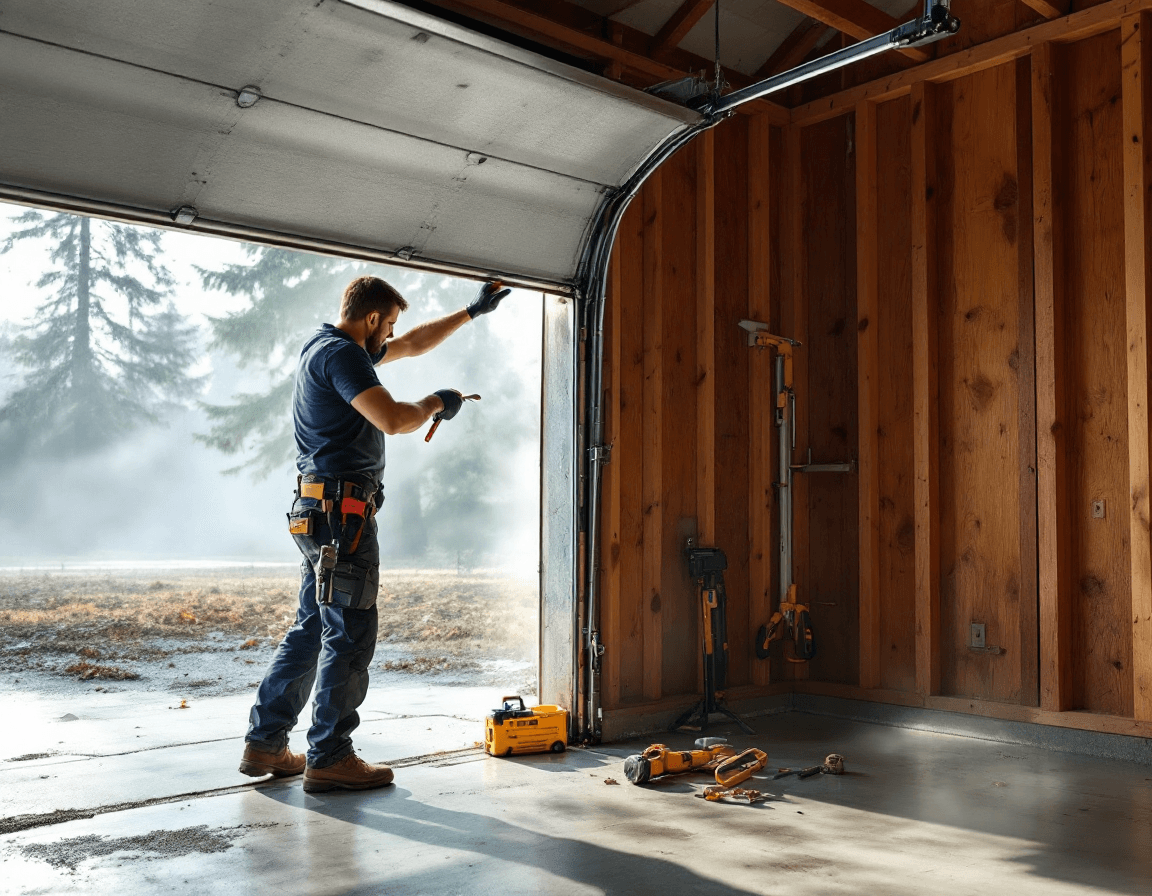
Off-Track Garage Door Repair in Issaquah, WA is one of the calls that cannot wait, because a door that has jumped its tracks can leave a family locked in or locked out. Whether the door came off during a windy December night or after a teenager backed a car into it, the door usually shows clear signs that something is wrong long before it stops moving altogether. Knowing what those signs look like, and what to do next, can prevent a minor realignment from turning into a bent-track replacement.
Our technicians serve homes across Issaquah and the surrounding Eastside foothills, including the 98027 and 98029 ZIP codes. We see the same pattern repeatedly: a door that worked fine in summer begins to drift, rub, or hang crooked once the rainy season settles in. Moisture, uneven driveways, and the steep grades common near Squak Mountain all work against a door's alignment over time. This page explains why off-track problems happen here, how to recognize them early, what you can safely check yourself, and what a licensed technician will do to get your door running straight again.
If your door is off the track right now, please keep people and pets away from it and read the safety guidance below before doing anything else. If it is only starting to look or sound wrong, you still have options, and catching the problem early usually means a simpler and less expensive repair. Either way, our team is ready to help you decide what comes next.
Why Doors Keep Leaving the Track in Western Washington Weather
Western Washington's wet, mild winters are hard on the steel that makes up a garage door system. Rain and mist get into the bottom roller brackets, hinges, and track joints, and the metal can begin to corrode or lose its smooth travel. Once rollers stop turning freely, they drag, and a drag that is only slight in October can become a derailment by January. The damp air around Issaquah also means that wood trim, door panels, and weatherstripping swell and shrink through the year, which subtly changes how the door sits in its opening.
Temperature swings add another layer of stress. A cold morning can make a door heavy and stiff, and a mild afternoon can make the same door glide differently, which tricks many homeowners into thinking the door is fine until a sudden gust or a rough lift pushes a roller out of its channel. The wind that funnels through the valleys and along the ridgelines can also push against the door's panels, especially on taller two-car doors that catch more air. Over several seasons, that pressure can bend the top track sections just enough to let rollers wander.
Hillside lots create their own problems. Many driveways in and around the Squak Mountain foothills slope toward the garage, and some homes have settled slightly since they were built. When the floor or the header above the opening is no longer perfectly level, the track system has to work against that tilt, and the door can start to climb one side faster than the other. A door that was installed level can become a door that binds on one side, and that imbalance is often what eventually pulls a roller out.
Early Warning Signs That Your Door Is Heading Off Track
Most off-track failures do not happen all at once. The door usually gives a series of small hints over days or weeks, and recognizing those hints gives you the best chance of a quick fix. Pay attention if your door begins to behave differently, especially after a storm, a freeze, or a vehicle bumped the garage. The following signs are worth taking seriously:
- A grinding, popping, or scraping noise along one side of the track when the door opens or closes
- A visible gap between the top or side of the door panel and the track or weatherstripping
- The door sitting noticeably lower or higher on one side when it is closed
- A roller that looks tilted, cracked, or has pulled partly out of the track channel
- The door stopping partway up or down, or the opener straining before it moves
- Daylight appearing at a new spot along the door edge, which can signal the door is no longer seated squarely
Any one of these symptoms deserves a closer look, and several together usually mean the door is already out of square. Do not wait for the door to stop completely. A door that is binding or crooked puts uneven load on the opener motor, the cables, and the springs, and continued operation can damage parts that would otherwise be inexpensive to correct. If you notice the door struggling only on one side, it is often better to stop using it until a technician has checked it.
What You Can Check Safely Before a Technician Arrives
There are a few observations a homeowner can make without touching anything under tension. Start by visually inspecting the tracks from inside the garage with the door closed. Look for obvious dents, flattened sections, or places where the track has pulled away from the wall bracket. Check whether the bolts and brackets that hold the track to the wall or ceiling appear loose or missing, and take photos of anything that looks unusual so you can share them when you call.
Next, look at the rollers themselves. Are any of them sitting crooked in their brackets, cracked, or visibly flat? Note which side the problem appears on, because an off-track door is often lower or more damaged on the side where the roller first jumped. Also check the level of the door at the bottom and the gap around the perimeter. Measuring the gap with a flashlight and a simple ruler can show whether one side has shifted.
Some homeowners want to move the door by hand, and that is where caution matters most. If the opener is still connected and the door is only slightly out of its track, do not force it, and never pull or lift the door hard while it is partly off the rails. Keep your hands clear of the track area and the springs, and do not stand directly beneath a door that is hanging or unbalanced. If you must disconnect the opener, use the emergency release cord only once, and then leave the door in place until a professional arrives. Pressing the release again and again, or trying to shove the door back on the track, can cause a sudden drop.
Why Spring and Cable Work Belongs to a Licensed Technician
Garage doors are heavy, and the springs that counterbalance them store a large amount of energy. Torsion springs and extension springs can release that energy violently if they are loosened, wound, or removed incorrectly, and the cables that lift the door can snap under tension. For these reasons, any work involving springs, cables, drums, or a door that has come off its track should be handled by a licensed and insured professional. Our technicians are trained to recognize when a door's balance has shifted and to make adjustments safely.
Off-track repairs frequently reveal a spring or cable problem that the homeowner had no way to see. A cable can fray or come loose from the drum when the door jumps, and a spring can lose tension after years of cycling. Attempting to fix these components with household tools is one of the most common ways people get hurt during what they assumed would be a quick repair. A technician has the proper winding bars, safety clamps, and experience to release tension in a controlled way and to verify the balance once the door is back in its tracks.
If anyone in your household has asked whether they can handle the spring work themselves, our answer is no. The savings are rarely worth the risk, and a mistake can damage the door, the opener, or the vehicle parked beside it. A licensed technician will explain what has failed, show you the affected part if you ask, and give you a clear recommendation before any work begins.
How a Technician Realigns a Derailed Garage Door
When a technician arrives for an off-track call, the first step is a safety assessment. We check whether the opener is disconnected, whether the springs are intact, and whether the door is resting on a stable surface. We also look at the entire path of the door, from the top rollers to the bottom seal, to understand how it left the track and whether it is sitting level. This assessment shapes everything that follows, and it helps us avoid making the problem worse.
Next, the technician will carefully guide the door back into the track, one side at a time, while checking that each roller seats fully in its channel. Rollers that have popped out are reinserted and inspected for cracks or flat spots, and any worn or damaged rollers are noted for replacement. The track is then checked for straightness along its full length. Where a section has been pushed out of line, the technician works to bring it back to its proper position and secures the brackets so the door can travel smoothly.
Once the door is back on track, the technician tests it through several full cycles. We watch for binding, uneven travel, and any sign that one side is lifting faster than the other. If the door balances correctly and moves quietly, we will confirm the reversing safety features are working as designed. Before we leave, you should know exactly what was adjusted, what was replaced, and what, if anything, should be monitored in the coming weeks.
Bent, Dented, and Separated Track Sections
Track damage is one of the more serious consequences of an off-track event. A roller that slams against a track section can bend the metal, leaving a dent or a kink that catches every roller that passes through it. Sometimes the damage is subtle, showing up only as a slight hitch in the door's motion. Other times a section is visibly pulled away from its mounting bracket or has separated at a joint, creating a gap large enough for rollers to escape.
Minor bends can often be straightened by a technician, especially if the metal has not cracked and the track remains structurally sound. Separated joints usually need the section re-seated and secured with fresh hardware, and bolts that have stripped or pulled out of the wall or ceiling may need replacement with stronger anchors. Severely crimped or cracked sections are typically replaced, because a track that cannot hold a straight line will keep causing derailments no matter how carefully the door is balanced.
Track work is also where the difference between a quick adjustment and a more involved repair becomes clear. Our technicians will tell you whether a section can be corrected on the spot or needs to be replaced, and they will explain what the difference means for cost. We prefer to show you the damage rather than simply declare it beyond repair, so you can make an informed decision.
When a Vehicle Strikes the Door in a Busy Driveway
A vehicle impact is one of the most common causes of sudden off-track failures, and it is often the most dramatic. Even a low-speed bump from a car backing out, a delivery truck clipping a corner, or a bicycle or trash bin hitting the lower panel can push the door out of line. The force from one of those hits may not be enough to shatter a panel, but it can knock a roller loose, bend a track section, or pull a bracket from its anchor point.
After a collision, avoid operating the door until it has been inspected. Even if the door appears to work, a hidden problem in the track, cable, or spring can grow worse with each cycle. Take photos of the damage to the door and the track from several angles, and if the impact involved another vehicle or property, note the time and any details you might later need for an insurance claim. Many homeowners find that a clear record makes the claims process smoother, although coverage decisions are made by insurers, not by us.
Driveways in Issaquah often have tight turns, sloped approaches, and parking spaces that leave little room for error, especially in older neighborhoods. If vehicles regularly come close to the garage door, consider adding a simple guard or bollard at the corner, or asking the family to pull in more slowly. A little prevention in the driveway can save a great deal of trouble on the track.
What Off-Track Repairs Typically Cost and What Affects the Price
For most off-track repairs, our pricing falls between $125 and $400. Where a job lands in that range depends on how far the door has moved, how many rollers need replacing, whether any track sections must be straightened or replaced, and whether the opener, springs, or cables have also been affected. A door that simply popped one roller out and needs a quick realignment will usually land near the lower end. A door that has bent track, a damaged cable, and multiple worn rollers will often land higher.
Your home's layout can also influence the work. Two-car doors are heavier and wider, which means more track, more hardware, and more careful balancing. Doors installed on sloped or settled floors may need additional adjustment to keep travel even. Older doors may have parts that are no longer manufactured in standard sizes, and sourcing a correct replacement can take a little extra time.
Before any work begins, our technician will explain the scope of the repair and provide an estimate tied to what was found on site. You should feel comfortable asking questions about each line item, including whether a part is repairable or must be replaced. A reputable technician will never pressure you into work you do not need, and will be upfront about the options that are available for your specific door.
Local Notes for Issaquah Highlands, Gilman Village, and Squak Mountain Homes
Garage doors in Issaquah reflect the town's varied development. Newer homes in Issaquah Highlands often feature larger two- and three-car garages with heavier insulated doors and sophisticated openers, and those doors benefit from regular checks of their balance and track alignment. Homes closer to Gilman Village may include a mix of older construction and remodeled garages, where the original tracks and brackets may have been modified over the years. Properties on and around Squak Mountain frequently sit on slopes or wooded lots, where drainage, soil movement, and driveway grade all put added pressure on the door opening.
Residents in the 98027 and 98029 ZIP codes often mention that their garage doors seem to suffer most during the first hard rains of fall and the long damp stretch of late winter. Those are the periods when we see a noticeable increase in off-track calls, typically following a windy night or a series of heavy storms. If your home is in a low spot where runoff collects near the garage, or your driveway drains toward the door, pay extra attention to the bottom seal and the lower brackets, since moisture there can accelerate rust and roller wear.
Local conditions also mean that a door can behave well in summer and then reveal a problem as soon as the weather turns. If you have noticed a change in how your door travels since the last storm, do not assume it will settle on its own. Early attention keeps a minor misalignment from becoming a full derailment on the coldest morning of the year.
Preventive Habits to Keep the Door on Track Through the Wet Season
Preventing an off-track event is easier than repairing one, and a few simple habits go a long way in the Pacific Northwest. Start by keeping the tracks clean and free of leaves, mud, and debris that can get wedged in the channel. A soft brush and a damp cloth are usually enough, and you should avoid heavy solvents that can strip lubricant from the rollers and hinges. Wipe the track gently after heavy storms, especially if your garage is exposed to wind-blown debris or tracked-in mud from a gravel or dirt driveway.
Lubrication matters too, but it should be applied carefully. Use a silicone-based or lithium-based lubricant on the rollers, hinges, and the track surfaces where the rollers travel, and avoid spraying the opener's drive chain or belt with products meant for other uses. Excess lubricant can attract dust and grit, which then wears the rollers faster, so a light application is better than a heavy coat. Never lubricate the springs under tension, because that is work for a professional.
Finally, schedule a professional inspection at least once a year, ideally in the early fall before the wettest months arrive. A technician can check roller wear, track alignment, bracket tightness, cable condition, and spring balance in a single visit. Catching a worn roller or a loose bracket during a routine check is far less disruptive than finding it after the door has jumped the track on a dark, rainy night.
Off-track garage door problems are rarely a mystery once a licensed technician has examined the door, and most can be corrected with careful realignment, roller replacement, or targeted track repair. If your door has come off its track, is binding, or shows any of the warning signs described above, please stop operating it and give us a call. Our team serves Issaquah and the surrounding communities, including the 98027 and 98029 ZIP codes, and we will walk you through what we find and what it will cost before any work begins. Call Seattle Garage Door Fix at (888) 799-3819 to schedule your off-track repair today.