
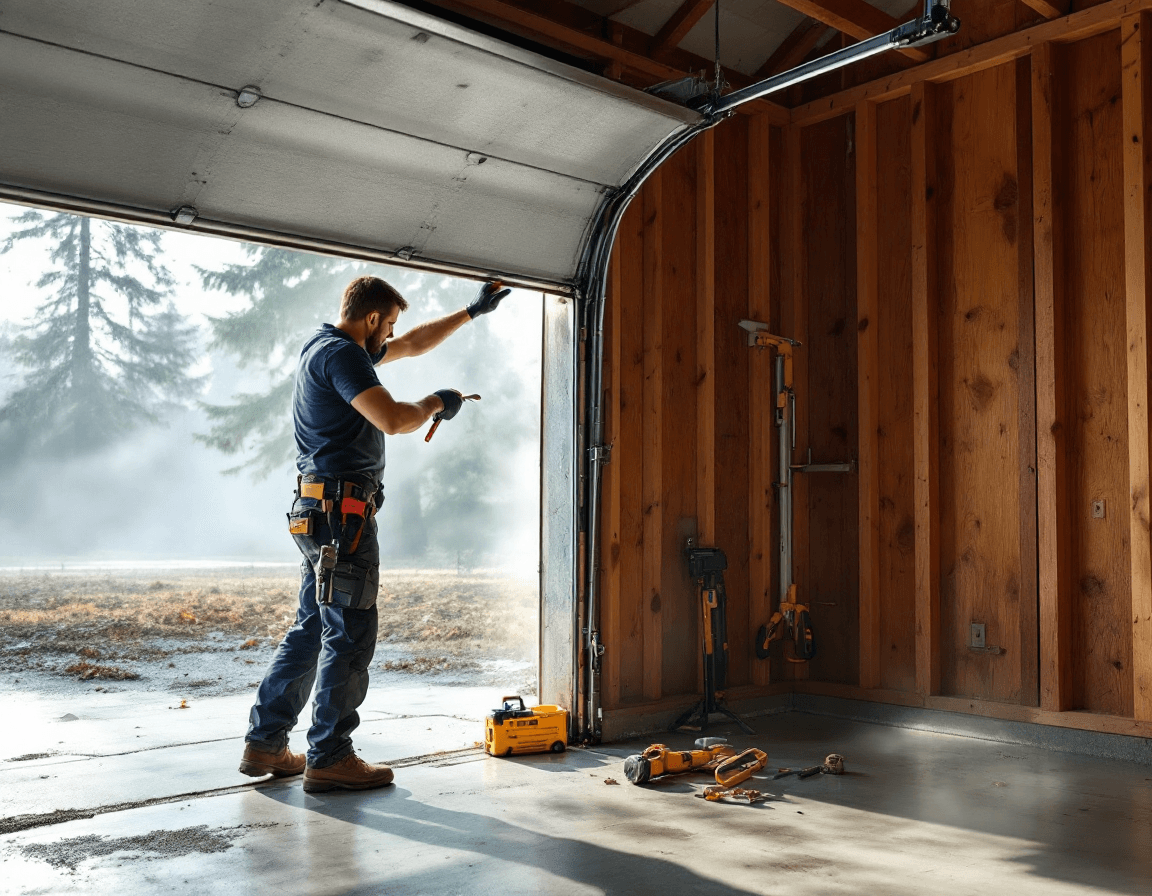
Off-track garage door repair in Newcastle, WA is one of the most common calls we take from homeowners on the Eastside hillside, and it is also one of the most misunderstood. A door that has slipped off its tracks can look like a catastrophe, but in many cases the door panels, springs, and opener are still sound, and the problem comes down to a roller, a track section, or a bracket that has shifted out of position. Knowing what has happened to your door helps you decide whether you can safely stop the problem from getting worse and when you need a licensed technician to take over.
Newcastle sits on the flanks of Cougar Mountain, with neighborhoods that climb and drop along streets near Coal Creek Parkway and Newport Way. Many homes here were built in subdivisions where the driveways slope, the garages sit at a slight angle to the street, and the sections of track were installed in a fixed alignment that can drift over years of use. Add the wet, mild Pacific Northwest winters, the moss and moisture that build up along the bottom of the door, and the occasional bump from a car backing out, and you have a set of conditions that quietly pushes doors off their tracks more often than people expect.
This page explains what off-track problems look like, what causes them locally, what you can safely check on your own, what a professional will do during a repair, and how pricing generally works. Our typical off-track repair runs from $125 to $400, depending on what has been damaged and how much labor is involved. If your door is off track right now, the most important thing you can do is stop operating it and call for help, which we cover in detail below.
Why Doors in Newcastle Tend to Leave Their Tracks
Garage doors in the Newcastle area sit in a demanding environment. Our winters bring long stretches of damp air and rain, and the steel tracks, brackets, and hinges can develop a film of grime and corrosion that makes rollers stick and bind. When a roller hangs up on a rough spot, the door tries to push past it, and the force can bend the track or pop the roller free of its channel. Over time, that small stress repeats every time the door opens and closes.
Temperature swings matter too. Steel expands slightly in warm afternoons and contracts on cold mornings, which means a track that was perfectly plumb in July may have a tiny shift by January. Most of the time this is not enough to notice, but if a bracket was already loose from a previous bump or a fastener had backed out, the cumulative movement can be enough to start pulling the door out of line. Homes in older Newcastle neighborhoods often have original hardware that has simply reached the end of its service life.
Our technicians also see a noticeable number of off-track calls where the cause is a worn or missing roller, particularly the nylon-tired rollers that many standard residential doors use. Nylon rollers wear flat over time, and once they chip or crack they can slip out of the track on the first hard push. Replacing worn rollers is one of the least expensive ways to prevent a derailment, and it is often part of a repair visit.
Reading the Warning Signs Before a Door Fully Derails
Most off-track events do not happen without warning. Homeowners often notice a subtle change first, such as a door that sounds louder than usual, a grinding noise near one side, or a slight wobble as it travels up. These are early signals that a roller is struggling or a track is no longer seated evenly. Catching them early can turn a potentially larger repair into a quick adjustment.
Visual clues are just as useful. Look at the gap between the top edge of the door and the header, and compare the space on the left and right sides of the door where it meets the track. If one side is noticeably tighter or looser, the door is probably riding on one roller more than the other. Light scuffs or fresh metal marks on the track can also show where a roller has been catching.
- A door that makes a popping or scraping sound near one corner
- Visible gaps between the door edge and the track on one side only
- Rollers sitting slightly outside the track channel when the door is closed
- Fresh scratches, shiny spots, or dents on the vertical or horizontal track
- A door that runs fine going down but hesitates or shudders going up
If you notice any of these, avoid making repeated attempts to run the opener. Each cycle can push a damaged roller further out of position and turn a simple realignment into a bent track replacement. Taking a photo or short video of the door can also help the technician understand the problem before arriving.
Rollers That Pop Out: What Is Actually Happening
When a roller pops out of the track, the mechanism underneath the door has lost its guide. Each roller is designed to travel inside a specific channel, and the track curves at the top to bring the door from vertical to horizontal. If a roller comes out at a curve or where the track has a slight kink, the door can lift unevenly and bind in the frame. Sometimes the roller simply rides on the outside edge of the track and the door keeps moving until it jams.
Re-seating a roller is usually straightforward for a trained technician, but it has to be done carefully. The door must be supported so it does not drop, and the technician needs to inspect the roller stem, the bearing, and the hinge that holds it. A roller with a cracked tire, a worn stem, or a loose hinge bolt will not stay in place even after re-seating, so the repair often includes replacing the worn part.
Homeowners should never try to force a roller back into the track while the door is under tension or while the opener is still connected. Doing so can cause the door to shift suddenly and create a pinch hazard. This is one reason we recommend a licensed professional for any off-track repair that involves lifting panels, adjusting track brackets, or working near the springs.
Bent, Dented, and Separated Track Sections After an Impact
Track damage is a different problem from a roller that has simply slipped out. A bent or dented track section changes the path the rollers must follow, so even a perfectly maintained roller will bind if it hits a deformed spot. In Newcastle, we see this most often after a vehicle backs into the garage opening, after a delivery truck or moving van clips the door, or after a child or pet pushes against the door at the wrong angle. Track sections can also separate at their joints when the bolts holding them to the wall or ceiling have loosened over time.
A bent track is usually visible as a waviness along the vertical run or a kink near the curve. Using a straightedge or a long level along the track can reveal problems that are hard to see by eye. Separated sections may show a visible gap or a small offset where two pieces meet. In these cases, the technician will typically realign the track, replace any damaged sections, and check that the bracket spacing is correct so the door can run smoothly.
Impact damage also deserves a check of the door panels themselves. Even if the door looks fine from the street, a hit can bend the bottom section, crack a hinge, or twist a panel enough to affect how it tracks. Our technicians inspect the door as a whole because a track repair alone may not solve the problem if the door is no longer square.
Hillside Driveways, Wet Winters, and Keeping Tracks Aligned
Because so many Newcastle homes sit on sloped lots, the garage floor is not always level, and the door's vertical tracks can be subtly out of plumb from the start. A slope can also change how the door meets the threshold and how weight is distributed as the door opens. Over several years, this uneven loading can nudge rollers toward one side of the track. Homeowners on steeper driveways may notice that the door seems to drift toward the lower edge or that one side closes a bit more firmly.
Moisture is the other big factor. Wet winters bring runoff that can wash grit and sand toward the garage threshold, and that grit works its way into roller channels. Leaves and moss from nearby trees collect in the tracks, especially in shaded areas. Over time these materials act like sandpaper and cause rollers to stick or bind. Keeping the tracks free of debris is one of the simplest ways to reduce the risk of a derailment.
Seasonal temperature changes also affect the fit between the door and the frame. If your door was adjusted in the dry summer months, it may rub a little more in the damp late fall or early spring. Check the seals and weatherstripping during these transitions, and let a technician know if you notice new rubbing sounds. Small adjustments made at the right time can keep the door tracking cleanly through the whole year.
Safe First Steps Before a Technician Arrives
If your door has come off its track, your first priority is safety. Keep children and pets away from the opening, and do not walk under a door that appears unstable. Do not attempt to lift or push the door into place, and do not pull on the springs, cables, or drums. These components store a large amount of energy, and mishandling them can cause serious injury.
There are a few things you can safely do while you wait. Confirm the opener is not running, and if the door is partially open, make sure nothing is caught in the track. If your opener has an emergency release cord, you can pull it to disconnect the door from the opener, but do this carefully and keep your hands clear of the door's path. Then leave the door where it is and call for service rather than attempting to move it manually.
- Keep people and pets clear of the door area and the track path
- Do not operate the opener or try to force the door open or closed
- Do not touch, adjust, or loosen the springs, cables, or drums
- Take photos of the track, rollers, and any visible damage for the technician
- Note whether the problem started after a bump, a strong wind gust, or gradually
These steps help the technician work efficiently and reduce the risk to everyone in the household. They also give you a clearer picture of what happened, which can be useful if you need to file a claim with an insurer after a vehicle impact.
What a Licensed Technician Checks During an Off-Track Visit
A complete off-track repair begins with a safety assessment. The technician will confirm the door's weight is supported, check the condition of the springs and cables, and make sure the opener is disengaged. If the door is under tension or the cables have come off the drums, the work is handled by a licensed professional with the proper tools and training. This is the stage where the most serious injuries happen when the job is attempted by someone without experience.
Once the area is secure, the technician inspects the rollers, hinges, brackets, and track sections. The goal is to identify every component that contributed to the derailment, not just the one that is visible. A worn roller may have been the trigger, but a loose bracket or a slightly bent track may have allowed it to slip. The technician will realign the track, re-seat the rollers, and replace any parts that are worn beyond safe use.
After the repair, the door should be tested through several full cycles. The technician watches for smooth travel, even gaps along both sides, and quiet operation. They also check the balance of the door, because an imbalanced door can strain the opener and cause future tracking problems. If the door has been damaged by an impact, the technician will document the condition of the panels and hardware so you understand what was fixed and what may need attention later.
Realignment or Replacement: Choosing the Right Repair Path
Not every off-track door needs a major repair. Many doors can be realigned and returned to service with a few adjustments and a new roller set. This is usually the case when the track is intact, the panels are straight, and the springs are not damaged. Realignment is often the most cost-effective path, and it preserves the existing door, which is important if the door is relatively new or matches the rest of the home.
Replacement becomes the better option when the track is badly bent, the panels are cracked or warped, or the hardware is so worn that repeated repairs would be a poor investment. If a door has been hit hard, a technician may recommend replacing a section or the whole door rather than trying to straighten a bent frame. Replacement is a bigger decision, and we always explain the trade-offs so you can choose what makes sense for your home and budget.
A useful rule of thumb is to ask whether the door can be restored to true alignment without compromising its structure. If the answer is yes, a targeted repair is usually the right step. If the door is twisted, cracked, or no longer square after realignment, replacing the affected components is safer than continuing to patch them.
What Typically Drives the $125–$400 Range for Off-Track Repairs
Our off-track repairs commonly fall between $125 and $400. The final cost depends on several factors. A simple re-seating of one or two rollers with minor track adjustment generally sits at the lower end of that range. Repairs that involve replacing multiple rollers, straightening a bent track section, or realigning both sides of a door tend to fall in the middle or upper portion. Impact damage that requires additional parts or extra labor can push a job higher.
Several details can affect the total. The type of roller, whether standard steel or nylon-tired, matters. So does the door's age, the accessibility of the track, and whether the springs need to be inspected or adjusted. Doors that have been off track several times may need additional hardware to stabilize them, which can add to the cost. We provide an estimate after the technician examines the door, so you know what is involved before any work begins.
It is worth noting that springs and cable replacement are separate from a standard off-track realignment. If the technician finds a broken spring or a cable that has come off the drum, the repair is more involved and is priced accordingly. Those situations require a licensed technician, and we will walk you through the options before doing any spring work.
Neighborhood Service Notes for 98056 and 98059
Our technicians regularly serve homes across the Newcastle area, including the 98056 and 98059 ZIP codes. Many calls come from households near the Newcastle Golf Club, where residential streets and driveways can carry a noticeable slope, and from homes close to the China Creek corridor, where damp conditions and seasonal runoff are part of daily life. Garages in these areas often see the combined effects of hillside grading, moisture, and heavy seasonal use, which makes regular track checks especially worthwhile.
If you live near Cougar Mountain Regional Wildland Park or along the older blocks with tall evergreens, you may notice more debris in your tracks and more moisture in the garage during rainy months. Clearing leaves and needles from the track and keeping the threshold swept can help keep rollers moving freely. Homeowners on the upper or lower ends of sloped streets should also watch for changes in how the door meets the floor, since slope can influence alignment over time.
Whether your home is a 1990s subdivision build or a newer property with contemporary hardware, the same principle applies. Early attention to small problems keeps off-track events rare and affordable to fix. When a door does come off its track, a prompt and careful repair protects the door, the opener, and the people who use the garage every day.
Keeping Your Door Tracking Straight Through the Seasons
A few simple habits can greatly reduce the chance of your door leaving its track. Once or twice a year, wipe down the tracks with a dry cloth to remove grit and debris, and avoid heavy greases that attract dirt. Lubricate the rollers and hinges with a silicone-based or manufacturer-recommended lubricant, and skip the rubber-safe products that can break down over time. Make sure the tracks remain firmly fastened and that no bracket has come loose.
Visual checks are equally valuable. Stand inside the garage with the door closed and look for gaps along the sides and top. Run the door up and down slowly and listen for any new sounds. If the door seems to pull to one side or the opener strains, schedule a service visit before the problem becomes a derailment. A quick inspection in the fall, before the heaviest rain, is a smart way to prepare for the season.
Finally, be mindful of what happens around the garage. Vehicles parked close to the door, moving equipment, and yard tools stored near the track can all cause impacts. Setting a simple habit of keeping the path clear and reminding family members to back in carefully can prevent many of the bumps that lead to off-track repairs.
Off-track problems are common, but they are rarely random. If your door has come off its tracks, looks crooked, or is binding, stop operating it and call a licensed technician. We will inspect the rollers, track, and door, explain your options clearly, and provide a fair estimate before any work begins. To schedule off-track garage door repair in Newcastle, WA, call Seattle Garage Door Fix at (888) 799-3819 and let our team get your door rolling smoothly again.