
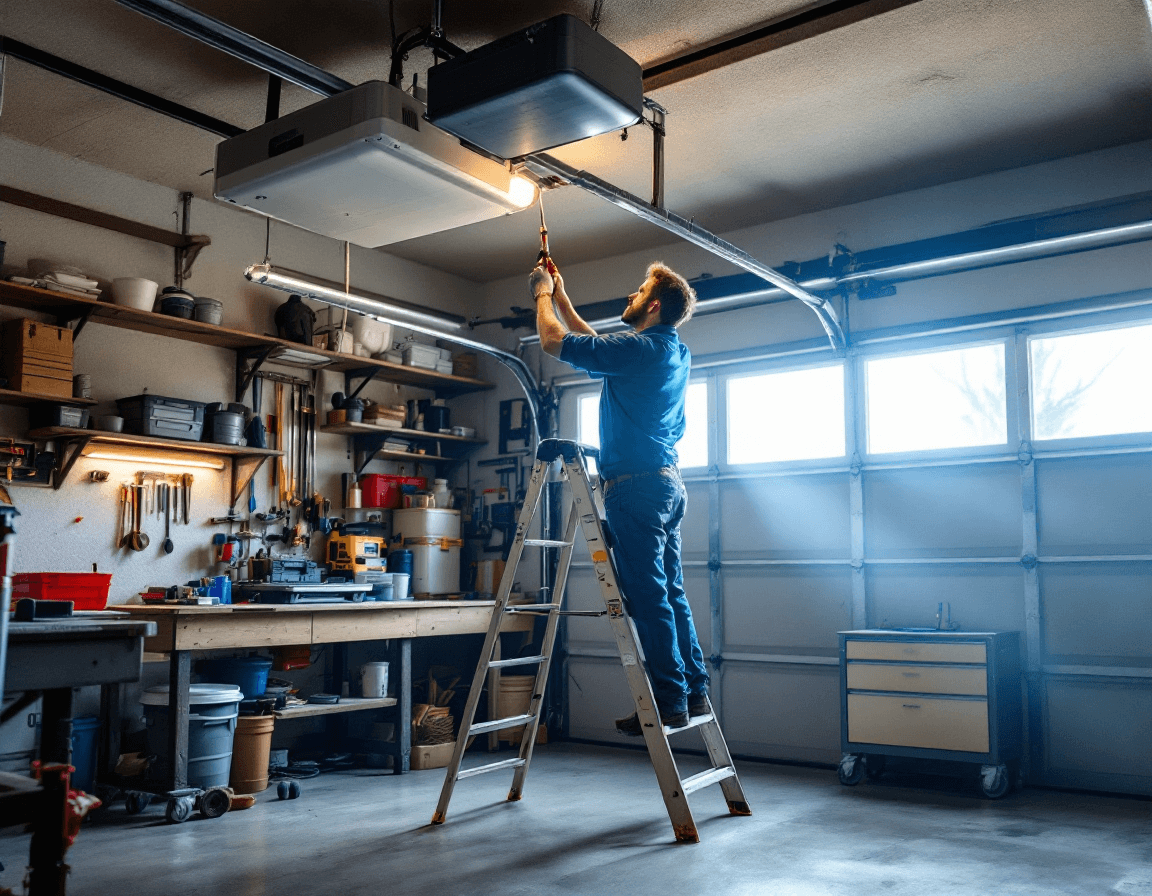
Garage Door Opener Repair in Newcastle, WA is one of the most common calls we handle on the Eastside hillsides, and it usually starts with something small: a remote that suddenly stops working, a door that stalls halfway, or a motor that hums without lifting anything. Newcastle sits on the slopes of Cougar Mountain, with neighborhoods that range from older ranch homes to newer builds tucked near the Newcastle Golf Club and the wooded corridors along China Creek. Those conditions affect how openers age, so the same symptom can have different causes here than it would in a dry, flat region. This page explains what typically goes wrong, how a technician narrows it down, and what you can safely check yourself before calling.
Our service covers motor, gear, circuit board, and travel-limit troubleshooting for every major opener brand, and most opener repairs fall in the range of $95 to $375, depending on what the diagnosis reveals. The final cost depends on the part, the brand, the age of the unit, and whether the problem is a simple adjustment or a component that needs replacing. We would rather walk you through the findings than guess from a phone description, which is why the first visit focuses on confirming the cause before anything is replaced. Read on for the details, and call (888) 799-3819 whenever you want a licensed technician to take a look.
When the Motor Hums but the Door Refuses to Budge
A motor that runs without moving the door is one of the more puzzling symptoms, but it narrows the possibilities quickly. The first thing a technician checks is whether the door is still connected to the opener's drive system. If someone pulled the emergency release cord, usually a red handle hanging from the trolley, the carriage is no longer engaged, and the motor spins freely while the door sits still. Sometimes the cord has simply drifted to a position where it catches on the door, which can disconnect the trolley during normal use.
When the trolley is engaged and the motor still turns without lifting, the fault usually lies in the drive path. A worn or broken drive gear, a sheared coupling, or a belt or chain that has slipped off its sprocket can all produce this exact sound. Newcastle homes with long driveways or steep grades often put extra strain on the drive system because the door is working against the full weight of the panels with little margin for error. Our technicians will inspect the trolley arm, the attachment to the door bracket, and the drive mechanism itself before deciding whether the motor is at fault.
Motor failure is less common than people expect, but it does happen, especially in units that have run for many years in damp garages. A motor that overheats, draws unusual current, or smells of burnt insulation should be shut off at the breaker and left alone until a professional can evaluate it. Continuing to run a failing motor can damage the gear set and the circuit board, turning a modest repair into a larger one.
Remote Silence and Dead Wall Buttons in Damp Garages
When the remote and the wall button both fail to respond, the cause is often in the control path rather than the opener itself. Batteries in remotes are the obvious first suspect, and they should be swapped before anything else because they are inexpensive and easy to test. Wall button failures are often caused by a loose or corroded connection at the terminal block, a damaged low-voltage wire running through the wall, or a faulty button. Moisture is a persistent factor in the Pacific Northwest, and garage wall panels that sit near exterior doors or damp corners can develop corrosion over time.
Remote programming problems deserve a separate look. Many modern openers use rolling-code technology, which means a remote can fall out of sync if it is pressed many times out of range, or if the opener's learn button was pressed during a previous visit. Radio interference from nearby devices, a damaged antenna wire on the opener head, or a metal object placed close to the unit can also block the signal. A technician can test the receiver, confirm the remote is transmitting, and resync the system without replacing parts that are still working.
Homeowners can safely do a few checks themselves. Confirm the opener has power by looking for the indicator light on the head unit, then check that the breaker has not tripped. Try the wall button and the remote from different positions, and inspect the wall panel for visible corrosion or loose wires. Here are the checks we recommend before calling:
- Replace the batteries in every remote, including any keypad or visor clip units.
- Look for the opener's power light and confirm the outlet or breaker is working.
- Check the wall button wiring for visible damage, but do not open the panel if it is live or if you are unsure.
- Make sure the antenna wire on the opener head hangs straight and is not pinched or wrapped around metal.
If none of these steps restores control, the problem is likely inside the receiver, the logic board, or the wiring path, and a licensed technician should take over from there.
The Grinding Sound That Points to Stripped Gear Teeth
A harsh grinding or clicking sound from the opener head is a warning sign that should not be ignored. In most cases, it means the plastic or metal gear teeth inside the drive assembly have worn down or stripped. Many standard residential openers use a nylon gear that gradually wears with use, and the teeth can fail suddenly if the door has been forced by hand or if the trolley has been abused by repeated stalls. Once the gear begins to slip, the motor may still run, but the door can jerk, pause, or stop completely.
Stripped gears are often accompanied by a door that moves unevenly or lurches at the start and end of its travel. In Newcastle, where the humidity keeps garages damp for much of the year, lubrication can break down faster than homeowners expect, adding friction to the gear set and accelerating wear. Dust, pollen, and moisture from the surrounding trees can also work their way into the housing. A technician will open the drive cover, check the gear teeth for chipping or missing material, and inspect the worm gear or shaft for scoring.
Replacing a stripped gear is usually a straightforward repair when the rest of the drive system is sound, but it should be paired with a check of the trolley, the rail, and the door balance. A gear that failed because the door was hard to lift may point to a separate problem, such as worn rollers or a spring that is losing tension. Ignoring that connection can lead to a second failure soon after the first repair. Stop using the opener if the grinding is loud or if the door moves in fits, and schedule service before the damage spreads.
Doors That Stop Short or Reverse Without Warning
When a door will not close all the way, or reverses immediately after it starts to descend, the opener is usually responding to a safety signal or a force setting. Modern openers are required to reverse the door if they detect an obstruction, and the photo-eye safety sensors mounted near the floor on each side are the most common trigger. If the sensors are knocked out of alignment, dirty, or obscured by cobwebs and leaves, the opener interprets the beam as blocked and sends the door back up. Newcastle's wet winters often bring leaf debris and mud into garages, which can settle on the sensor lenses.
The travel limits, which tell the opener where the door should stop when fully open and fully closed, can also drift out of calibration. This can happen after a power interruption, after a belt or chain has stretched, or after the door has been adjusted. A door that closes partway and then bounces back is often a sign that the close limit has been set too high or that the force setting has been pushed past its intended range. Adjusting these settings requires care, because an incorrect force setting can fail to reverse the door when it should.
A door that reverses on its own may also be struggling to close because it is out of balance or the tracks are not square. Check that nothing is resting in the door's path, and confirm the sensors have a clear view of each other. If the door still reverses after you have cleaned and aligned the sensors, a technician can test the safety circuit, verify the travel limits, and check the door's balance. Never bypass or tape over the safety sensors, even temporarily, because that defeats a protection designed to prevent injuries.
Reading the Blinking Lights on the Opener Head
A repeating light pattern on the opener head is a diagnostic code, and each brand uses its own system. Some units flash a series of slow pulses, while others blink quickly, pause, and repeat. These patterns often indicate a specific fault, such as a safety sensor problem, an obstruction, a motor issue, or a logic board error. Because the meaning varies widely from one brand to another, the owner's manual or the label on the unit is the most reliable starting point.
Light patterns can also appear after a power outage or a surge, when the opener resets and runs a self-check. A flashing light that appears once and clears is usually harmless, but a pattern that repeats every time you try to operate the door suggests a fault that needs attention. Homeowners sometimes assume the light means the entire opener is dead, when it may only be a single input, such as a sensor wire that has come loose. Note the pattern, how many times it flashes, and what the door was doing when it started. That information helps a technician narrow the diagnosis quickly.
In our experience, the most common causes behind repeating codes are misaligned sensors, a damaged sensor wire where it passes through the track bracket, and a logic board that has been affected by moisture. Wiring that runs along the garage ceiling is exposed to temperature swings and condensation, which can break down insulation over several seasons. A technician will compare the code to the brand's documentation, test the sensor circuit, and check the wiring path before recommending any replacement part.
Loose Chains, Slipping Belts, and the Slack You Should Not Ignore
A chain or belt that is loose, has come off its track, or looks frayed is a direct threat to the opener's ability to move the door. Chain-drive openers can develop slack as the chain stretches with age, and belt-drive units, which are popular for quieter operation, can slip if the belt loses tension or the pulleys wear. When the chain or belt jumps off, the door may stop, the opener may run without moving the door, or the carriage may make a loud clacking sound. Slack in the drive should never be ignored, because it can lead to more damage if the system is operated repeatedly.
Newcastle homes often have garages that are used for storage, which can mean dust, cobwebs, and debris accumulate around the drive rail. Moisture can also cause surface rust on chains and pulleys, speeding up wear. A quick visual check can help you spot early signs of trouble, but adjusting or tightening a chain or belt involves enough tension and risk that it should be left to a technician. Our team will inspect the drive, check the tension, replace any damaged parts, and confirm the trolley and rail are aligned.
Remember that chain and belt work is separate from spring and cable work, and the two should not be combined by a homeowner. The springs and cables counterbalance the weight of the door and store significant energy, which can cause serious injury if released unexpectedly. The following signs suggest your drive system needs professional attention:
- Visible gaps or sagging in the chain or belt when the door is still.
- A chain or belt that has popped off the sprocket or pulley.
- Rust, cracking, or fraying on the drive components.
- Clicking, clacking, or grinding that changes as the door travels.
Intermittent Operation and the Quiet Role of Moisture
Intermittent or unreliable operation is among the most frustrating symptoms because the door works one day and fails the next. Often the cause is a loose connection, a failing component that behaves differently with temperature, or a moisture problem that comes and goes with the weather. A garage in Newcastle can swing from damp and cool to warmer and drier over the course of a few days, and that movement can stress solder joints, wire terminals, and sensor connections. The door may respond fine to the remote one morning and then hesitate the next evening.
Wiring is a frequent suspect, especially in garages with older installations or where the wall panel and sensors have been moved during a renovation or a previous repair. Low-voltage wires can become pinched, nicked, or disconnected at the terminal block, and a connection that seems fine when pressed may open again under vibration from the door. Pests are also a factor in the Pacific Northwest, since rodents will chew insulation in attics and along garage ceilings, and that damage can create short circuits or intermittent faults. Our technicians check the full signal path, from the wall button to the receiver, to find where the connection is failing.
If you notice the opener working in one situation and failing in another, make a note of the conditions. Write down the time of day, the weather, whether the door has been used repeatedly, and whether the failure happens from the remote, the wall button, or both. That detail gives a technician a much better starting point than a general complaint that the door is unreliable. Persistent intermittent problems are rarely solved by replacing the remote or the wall button, so the diagnosis should focus on the wiring, the logic board, and the sensors.
How Different Opener Brands Shape the Repair Process
Every major opener brand has its own design, and those differences affect how a repair is diagnosed and performed. Some units use belt drives, others use chains or screw drives, and the logic boards, control panels, and safety systems vary considerably between manufacturers and model years. A repair that is routine on one brand may require different tools, parts, or programming steps on another. That is why our technicians work across all major brands rather than assuming every opener behaves the same way.
Part availability can also differ. Older models may use discontinued logic boards or gear sets, and in those cases a technician may need to recommend an alternative part or discuss whether a replacement opener makes more sense. Newer openers often include built-in diagnostics, wireless accessories, and smartphone connectivity, which can help with troubleshooting but also add layers that need to be checked. A technician will identify the model, confirm its current condition, and explain the options clearly before any work begins.
Brand knowledge also matters for safety features and settings. Each system has its own method for setting travel limits, force, and sensor behavior, and using the wrong procedure can result in a door that does not reverse properly. Homeowners who attempt to adjust these settings based on a generic guide sometimes create new problems. Bringing the opener's model number and a description of the symptom to the appointment speeds up the process and helps the technician arrive prepared.
What Shapes the Price of an Opener Repair
Most opener repairs fall between $95 and $375, but the final figure depends on several factors. A simple adjustment, such as realigning a sensor or resetting a travel limit, sits at the lower end of that range. A replacement gear set, logic board, or motor typically costs more because the part itself is more expensive and the labor to install it takes longer. The age and brand of the opener also play a role, since some parts are harder to source and some systems require additional calibration after repair.
The condition of the rest of the door system can influence the total as well. If a stripped gear or failed drive component is discovered alongside worn rollers, a damaged track, or an unbalanced door, a technician may recommend addressing those issues at the same visit to avoid a second service call. We believe homeowners should understand what is being fixed and why, so we explain the diagnosis before recommending any additional work. You are never obligated to approve work beyond the original problem, and a clear explanation should come before any parts are installed.
Keep in mind that a repair estimate is most accurate when the technician has seen the unit. Phone descriptions can point toward likely causes, but confirming the fault on site prevents unnecessary parts from being ordered. If the opener is near the end of its service life, we will say so honestly, because repeatedly repairing an aging unit may cost more over time than planning for a replacement. Our goal is to give you a clear picture of the repair options so you can make the decision that fits your home and budget.
Working Around Newcastle's Hillsides, Wet Winters, and Garage Layouts
Newcastle's terrain shapes how garage doors and openers perform. Many homes sit on sloped lots, and driveways that tilt toward the garage can cause water to pool at the threshold during heavy rain. Standing water and mud can work their way under the door and reach the bottom sensor, the weatherstripping, and the opener's wiring if it runs low. Homes near the wooded areas around China Creek and Cougar Mountain may also see more leaf litter, moss, and organic debris collecting near the door, which can clog tracks and sensor housings over time.
Winter brings its own challenges. Cold mornings can make door tracks and rollers stiffer, which increases the load on the opener and can lead to stalls or reversals. Condensation forms inside uninsulated garages during temperature swings, and that moisture can settle on the logic board and wire connections. Summer may be drier, but heat can affect the opener's internal components and the lubricants in the drive system. Our technicians consider these seasonal patterns when they diagnose a fault, because a problem that appears only on cold, damp mornings points to a different cause than one that happens consistently.
Garage layouts in the area also vary. Some homes have detached garages, long runs of wiring to a far wall panel, or ceilings where the opener head is mounted close to storage racks. Those details affect where the sensors can be aligned, how the wall button is wired, and how much clearance the trolley has. A technician who understands local housing styles can often find the cause of a symptom faster and plan a repair that fits the actual space rather than a textbook installation.
Where Homeowner Checks End and Licensed Service Begins
Some garage door work is appropriate for a homeowner, and some is not. Cleaning sensor lenses, replacing remote batteries, checking the breaker, and observing whether the door moves freely by hand are safe starting points. Anything that involves the torsion or extension springs, the lift cables, the drum, or the high-tension hardware should be left to a licensed professional. Those components store large amounts of energy, and even experienced people can be seriously hurt when they are released unexpectedly. Spring and cable work is not something we recommend homeowners attempt, and we always direct that type of repair to a licensed technician with the proper tools.
Opener repairs can also involve electrical components, and working on live wiring or the logic board without the right training creates risk. Shut off power at the breaker before opening any housing, and avoid forcing the door by hand when the opener is engaged. If the door is off track, bent, or hanging unevenly, stop using it and keep people and vehicles clear of the opening until service arrives. These precautions protect both you and the equipment, and they reflect the careful approach our technicians take on every call.
A good rule of thumb is this: if a fix requires tension, force, electrical testing, or removing a safety component, it belongs with a licensed technician. Our team is licensed, bonded, and insured, and we are glad to explain what we find during the visit so you understand the repair before it begins. Whether your Newcastle garage door is stalling, grinding, flashing codes, or refusing to respond, a professional diagnosis is the fastest way to get it working again safely.
Garage door openers are built to last, but the damp Pacific Northwest climate, the sloped lots and wooded surroundings of Newcastle, and years of daily use all take their toll. If your opener is showing any of the symptoms described here, do not wait for it to fail completely. Call Seattle Garage Door Fix at (888) 799-3819 to schedule service with a licensed technician who can diagnose the problem, explain your options clearly, and get your door moving reliably again.