
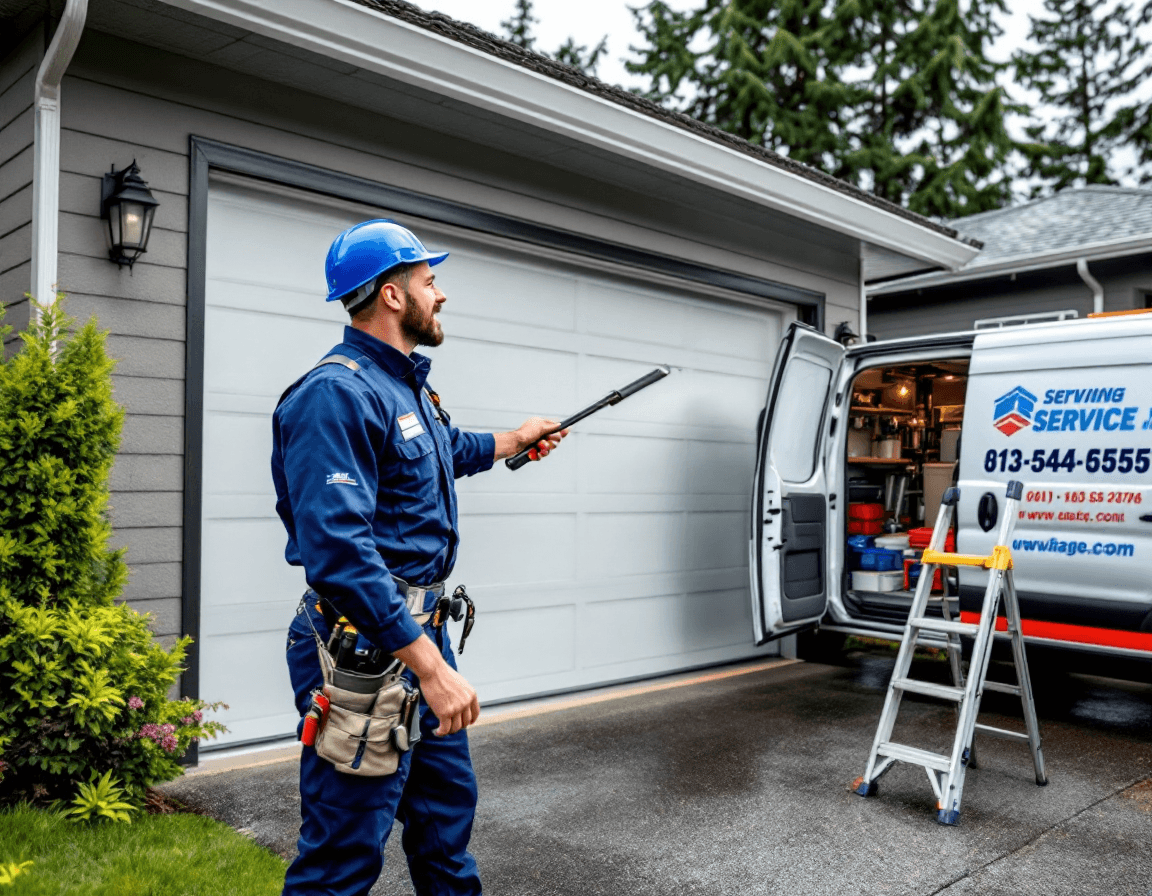
Garage door repair in Issaquah, WA is a practical need for homeowners across the city, from the newer streets of Issaquah Highlands to the older blocks near Gilman Village and the wooded lots climbing toward Squak Mountain. A door that won't open, closes unevenly, or stops halfway is more than an inconvenience. It can trap your car inside, expose your home to weather and theft, and in some cases create a safety hazard for children and pets who use the garage as a path into the house. Seattle Garage Door Fix works on residential doors throughout King County, and our technicians see the same patterns repeat: moisture, daily use, and small problems left alone until they become expensive ones.
This page explains what tends to go wrong with garage doors in the Issaquah area, how to recognize the early signs, and what you can safely check yourself before a technician arrives. We cover the symptoms we hear about most often, including doors that reverse before reaching the floor, loud grinding or banging, and doors that look crooked or sag. We also explain why certain repairs, especially anything involving springs or cables, should always be left to a licensed professional. Typical residential repairs in our service area generally fall between $95 and $450, and the sections below describe what drives that range.
Our goal is to give you enough background to make a confident decision, whether you're dealing with a sudden failure on a weekday morning or a slow change you have noticed over the past few months. Read the sections that match what your door is doing right now, and call us if anything here leaves you unsure.
How Pacific Northwest Weather Wears Down Issaquah Garage Doors
Issaquah sits in a part of King County where long wet seasons are the norm, and that moisture finds its way into almost every component of a garage door. Steel panels can develop surface rust at the bottom edge where water collects, and wood doors can swell, warp, or lose their shape after months of humidity followed by dry spells. Even insulated steel doors, which hold up well in general, can have their weatherseals harden or split after repeated cycles of rain and freezing temperatures. When a door changes shape slightly, the rollers and tracks no longer line up the way they were designed to, and the strain shows up as sticking or uneven travel.
Cold snaps add another layer of trouble. On the coldest mornings, lubricants thicken and metal contracts, which can make a door that worked fine in October struggle to lift in January. Many homeowners notice that their opener seems to labor or stall for the first few cycles of a cold day and then runs more smoothly as the mechanism warms. That pattern is worth paying attention to, because it often means lubrication has broken down or a component is starting to bind. Ignoring it usually leads to a more involved repair later.
Leaf debris and forest litter are also constant factors in areas near Squak Mountain and other tree-lined neighborhoods. Fir needles, moss, and grit collect in door tracks and along the floor seal, and when the door moves, that debris gets pressed into the rollers and hinges. Over time it creates friction and noise. Keeping the bottom track and the lower panel edge clear is one of the simplest ways to protect your door's smooth operation, and it costs nothing more than a few minutes with a broom and a damp cloth.
Warning Signs Your Door Is Asking for Help
Most garage door failures do not happen without notice. Doors usually give off clues for days, weeks, or months before a complete breakdown, and recognizing those clues early is often the difference between a modest repair and an emergency call. Homeowners in Issaquah frequently describe the same progression: a slight hesitation, then a new sound, then a door that stops partway and refuses to cooperate. Paying attention to these changes gives you more control over when and how the repair happens.
The symptoms we see most often include the following:
- The door stops or jams partway through its travel and then either stays put or reverses.
- The door moves unevenly, rising faster on one side or appearing tilted when it's closed.
- Loud grinding, squealing, or banging occurs during opening or closing, especially in the first few seconds of movement.
- The remote or wall button responds with a light but the door does not move, or the opener runs without lifting the door.
- Visible gaps appear between the bottom panel and the floor, or the door sags in the middle when it is partly raised.
- The door slams shut suddenly instead of descending at a steady pace.
Any one of these signs deserves attention, and several together usually point to a problem that is building. A door that shows two or three of them at once is often suffering from worn rollers, a misaligned track, or an opener that is working harder than it should. Calling for an evaluation early can keep a $95 adjustment from turning into a larger repair involving multiple components.
Why Doors Reverse Before the Floor and What Sensors Have to Do With It
A door that starts to close and then reverses before it reaches the floor is one of the most common complaints we hear, and it is also one of the most important to understand. Modern openers are equipped with safety reversal systems that are designed to stop and reverse the door if something blocks its path. The system also reverses the door if the photo-eye sensors near the floor cannot see each other. That is an intentional safety feature, and it protects people, pets, and vehicles from being crushed under a descending door.
In many cases, the reversal is caused by something simple. The sensors are mounted on each side of the door opening, roughly six inches above the floor, and they must be aligned so their lenses face each other. A bump from a bicycle, a shifted sensor bracket, or a bit of cobweb or dust across a lens can break the beam. Sun glare through a side window or a dirty lens can cause the same effect. Checking that both sensor lights are steady, and that nothing is blocking the beam, is a reasonable first step for any homeowner.
If the sensors look properly aligned and clean but the door still reverses, the issue may be the force settings on the opener or a problem with the door balance and tracks. A door that is harder to lower than it should be can trigger the reversal even without an obstruction. This is one area where a technician's experience matters, because adjusting force settings incorrectly can create a real safety hazard. We always test the reversal function after any work to confirm the door responds correctly to an obstacle.
Remote and Wall Button Failures: Checks Worth Doing First
When the remote or wall button seems to do nothing, it is tempting to assume the opener has died. In reality, a surprising number of these calls turn out to be simple battery, programming, or power issues. Before you call for service, it is worth spending five minutes on a few basic checks, since they can save you a visit or at least help us diagnose the problem faster when we arrive. Most of these checks require no tools and no special skills.
Start with the remote itself. Replace the batteries, even if they seem to have some charge left, because weak batteries often produce an intermittent signal that works only sometimes. Next, look at the wall button and check whether its indicator light comes on when pressed. If the wall button works and the remote does not, the problem is likely in the remote or its programming. If neither works, check the opener's power supply, including whether the breaker has tripped and whether the opener's light and motor respond when you use the emergency release.
The emergency release cord, the red handle hanging from the rail, disconnects the door from the opener so you can operate it by hand. Pull it only when the door is fully closed to avoid a sudden drop, and reconnect it before using the opener again. If the door moves freely by hand, the problem is likely electrical or related to the opener. If the door is hard to lift or won't move at all, the issue is mechanical and should be left to a professional. Never attempt to force a door that is stuck or resist the urge to lift it while the opener is still engaged.
Off-Track Doors, Worn Rollers, and Uneven Movement
A door that has come off its tracks is one of the more alarming situations a homeowner can face. The door may lean at an angle, sit crooked in the opening, or hang partway out of the track on one side. In this condition the door is unstable and can fall, so it should never be forced or pushed back into place. Keep people and vehicles clear of the door, avoid using the opener, and call a technician right away. A door that has left its track often has damaged rollers, bent track sections, or a shifted hinge that needs proper correction.
More commonly, we see doors that move unevenly rather than leaving the track completely. Worn or cracked rollers can cause one side of the door to lag behind the other, creating a visible tilt or a rocking motion. Nylon rollers, which are common on many residential doors, can crack or flatten over time, especially after years of temperature swings. Steel rollers can develop flat spots or lose their bearings. Replacing rollers is generally a straightforward repair, and it often restores smooth travel and reduces the noise that comes from grinding and rubbing.
Track alignment is another frequent culprit. Tracks can loosen from their mounting brackets, particularly on doors that are opened and closed many times a day by busy households. A track that is out of level or slightly bent will create resistance that the opener has to overcome, and that extra strain can wear out the motor and the drive system faster than normal. A technician can check track alignment with a level and make adjustments that keep the door traveling evenly from start to finish.
Grinding, Squealing, and Banging: Decoding the Noise
Garage doors are not silent, but the sounds they make carry useful information. A steady, low hum from the opener is normal. A high-pitched squeal, a rhythmic grinding, or a sharp bang from the door or the track is not. Each of these sounds tends to point to a different part of the system, and listening carefully can help you describe the problem accurately when you call for service.
Squealing often comes from dry hinges, rollers, or bearings that need lubrication, particularly in cold weather when the old grease has stiffened. Grinding sounds frequently indicate metal rubbing against metal, which can mean a roller with a damaged bearing, grit caught in the track, or a loose bracket allowing parts to shift. A loud bang, especially at the top or bottom of travel, may point to a loose cable drum, a worn stop, or a track that has been bent by impact. Banging can also come from the door panels flexing when a section is damaged or a hinge has broken.
We recommend against trying to fix noisy doors with heavy lubricants or by tightening everything you can reach. Over-greasing can attract grit and make the problem worse, and loosening the wrong component can change the balance of the door. The better approach is to clean the tracks, apply a light garage-door-appropriate lubricant to the rollers and hinges, and then call for an inspection if the noise continues. Most noise complaints are resolved with a combination of cleaning, lubrication, and a few targeted adjustments.
Springs and Cables: Why a Licensed Technician Must Handle Them
The springs and cables that counterbalance your garage door are under extreme tension, and this is the single most important safety consideration in any garage door repair. A torsion spring or extension spring stores enough energy to cause serious injury if it breaks or is released improperly. Even when a spring appears to be intact, it may be carrying load that can snap or unwind without warning. For this reason, we strongly recommend that homeowners never attempt to adjust, replace, or remove springs or cables themselves. These repairs should always be handled by a licensed, bonded, and insured professional who has the right tools and training.
Many homeowners underestimate the danger because a broken spring often makes a loud bang and then leaves the door heavy or difficult to lift. Some people try to lift the door manually or open it with the opener after the spring has failed, which can strain the opener, bend the track, or cause the door to drop. Others attempt to wind a torsion spring using improvised tools, which is one of the most dangerous things a person can do with a garage door. A broken spring is a repair to schedule right away, not a project for a weekend.
Here are a few warning signs that indicate a spring or cable issue rather than a simple adjustment:
- A sharp bang from the top of the door, followed by a door that is suddenly heavy or will not lift.
- A visible gap in a torsion spring, or a spring that appears stretched or separated.
- A cable that is frayed, slack, or has come off the drum.
- A door that sits partly open and cannot be raised or lowered without strain.
If you notice any of these, keep the door closed if possible, avoid using the opener, and call a licensed technician. We will assess the spring and cable system, recommend the appropriate repair, and explain the options clearly before any work begins.
What Garage Door Repairs Typically Cost Around Issaquah
Pricing for garage door repair depends on what is actually wrong, how accessible the components are, and the type of door involved. For most residential repairs in our Issaquah service area, the typical range is $95 to $450. Smaller jobs, such as sensor realignment, minor track adjustments, or roller replacement on a single side, usually fall toward the lower end of that range. More involved work, such as opener repairs, cable replacement, or multiple components on a heavy or custom door, tends to land higher.
Several factors influence the final figure. The door's size and weight matter, since heavier or wider doors require more robust hardware. The age and condition of the opener affect whether a repair is practical or whether replacement makes more sense. Access also plays a role. A door in a standard two-car garage with straightforward access is usually simpler to service than one in a detached structure or a garage with limited working space. Parts availability can also influence the timeline, especially for less common door models.
We believe homeowners should understand the scope of work before any repair begins, so our technicians explain the diagnosis, the recommended fix, and the expected cost clearly. If a repair is likely to exceed the typical range, we discuss that upfront and let you decide how to proceed. Getting an accurate diagnosis first is often the most cost-effective choice, because it prevents unnecessary parts from being replaced and helps you prioritize the work that matters most.
Maintenance Habits That Keep Doors Smooth Through Wet Seasons
A little regular attention goes a long way toward preventing the problems described above. In the Issaquah area, the most useful habits focus on keeping moisture, debris, and friction under control. Once or twice a year, typically in early fall before the rainy season sets in and again in late spring, take a few minutes to inspect your door and perform basic upkeep. These steps will not replace professional service, but they can extend the life of the rollers, hinges, and opener and reduce the chances of an unexpected failure.
Start by cleaning the tracks with a damp cloth to remove grit, leaves, and moss. Wipe the lower edge of the door and the weatherstrip along the bottom, since these are where water and debris tend to collect. Check the weatherstrip for cracks or flattened sections and replace it if it no longer seals against the floor. Look at the hinges and rollers for signs of wear, and apply a silicone-based or lithium-based garage door lubricant to moving parts rather than heavy oil or grease. Avoid spraying lubricant on the photo-eye sensors or the opener motor.
It is also wise to test the door's safety reversal and auto-reverse features every few months. Place a sturdy object, such as a piece of wood, on the floor in the door's path and close the door using the wall button. The door should reverse as soon as it contacts the object. If it does not, stop using the opener and call for service. Keeping an eye on these features protects your family and your belongings, and it provides an early indication of problems that may be developing.
Scheduling Repairs Across Issaquah Highlands, Gilman Village, and the 98027 and 98029 Neighborhoods
Our technicians serve homes throughout Issaquah, including the Issaquah Highlands area, the blocks near Gilman Village, and the residential neighborhoods extending toward Squak Mountain. Homes in these areas vary widely in age, layout, and garage configuration, from newer townhomes and single-family houses to older properties with custom or aftermarket doors. Whatever your situation, we aim to match you with a technician who understands the specific door and opener you have and can arrive prepared with the right parts when possible.
Because many Issaquah households rely on their garage as the primary entrance to the home, a door that fails at the start of a workday or the end of a school run creates real disruption. We work to schedule service promptly and communicate clearly about arrival windows. If your door is stuck open or closed, or if it presents a safety concern, let our dispatch team know so the call can be prioritized. For a door that is still operating but showing early warning signs, a scheduled visit is often the most convenient way to get ahead of the problem.
If you are unsure whether a repair is urgent, describe what your door is doing when you call. Tell us whether it is moving at all, whether you hear any unusual noises, and whether you have noticed any sagging, gaps, or movement on one side. That information helps us determine the right level of response and gives the technician a head start on diagnosis.
Your garage door works hard every day, and when it struggles, the rest of your household feels it. Seattle Garage Door Fix provides licensed, bonded, and insured residential garage door repair throughout Issaquah and the surrounding Western Washington communities, with honest diagnoses and clear pricing. Whether your door is stuck, reversing too early, grinding loudly, or sitting crooked on its tracks, call (888) 799-3819 to schedule service with a technician who knows the local conditions and takes safety seriously.