
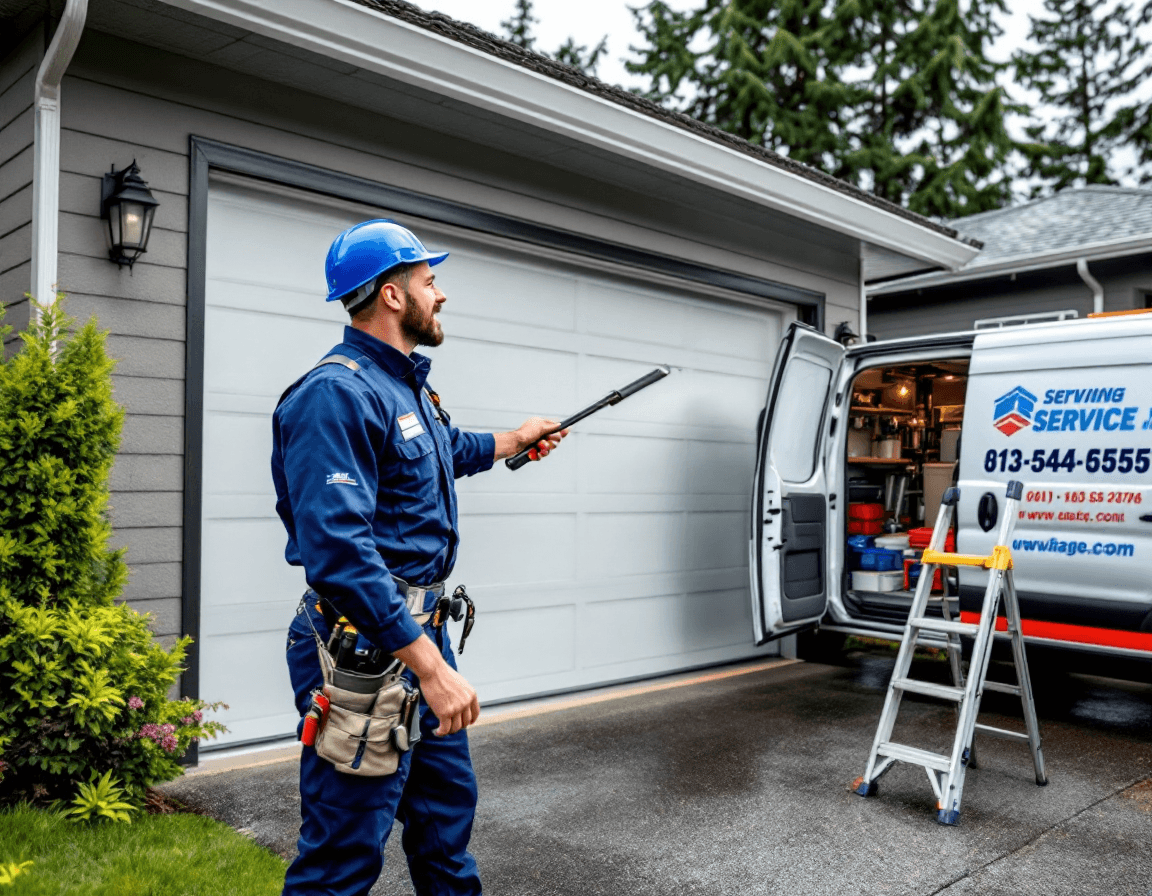
Garage Door Repair in Snoqualmie, WA is a common need for homeowners who live where the Snoqualmie River meets the foothills, because the damp valley air, cold mornings, and heavy seasonal rain wear on door hardware faster than many people expect. A door that stalls, rattles, or refuses to close may look like a single failed part, but in our experience it is usually a combination of moisture, metal fatigue, and a sensor or track that has drifted out of alignment. Seattle Garage Door Fix works with homeowners across Snoqualmie and the surrounding Eastside and Valley communities, and we start every call by asking what the door is doing, when it started, and whether anything changed right before the problem appeared.
The Snoqualmie area has its own rhythm. Fog often sits in the valley in the early morning, especially near Snoqualmie Falls, and it can leave a film of moisture on exposed hinges, rollers, and tracks that never fully dries before the next rain. Homes on Snoqualmie Ridge and in the newer neighborhoods tend to have insulated steel or composite doors with built-in openers, while older houses closer to the historic downtown core may still have wood doors or older steel sections that swell and shrink with the seasons. Each type of door shows wear differently, and knowing which one you have makes diagnosis much faster.
This page walks through the most common symptoms we see in Snoqualmie homes, explains what is usually behind each one, and describes what a practical repair looks like. Pricing for most residential repairs falls between $95 and $450, depending on the part, the door type, and how much diagnosis is needed. Some problems are simple adjustments you can safely check yourself, while others, especially anything involving the tension system, call for a licensed technician with the right tools. We will be clear about which is which so you can make an informed decision.
Why Valley Moisture Shapes Garage Door Trouble in Snoqualmie
Snoqualmie sits in a river valley with long stretches of gray, damp weather from fall through spring, and those conditions have a direct effect on a garage door. Steel parts that are not well coated begin to surface-rust at the hinge knuckles and roller stems, and that rust creates friction the opener was never designed to overcome. Nylon rollers can flatten or crack after years of moisture and temperature swings, and wooden door sections may warp slightly, which pushes the bottom seal out of contact with the threshold. Over time these small changes stack up into the grinding, sticking, and uneven movement that homeowners notice first.
Cold snaps add another layer. When temperatures drop into the low twenties on a clear winter night, lubricant in the rollers and hinges thickens, and the opener motor has to work harder to lift the door in the morning. Water that seeps into the bottom track can freeze overnight, creating a barrier the rollers cannot pass through. Homeowners often assume a door has failed when it has only been held in place by a thin layer of ice, so it is worth checking the track for frost or standing water before assuming a mechanical breakdown.
Because the valley holds moisture so well, we also recommend paying attention to the garage floor and the wall where the door meets the frame. Gaps that let in damp air accelerate corrosion inside the door bottom and along the tracks. A simple seasonal routine of wiping down metal parts, checking the weather seal, and keeping the track free of debris can prevent many of the calls we handle every winter. Preventive habits are not a substitute for repairs, but they often stretch the life of a part by a meaningful amount.
Reversing Before the Floor: Reading Your Safety Sensors
When a door begins to close and then reverses before reaching the floor, the most likely cause is the safety reversal system rather than the motor. Modern openers use two photo-eye sensors mounted near the bottom of the door tracks, one on each side. These sensors send an invisible beam across the opening, and if the beam is interrupted during closing, the opener is designed to stop and reverse the door to prevent injury or damage. Even a small misalignment can cause the sensors to think something is in the way when nothing is there.
In Snoqualmie homes, sensor problems often start with dirt, spider webs, or condensation on the lenses, especially in garages where dust and humidity build up together. A sensor that has been bumped during storage, a holiday decoration, or a bicycle moved against the wall can drift out of alignment without any visible sign. Wiring damage is another frequent culprit, since the thin low-voltage cable running from the sensor to the opener can be pinched by a door roller or chewed by pests in older garages. Checking the indicator lights on each sensor is usually the first diagnostic step, and a steady light on both usually means the beam is connected.
You can safely check and clean the sensor lenses with a soft, dry cloth and gently realign them so the two lights line up with each other. If the door still reverses, or if one light flashes or stays off, the sensor, its bracket, or the wiring likely needs professional attention. Do not bypass or disconnect the sensors to make the door close, because that removes a critical safety feature. A technician can test the reversal force, confirm the opener's travel limits, and replace the sensor or wiring if needed.
Grinding, Squealing, and Banging: Decoding the Noises
Garage doors make a lot of noise, but some sounds are more informative than others. A high-pitched squeal usually points to dry or corroded hinges, rollers, or bearings that need lubrication or replacement. A low grinding noise often comes from the opener's drive system, such as a worn chain or a stripped gear, while a sharp bang at the top or bottom of the travel can mean the door is hitting the stop or that a roller has come loose from its track. Paying attention to when the noise occurs, whether on opening, closing, or both, narrows the field quickly.
Snoqualmie's damp springs can make squealing more pronounced. Metal parts that sat in the fog all night can chatter for the first few cycles of the morning and then quiet down as they warm up. That pattern does not necessarily mean a serious fault, but it does suggest that the rollers and hinges would benefit from a proper lubricant designed for garage door hardware. Do not use heavy grease or household oils on the tracks, because they collect dirt and grit that can clog the rollers and make the problem worse over time.
A banging noise deserves more caution. If the door drops and makes a heavy thud, or if you hear a loud snap during operation, stop using the door and call for service. These sounds can signal a broken spring, a cable under stress, or a damaged track section, all of which can lead to a sudden drop. Our technicians treat these symptoms as urgent because the stored energy in a spring can release unpredictably, and we never recommend that a homeowner attempt to diagnose or repair the spring system themselves.
Crooked Travel, Uneven Lifts, and Doors Knocked Off Track
A door that looks lopsided, lifts higher on one side, or rides crooked in its tracks is trying to tell you something about balance and alignment. Garage doors are designed to lift evenly, and when one side moves faster or slower than the other, the stress transfers to the rollers, hinges, and panels. Left alone, that stress can bend a track, pull a roller out of its channel, or cause a panel to separate from its neighbor. In a Snoqualmie home where the door may be older or heavily used, an uneven lift is often the first sign of a worn component on one side.
Common causes include a roller that has popped out of the track, a track bracket that has loosened from the framing, a cable that has frayed or slipped on one drum, or a spring that has lost tension unevenly. Homes on the Ridge with larger double doors sometimes show more pronounced imbalance because the weight is distributed across a wider span. Even a slight tilt can cause a door to bind halfway up, which then looks like a separate problem. Checking whether the top rollers sit fully inside the track is a good first look, but if you see any frayed cable, bent track, or spring wound loosely, leave the door alone and call a technician.
Track realignment is one of the most practical repairs we perform in the area. A technician can loosen the track brackets, square the track to the door, and tighten the hardware so the door travels in a straight line. Replacing worn rollers with sealed, nylon-tired versions often improves smoothness and reduces noise at the same time. Because the spring and cable system is under high tension, any adjustment that touches the balance mechanism should be performed by a licensed professional with proper equipment.
Stuck Halfway: Jams, Obstructions, and Cold-Weather Binding
A door that stops halfway through its travel is frustrating, and it can also be a safety concern if someone is trying to move a vehicle or exit the garage. The most common cause is a physical obstruction such as a bicycle, a storage bin, or a shifted track section caught in the door path. Before calling for service, clear the opening, check that no objects are resting against the door, and look along the tracks for anything that might have bent or moved. If the door stops at the same point every time, that location is a strong clue to where the problem sits.
Cold weather in the valley can create a different kind of stuck door. When metal contracts, rollers and hinges can bind, and when frost forms inside the track, the door may stop just above the snow line of ice or refuse to start. Moisture can also cause the wooden stiles or panels to swell slightly, creating friction against the side jambs. In these cases, the opener may strain, reverse, or shut off because it senses too much resistance. Clearing ice carefully with a plastic scraper and avoiding hot water on metal tracks can help, but repeated binding should be inspected.
Persistent jamming can also mean the opener has lost its force setting or that a part such as a drive gear or chain is worn. Our technicians check the opener limits, measure the door balance, and inspect the tracks and rollers to determine whether the jam is environmental or mechanical. Often, a combination of cleaning, lubrication, and track adjustment restores smooth operation. If the door will not move at all, or if you hear the opener motor humming without movement, disconnect power to the opener by pulling the emergency release cord only if you are sure the door is closed, and then call for help rather than forcing it.
Remote and Wall Button Failures: Separating the Opener From the Power
When the remote and wall button both fail, the cause is usually something simple, but it still needs a methodical check. Start with the remote batteries, since a weak battery can work intermittently or only at close range. Confirm that the wall button has power by checking whether its indicator light glows, and make sure the opener itself has power by looking for the light on the motor unit. A tripped breaker, a loose outlet connection, or a power outage can all make the opener appear dead.
If the opener has power but still does not respond, the next suspects are the wall control wiring, the receiver, or the remote programming. A wall button that has been damaged by moisture or pulled loose from its wiring can stop working even when the opener is fine. Remotes can lose their synchronization after a power interruption or after a nearby device interferes with the signal, and reprogramming usually restores function. Older openers may have receivers that have simply reached the end of their service life, and replacing the logic board can be more economical than repairing a unit that is decades old.
Homeowners should be careful not to attempt internal repairs on the opener's electrical components. The motor and control board operate on household current, and mishandling them can cause shock or damage. A licensed technician can test each component, confirm the wiring, and replace the faulty part with one that matches the opener model. In many Snoqualmie garages, we find that a loose wire at the wall control or a damaged low-voltage connection is the actual problem, and a quick repair restores normal operation.
Slamming Shut: Why a Door Drops Too Quickly
A door that slams shut or drops faster than normal is more than an annoyance. A controlled, steady descent is part of the door's safety design, and rapid closing can injure a child, a pet, or a person near the opening. The most common reasons include a weakened spring that no longer balances the door's weight, a damaged cable, or a worn drive system that lets the door fall rather than lowering it under control. Sometimes the problem is simply that the door has become heavier because of added insulation or hardware, and the balance has shifted.
In Snoqualmie homes, a door that drops quickly on a cold morning may be struggling against stiff rollers and thickened lubricant, then releasing suddenly once things warm up. That pattern can be confusing because the door seems to work fine most of the day. However, a sudden drop is a warning sign that the balance system needs professional inspection, and we advise homeowners to stop using the door until a technician confirms it is safe. Because the springs and cables store large amounts of energy, we never recommend adjusting them without training and equipment.
What a homeowner can do is observe and document the behavior. Note whether the door drops on every cycle or only when cold, whether one side falls faster than the other, and whether you hear any unusual noise during the descent. Take a short video if you can do so safely from a distance. This information helps a technician diagnose the problem quickly and recommend the right repair, which may involve replacing springs, cables, or rollers, or adjusting the opener's force settings.
Sagging Panels, Visible Gaps, and Weather Seals in Wet Country
Sagging panels, gaps at the top or sides, and a bottom seal that no longer touches the floor all point to a door that has shifted or aged. In a wet climate like Snoqualmie's, these changes matter because every gap admits rain, leaves, cold air, and pests. A sagging section can also distort the door's alignment, which then loads the rollers and tracks unevenly. Catching the problem early often means a smaller repair, such as replacing a weather seal or tightening a bracket, rather than a larger overhaul.
Sagging often begins where a panel has lost support from a hinge or where a bent track has allowed the door to lean. Wood doors may show gaps as the wood absorbs moisture and then dries, and steel doors can develop dents that change how the sections fit together. The bottom rubber seal is especially important in the valley because it blocks water and mud that can otherwise pool in the garage. If you can see daylight around the perimeter when the door is closed, or if the bottom seal is cracked, flattened, or missing, it is time to schedule an inspection.
Weather seal replacement is a straightforward repair, and it can make a noticeable difference in comfort and in protecting stored items. Panel repairs and hinge replacement are also common, especially on older doors where individual sections have been damaged by a bump from a vehicle or a stray object. We recommend asking a technician to check the entire door system during these repairs, because a sagging panel is often connected to a balance or track problem that needs attention at the same visit.
What a Snoqualmie Repair Visit Usually Covers and Costs
Understanding the typical steps in a service visit can help you plan. A technician usually begins with a safety check, confirming the door's balance, reversal function, and the condition of springs, cables, and tracks. Next, they test the opener and its controls, diagnose the reported symptom, and explain what they found before doing any work. Many residential repairs can be completed in a single visit, while more involved jobs such as spring replacement may require ordering parts or scheduling a follow-up.
Pricing for most residential repairs falls between $95 and $450. Simple adjustments, sensor realignment, and lubrication often sit at the lower end of that range, while parts such as rollers, hinges, cables, or an opener logic board typically raise the total. Spring replacement and extensive panel work can exceed that range depending on the door's size, weight, and material, so we recommend asking for a clear explanation before approving any work. A reputable technician should describe the problem, the proposed fix, and the expected cost in plain language.
To make the most of a visit, prepare a few details in advance. Write down the symptoms, when they started, and whether they happen every time or only in certain weather. Note the brand of your opener if you know it, and have the model number ready if it is on the motor unit. Clear a path to the door and the tracks so the technician can work efficiently. These small steps can shorten the appointment and help the diagnosis land on the first try.
Safety Lines Every Snoqualmie Homeowner Should Respect
Garage door repair involves some of the most hazardous components in a home, and certain tasks should never be attempted without training. Torsion springs, extension springs, and their cables store enough energy to cause serious injury, even when the door looks still. Do not attempt to wind, unwind, or remove springs, and do not loosen cable drums or brackets while the door is under tension. If you are unsure whether a component is under load, treat it as dangerous and call a licensed professional.
Some safe actions are appropriate for homeowners. You can keep the tracks clear, wipe dust from the sensor lenses, check that the door closes fully, test the auto-reverse function with a sturdy object placed on the floor, and lubricate hinges and rollers with a silicone-based or lithium-based product made for garage doors. Test the reverse function carefully, and if the door fails to reverse when it contacts the object, stop and call for service. Never disconnect the safety sensors or the auto-reverse feature to keep the door running.
When in doubt, leave the door alone and schedule a visit. Seattle Garage Door Fix is licensed, bonded, and insured, and our technicians follow established safety procedures for every repair, from a simple sensor realignment to a full spring replacement. We believe a homeowner should feel confident about every repair, which is why we explain the work before we start and answer questions throughout the visit. Taking a cautious approach protects your family, your vehicles, and your investment in the home.
If your Snoqualmie garage door is stuck, noisy, reversing too early, drifting out of its tracks, or simply not responding, do not wait for a small problem to become a bigger one. Call Seattle Garage Door Fix at (888) 799-3819 for fast, reliable repair service across Snoqualmie and nearby communities, and let our licensed technicians diagnose the issue, explain your options clearly, and get your door moving smoothly again.