
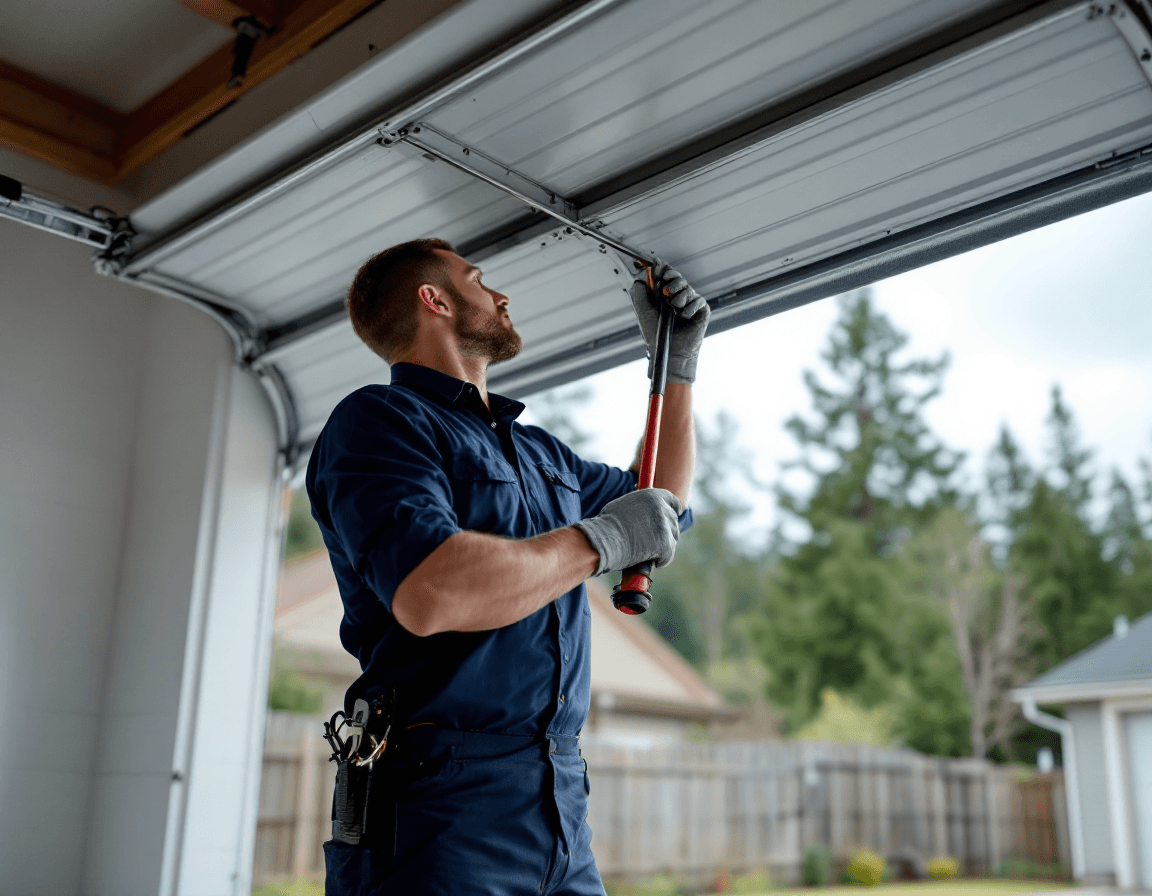
Garage Door Spring Replacement in Snoqualmie, WA is one of the most common repairs we handle for homeowners across the Snoqualmie Valley, and it is also one of the most important to get right. The springs carry most of the weight of your door, so when one fails, the door can go from smooth to stuck in a single morning. If you have heard a sharp bang in the garage, or your door now sits partway open like it is thinking things over, you are dealing with a problem that deserves prompt attention.
Snoqualmie sits in a setting that is beautiful and demanding on mechanical equipment. Homes on Snoqualmie Ridge often have attached two-car garages with larger doors, while older houses near the historic town center may have single-car garages with doors that have been repaired several times over the years. Wherever you live, the combination of damp Western Washington winters, cool nights in the river valley, and frequent temperature swings puts steady stress on steel springs. This page explains what spring failure looks like, why it happens here, and what a responsible repair involves.
Our goal is to give you a clear, practical picture so you can make a confident decision. We will cover the sounds and symptoms that point to a spring problem, the difference between torsion and extension systems, realistic pricing, the option of higher-cycle springs, and why balancing and cable inspection matter as much as the spring itself. We will also be direct about safety, because spring work is one of the few garage door tasks that should always be left to a licensed professional.
What a Snapped Spring Sounds Like in a Snoqualmie Garage
Most homeowners remember the first time a spring broke, and almost everyone describes it the same way: a loud bang, sometimes sharp enough to make you think a vehicle hit the garage. The noise happens because the spring is wound under very high tension, and when the steel fatigues and gives way, that stored energy releases instantly. In many Snoqualmie homes the sound carries through the wall into the kitchen or the bedroom above the garage, which is often how people discover the problem. The bang is rarely the end of the story, but it is a clear signal that the door is no longer supported the way it was designed to be.
After the bang, check the door carefully from a safe distance. If the door is sagging unevenly, sitting low on one side, or resting lower than normal, the spring on that side may be the one that failed. Look up at the horizontal torsion tube above the door for a gap in the coil or a spring that appears to have pulled apart. Do not put your hands near the springs or try to adjust anything. A broken spring can still hold residual stress, and the wrong movement can cause injury.
A sound that is quieter but more persistent can also be informative. Some homeowners hear a grinding or popping noise as the door travels, which can point to a weakening spring that is beginning to shift or a roller that is binding in the track. If the noise changes with the weather, especially after a cold snap, it is worth having the springs inspected before the next failure makes the decision for you.
Why Valley Moisture and Cold Snaps Wear Out Springs Faster
Western Washington is known for rain, and the Snoqualmie Valley receives its share of wet, overcast months that can linger well into spring. Moisture itself does not destroy a spring overnight, but it encourages surface rust on exposed coils, especially on older doors where paint has chipped or lubrication has dried out. Rust weakens the steel and creates tiny stress points, and over many seasons those points can become the place where a coil finally fractures. Garages with poor ventilation or uninsulated walls tend to hold dampness longer, which accelerates the process.
Temperature changes also play a role. Steel responds to cold by becoming slightly less flexible, and the sudden cold snaps that sometimes arrive in the foothills can expose a spring that was already close to its limit. Many homeowners notice that their door works fine in October but starts to struggle in January, and that pattern is consistent with a spring that has been weakened by months of moisture and cycling. The springs are doing the same amount of work every time the door opens, so each season adds fatigue.
Homes near the river and the falls can also experience more fog and dew in the mornings, which means garage doors sometimes stay damp longer than those in drier parts of the region. A simple habit like keeping the door closed during heavy wet spells, wiping visible spring coils during routine checks, and making sure the garage is not used as a storage space that traps humidity can make a meaningful difference. These habits will not replace professional maintenance, but they help the components last closer to their rated life.
Torsion or Extension: Knowing Which Spring Your Door Carries
Before any repair begins, a technician needs to identify the type of spring system on your door, because the two main designs behave differently when they fail. Torsion springs are mounted on a steel shaft above the door opening, and they twist to store energy as the door closes. They are generally the choice for modern residential doors because they are smoother, quieter, and more balanced over a long life. A torsion spring that breaks will usually leave the door partly open or sagging, and the failure often shows up as a visible gap in the coil.
Extension springs run along the horizontal tracks on either side of the door, stretching as the door lowers and pulling the door back up when it opens. They are common on older garage doors and on some budget installations. When an extension spring breaks, it often lets go suddenly, and the door can drop quickly if it is not held by a safety cable. Extension systems require their own set of safety considerations, including proper cable routing and secure end brackets, and they should always be replaced as a matched pair to keep the door level.
Some Snoqualmie homes have a mix of components from different eras, particularly where a previous owner upgraded the opener or replaced a panel without changing the springs. A knowledgeable technician will confirm the spring type, measure the door weight and height, and verify the existing hardware before recommending a replacement. Matching the new spring to the door's actual specifications is essential, because a spring that is too light will not lift the door properly and one that is too heavy will put unnecessary strain on the opener and the track.
Signs Your Door Is Asking for Help Before It Fails
Many spring failures give a warning long before the bang. Homeowners who learn to recognize these early signs often save money by replacing a weakened spring on their own schedule instead of responding to an emergency. The list below covers the most common indicators we see on residential doors in the valley, and each one deserves a closer look.
- The door feels noticeably heavier when lifted by hand, or it takes effort to start the door moving.
- The door opens a few inches and then stops, or it reverses partway through its travel.
- The opener motor hums, strains, or cycles on and off without the door moving much.
- There is a visible gap, stretch, or uneven spacing in the torsion spring coils.
- The door closes too quickly, drops with a jolt, or sits crooked in the opening.
- A cable has come loose from the drum or is hanging slack after a noise.
Any one of these signs warrants a prompt inspection. Two or more together are a strong indication that a spring has already lost much of its strength or has failed completely. Continuing to run the opener in this condition can damage the motor, the gears, and the door panels, which turns a reasonable repair into a larger bill. If you notice the door struggling, it is better to stop using it and call for service than to keep forcing it.
Realistic Price Ranges for Spring Work in the Snoqualmie Area
Pricing for spring replacement depends on the type of spring, the size and weight of the door, and whether the job includes additional parts such as cables, drums, or bearings. For most residential spring replacements, our typical range is $180 to $450. The lower end generally applies to standard single-spring replacements on lighter doors where the existing hardware is in good condition. The higher end often reflects double-spring configurations, heavier insulated doors, or jobs where the cables and drums also need attention.
It helps to understand what that range includes. A proper spring replacement is not just swapping coils. The technician should inspect the entire torsion or extension system, check the cables and drums for wear, confirm the bearing plates and brackets are secure, and test the door's balance after installation. Quotes that seem dramatically lower may leave out these steps, and quotes that seem much higher should be explained line by line. We recommend asking for a written estimate that lists the parts and labor so you know exactly what you are paying for.
Keep in mind that the price of a broken spring is only part of the cost picture. Continuing to operate a door with a failed spring can lead to damaged openers, bent tracks, and panels that crack under uneven load. Repairing the spring promptly typically costs less than repairing the secondary damage that follows. If your budget is tight, ask the technician to walk you through what must be done now and what can safely wait.
High-Cycle Springs and What They Actually Buy You
Standard garage door springs are designed for a certain number of cycles, which means a full open and close counts as one cycle. Many homes in the valley use their garage doors several times a day, especially where two adults commute in different directions or where kids come and go frequently. High-cycle springs are engineered with heavier wire or upgraded steel treatments to handle more repetition before fatigue sets in. They are available for both torsion and extension systems and can be a practical upgrade when the original springs were not sized for heavy daily use.
High-cycle options are not a magic solution, and they do not make the door maintenance-free. They do offer a longer expected service life under the same conditions, which can reduce the frequency of emergency calls and make the door feel more reliable through wet and cold seasons. Whether they make sense for your home depends on how often the door opens, the weight of the door, and whether the existing system is already properly balanced. A technician can help you weigh the added cost against your household's daily use.
When we recommend a high-cycle spring, we also check the rest of the system. A stronger spring paired with worn cables, dry bearings, or a misaligned track will not perform as expected. Upgrading the spring is most effective when it is part of a complete tune-up that includes lubrication, hardware inspection, and balance verification. That approach gives you the longest and most predictable performance from the new components.
Balancing the Door After the New Springs Go In
Balance is one of the most overlooked parts of a spring replacement, and it has a major effect on how the door behaves every day. A balanced door should stay in place when you lift it partway and let go, and it should open and close with steady, controlled movement. When the balance is off, the opener works harder than it should, the door may drift up or down on its own, and the components wear faster. Proper balancing is a precise task that depends on measuring the door's weight and adjusting spring tension to match.
After a new spring is installed, a technician should test the door by disconnecting the opener and lifting it manually to check whether it holds at several heights. If the door slides down, it may need additional tension, and if it rises on its own, the tension may be too high. These adjustments are small but important, and they require the correct tools and training. Doing this without the right equipment is one of the most common ways homeowners end up with a second failure within months.
Balancing also affects the opener's longevity. A door that is in balance allows the motor to start and stop smoothly, which reduces strain on the gears and the drive mechanism. For households that rely on automatic openers for daily access, this translates into fewer surprise breakdowns and more consistent operation. Ask your technician to demonstrate the balance test before they leave, so you understand what a properly working door should feel like.
Cables, Drums, and the Hidden Damage After a Break
When a spring breaks, the cables that work alongside it are often affected. Torsion systems use lift cables wound onto drums at each end of the shaft, and when the spring releases suddenly, the cable can slip off the drum, fray, or kink. Even if the cable looks intact, a sudden load can stretch or damage the strands, which creates a weak point that may fail later. Inspecting the cables and drums is a standard step in any professional spring replacement for this reason.
Drums themselves can become damaged if a cable has come loose or if the door dropped unevenly. A drum that is cracked, worn, or not seated correctly can allow the cable to bind or slip, leading to repeated problems. Technicians check the drum's condition, the set screws, and the alignment of the cable path as part of the repair. Replacing a damaged drum at the same visit is typically more efficient than returning later for a second service call.
Other components deserve a look as well. Bearing plates, center brackets, and the torsion shaft itself can show wear after a break, especially on older doors. Rollers and hinges may have shifted under the sudden change in load. Taking a few extra minutes to inspect these parts can prevent a chain of small failures that would otherwise show up over the next few months.
Safety Rules That Should Never Be Skipped in Snoqualmie Garages
Garage door springs store a tremendous amount of energy, and working on them without proper training and equipment is dangerous. Torsion springs are wound under high tension using steel winding bars, and a bar that slips can cause serious injury. Extension springs can also release violently when they are removed or adjusted. For these reasons, we strongly advise homeowners never to attempt spring replacement on their own, regardless of how many online videos they have watched. A licensed, bonded, and insured technician has the training and tools to handle this work safely.
Until help arrives, there are simple precautions that reduce risk. Keep children and pets away from the door and the area beneath it. Do not stand under a door that appears unbalanced or sagging, and do not try to lift it by hand if it is hanging at an odd angle. Disconnect the opener by pulling the emergency release cord only when you are certain the door is not going to drop unexpectedly, and understand that a door with a broken spring may still be heavy and unstable when manually handled. If there is any doubt, leave the door closed and call for service.
Many homeowners also overlook the risk of an unsecured door being used as a passage. If the door is partly open or hanging, treat the space as off limits. Clear the area of vehicles and stored items that could be damaged if the door drops. Finally, make sure that anyone in the household knows the emergency release location and understands that the spring system is not a do-it-yourself task. Clear communication is one of the most effective safety tools a family can have.
Scheduling a Visit Across the Snoqualmie Valley and Ridge
Service visits in Snoqualmie often involve a mix of home types, from newer construction on the Ridge to older residences near the central streets, and each property has its own access considerations. Driveways may be steep, garages may be detached or tucked behind landscaping, and some homes have doors installed in unusual configurations. Our technicians plan each visit with those details in mind so that the appointment runs efficiently and the proper parts are on hand for the job. If you are not sure what spring type your door uses, the technician can confirm it during the initial inspection.
When you call, it helps to describe what you are experiencing. Mention whether you heard a loud bang, whether the door is stuck partway open, whether the opener is humming without movement, and whether any cables appear loose. Also note the approximate size of the door and whether it is insulated or has glass panels, since those details affect the spring selection. The more information you provide, the better prepared the technician will be to arrive with the right components and an accurate estimate.
Quick service matters in this climate because a door left in a damaged state can be exposed to rain, cold, and humidity for days at a time. A prompt inspection protects the springs, the opener, and the household from further problems. If your door has failed, we can discuss the repair options, provide a clear price range, and schedule the work at a time that fits your routine. Reach out for service with any questions about the process or the options that fit your home.
Ready to get your Snoqualmie garage door back on track? Call Seattle Garage Door Fix at (888) 799-3819 to schedule a licensed, insured spring replacement and a full balance check, and let our team handle the heavy lifting safely.