
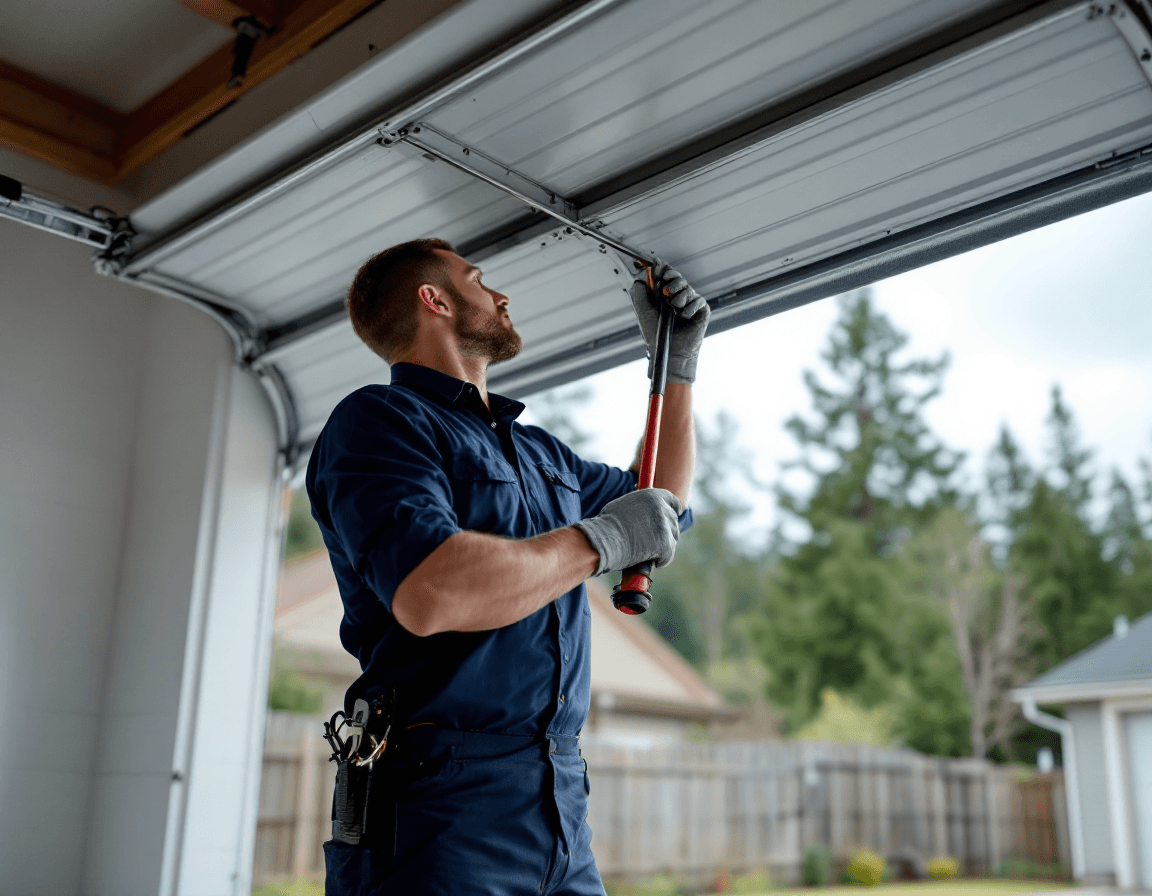
Garage door spring replacement in North Bend, WA is one of the most common repairs we handle for homes in the Snoqualmie Valley, and it is also one of the most important to get right. The torsion or extension springs that counterbalance your door are under enormous tension, and when one fails, the door can become impossible to lift by hand or can drop with real force. Because North Bend sits at the foot of Mount Si with wet winters and cool, damp summers, springs here often reach the end of their service life sooner than the manufacturer's rating suggests. Knowing what a failing spring looks like can save you from a stuck car, a damaged opener, or an injury.
This page explains how spring problems show up in North Bend garages, why our local weather plays a role, and what a professional replacement involves from start to finish. We also cover the difference between torsion and extension systems, the high-cycle upgrades that suit busy households, and what you can reasonably expect to pay. Our goal is to help you make an informed decision before you call, and to explain why this is work for a licensed technician rather than a weekend project.
If you have already noticed something unusual, such as a loud crack from the garage or a door that refuses to rise, you are in the right place. Read through the warning signs and the safety notes, then give us a call at (888) 799-3819 so we can talk through what your door is doing. The sections below are written from the perspective of a technician who spends regular days in North Bend driveways, so the advice is practical rather than theoretical.
The Sound of a Snapped Spring in a North Bend Garage
Most homeowners remember the first time a spring broke. It usually sounds like a gunshot or a heavy metal pipe dropped onto a concrete floor, and it often happens early in the morning or late at night when the house is quiet. In many North Bend homes, the sound carries through an attached garage into the kitchen or bedrooms, which is why people often assume something hit the house or that a car backfired. The bang is the sudden release of tension stored in the coil, and it is a clear signal that the spring is no longer doing its job.
After the bang, the symptoms tend to follow a pattern. The door may sit at a strange height, drop a few inches, or refuse to move at all. On a torsion system, you might notice a gap in the coil above the center bracket, and on an extension system one side of the door may sag lower than the other. Some owners hear the opener run and strain without the door budging, which is the opener working against a load it can no longer lift.
Do not try to test the door by forcing it open or by pulling on the cables. A door with a broken spring can shift unpredictably, and the remaining spring still holds stored energy even when it looks slack. Keep vehicles and people clear of the door path, and disconnect the opener only if you can do so from the side without standing beneath the door. A professional should then inspect the entire assembly before anyone attempts to lift or move the panels.
Why Foothill Weather Wears Down Springs Faster
Spring fatigue is driven largely by repeated cycles and by temperature. Every time the door opens and closes, the spring winds or unwinds and the metal flexes. Cold temperatures make steel stiffer and more brittle, and North Bend's winter mornings can drop well below freezing in the valley and in the surrounding foothills. A spring that handled the summer without complaint may lose its margin when a hard cold snap arrives in January.
The Pacific Northwest also brings long stretches of damp weather, and moisture is a quiet enemy of garage hardware. Condensation forms on metal surfaces when warm, humid air meets a cold slab, and salt-laden road spray from winter traffic can settle on exposed springs and brackets. Over time this encourages surface rust, which weakens the steel and makes the coil more likely to fail at a stressed point. Homes near the base of Mount Si and in the wooded lots around Tanner often see extra moisture from shade, slow-drying yards, and dense tree cover.
Seasonal swings matter too. A garage that is heated in winter and cool in summer, or one that is attached to a shop or laundry area with its own humidity, expands and contracts the door panels and hardware in ways that add up. Lubrication that once worked well can dry out or wash away, leaving friction in the rollers and hinges that places extra load on the springs. For this reason, we often recommend checking the entire balance system whenever a spring is replaced in the Snoqualmie Valley, rather than replacing one component and calling the job finished.
Torsion or Extension: Identifying Your North Bend Spring System
Before any spring work begins, a technician needs to identify which system your door uses, because the replacement procedure and the safety equipment differ. Torsion springs are mounted on a steel shaft above the door opening, usually running horizontally across the header. They wind and unwind to lift the door, and they are typically the most common system on newer residential doors. If you see a single long coil or pair of coils centered over the opening, you likely have torsion springs.
Extension springs run along the horizontal tracks on either side of the door, stretching as the door lowers and contracting as it rises. They are often found on older homes and on some lighter doors, and they usually come with safety cables routed through the springs themselves. An extension spring can fail with a sudden jolt, and the safety cable is designed to restrain the broken coil so it does not whip through the garage. If your door has these cables and they are frayed or loose, that is a sign the system needs professional review.
Correct identification also affects pricing and parts. Torsion replacements usually involve a matched pair, sized by wire diameter, inside diameter, length, and cycle rating, while extension sets are sized by length and load. Using the wrong spring can leave the door unbalanced and place stress on the opener, which is why we measure the existing hardware carefully and confirm the door weight before ordering. We are happy to explain which system you have when you call, and to note any differences that matter for your particular door.
Warning Signs That Appear Before a Spring Breaks
Springs rarely fail without warning, even though the failure itself is sudden. Many North Bend homeowners notice small changes weeks or months before a break, and recognizing those early clues can help you schedule service on your own terms rather than during a rushed emergency. The door may open more slowly than usual, the opener may sound louder as it works, or the panels may seem to bounce slightly at the top of their travel.
Here are the most useful warning signs to watch for:
- A visible gap or separation in a torsion coil, especially on one side of the center bracket
- Rust-colored dust, flaking, or orange streaks on the coil or along the shaft
- A door that opens a few inches and then stops, or that will not stay open at its highest point
- One side of the door sitting noticeably lower than the other when closed
- An opener that hums or strains without the door moving smoothly
- Cables that look loose, kinked, or pulled off their drums
Any one of these signs deserves attention, and several together usually mean the spring is near the end of its life. Continuing to operate a damaged door increases the chance of a sudden failure, and it can also damage the opener motor, drums, and tracks. If you notice more than one item on this list, it is worth scheduling an inspection soon.
What a Professional Spring Replacement Involves
A proper spring replacement in North Bend starts with a full inspection rather than a quick swap. A licensed technician will check the door's weight, confirm the spring type, examine the cables and drums, look at the bearings and rollers, and test the balance by lifting the door partway and letting it hang. This process reveals whether the door is evenly loaded and whether any other component is contributing to the problem. Skipping this step is one reason DIY spring jobs often end with a second failure.
Once the diagnosis is complete, the technician will remove the damaged spring under controlled conditions, using specialized tools and safe methods to release the tension. The replacement spring is then installed, wound to the correct turns for the door's weight and height, and secured to the bracket and cones. Cables are checked for fraying and seated properly on their drums, and the shaft and hardware are inspected for wear. Every fastener is tightened to specification before the door is cycled.
The job concludes with testing and adjustment. The door is opened and closed several times to confirm smooth travel, the auto-reverse feature is checked, and the balance is confirmed again. If the opener needs a force or travel adjustment after the new spring is installed, that is completed at the same visit. Homeowners in Downtown North Bend and the Tanner area typically appreciate a clear walkthrough of what was replaced and what to monitor going forward.
High-Cycle Springs and When They Make Sense
Standard springs are rated for a certain number of open-and-close cycles, and many residential sets are built to a rating that suits an average household. A family that uses the garage as its main entrance, runs multiple cars in and out each day, or has teenagers coming and going at unpredictable hours may wear through a standard spring well before it reaches the end of its rated life. High-cycle springs use heavier-gauge or differently processed wire designed to handle more repetitions, and they are a practical upgrade for busy homes.
High-cycle options are especially useful for homes near the foothills, where the door may also be exposed to the temperature swings described earlier. Because these springs are engineered for extended service, they can reduce the frequency of replacements and the disruption that comes with a failed door. The tradeoff is cost: high-cycle sets carry a higher price than standard springs, so the decision depends on how often the door is used and how long you plan to stay in the home.
Choosing the right rating is a conversation rather than a guess. We look at how many times the door cycles in a typical day, whether the garage is a primary entrance, the door's weight and material, and whether any other components are due for replacement. We will explain the options plainly so you can decide what fits your household, and we will not recommend an upgrade that the door does not need.
Cable, Drum, and Balance Work Often Completed Alongside Springs
Springs do not work alone. They are part of a system that includes cables, drums, bearings, the center bracket, and the shaft, and each of these parts shares the load. When a spring breaks, the cables can be overstressed, stretched, or pulled off their drums, and the drums themselves may be cracked or worn. Replacing only the spring without checking these components leaves the door vulnerable to a second failure, sometimes within weeks.
Balance is the key concept that ties the system together. A well-balanced door rises smoothly and stays put when released partway up, while an unbalanced door drifts up or down on its own. Imbalance is one of the main causes of the door closing too fast, closing crooked, or straining the opener. After a spring replacement, we recheck balance and make small adjustments so the door travels evenly from top to bottom.
Cable work also matters for the look and feel of the door. A cable that has slipped out of its groove can cause one side of the door to hang lower, leading to a crooked appearance and uneven wear on the rollers. Frayed cables should always be replaced rather than patched. We inspect each cable for strand damage and check the drum set screws and the tension of the cable where it attaches to the bottom bracket, since these details are easy to overlook but can cause repeated problems.
Realistic Pricing Between $180 and $450
Most spring replacements in our service area fall between $180 and $450, and the final number depends on several factors. The spring type and rating are the largest variables, since a standard torsion pair costs less than a high-cycle set, and extension systems are priced differently. The door's size and weight matter as well, because heavier doors require springs with more lifting force. Some jobs also include a cable or drum replacement, which adds to the total.
Other factors can shift the price up or down. A door that needs bearing replacement, track alignment, or opener adjustment will require more time, and access to the spring hardware can affect labor. Emergency or after-hours calls may carry different rates, and we always explain the scope before any work begins. We do not recommend unnecessary parts, and we will give you a clear explanation of what the repair includes so you can compare options with confidence.
We encourage homeowners to avoid the lowest online quotes that do not include an inspection, a balance check, or proper disposal of the old spring. A cheap spring that is installed without balancing can fail early, and the cost of the second repair often exceeds the difference in price. Our pricing reflects licensed work, insured service, and a complete check of the system so the door is safe and reliable when we leave.
Why Spring Work Belongs With a Licensed Technician
Garage door springs store a large amount of energy, and mistakes during removal or installation can cause serious injury. Winding bars can slip, coils can release unexpectedly, and a door that is not properly supported can fall. These hazards are why spring and cable work should always be handled by a licensed, bonded, and insured professional. Our team is trained to manage the tension safely and to protect both the technician and the homeowner throughout the job.
Homeowners sometimes try to save money by replacing springs themselves, but this approach carries real risks. The following are common mistakes we see when a DIY attempt goes wrong:
- Winding or unwinding a spring without the correct tools or without locking the winding cones in place
- Standing directly beneath a door that is only partly supported
- Removing a cable or drum before the spring tension has been safely released
- Installing a spring with the wrong length, wire size, or cycle rating
- Ignoring balance, which leads to rapid wear on the new spring and the opener
If you are unsure whether a spring has failed, keep the door closed, keep people and pets away from it, and call a professional. A licensed technician can confirm the problem quickly and explain the safest path forward. Safety is not an area where shortcuts are worth the risk.
Service Across Downtown North Bend, Tanner, and the Surrounding Valley
North Bend's layout is a mix of compact downtown blocks, older residential streets, newer neighborhoods, and rural properties that stretch toward the foothills and the Tanner corridor. Each setting presents different challenges for garage door service. Downtown homes may have tight driveways and shared access, while properties closer to Mount Si can have longer runs, steeper slopes, and more exposure to rain and debris. Our technicians plan each visit with these conditions in mind so arrival times and parts are as predictable as possible.
Many homeowners in the Snoqualmie Valley own detached garages, workshops, or outbuildings that have their own doors and hardware. These structures often see less regular use but can be exposed to moisture and temperature changes that accelerate spring wear. If you have a secondary door that has been sitting unused, it is worth inspecting before winter, since a spring that has been idle for months can behave differently once it is cycled again. We are glad to look at every door on a property during one visit.
Scheduling is most efficient when you describe the symptoms clearly. Mention whether you heard a bang, whether the door moves at all, which side looks uneven, and whether the opener is still running. This information helps us bring the right parts and tools, which shortens the visit. When you call (888) 799-3819, have the ZIP code 98045 and your general location ready, and we will guide you from there.
Keeping New Springs Performing Well After Installation
A new spring is only as good as the care it receives afterward, and a few simple habits can extend its life. Visually inspect the springs and cables every few months, looking for rust, gaps in the coil, loose cable ends, or anything that seems out of place. Keep the door's tracks, rollers, and hinges clean, and lubricate moving parts with a garage-door-specific lubricant rather than heavy grease, which can attract dust and grime. These small steps reduce friction and help the spring work within its intended range.
Seasonal attention matters in the Pacific Northwest. Before the wet season arrives, check that the door seals and weatherstripping are intact, since water intrusion accelerates rust on the hardware. During cold snaps, watch for slower operation or a door that seems heavier than usual, and call for service if the change persists. Keep the garage clear of heavy items stored on the bottom of the door, because extra weight throws off the balance the springs were designed to maintain.
Finally, do not adjust the springs, cables, or balance yourself, even if the door seems slightly off. Minor issues are usually a sign that a professional should take a look before they become a failure. Regular inspections, combined with prompt attention to new symptoms, are the best way to keep your North Bend garage door safe, quiet, and dependable for years to come.
If your garage door has gone silent, stuck, or noisy, or if you heard that unmistakable bang, do not wait for the problem to spread. Call Seattle Garage Door Fix at (888) 799-3819 and a licensed technician will inspect the springs, cables, and balance, explain your options clearly, and get your door moving safely again.