
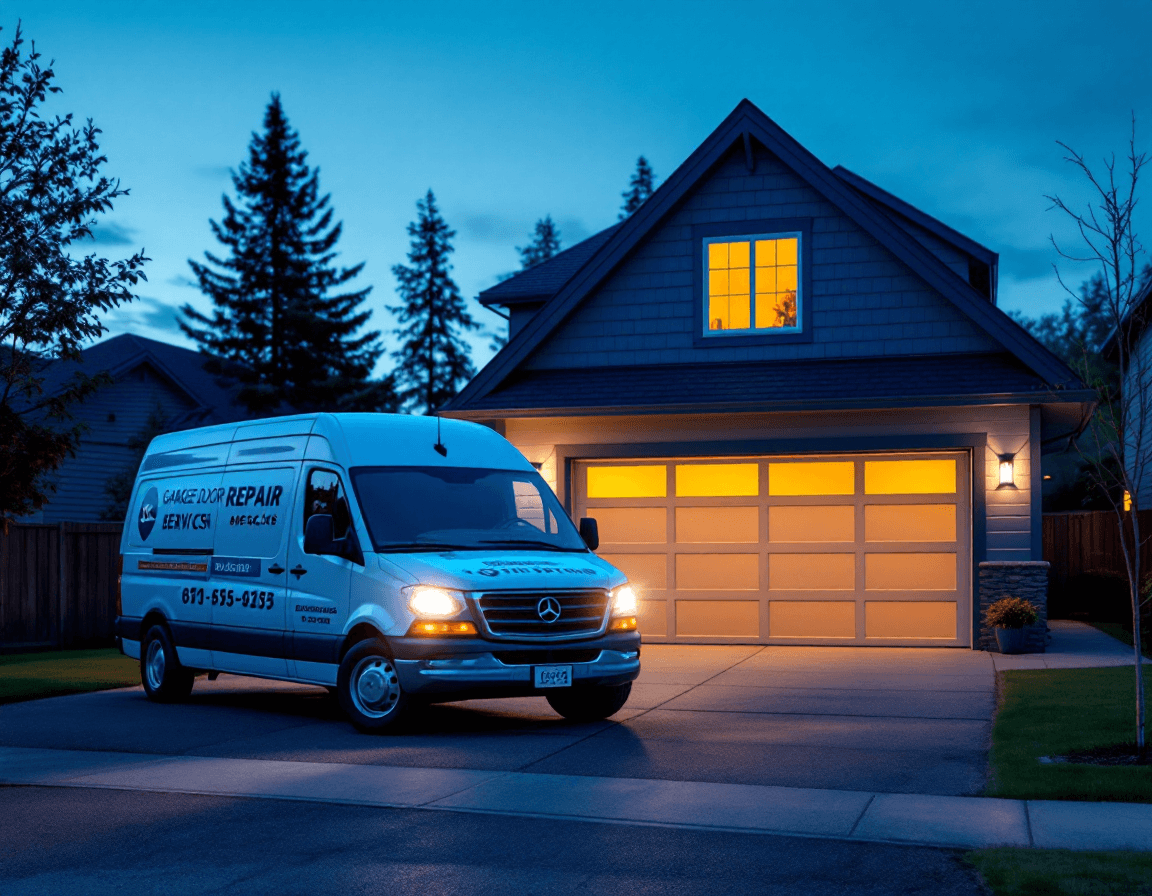
Emergency garage door repair in North Bend, WA is a different kind of call than a routine tune-up. When a door fails at 6 a.m. before a shift on the I-90 corridor, or at 10 p.m. after a wind gust rolls down from the Cascade foothills, the problem is usually more urgent than the hardware itself. A car trapped inside, a door frozen open at the end of a driveway, or a panel hanging off its track can leave a household stranded or exposed. Our technicians are available around the clock for same-day emergency visits across the North Bend area, including the 98045 ZIP code.
North Bend sits in a valley where the Snoqualmie River, the foothills of Mount Si, and wet winter weather all shape how garage doors behave. Homes here range from older downtown bungalows with detached garages to newer houses on wooded lots where the driveway climbs a grade. Each setup brings its own failure patterns, and a technician who knows the area can often predict what they'll find before they open the toolbox. This page explains the most common emergencies we see locally, what you can safely do while you wait, and how our same-day process works from the first phone call to the final test cycle.
If you are reading this with a door that will not close, will not open, or is sitting crooked right now, call (888) 799-3819 first and then return to these notes when you have a moment. Many of the steps below help you stay safe until a licensed technician arrives. Some steps, especially anything involving springs, cables, or the door's tension system, should never be attempted by a homeowner. We would rather you wait safely than try a fix that turns a repair bill into an injury.
Why North Bend Garages Fail in Their Own Particular Way
The Snoqualmie Valley has a long wet season, and that moisture is hard on garage doors in ways that are easy to overlook until something breaks. Wood doors and wood framing swell after weeks of rain and shrink again during dry spells, which can push panels out of alignment and cause the bottom seal to bind against the floor. Steel doors are more stable, but their hinges, rollers, and bottom brackets still corrode when condensation sits on them through November and February. Many North Bend properties also sit under tall conifers, so needles, sap, and moss collect along the tracks and encourage rust where the metal is already weathering.
Temperature swings matter too. On cold mornings, lubricant in the rollers thickens, and a door that glided smoothly in August may groan, stall halfway, or reverse on its own. Snow is not common in the valley every winter, but when it does arrive, especially at higher elevations near the base of Mount Si, it adds weight to the top section and can leave ice in the track. Our technicians often find that a door failing in January was already struggling in October, and the cold simply revealed the weakness.
Wind is a local factor that deserves attention. Gusts funneling through the valley can push a lightweight door against its tracks, bend a section, or loosen a bracket that has been slowly backing out. Properties with detached shops or RV bays along exposed roads see this more often than homes tucked into town. If your door has begun making new noises or sitting slightly unevenly after a windy stretch, that is worth a professional look before a small issue becomes a same-day emergency.
Trapped Inside: What to Do Before the Technician Arrives
Being locked in a garage with a car inside is stressful, especially when the door refuses to lift and you need to get out for work or an appointment. The first priority is safety for everyone in the household, including pets. Never run a vehicle engine inside an enclosed garage, even with the big door partly raised, because carbon monoxide builds quickly in a closed space. If you smell exhaust or feel lightheaded, leave the structure and call emergency services before anything else.
Once everyone is safe, use a short triage checklist to narrow down what has happened. The goal is to describe the situation accurately when you call, which often shortens the time it takes to bring the right parts to the job. Keep these points in mind:
- Check whether the opener light blinks or the motor hums, since that can point to a power or sensor issue rather than a mechanical failure.
- Look for a broken or sagging spring above the door, which is a common cause when the door will not lift at all.
- Note whether a cable is visibly loose, frayed, or hanging off the drum, because that suggests the door may be unbalanced.
- Make sure the emergency release cord, usually a red handle hanging near the opener rail, has not been pulled or tangled in a way that disconnects the door unexpectedly.
- Do not pull the emergency release while a vehicle or person is positioned under the door, and never stand beneath a door that is partly raised and unsupported.
If the car is the only thing inside and you need it out, do not attempt to force the door by hand or tug on cables. A door under spring tension can drop without warning and cause severe injury. Wait for a licensed technician, who will secure the door, confirm its balance, and then restore normal operation or carefully release the vehicle.
Broken Springs When the Door Refuses to Lift
Torsion and extension springs carry most of the weight of a garage door, so when one breaks, the door often feels impossibly heavy or refuses to rise at all. In North Bend homes, we see broken springs most often after a long cold snap or during the first warm days of spring, when metal that has been under stress for years gives way. A snapped spring usually makes a loud crack, and afterward you may see a gap in the coil or a spring hanging loose above the door. The opener may strain, stop, or reverse, which is the motor protecting itself.
Replacing a spring is one of the most dangerous jobs in garage door work because the tension stored in the coil can cause serious injury when released. Springs are wound under extreme force, and improper handling can cause them to fly apart. This is why spring replacement belongs only to licensed, trained technicians with the correct winding bars and safety equipment. Homeowners should never attempt to remove, adjust, or wind a spring, even if a video makes it look simple.
When we arrive for a broken spring call, we begin by securing the door so it cannot drop during the repair. We then inspect the opposite spring, the cables, the drums, and the bearing plates, since a failed spring often means the rest of the system is aging at the same rate. Replacing both springs at once is frequently the most economical choice on older doors, because the second one is usually close to failure. We will explain the options clearly before any work begins, so you can decide how to proceed.
Frayed or Snapped Cables and a Door Hanging Crooked
A cable that snaps or slips off its drum is one of the most unsettling garage door problems because the door may hang at an angle, one side higher than the other, and sometimes jam into the frame. Cables work together with the springs to balance the door, so losing a cable means the weight is no longer evenly distributed. Continued use can damage the track, bend the rollers, or pull the opener off its mount. For that reason, a crooked door should be treated as an emergency even if it still seems to move.
Local conditions contribute to cable wear. Moisture accelerates rust on steel cables, especially where they run near the bottom bracket, and debris that collects in the track can cause uneven friction over time. Homes with older doors that have never been serviced often show fraying where the cable meets the drum fitting. Many homeowners notice the problem only after the door begins to rattle or pull to one side during opening.
Our technicians handle cable replacement with the same caution used for springs. We secure the door, assess the drum and shaft, and replace any worn components so the new cable runs true. After reinstalling, we test the balance with the door partly open and confirm that it stays put when released. If the track or rollers show damage from the crooked travel, we will tell you exactly what needs replacing and why, rather than leaving you with a vague recommendation.
Doors Knocked Off Their Tracks After an Impact
A door that has jumped off its tracks is common after a driver misjudges the opening, after a delivery truck clips the frame, or after a branch falls during a windstorm. Sometimes the damage is obvious, with a panel bent outward or a roller pulled loose. Other times the door looks fine from the driveway but grinds, sticks, or sits uneven when you try to operate it. Either way, continuing to run the opener can bend the track further and put stress on the motor.
Realigning a door involves more than simply pushing it back into place. The tracks must be level, plumb, and parallel to each other, and the rollers must sit correctly within the channel. If a section of the door has buckled, it may need to be straightened or replaced. Our technicians measure the track alignment and check the hinges and brackets before deciding whether a simple reset will hold or whether the damage requires new components.
If you suspect your door has come off its track, avoid operating it with the remote or wall button. Keep children and pets clear, and do not climb onto the door or try to lift it by hand. Call for a same-day visit so the technician can secure the door, confirm there is no spring or cable damage, and bring the track back into proper alignment.
Door Stuck Open Overnight and Home Security
A garage door that will not close is more than an inconvenience. It leaves the interior of your home more exposed, and the open bay can invite theft of tools, bikes, or stored equipment. In the North Bend area, where many properties have wooded edges and detached shops, a door stuck open for hours can be an open invitation to anyone passing by. Protecting your home while you wait for service is a legitimate part of the emergency.
Start by closing the access door between the garage and the house, if you have one, and lock it. Move valuables from the open bay into a locked room or vehicle if you can do so safely. If you have a manual lock or slide bolt on the door, engage it, but understand that a locked door with a broken spring may still be difficult to move later, so do not force it. A portable barrier, such as a heavy piece of furniture set against the bottom of the opening, can deter casual entry without putting anyone at risk, though it is not a substitute for proper repair.
Once the technician arrives, we typically address the closing mechanism first, including the safety sensors, the closing force, and the travel limits on the opener. Photo-eye sensors often get knocked out of alignment by yard work, dust, or spider webs, and a dirty lens can stop a door from closing even when the mechanical parts are fine. We test the sensors, reset the limits, and confirm the door closes fully and reverses correctly if something blocks the path.
Break-In Damage and Storm Debris
Garage doors are sometimes the point of forced entry, and a pried or damaged door can leave a property vulnerable until it is repaired. Pry marks along the bottom seal, bent panels near the lock, or a broken latch are signs that someone attempted to force the opening. If you are dealing with suspected break-in damage, document what you can with photos for your records and your insurer, and contact the police if you have not already done so. We can then secure the door, repair or replace damaged hardware, and restore the locking mechanism so the door is functional and as secure as possible.
Storm damage in the foothills can range from a fallen limb that dents a panel to wind-driven debris that bends a track or tears a weatherstrip. After a major storm, check the door for daylight around the edges, for loose hardware, and for any section that no longer sits flush. Be cautious about trying to clear large debris from the top of a damaged door, since the weight may shift unexpectedly. Our technicians assess storm and break-in damage with an eye toward both function and safety, and we will tell you which panels can be repaired and which require replacement.
Insurance claims sometimes involve repair estimates, and clear documentation of the damage helps. Ask the technician to note the specific components affected, such as panels, tracks, springs, or the opener, so your claim reflects the actual work performed. We will explain the repair in plain terms, and you can use that information in conversations with your insurance provider.
How Our Same-Day Emergency Visits and Upfront Pricing Work
When you call (888) 799-3819, our dispatcher will ask a few questions about the problem, the door type, and your location, which helps us send the right technician with the right parts. Same-day service is our standard approach for true emergencies, including trapped vehicles, doors stuck open, broken springs, and off-track doors. We aim to get you back on the road or secured as quickly as the day's schedule allows, and we will tell you honestly if the timing is tight.
Upfront pricing means you know the cost before work begins. Our technician will explain the diagnosis, the repair options, and the price for each option, and you decide how to proceed. We do not start major work without your approval. Every emergency visit includes a safety check of the door's balance, the opener's operation, and the sensors, so you leave with a clear understanding of what was fixed and what may need attention later.
- Initial safety assessment and stabilization of the door before any work begins.
- Diagnosis of springs, cables, drums, tracks, rollers, and hinges.
- Clear explanation of repair options and pricing before any major component is replaced.
- Testing of the opener, safety reversal, and sensor alignment after the repair.
- Written summary of the work performed so you have a record for your files or insurance.
As a licensed, bonded, and insured company, we follow proper procedures for spring and cable work, and we will never ask you to attempt those repairs yourself. If you have questions about what we are going to do, ask them. A good emergency visit should leave you informed, not confused.
Keeping a North Bend Garage Door Ready for Wet Seasons and Mountain Weather
After an emergency repair, the best way to prevent the next one is a regular maintenance routine suited to the Snoqualmie Valley climate. Wipe down the tracks and rollers during dry spells, removing grit and debris that can cause uneven wear. Use a silicone-based or manufacturer-recommended lubricant on hinges, rollers, and the springs' bearing plates, but avoid spraying lubricant onto the springs themselves or onto the opener's belt or chain. Check weatherstripping along the bottom and sides, since gaps let in rain, leaves, and cold air.
Watch for early warning signs. A door that squeaks more than usual, pulls to one side, or pauses during travel may be telling you that a roller, bracket, or cable is starting to wear. Listen for a sharp snap or a loud bang, which can indicate a spring under stress. Look for rust streaks on tracks or hardware, and note any section of the door that no longer lines up with the frame. Catching these signs early often turns a potential emergency into a scheduled repair.
Homes near the foothills benefit from an annual inspection that includes the door's balance, the opener's force settings, and the condition of the cables and springs. A licensed technician can perform this check quickly and identify parts that are near the end of their service life. Planning ahead lets you choose parts and timing on your terms, rather than waiting for a cold morning to decide for you.
Neighborhood Notes: Downtown North Bend, Tanner, and the Mount Si Foothills
Our technicians serve a range of properties throughout North Bend, and each area has its own character. Downtown homes often feature older detached garages with single-wall or early-generation steel doors, where cramped clearances and aging track systems can make even small repairs require careful planning. Around the downtown core, we also see doors that have been adapted or modified over the years, so the technician may need to confirm the original hardware before ordering replacement parts.
Properties in the Tanner area and along the slopes near Mount Si often have longer driveways, detached shops, and garages exposed to weather coming down the valley. Doors on these properties may face more wind and wider temperature swings, and moisture from wooded surroundings can accelerate corrosion on hardware. If your garage sits at the end of a long gravel or paved drive, it is worth mentioning the distance and any access considerations when you call, because that helps us plan the visit.
Whether your home is near the river, tucked into a hillside lot, or in town near the shops and trailheads, the principles of safe emergency repair remain the same. We approach every North Bend call with careful assessment, clear communication, and respect for the safety of your household. If your garage door is trapped, stuck, broken, or off track right now, call (888) 799-3819 and a licensed technician will help you get back to normal as safely and quickly as possible.