
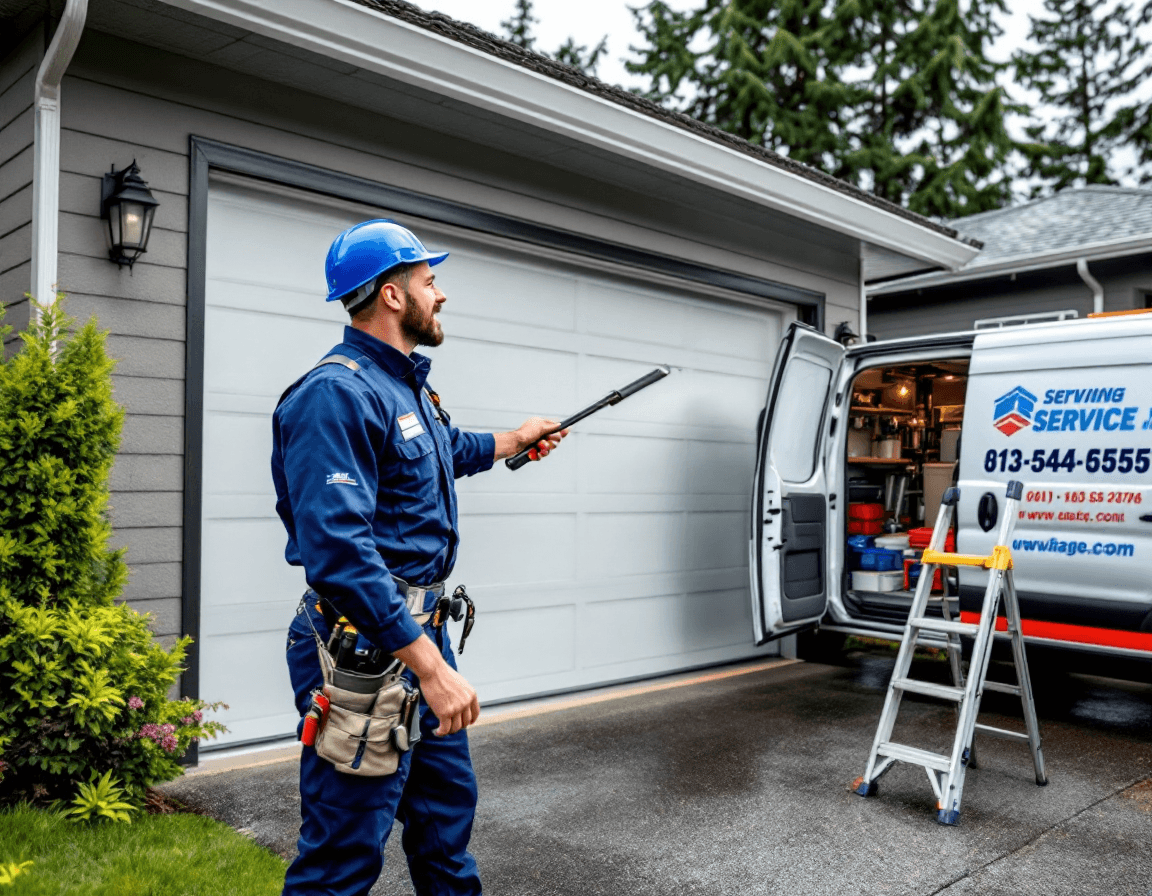
Garage Door Repair in North Bend, WA is one of the most common calls we handle in the Snoqualmie Valley, and it usually starts with a door that simply stops doing its job. Maybe it stalls halfway up, maybe the remote has gone quiet, or maybe it drops with a bang that rattles the windows. Whatever the symptom, a door that won't open, close, or move smoothly disrupts the routine of getting in and out of the house, and it can leave a family's car, bikes, or workshop exposed overnight. Our technicians serve North Bend and the surrounding communities of King County, and we aim to get to the property quickly with the parts most common repairs require.
This page explains what tends to go wrong with residential doors in North Bend, how to recognize the early signs before a small problem becomes a full failure, and what to expect when you call us. Most residential repairs we perform fall in the range of $95 to $450, depending on the part involved and how much labor the diagnosis requires. We will walk through the factors that influence that number so you can plan without guessing. We also explain which jobs should never be attempted by a homeowner, because the stored energy in a garage door system is significant.
Local conditions matter here. Homes in the valley deal with long wet stretches, cool damp mornings, and the kind of moisture that finds its way into every metal fitting. Below you will find sections that address the specific symptoms we see most often, along with practical steps you can take between service visits. If you need help now, you can reach our dispatch line at (888) 799-3819 at any time.
How Valley Weather Wears Down a Garage Door
North Bend sits in a part of Washington where moisture is a constant companion for much of the year. Rain can arrive steadily through fall and winter, and the humidity that lingers in the valley after a storm works its way into steel tracks, roller bearings, and hinge pins. Over time that moisture encourages surface rust, and rust makes parts grind, bind, and resist the smooth motion the opener expects. A door that operated quietly last summer may start complaining the first time the morning temperature drops near freezing and the lubricant thickens.
Temperature swings also affect the metal and the components that hold the door under tension. Steel expands in warm afternoons and contracts on cold nights, and that daily movement can gradually loosen brackets, shift a track by a fraction of an inch, or stress a roller until its stem cracks. Doors on the north or shaded side of a home often collect more damp and moss at the bottom seal, which can freeze to the concrete and make the door hesitate when it tries to lift. Homeowners near wooded lots sometimes notice debris and needles collecting in the track channel, which adds friction on every cycle.
Preventing weather damage is mostly a matter of inspection and timely attention. Wiping down tracks, checking that rollers spin freely, and keeping the bottom weatherstrip intact will prevent many of the failures we are called to fix. When you notice a change in how the door sounds or moves, it is worth acting before the next cold snap. Small corrections early on are almost always less expensive than replacing a bent section of track after the door has been forced through a jam.
Reading the Warning Signs Before a Breakdown
Garage doors rarely fail without warning. Most of the time, the system gives off clues for days or weeks before it stops working entirely. The trick is knowing which sounds and movements point to a real problem and which are just part of normal operation. The list below covers the symptoms our technicians hear about most often from homeowners in North Bend and nearby neighborhoods.
- The door makes a loud grinding, squealing, or banging noise at the start or end of its travel
- The door moves unevenly, with one side rising faster or sitting lower than the other
- The door appears crooked or sits at an angle when closed
- Visible gaps appear around the edges, or the bottom seal no longer touches the floor
- The door sags in the middle or looks bowed when it is partly open
- The opener strains, runs longer than usual, or stops and restarts on its own
- The door closes faster than it used to and seems to drop rather than descend
Any of these signs deserves attention, but some carry more urgency than others. A squeal that disappears after lubrication may only require maintenance, while a door that sags or sits crooked may indicate a failed spring, a damaged cable, or a track that has shifted out of alignment. Ignoring those problems often leads to a sudden failure, sometimes at the worst possible time. If you notice a combination of symptoms, it is wise to schedule an inspection rather than hoping the issue resolves on its own.
When the Door Stalls, Jams, or Comes Off Track
A door that stops halfway through its cycle can be frustrating, especially when you need to leave for work or return after dark. Several causes produce this behavior. An obstruction in the track, such as a stray tool, a child's toy, or accumulated grit, can stop the rollers from moving freely. A worn roller that has seized inside its track can produce the same effect, and so can a damaged cable that has begun to slip.
A door that jumps off its tracks is a more serious situation. Often the root cause is a roller that has come loose from its bracket, a track that has been bumped by a vehicle or a loaded ladder, or a cable that has unspooled from the drum. Never try to force a door back onto its track by pulling or pushing hard on the panels, because the springs and cables can release unexpectedly. Keep people and pets clear of the doorway and call a technician to stabilize the door before anyone works near it.
When a door is stuck, the safest first step is to disconnect the opener using the emergency release cord so the door can be operated by hand. Do this only when the door is fully closed, and avoid lifting or lowering it once you realize the cable or spring may be damaged. Once the door is secured, our team can inspect the track alignment, roller condition, and cable routing. Many of these repairs are straightforward, but the inspection itself should always come before any attempt to move the door under load.
Auto-Reverse Trouble and Sensors Near the Floor
Modern openers include safety sensors mounted a few inches above the floor on each side of the door. These sensors project an invisible beam across the opening, and if the beam is interrupted while the door is closing, the opener reverses direction. The feature is designed to prevent injuries and property damage, and it is one of the most useful safety features in a residential system. When it malfunctions, however, the door may reverse before reaching the floor and refuse to close.
Several things cause sensors to fail or misalign. The lenses can accumulate dust, cobwebs, or road grime, and the sensor brackets can be knocked out of position by bikes, recycling bins, or a shovel leaning against the wall. Wiring that runs along the wall or through the track can become pinched or corroded, especially in damp garages where condensation settles on exposed connections. Sunlight entering through a side window can sometimes confuse the receiver, particularly in the lower sun angles of winter afternoons.
You can often resolve a simple sensor problem yourself by wiping the lenses with a dry cloth and confirming that both indicator lights are steady and aligned. If the lights blink or go out, check the wire connections at the sensor end and make sure nothing is blocking the beam. A door that still reverses after these checks may need a new sensor, a repaired wire run, or a replacement logic board. Because the auto-reverse system is a safety device, we recommend leaving any permanent adjustment or replacement to a qualified technician.
Remotes, Keypads, and the Wiring Behind the Wall Button
When a remote or wall button does nothing, the cause is not always the opener itself. Remote batteries are the most common culprit, followed by a receiver that has lost its programming after a power surge or a storm-related outage. Our crews also find that wall control wiring can loosen or corrode in garages where humidity is high, and that a damaged low-voltage cable can prevent the wall button from communicating with the opener head.
Start with the simple checks. Replace the battery in the remote and try a second remote if you have one, because that quickly tells you whether the problem is the transmitter or the receiver. Look at the opener's indicator lights and confirm that the unit has power at the outlet. If the wall button is the only control that fails, inspect the wire terminals at both ends and make sure the cable is not crushed behind a shelf or near a hinge. Keypads that use a backlit display may also need a fresh set of batteries or a new code entered after a reset.
Some remote problems stem from interference rather than hardware. Nearby garage door openers, certain wireless alarm systems, and even newer LED fixtures can disrupt the frequency that your remote uses. If the signal works from a few feet away but fails from the driveway, a more sensitive antenna or a relocated receiver may help. Our technicians can test signal strength and recommend an upgrade if the existing equipment is outdated.
Springs and Cables: Why These Stay with a Licensed Professional
The springs and cables that counterbalance a garage door are the most dangerous components in the entire system. Torsion springs wound above the door store enough energy to cause serious injury if they release unexpectedly, and extension springs along the track can snap with force. Cables carry tension that can whip or unravel if a drum slips or a fitting fails. For these reasons, spring replacement, cable repair, and drum work must be performed by a licensed and insured professional with the proper winding bars, safety equipment, and training.
We strongly advise homeowners not to attempt spring adjustments, cable replacements, or drum repairs on their own, even when online videos make the task look simple. A torsion spring that appears to be in good shape can still have metal fatigue that causes it to fail under load. Attempting to wind or unwind a spring without the correct equipment is one of the most common ways people are hurt during garage door work. If you suspect a spring or cable problem, keep the door closed, disconnect the opener, and schedule a visit.
Warning signs that point toward spring or cable trouble include a door that sags or feels heavy, a visible gap in a spring coil, a cable that looks frayed or loose, or a door that slams shut when the opener is not engaged. Any of these conditions should be treated as urgent. Our team can inspect the entire counterbalance system, explain the findings in plain language, and provide a repair quote before any work begins. Safety always comes first, and in this area of the work, it should never be negotiated.
What Repairs Typically Cost in North Bend
Pricing for garage door repair depends on the part, the complexity of the diagnosis, and whether the job can be completed during the first visit. For most residential repairs, our rates fall between $95 and $450. Smaller jobs such as sensor realignment, remote programming, or a single roller replacement tend to land near the lower end of that range, while more involved work such as track realignment, multiple roller replacements, or opener component repair can move higher. Spring and cable work is priced separately because it requires specialized equipment and additional safety procedures.
Several factors shape the final number. The age and make of the door matter, because older or custom doors sometimes require parts that take longer to source. The accessibility of the opener and the condition of the track can add time, especially if rust has seized fasteners that need to be cut or drilled out. A technician who arrives to find a problem that differs from the original description may need to explain options before proceeding, and you should always receive a clear estimate before approving the work.
Homeowners can keep costs manageable by addressing small issues early. A squeaky roller that is replaced promptly is far less expensive than a cascade of damage caused by a track that has been bent during a forced operation. If you are comparing options, ask for a written breakdown that separates the diagnostic fee, parts, and labor. A transparent estimate makes it easier to decide whether to repair the existing door or consider a replacement, which we discuss in the next section.
Repair Versus Replacement for Older North Bend Doors
Many homes in the valley have garage doors that have been in service for twenty years or more. Older steel doors, wood carriage-style doors, and early insulated panels can still perform well when their hardware is maintained, but they often reach a point where repairs become frequent and expensive. Deciding whether to keep repairing or to invest in a new door depends on the condition of the panels, the reliability of the opener, and how much the homeowner values insulation, security, and curb appeal.
A good rule of thumb is to compare the cost of the current repair against the cumulative cost of the last few service calls. If you have replaced rollers, a cable, and a sensor within the past year, the door may be entering a phase where each fix reveals another worn component. Panels that are dented, delaminated, or pulling away from their hinges usually cannot be restored economically. Doors that have been damaged by moisture or pest activity may also hide problems inside the panel that only become visible during a full inspection.
Our technicians are happy to give an honest assessment without pressuring you toward a replacement you do not need. In many cases, a well-maintained door with a few worn parts can run reliably for years after a targeted repair. In other cases, the most cost-effective path is a new door paired with a modern opener that supports quieter operation and better safety features. Either way, you should understand the trade-offs before making a decision.
Keeping the Door Running Between Service Visits
Routine maintenance is the most effective way to extend the life of a garage door and reduce the number of emergency calls. A short check every few months takes only a few minutes and can catch loose hardware, worn rollers, or misaligned sensors before they cause trouble. Because the Pacific Northwest climate is damp for much of the year, it is worth paying attention to moisture, grit, and corrosion on exposed metal.
A simple maintenance routine might include the following steps:
- Wipe the tracks clean of dirt, leaves, and debris, especially near the bottom where the rollers start their travel
- Apply a silicone-based or garage-door-specific lubricant to hinges, rollers, and the bearings on the torsion shaft, avoiding the track itself
- Check the bottom weatherstrip for cracks or flattened sections and replace it if light no longer stays out when the door is closed
- Test the auto-reverse feature by placing a flat object, such as a piece of wood, in the path of the closing door and confirming it reverses
- Inspect the sensor lenses and brackets, and make sure both lights are steady
- Tighten visible nuts and bolts on brackets and track supports, but leave springs and cables alone
- Open and close the door manually while disconnected from the opener to notice any stiffness or binding
If you discover a problem during these checks, note it and schedule service instead of trying to fix a spring or cable yourself. Keep a simple log of what you observed and when, because this information helps a technician diagnose intermittent issues more quickly. A door that is maintained consistently tends to operate more quietly, use less energy from the opener, and avoid the sudden failures that disrupt daily life.
Scheduling a Visit That Fits Your Day
Homeowners in North Bend often juggle commutes that run along the freeway corridor, school drop-offs, and weekend trips into the mountains. When a garage door fails, the timing of the repair can be as important as the repair itself. We try to make scheduling straightforward, and we ask a few questions when you call so the technician arrives prepared with the right parts and tools for your specific door.
When you contact us, describe the symptoms in as much detail as you can. Tell us whether the door moves at all, whether the opener makes a sound, whether the problem happens in both directions, and whether the door was recently bumped or serviced. Photos or a short video of the noise or movement can also help. This information lets us determine whether a visit can be resolved in one trip or whether additional parts may need to be ordered.
If the door is currently closed and secure but you cannot operate it, let us know that as well. In most cases, a door that is safely closed can wait for a scheduled appointment, and you can continue to use a side entry or a pedestrian door in the meantime. If the door is open, sagging, or off its tracks, we will prioritize that call and give you guidance on keeping the area safe until a technician arrives.
Protecting Your Home Until the Repair Is Complete
Whether the wait is a few hours or a few days, there are steps you can take to protect your property. A door that cannot close leaves the garage open to weather, wildlife, and unwanted visitors, so consider temporary measures such as a secured tarp over the opening or a sturdy barrier that keeps the space closed without stressing the door. Move valuable items out of the garage if you can, and make sure vehicles and bicycles are not parked directly beneath a door that may fall.
Keep the interior door to your home closed and locked, and avoid using the garage as a primary entry point until the repair is complete. If you rely on a keypad or remote for daily access, carry a spare key or know the location of your manual release cord. Make sure children and pets stay away from the door, and do not allow anyone to stand under a door that is partially open or unbalanced.
Once the repair is finished, take a few minutes to test the door several times. Confirm that it opens and closes smoothly, that the sensors reverse the door when interrupted, and that the remote and wall control respond on the first press. Ask your technician to walk you through any maintenance steps that apply to your specific door so you can keep it running well between visits.
Garage door trouble rarely waits for a convenient time, and a door that sticks, grinds, or refuses to close can turn an ordinary morning into a scramble. Our licensed, bonded, and insured team serves North Bend and the surrounding Snoqualmie Valley communities, with service that focuses on safe diagnosis, clear pricing, and repairs that get your door moving again. For same-day questions or to schedule a visit, call (888) 799-3819 and a team member will help you find the right appointment.