
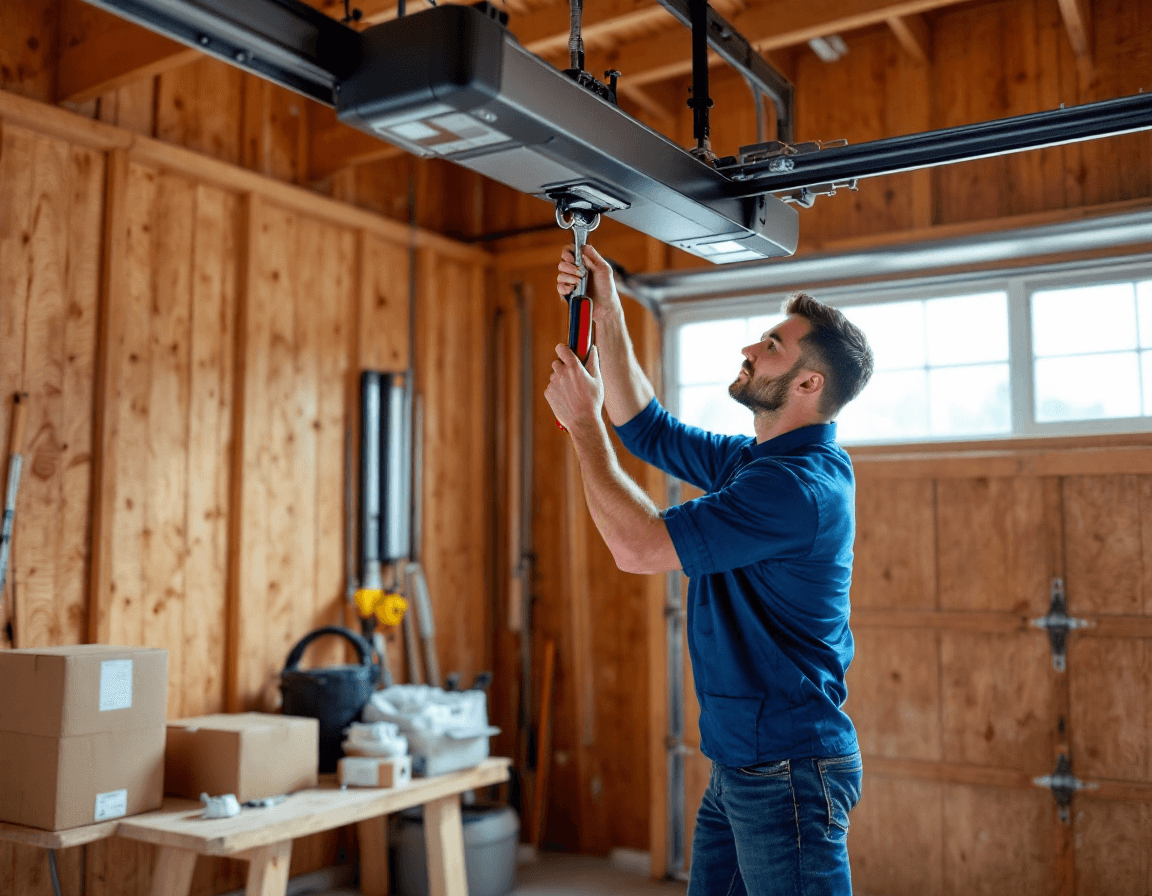
Garage door opener installation and replacement in North Bend, WA is one of the most useful upgrades a homeowner can make, because the opener does far more daily work than most people realize. In a town tucked against the foothills, where wet winters and sudden cold snaps are part of the routine, an opener that stalls, grinds, or quietly fails can leave you stuck outside or unable to get the car in during a storm. Our technicians install belt-drive, chain-drive, and wall-mount smart openers, with battery backup options, for homes throughout the North Bend area and the surrounding 98045 neighborhoods.
North Bend homes come in a wide range of styles, from older ranch houses near Downtown North Bend to newer two-car garages on the hillsides above the valley. Many of these garages were built with the door centered on a single header and limited ceiling height, which affects which opener rail and mounting style will fit. A good replacement starts with measuring your space, checking the door's weight and spring setup, and choosing a motor that suits how you actually use the door. This page explains what to look for, what the work involves, and how pricing usually breaks down.
Every installation is different, so the figures you see here are general guidance rather than a promise for your exact door. Installed pricing generally falls between $275 and $650, and the final number depends on the opener model, the features you choose, and any mounting or wiring work your garage needs. If you are not sure whether your current unit is worth saving, a short phone call can help you sort out repair versus replacement before anyone visits. Call (888) 799-3819 to talk with a licensed technician who can walk through your options.
Recognizing When Your Current Opener Has Reached Its Limit
Most homeowners do not wake up one morning and decide the opener is finished. The change happens gradually, with a door that takes a few seconds longer to respond, a motor that hums louder than it used to, or a remote that works only when you stand in the driveway at the right angle. In North Bend, where damp air and seasonal temperature swings are normal, these small symptoms often appear first in the electrical contacts, the limit settings, and the trolley assembly. Paying attention to them early can save you from a dead opener during a school run or a late-night return from a trip over the pass.
Age is one of the clearest indicators. Many older openers were designed around older safety standards and older radio technology, so they may lack the modern safety reversal features and rolling-code encryption that current models include. If your unit still uses a fixed-code remote with a row of small dip switches, anyone with a cheap scanner could potentially capture the signal and replay it. Upgrading to a rolling-code system closes that gap while also making the door easier to manage from a phone.
Repair costs are the other major factor. When a motor board, logic board, or drive gear fails on an older unit, the part may be hard to source or may cost nearly as much as a new opener once labor is added. We recommend replacement rather than repair when the unit is past its expected service life, when multiple components are wearing out at once, or when the cost of fixing it would approach the price of a modern installation. A technician who inspects the unit honestly can tell you which situation applies to your garage.
Choosing Between Belt Drive, Chain Drive, and Wall Mount
The drive style you choose has a larger effect on daily life than most people expect, because it determines how loud the door is, how it feels when it moves, and how well it handles the heavier doors common on larger garages. Chain-drive openers are the traditional workhorse. They are typically the most affordable option and handle heavy doors well, but they tend to be noisier because the metal chain runs along the rail and makes a rattling sound as it travels.
Belt-drive openers use a reinforced rubber belt instead of a chain, which makes them noticeably quieter inside the house. For homes in Downtown North Bend where the garage shares a wall with a bedroom or a home office, that difference matters a great deal. Belt-drive units also run smoothly through the wet-season months, though they still need the rail and belt kept clean and properly tensioned. If quiet operation is a priority, a belt drive is usually the first choice we recommend.
Wall-mount openers attach to the side wall rather than the ceiling, which frees up overhead space. This is a useful solution for garages with low ceilings, for homes with a lift or storage racks mounted above the door, or for detached garages where the ceiling framing is limited. Wall-mount installation requires a solid, properly framed wall and sometimes a bracket upgrade, so an on-site evaluation is important before ordering a unit.
Smart Control, myQ Compatibility, and Remote Access
Smart openers have become popular across the greater Seattle area because they let you check the door, open it, or close it from a phone. Many homeowners in North Bend appreciate being able to confirm the garage is closed after a trip to the trailhead or a long day at work. Compatible systems typically connect to your home Wi-Fi network and work with a companion app, and some work with myQ-compatible accessories and smart home platforms. These features are convenient, but they work best when the opener is installed in a location with a reliable wireless signal.
Wi-Fi reach can be a real concern in older foothill houses where the garage sits at the far end of the property or where thick framing and exterior siding block the signal. A technician can check the signal strength during installation and recommend a range extender or a different placement if needed. We also make sure the app setup, account linking, and notification settings are configured before we leave, so you are not left guessing how to use the new system.
Smart features do not replace basic safety habits, and they should be paired with sensible settings. Enable alerts if your app supports them, review which users have access, and remove old devices or shared codes when someone no longer needs entry. A good installer will show you how to manage these settings, and will explain how the door's safety reversal and photo-eye sensors work with the smart controls so you understand what the system is doing at all times.
Battery Backup and Staying Mobile During Power Outages
Power outages are a real part of life in the Pacific Northwest. Windstorms, heavy rain, and falling branches can knock out electricity to parts of King County for hours at a time, and in a rural-leaning town like North Bend, restoration can take longer than it would in a dense city core. Without power, a standard opener cannot lift the door, and if you have no manual release plan, you may be stuck inside or outside your garage.
A battery backup kit solves much of this problem. These kits install alongside the opener and provide enough stored power to run the door through several cycles when the grid goes down, depending on the model and battery capacity. Many systems also switch over automatically and keep the opener's lights and logic active so your remote and app can still operate the door. Battery backup is especially helpful for households that rely on the garage as their primary entrance or that keep medical equipment, a vehicle with a charging port, or a home office in the attached space.
It is worth checking the manual release cord as well, since it is the final fallback when both main power and battery backup are unavailable. The release should hang at a reachable height and should be tested periodically. A technician can show you how to operate it safely and can confirm that the door balances properly, because a door that is heavy, out of balance, or dependent on a worn spring will be difficult to lift manually even with the release engaged.
Safety Features, Rolling Codes, and Modern Protection
Modern openers include several layers of protection that older units may not have. Photo-eye sensors mounted near the floor detect objects in the door's path and reverse the door if something blocks the beam. Force settings let the opener stop and reverse when it meets resistance, such as a bicycle, a child's toy, or a pet. Rolling-code technology changes the transmitted signal every time you press the remote, which makes it much harder for someone to copy or reuse a captured code.
Installing these features correctly takes more than plugging in a new motor. The photo-eyes need to be aligned, the wiring needs to be secure and protected from moisture, and the force limits need to be adjusted to match the actual weight and balance of your door. In a region where dampness can corrode low-voltage connections over time, proper sealing and strain relief make a real difference in long-term reliability. Our technicians test every safety function before leaving the job site.
It is important to note that opener installation is separate from spring and cable work. Torsion springs and lift cables store large amounts of tension, and mistakes during handling can cause serious injury. If your door needs spring adjustment, cable replacement, or drum repair, that work should be handled by a licensed professional with the proper tools and training. Do not attempt to adjust or remove springs yourself, even if you have experience with other home projects.
Preparing Your North Bend Garage for a New Opener
Good preparation shortens the appointment and helps the installer deliver a more accurate result. Start by clearing the area around the door and the overhead track so the technician can work safely. Take note of the approximate door height and width, the type of door you have, and whether the garage ceiling has any obstructions such as ductwork, lighting, or stored items hanging from the rafters. If you already have a remote or a keypad, bring them along so the new system can be compared and programmed properly.
Think about your daily routine before the install day. Do you want a wall button inside the house, an exterior keypad near the driveway, or both? Do you want the opener to shut off automatically after a certain time, or to send you an alert if the door stays open? Answering these questions ahead of time helps the technician set up the controls to match your habits, instead of leaving you to adjust them later.
Finally, consider the condition of the door itself. An opener can only work as well as the door it moves, so worn rollers, bent tracks, or an unbalanced panel can cause strain on even a high-quality motor. If the door hangs unevenly, grinds on the track, or needs more force than usual to lift by hand, let the technician know. Addressing those issues during the same visit can extend the life of your new opener and improve the door's overall performance.
What a Professional Installation Typically Includes
A professional installation follows a sequence that protects both the homeowner and the equipment. The technician begins with an inspection of the door, the tracks, the springs, and the existing wiring, then confirms that the chosen opener fits the space and the door weight. Once the mounting hardware is set, the new unit is attached, the rail is aligned, and the header bracket is secured to structural framing rather than thin drywall or loose trim. The door is then connected to the trolley arm, the limits are set, and the safety systems are tested.
Clear communication is part of the job. Before leaving, the technician should walk you through how to use the remote, the wall control, and any smart features, and should show you how to operate the manual release safely. You should also receive guidance on routine care, such as keeping the rail clean, checking the safety sensors periodically, and watching for signs of wear. If your installation includes battery backup, the technician should explain how to test the system and when the battery should be replaced.
Below are the items we typically review and confirm during a replacement visit:
- Door weight, balance, and overall condition before the new opener is mounted
- Header bracket attachment to solid structural framing
- Rail alignment, trolley connection, and travel limit settings
- Photo-eye alignment and force adjustment tests
- Wi-Fi signal check and app setup for smart models
- Battery backup connection and test cycle, if included
- Manual release location and operation walkthrough
Warranty Questions, Ongoing Care, and Long-Term Value
Warranty coverage varies by manufacturer and model, and it is worth reading the details before choosing a unit. Some warranties cover the motor for a longer period than the electronics or accessories, and some require registration within a certain window after installation. Ask your technician to explain what is covered, what is excluded, and what documentation you should keep for future claims. A clear explanation at the start prevents confusion later.
Routine care helps an opener last. In the damp months, check that the rail, chain or belt, and fasteners are not loose, and wipe away dust and debris that can accumulate over time. Test the auto-reverse feature occasionally by placing a light object in the door's path, following the manufacturer's instructions. If you notice unusual noises, slower travel, or the door stopping partway, schedule a service visit rather than waiting for a complete failure.
Replacing an opener can also improve the value of your home. Buyers in the North Bend and Snoqualmie Valley area often look for updated systems, quiet operation, and modern safety features, and a well-documented installation can be a selling point. Keeping the receipt, manual, and warranty information together makes the upgrade easier to explain at the time of sale.
Scheduling Your Opener Installation or Replacement
Once you have decided on a drive style and feature set, scheduling is straightforward. Call (888) 799-3819 and describe your opener, your door, and the problems you have noticed. A technician can help you decide whether repair or replacement makes more sense, recommend a model that fits your space, and give you a clear sense of what the installed price will include. Pricing typically ranges from $275 to $650 installed, depending on the opener you select and the work your garage requires.
Our licensed, bonded, and insured team serves North Bend and communities across King County and Western Washington, including homes near Mount Si and the Tanner area. We handle the installation itself and can point you toward licensed specialists for spring, cable, or drum work when those repairs are needed. Whether your current opener is loud, unreliable, lacking modern security, or simply past the point of economical repair, a careful evaluation is the best first step.
Ready to upgrade? Call (888) 799-3819 today to schedule a North Bend garage door opener installation or replacement and get back to reliable, quiet, and secure access to your home.