
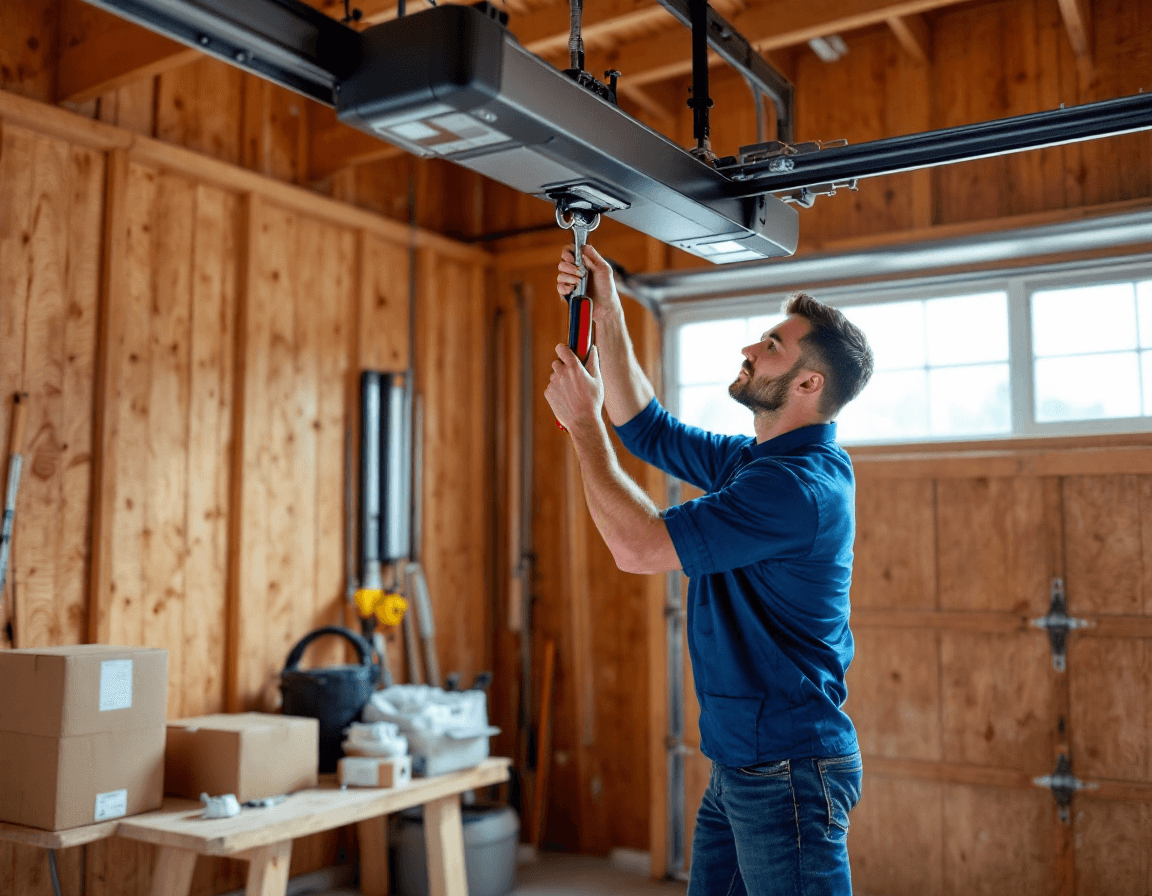
Garage Door Opener Installation & Replacement in Snoqualmie, WA is one of the most practical upgrades a homeowner can make, and it often gets postponed longer than it should. If your opener groans on the way up, stops halfway through a cycle, or simply refuses to respond on a wet January morning, the problem is rarely just the remote. Snoqualmie's combination of heavy winter rain, cool damp air drifting up from the Snoqualmie and Tolt river valleys, and occasional hard freezes puts real stress on a motor, a logic board, and a set of safety sensors. A tired opener that worked fine in a drier climate can become unpredictable here within a few seasons.
Our technicians install and replace belt-drive, chain-drive, and wall-mount openers throughout the city, from older homes near the historic downtown core to newer houses on Snoqualmie Ridge and the rural-feeling lots closer to the Cascade foothills. Each job starts with a look at how your door is built, how much ceiling space you have, what kind of wiring is already in place, and how you actually use the garage day to day. Installed pricing typically ranges from $275 to $650, depending on the opener model, drive type, and any smart features or battery backup you choose. The rest of this page explains how to tell when replacement makes more sense than another repair, and what to weigh before you make a decision.
Whether you are dealing with a noisy unit that rattles the bedroom wall or an older opener that no longer matches your household's security needs, the goal is the same: a reliable, quiet, safe system that suits the way you live in the Snoqualmie Valley. If you have questions about your specific setup, you can call us at (888) 799-3819 and a licensed technician will walk you through your options.
Reading the Signs Your Opener Is Losing Its Grip
Most openers do not fail overnight. They drift toward failure through a series of small changes that are easy to ignore when you are rushing out the door. The door may start reversing for no obvious reason, the light may flicker when the motor engages, or the travel may pause partway up as if the unit is thinking about it. Each of these symptoms points toward something specific, and recognizing them early can save you from being stuck in the driveway with a mountain of groceries and a closed door.
Snoqualmie homeowners often notice these changes after a long stretch of wet weather, because moisture finds its way into wiring junctions, limit switch contacts, and control boards that were never designed to live in persistent humidity. A thin film of corrosion on a terminal can cause intermittent contact, and that intermittent contact can look exactly like a failing motor. Temperature swings matter too, since lubricants thicken in the cold and the motor works harder to start the door, which can make a healthy unit sound like it is struggling.
The following symptoms are worth a professional look before they turn into a full breakdown:
- The opener is noticeably louder than it used to be, especially on the upstroke or when it starts moving from a stop.
- The door opens or closes more slowly than it did a year or two ago, even though the track and rollers look fine.
- The unit stops mid-travel and needs a second press, or the door reverses without any obstruction.
- The remote works only when you stand close to the door, or the range has shrunk considerably.
- The lights flicker, buzz, or fail to turn on, which can signal a worn motor or an aging control board.
- The opener is more than roughly ten to fifteen years old and repairs are starting to cost more than a modest upgrade.
If you see one of these signs, it does not automatically mean the opener needs replacing. It does mean the unit deserves a diagnosis before the problem compounds.
Why Belt, Chain, or Wall-Mount Fits Your Garage
Choosing a drive type is one of the first decisions in any opener replacement, and it affects noise, maintenance, and how the unit fits in your space. A chain-drive opener uses a steel chain running along a rail to pull the trolley and door. Chain drives are robust, handle heavy doors well, and tend to cost less up front, but they are also the loudest option because metal-on-metal contact creates a distinct rattle that travels through a wall into living space.
A belt-drive opener uses a reinforced rubber belt, usually with steel cord inside, in place of the chain. Belt drives run noticeably quieter and smoother, which is why many homes with an attached garage beneath a bedroom or living area choose them. Belts do not require lubrication, and they stretch less than chains over time, though they still need periodic tension checks. In a home where the garage shares a wall with the kitchen or a child's room, the quieter operation is often the single biggest improvement a homeowner notices.
A wall-mount opener attaches to the wall beside the garage door rather than to the ceiling, using a bracket and a short arm. This design is especially useful when the ceiling is low, when the garage has an unusual layout, or when a ceiling-mounted rail would interfere with storage racks or a lift. Wall-mount units can also reduce vibration transferred into the framing, which some homeowners appreciate in older houses. Our technicians will measure your headroom, check the door's counterbalance hardware, and recommend the drive style that fits your garage rather than the one that is simply cheapest.
Rolling Codes and Why Your Older Remote Matters
A rolling code changes every time you press the remote, so a thief who records one signal cannot replay it later to open your door. Openers made before rolling-code technology became standard relied on fixed codes, which are far easier to capture and copy with inexpensive devices. If your current opener still uses a fixed-code remote, you have a real security gap even if you have never had a problem.
This matters in neighborhoods across the Snoqualmie Valley, where many homes have attached garages that open directly into the rest of the house. A garage door opener is effectively a key that can be duplicated, and a fixed-code system gives an attacker a far easier path than a modern rolling-code unit does. Upgrading also means your new remotes and keypads will be programmed to the new system, so the replacement becomes an opportunity to clean up old remotes that you no longer use or that were handed to contractors and former tenants years ago.
Security upgrades do not require you to buy the most expensive model. Most current openers include rolling-code encryption as a baseline feature, and the decision usually comes down to features such as keypad access, multiple remote counts, and whether you want the opener to connect to your phone. During installation we will reprogram every remote, confirm the safety reversal system is working correctly, and show you how to delete lost remotes so the old ones stop working immediately.
Wi-Fi Control Without Wrestling Your Router
Smart openers that connect to a home Wi-Fi network allow you to open and close the door from your phone, receive alerts when it opens or stays open, and sometimes integrate with voice assistants or home automation routines. Brands that support app-based control often pair with a myQ-compatible ecosystem, though the exact app and features depend on the model and the current software your manufacturer provides. We will explain what the specific unit you choose can and cannot do before the installation, so there are no surprises later.
The practical challenge in many Snoqualmie homes is signal strength. A garage that sits at the far end of a long driveway, or one built with thick framing and a detached workshop nearby, may not reach the router reliably. A single weak connection can make a smart opener seem unreliable even when the hardware itself is excellent. Before recommending a Wi-Fi model, we will check the signal at the door location, and if the connection is marginal, we can discuss a mesh node, a range extender, or a different placement for the router.
Smart control does introduce a few considerations that homeowners should weigh. You will want a strong password, two-factor authentication on the associated account where available, and a plan for who in the household is allowed to operate the door remotely. Guests, housekeepers, and family members who share an account should be managed deliberately. A quick conversation during installation can help you set up the app so that you have convenience without giving away more access than you intend.
Battery Backup for Snoqualmie's Winter Outages
Power outages happen in the Pacific Northwest, especially during windstorms when trees and lines come down across the valley. When the power goes out, a standard opener cannot lift the door, which means you may be stuck inside or outside depending on where you are when the lights go dark. A battery backup unit keeps the opener running for a limited number of cycles so you can get the door open or closed and move your car when you need to.
Battery backup is most valuable in homes where the garage is the primary entrance, where someone relies on the door to reach medication or a medical device, or where the household includes a person who has difficulty opening a manual door. It is also useful during the dark months, when a storm can knock out power for hours and the last thing you want is to fumble with a manual release in the rain. Battery capacity varies by model, so we will explain how many cycles a given backup provides and how long the battery is expected to hold a charge.
Batteries do wear out, and the backup unit needs periodic attention just like the rest of the system. We will show you where the battery sits, how to test it, and when a replacement is due. Some backup units also send a notification when the battery is low, which is useful if you rarely use the garage door during the day and might not notice a problem until an outage occurs. Battery backup is an optional add-on, so it is worth deciding whether it fits your household before the technician arrives.
Moisture, Mountain Air, and Choosing Hardware That Lasts
The Snoqualmie Valley receives a substantial amount of rain across most of the year, and the cool, damp air that settles in during fall and winter can be hard on electronics. Condensation can form on control boards, and salt-laden road spray or wet tires can carry grime into a garage that is not kept clean. We take these conditions into account when recommending components, because a unit that handles a dry desert garage may not perform as well in a coastal-influenced valley climate.
Practical choices make a real difference. Sealed wiring connections, quality weather-resistant outdoor wiring where needed, and a properly grounded outlet all reduce the chance of intermittent faults. We also check whether the garage has adequate ventilation, since trapped moisture from a damp concrete floor or a cold-weather vehicle can accelerate corrosion on metal parts. A simple dehumidifier or a bit of airflow can extend the life of an opener, the door hardware, and the sensors more than most homeowners expect.
Hardware quality matters in the rails, brackets, and mounting points as well. Galvanized or coated components resist rust better than bare steel, and stainless fasteners are a small investment that pays off in a wet climate. A well-matched opener is only as good as the structure it attaches to, so we inspect the header, the door bracket, and the header bracket for solid anchoring before finalizing an installation. If the existing mounting surface is weak or deteriorated, we will tell you that plainly rather than bolting a new unit onto a failing support.
What a Snoqualmie Installation Visit Involves
A typical opener replacement begins with a walkthrough of the garage and the door. The technician checks the door's counterbalance system, the condition of the tracks, the wiring at the wall, and the location of the existing opener. This is also the moment to talk about what you want from the new system, whether that is quieter operation, smart control, battery backup, or simply a reliable replacement that matches the old unit's function. A clear conversation at this stage prevents surprises when the work begins.
Once the model is chosen, the installation includes removing the old unit, mounting the new drive, attaching the rail or wall bracket, connecting the door arm, and wiring the photo-eye safety sensors. The technician programs the travel limits so the door stops at the correct positions, tests the auto-reverse function, and programs the remotes and any keypad. Every installation ends with a functional test that includes opening and closing the door several times, checking the lights, and confirming the wall control works as expected.
We also explain how to use and maintain the new system. That includes how to add or delete remotes, how to adjust the force settings if the door behaves unusually, and what to watch for in the months after installation. If the door itself has issues, such as a worn roller or a sticking track, we will note them so you understand the full picture. Our work covers the opener and its direct connections, and when a repair involves torsion springs or cables, we will refer that work to a licensed technician rather than attempting it casually.
Pricing Between $275 and $650 Explained
Installed pricing for opener replacement generally falls between $275 and $650, and the spread reflects real differences in hardware and labor rather than arbitrary markups. A basic chain-drive unit without smart features typically sits at the lower end, while a belt-drive or wall-mount model with Wi-Fi control and battery backup will land higher. The exact price depends on the opener you choose, the complexity of mounting it, and whether any additional parts are needed to bring the system up to current safety standards.
Several factors can move the final number. A garage with an unusual door size, a heavy custom door, or limited ceiling space may require a different bracket or arm. Older wiring that needs updating, or an outlet that is not suitable for the new unit, can add a small amount of work. If your existing door hardware is worn, the technician may recommend a roller or hinge replacement at the same visit, which is worth discussing so you can decide whether to address it now or later.
To make the decision easier, here is a simple way to think about the choice:
- Choose a basic chain-drive opener if your garage is detached or separated from living space, the budget is the primary concern, and noise is less of a factor.
- Choose a belt-drive opener if the garage shares a wall or ceiling with living areas and you want the quietest reliable operation.
- Choose a wall-mount opener if ceiling space is limited or a ceiling rail would interfere with storage or lifts.
- Add Wi-Fi control if you want app access and alerts, and confirm your signal strength at the door first.
- Add battery backup if the garage is a primary entrance or you want protection during winter power outages.
We will give you a firm written estimate before any work begins, so the price reflects the model and options you actually chose.
Safety Systems You Should Never Skip
Every modern garage door opener must include an automatic reversing mechanism, and photo-eye sensors mounted near the floor are a key part of that protection. These sensors detect an obstruction in the door's path and stop or reverse the door before it can injure a child, pet, or object. A properly functioning safety system is not optional, and a technician who bypasses or disables these sensors to make an installation easier is creating a serious hazard.
The sensors also need to be aligned and cleaned periodically, especially in a Snoqualmie garage where dust, mud, and moisture can build up on the lenses. A misaligned sensor may cause the door to refuse to close or reverse for no obvious reason. During installation we will confirm the sensors are aligned, test the reversal force, and show you how to check the sensors yourself with a simple test. If the door does not reverse when it contacts an object on the floor, stop using the opener and call for service.
Springs and cables are a different category of risk. The torsion springs that counterbalance a garage door are under high tension and can cause serious injury if they are adjusted or replaced incorrectly. Opener installation does not require handling these springs, and we strongly recommend that homeowners never attempt spring or cable work themselves. If your door needs spring adjustment, a cable repair, or a broken spring replaced, that work should be handled by a licensed, insured professional with the proper tools and training.
Sizing, Clearance, and the Quirks of Ridge and Valley Garages
Not every garage is built the same way, and the quirks of a particular home can influence which opener will work best. Newer homes on Snoqualmie Ridge often have a more standardized layout, while older homes closer to the valley floor may have garages that were built decades ago with different door sizes, lower headroom, or unusual framing. Before recommending a model, we measure the door's height, width, and track configuration, and we note any obstructions such as ductwork, water heaters, or storage shelving that could limit where the opener can be mounted.
Headroom is one of the most common constraints. A standard ceiling-mount rail needs enough clearance above the door to allow the trolley and arm to travel without binding. If the garage has a low ceiling, a high-lift door, or a lift that hangs close to the rail, a wall-mount system may be the better option. We will also check whether the existing door is a single-piece or sectional design, since that affects how the arm connects and how smoothly the door will operate under the new opener.
Garage door weight matters too. A heavy wood or insulated door places more load on the opener, and a unit that is undersized for the door may struggle, run hot, or wear out prematurely. We match the horsepower and drive type to the door's weight and size, rather than selecting the cheapest option that technically fits. In a valley with frequent rain and cold mornings, a correctly sized opener works less hard and tends to hold up better over the years.
Repair or Replace? A Practical Decision Guide
Sometimes a repair is the right call, and sometimes replacement is the smarter investment. A failed limit switch, a worn sensor, a blown fuse, or a damaged remote can often be fixed for a modest cost without replacing the entire unit. If the opener is relatively new and the problem is isolated, a targeted repair may be all you need. The question becomes more complicated when the opener is older, the problem keeps recurring, or the cost of parts begins to approach the price of a replacement.
Consider replacement when several of the following apply:
- The opener is roughly ten to fifteen years old or older, and parts are becoming harder to source.
- The unit is using fixed-code remotes and you want rolling-code security.
- Repairs have been needed more than once in a short period, which suggests the motor or control board is wearing out.
- You want quieter belt-drive operation, Wi-Fi control, or battery backup that the current unit cannot provide.
- The opener struggles with the door, runs hot, or makes grinding noises that a tune-up does not resolve.
If you are unsure, our technicians will give you a straightforward assessment. We will tell you what is failing, what it would cost to fix, and whether replacing the opener would give you better value over the next several years. Our goal is to help you make a clear decision based on the condition of your equipment, not to push a sale you do not need.
Whatever you decide, a reliable opener should feel like a quiet, dependable part of your home. If you are ready to talk through options for your Snoqualmie garage, call (888) 799-3819 to schedule a visit with a licensed technician who can measure your door, explain the differences between drive types and features, and give you a clear, written estimate before any work begins.