
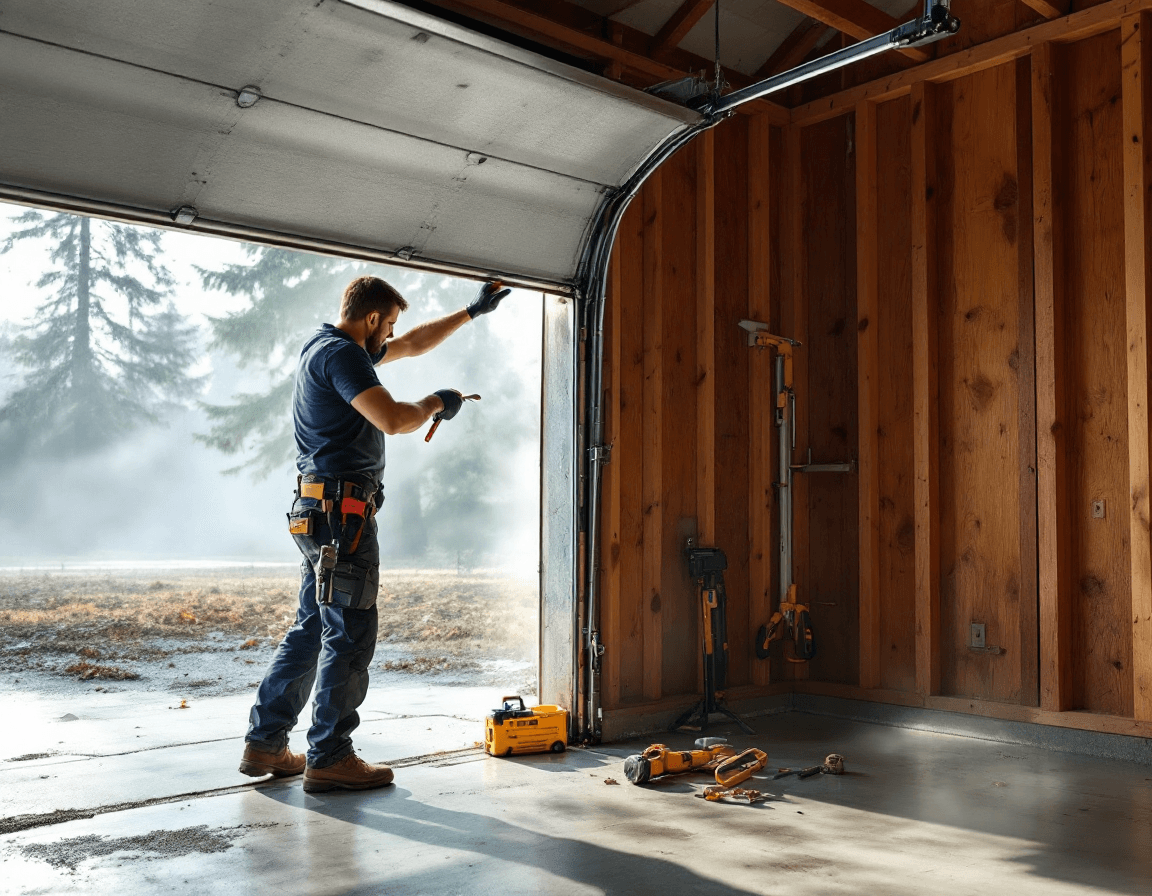
Off-track garage door repair in Snoqualmie, WA is one of those jobs that looks more alarming than it usually is. When a door jumps its track, most homeowners see a bent, tilted panel and assume the whole opener has failed. In many cases the door, springs, and opener are still sound, and the problem is a roller that slipped out of its channel or a track section that shifted slightly. Catching it early keeps a simple realignment from turning into a bigger repair, and it keeps you from making the situation worse by forcing the door back into place yourself.
Our technicians work throughout Snoqualmie, from the homes near Snoqualmie Falls to newer houses up on Snoqualmie Ridge, and across the 98065 ZIP code. The valley's mix of older garages with original hardware and newer builds with heavier insulated doors means we see a wide range of off-track situations. Some are caused by a single hard gust that catches an open door, others by years of slow wear, and a few by a car that clipped the door while backing out. This page explains what those problems look like, what causes them locally, what a realignment involves, and what you can reasonably expect to pay.
Throughout, you will notice one theme repeated: anything involving the springs, cables, or high-tension hardware should be handled by a licensed, insured professional. A door that is off track is often held in an unstable position, and the forces stored in the springs can be significant. Knowing where the line sits between a safe homeowner check and a job for a technician is one of the most useful things you can take away from this guide.
What an Off-Track Door Is Really Telling You
A garage door that has come off its track is rarely a random event. The track system is designed to guide the door through a precise arc, and every roller has to stay seated in its channel for the door to move smoothly. When something knocks that system out of alignment, the door will usually give you a warning before it fully derails, such as a slight hitch, a squeal, or a panel that seems to sit a bit crooked when closed. Paying attention to those early signs can save you from a door that comes down unevenly or gets stuck halfway open.
In the Snoqualmie Valley, the most common root causes are movement and moisture. Doors expand and contract with temperature swings, and the wide daily range between cool, damp mornings and warmer afternoons puts stress on the hinges, brackets, and track fasteners. Over time, small amounts of movement can loosen bolts that hold the vertical track to the wall or ceiling. Once one section drifts, the rollers begin to ride at an angle, and the door eventually finds a way out of the channel.
Think of an off-track event as a symptom report rather than a diagnosis. The job of a technician is to figure out why the door left the track, not just to put it back. Sometimes the answer is a worn roller that no longer holds its position. Other times it is a bent track that has been pushed out of plumb, or a hinge that has torn loose from a panel. Getting to the real cause is what keeps the same problem from repeating next month.
How Pacific Northwest Weather Loosens a Track's Grip
Western Washington winters are long, wet, and mild, which is a combination that quietly works against garage door hardware. Rain runs down the face of the door and collects at the bottom seal and along the track, and in shaded garages in Snoqualmie the moisture may not fully dry for days. Galvanized steel holds up well, but the fasteners, roller bearings, and older track sections can still develop surface corrosion that changes how smoothly a roller rolls. A roller that sticks even slightly is more likely to ride up and out of the channel when the door is under load.
The valley's damp air also affects wood and composite doors. Wood panels absorb moisture, swell, and then shrink as the house dries out in summer, and that cycling can pull hinges and track brackets out of their original positions. Even steel doors can flex slightly across a wide opening, especially double-car doors on newer homes around the Ridge. When the door changes shape, the rollers no longer sit perfectly square in the track, and the friction increases.
Wind is another local factor worth watching. Gusts funneling along the Snoqualmie River corridor can push against a partially open door, particularly in exposed driveways. A door that is open and unlatched during a windy afternoon can be jolted hard enough to pop a roller free. If your door has ever shuddered, rattled, or moved on its own during a storm, that is worth mentioning when you schedule service, because it helps the technician check the track alignment and the mounting points before the next weather system arrives.
Reading the Rollers: What a Popped Roller Looks Like
Rollers are small, but they carry the entire weight of the door as it moves. Most residential doors use steel rollers with either a ball-bearing or nylon-wheel design, and each one rides inside the track channel. When a roller pops out, it usually leaves a visible gap or a shiny wear mark on the track edge, and the door will often look like it has a slight lean on the side where the roller came loose. Checking for those clues from inside the garage, with the door closed and the opener disconnected, can tell you a lot before a technician arrives.
Worn rollers tend to fail first. A nylon wheel that has flattened on one side, a bearing that feels gritty when turned by hand, or a stem that has bent will all allow the roller to wander. Because the roller seats differently when worn, it may stay in the track for weeks and then slip out on the first cold morning when the door is slightly stiffer. Replacing a worn roller at the same time as realigning the door is often the most cost-effective approach, since the door will otherwise be prone to repeating the same problem.
Re-seating a roller is simple in principle but requires care. The door has to be supported so it cannot drop, and the springs must be treated with respect because they remain under tension. In most residential cases, the roller can be guided back into the track once the door is braced and the track section is inspected for damage. If the roller stem has bent or the track lip is deformed, a straightforward reseat will not hold, and the component needs to be replaced rather than coaxed back into place.
Crooked Doors, Gaps, and the Slow Warning Signs
A door that looks crooked is one of the most common reasons homeowners call us, and it is often the earliest stage of an off-track problem. When you close the door and notice a gap at the top corner, a bottom seal that does not meet the floor evenly, or a panel that appears to sit lower on one side, the door is telling you one side is traveling differently from the other. That imbalance puts extra strain on the springs, cables, and opener, and it can cause a roller on the high side to climb out of its track.
Gaps between the door and the track are another clue. A gap that appears between the door edge and the vertical track usually means the track has been pushed away from the door or that a bracket has shifted. Sometimes the cause is as simple as a loose lag bolt in the wall or a track bracket that has backed out. Other times it is a result of a door that has been adjusted incorrectly in the past, perhaps during a DIY attempt to fix a noisy opener or to tighten a sagging panel. Either way, the gap is worth measuring and documenting, because it tells the technician how far the track has moved from its original position.
Keep an eye out for uneven movement. If the door seems to rise smoothly on one side and drag on the other, or if the opener strains only when the door reaches a certain height, you may be seeing a roller that is starting to bind. Catching that early means the repair is often limited to tightening brackets, replacing a roller, and squaring the track. Waiting until the roller leaves the channel entirely usually means more labor and sometimes a damaged track section as well.
Jammed in Place: When the Door Refuses to Move
A door that is stuck halfway open or halfway closed is one of the more stressful situations a homeowner can face, especially if the family is trying to leave for work or the weather is turning. In most cases, a jam occurs because a roller has come out of the track at an angle and is now wedged against the track lip, or because a section of track has bent enough to pinch the rollers. The opener may hum, strain, or trip its safety reverse, and the door will not budge in either direction.
When a door jams, the safest step is to stop using the opener entirely. Continuing to run the motor can damage the drive mechanism, strip gears, or cause the door to shift in a way that bends the track further. If the door is partly open and you can see that a roller has clearly left the channel, do not attempt to lift the door by hand or pull on the cables, since the door may drop unexpectedly once the tension shifts. Call a professional and keep people and pets clear of the door opening.
Once on site, the technician typically checks each roller, measures the track for plumb and level, and inspects the torsion or extension springs for any signs of separation or damage. Jams are often caused by a combination of issues rather than a single failure, so the repair may include reseating rollers, straightening a section of track, and tightening every bracket along the run. This is one reason jammed doors can fall within the wider price range we describe below, since the scope depends on how many components were affected.
Bent Track Sections and Vehicle Strikes on Driveways
Vehicle impacts are a special case, and they are more common than many homeowners expect. Backing out of a narrow driveway, misjudging the distance to a garage opening, or pulling in too quickly during a rainy evening can all result in a bumper meeting the lower panels or the track. Even a low-speed hit can bend a track section, dent a rail, or separate a joint where two track pieces connect. Many Snoqualmie driveways are sloped or tight, and it is easy to underestimate how close a vehicle sits to the door frame when it is parked on the far side of the garage.
Track damage from a strike is usually visible as a flattened curve, a kink along the rail, or a gap where a bolted joint has separated. The door may still move, but it will do so unevenly, and the rollers may chatter or climb at the damaged point. Because the track is a precision component, even a small bend can cause a roller to derail repeatedly. Straightening is possible for many minor bends, but severe deformation usually requires replacing the affected section so the door can track smoothly again.
If a vehicle has struck the door, check the springs and cables before doing anything else, and treat them as potentially stressed. A panel that has been hit may have shifted enough to change the tension balance, and any visible damage to the spring system is a reason to stop and call a licensed technician. Take a few photos of the track and door for your records and, if the strike involved another driver or a car insurance claim, note the date and details for your own documentation.
What Happens During a Professional Realignment
A typical off-track service follows a sequence that is designed to protect the door, the household, and the technician. The first step is securing the door so it cannot move unexpectedly, which usually involves clamps or temporary supports at the track. The technician then inspects the springs, cables, drums, and brackets to determine whether any high-tension components have been affected. Only after that assessment does the work of reseating rollers and straightening track begin.
Once the door is stable, the technician will typically do the following, in roughly this order:
- Inspect each roller for wear, bearing condition, and stem straightness, and replace any that are compromised.
- Check the vertical and horizontal track sections for plumb, level, and square, and straighten or replace bent sections as needed.
- Tighten or re-anchor every track bracket, lag bolt, and hinge that has loosened or pulled out of position.
- Test the door by hand through its full travel to confirm smooth movement without binding or uneven lift.
- Run the opener through several cycles and verify the safety reverse and auto-stop functions work correctly.
- Review the balance of the door, and if the springs or cables show wear, recommend and schedule licensed spring or cable work.
Finishing the job matters as much as the repair itself. A good technician will explain what was found, which parts were replaced, and whether any related issues need attention soon. Asking those questions before the crew leaves gives you a clear record of the work and helps you plan for any follow-up service, particularly if the door is older or has been struck more than once.
Understanding the $125 to $400 Price Range
Most off-track repairs in our service area fall between $125 and $400, and the actual number depends on how much of the system is involved. A single roller that has popped out and a track that is only slightly misaligned will usually sit at the lower end of that range. A door with several damaged rollers, a bent track run, and loosened brackets across both sides will land higher, because the technician has more to inspect, reset, and verify. Doors that need a section of track replaced rather than straightened also fall in the upper part of the range.
Several factors tend to push the price up or down. Here is what typically shapes the estimate:
- Number of rollers affected and whether they need replacement or only reseating.
- Whether one track or both tracks are bent, separated, or out of plumb.
- Accessibility of the track, including high ceilings or tight spaces common in some older garages.
- Door size and weight, since double-car doors and insulated panels take more time to support safely.
- Whether the opener, springs, or cables also need attention, which would be quoted separately.
We prefer to give you a clear explanation before starting work, rather than surprising you with add-ons once the door is open. If the technician finds that spring or cable work is needed, that will be discussed and scheduled as its own service. Remember that the range above applies to most off-track realignments, and your specific door may fall outside it if the damage is unusually severe or the hardware is particularly difficult to access.
Safety Lines Every Homeowner Should Respect
Garage doors store a great deal of energy, and the most dangerous part of a repair is often the moment before anyone realizes how much tension is in the system. Torsion springs and extension springs can release that energy suddenly if they are disturbed, and the cables and drums are equally unforgiving if they are mishandled. Because of this, the line between what a homeowner can safely check and what requires a licensed professional is important to understand before you touch anything.
There are a few things you can do safely while you wait for service. You can keep people and vehicles clear of the door, avoid using the opener until the problem is inspected, and take photos of the gap, the crooked panel, or the track damage. You can also visually check whether the door is fully closed and whether the lock is engaged, which helps prevent further movement. Making these observations from a distance helps the technician arrive with useful information.
What you should not do is attempt to lift the door off a jammed track, pry rollers back into the channel, adjust spring tension, or disconnect cables. Those actions can cause the door to drop or the springs to release, and they are the reason garage door repair is treated as a licensed trade. If you find yourself tempted to fix it quickly, remember that the cost of a professional visit is far lower than the cost of an injury or a damaged door.
Keeping Tracks Aligned Through Wet Winters and Dry Summers
Preventing off-track events is easier than repairing them, and a little attention through the seasons goes a long way in the Snoqualmie Valley. Start by looking at the track and rollers a few times a year, ideally before the wettest months and again after the first dry stretch of spring. Check that the track brackets are tight, that no bolts have backed out, and that the rollers still move smoothly when the door is operated by hand. Surface rust on the track or a gritty feel on a roller are both reasons to schedule a closer look.
Lubrication helps, but it should be done with the right product. Use a silicone-based or lithium-based lubricant on the rollers, hinges, and track surfaces, and avoid heavy grease that attracts dirt and grit in damp conditions. Wipe away old residue before applying anything new, and keep the lubricant off the weather seal, which can degrade over time. Lubrication alone will not fix a bent track or a loose bracket, but it does reduce the friction that causes rollers to bind and climb.
Think about the environment around the door as well. Trim back shrubs that trap moisture against the lower panels, keep the driveway edge clear of debris that can get under the door seal, and consider whether a door that sits exposed to wind would benefit from a better latch or bottom seal. If you notice the door shifting or rattling during storms, mention it to a technician, because it may indicate that a bracket needs reinforcement before the next off-track event.
Scheduling Service Across Snoqualmie and the 98065 Area
Off-track repairs are time-sensitive, because a door that is stuck open or partly closed can leave a garage exposed or prevent you from getting a vehicle out. We schedule service across Snoqualmie, including the neighborhoods around Snoqualmie Falls and the newer homes on Snoqualmie Ridge, as well as the wider 98065 ZIP code. When you call, it helps to describe what you see: whether the door is open, closed, or stuck halfway, whether one side looks lower, and whether you have heard any unusual noises or seen damage on the track.
Local details help us plan efficiently. Let us know whether the garage is attached or detached, whether the door is single or double width, and whether the opener is a belt drive, chain drive, or screw drive. If the door was struck by a vehicle or moved during a storm, say so when you book, since that information helps the technician bring the right parts and tools. Keeping your garage clear around the door and the track also gives the crew room to work safely.
If the door is currently unusable and you are worried about security or weather, let the dispatcher know so the appointment can be prioritized. We will explain what to expect, confirm the likely scope of the repair, and walk you through any follow-up service such as springs, cables, or an opener adjustment. Off-track repairs are routine for our technicians, and a clear conversation at the start usually makes the visit smoother for everyone.
Getting a crooked, binding, or off-track door back on its rails is usually a manageable repair when it is handled promptly and by the right people. If your garage door has jumped its track in Snoqualmie or anywhere in the 98065 area, do not try to force it back yourself. Call Seattle Garage Door Fix at (888) 799-3819 to schedule a licensed, insured technician who can inspect the rollers, track, and springs, explain the repair clearly, and get your door moving safely again.