
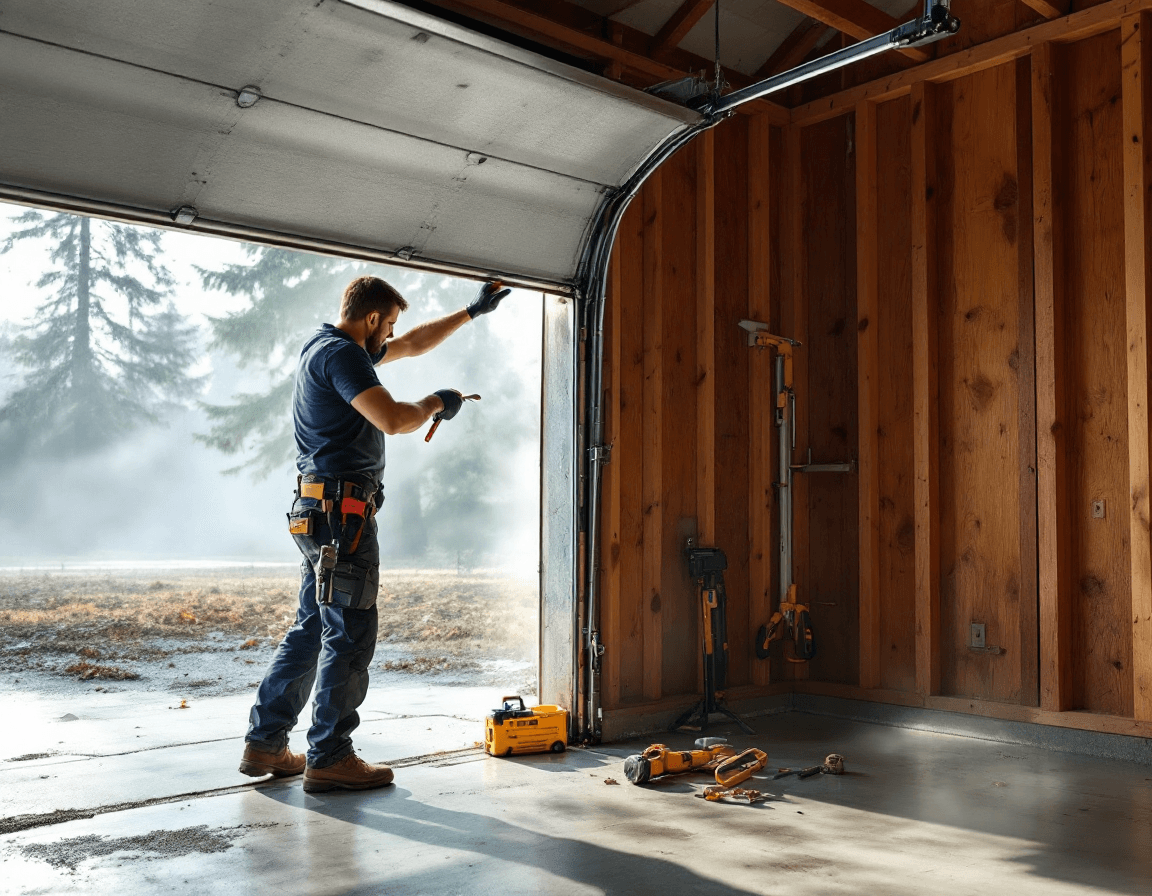
Off-track garage door repair in North Bend, WA is one of the most common calls we take from homeowners across the Snoqualmie Valley, and it is rarely a problem that fixes itself. When a door slips out of its track, the panels may still look fine from the driveway, but the rollers, hinges, and track alignment are all working against the opener. Left alone, a door that has popped a roller can bend a track section, strain the opener motor, or drop onto a vehicle or a person. Our technicians handle these calls regularly, and most off-track repairs are resolved in a single visit.
North Bend homes come with their own quirks. The town sits at the foot of Mount Si in a valley where winter rain is steady, spring moisture lingers, and temperatures can swing enough in a few days to change how wood, steel, and vinyl door sections behave. Whether your home is near Downtown North Bend, out toward the Tanner area, or on one of the residential streets in the 98045 ZIP code, the same basic mechanics apply, but the local climate and driveway conditions shape how often problems show up. This guide explains what causes doors to leave their tracks, how to recognize the early warning signs, what a realignment typically involves, and what you can and cannot safely do yourself.
If your door is currently off its track, stop using the opener and keep people and pets clear of the opening. If you are unsure whether the door is stable, call us at (888) 799-3819 and we will talk through the safest next step before anyone attempts to move it.
Why Valley Doors Keep Leaving Their Tracks
Garage doors are engineered to run in a precise path, and the tracks on either side are the guide for that path. In the Snoqualmie Valley, the combination of heavy rain, damp air, and seasonal temperature shifts gives every component a little more work to do than it would in a drier climate. Wooden doors can swell and warp after long wet stretches, which changes the weight distribution and pushes panels against the track edges. Steel doors are less sensitive to moisture, but the hardware still corrodes at the hinge pins and roller stems when water sits on it through the winter.
Ground movement also plays a role. Many North Bend driveways are built on compacted fill and gravel bases that settle over time, especially after several years of freeze-thaw cycles and heavy runoff. When a slab shifts even slightly, the tracks may no longer sit at the same height or angle, and the rollers begin to ride unevenly. Over months, that uneven load can push a roller partly out of its channel, and eventually the door walks itself off the track entirely.
Finally, daily use matters more than most homeowners expect. A door that is opened and closed several times a day will gradually loosen the hardware that holds the track together, particularly the bolts that anchor the vertical sections to the wall and the bracket that supports the horizontal run near the ceiling. A loose bracket is one of the quietest causes of misalignment, because the door keeps working for a long time before the damage becomes obvious.
Reading the Warning Signs Before a Door Fully Derails
Most off-track failures announce themselves well ahead of time. The problem is that the early signs are easy to dismiss as normal wear, especially when the door still opens. Paying attention to small changes in sound and movement can save you a larger repair bill and reduce the risk of a door dropping while someone is near it. Common early warnings include:
- A grinding or scraping sound at one side of the door during the first few feet of travel
- A door that rises slightly crooked, with one side noticeably higher than the other
- A gap that suddenly appears between the top panel and the header or between the bottom seal and the threshold
- A roller that looks flattened, cracked, or pulled partly out of the track
- The opener running longer than usual or reversing for no clear reason
These symptoms often appear in sequence. A door that starts scraping in the morning damp may run crooked by the end of the week, and a roller that begins to lift can pop completely free after one more cold morning. If you notice more than one of these signs, it is worth having the door inspected before it stops moving. A quick visit at that stage usually means a simpler adjustment than a full track rebuild.
What Happens Inside the Track When a Roller Pops Out
To understand why an off-track door is so unpredictable, it helps to picture the track system. Each side of the door has a vertical track bolted to the jamb, a curve that carries the door from vertical into a horizontal run near the ceiling, and a horizontal track that supports the weight of the door as it rests overhead. Rollers, which are small wheels mounted on stems attached to the door sections, ride inside those tracks. When everything is aligned, the rollers carry the load smoothly and the door stays in its channel.
When a roller pops out, the door section it supports loses its guidance. The weight shifts onto the neighboring rollers and the hinges, and the door begins to tilt toward the side that has lost support. In many cases the door will rest partly on the track lip and partly on the wall or the header, which is why it may appear stuck rather than fully off. Forcing the door at this point can bend the track, strip the roller stem, or crack a panel edge, so the safest assumption is that a derailed door needs professional attention before anyone pushes it.
Many off-track problems start at the curve. The transition from vertical to horizontal is where the rollers change direction and where most of the stress concentrates. A slightly bent curve or a loose mounting bolt at that point can let a roller ride up and out, particularly when the door is heavy or the springs are fatigued. This is why a technician checks the curve, not just the rollers, when a door has jumped its track more than once.
Rollers, Hinges, and the Small Parts That Cause Big Problems
Rollers get most of the attention in an off-track call, but they are only one part of the system that keeps a door aligned. Stems can loosen, bearings can dry out, and nylon rollers can crack or flatten after years of use in cold weather, when the material becomes less forgiving. Hinges that connect the door sections also matter, because a worn hinge allows one panel to twist relative to its neighbors, which can drag a roller out of line even if the track itself is perfect.
During a standard off-track visit in North Bend, our technicians typically check the following components before deciding on a repair plan:
- Roller condition, including cracks, flat spots, stem wear, and bearing play
- Hinge pins, brackets, and fasteners for looseness or corrosion
- Track bolts at the wall, the curve, and the header bracket
- Track straightness along the vertical and horizontal runs
- Cable and spring condition, checked visually only, without any adjustment
That last item deserves emphasis. Visual inspection of springs and cables is part of a safe evaluation, but tensioning, replacing, or adjusting them is high-risk work that should only be done by a licensed professional with the right equipment. Torsion springs and lift cables store a large amount of energy, and a mistake can cause serious injury.
Replacing a roller is usually a straightforward repair, and many homeowners are surprised by how inexpensive it can be when the track itself is undamaged. Still, a new roller placed into a misaligned track will wear quickly and may pop out again within weeks. A good repair addresses the reason the roller left the track, not just the roller itself.
Impact Damage From Driveway Mishaps and Delivery Trucks
Not every off-track door is the result of slow wear. A significant share of the calls we see involve impact, whether from a car backing into the door, a delivery truck clipping the bottom panel, or a moving van that grazed the tracks while maneuvering a large item into a garage. In tight driveways common around older North Bend neighborhoods, these incidents happen more often than people expect, especially when cars are parked near the garage opening or when several vehicles share a turnaround area.
Impact damage can look minor from the outside. A dented panel may hide a bent roller stem, and a small kink in a track section can throw the entire door out of alignment. Sometimes the header bracket is pulled slightly off the framing, which changes the angle of the horizontal track and causes the door to bind on one side. Because the damage is not always visible, it is wise to have any impact checked even if the door still appears to open normally.
If you have hit the door, avoid trying to force it closed or open. Forcing a damaged door can turn a straightforward realignment into a panel replacement, and it can also put strain on the opener. If the door is still moving, operate it slowly and watch for scraping or uneven movement. If it has come off the track, leave it alone and call for service.
Bent Track Sections and When Straightening Is Realistic
Track damage is one of the more variable parts of an off-track repair. Some sections can be carefully straightened, while others have been bent too far or cracked at the seam and need to be replaced. The decision depends on the metal thickness, the severity of the bend, whether the track has separated from its joint, and whether the rollers can still run smoothly once the track is returned to position. A technician will usually test the door through several cycles after any straightening to confirm that the path is consistent.
Separated track sections are a particular concern. When two lengths of track pull apart at the joint, the rollers can catch on the gap and derail on every pass. This often happens after impact or after years of vibration loosens the fasteners. In these cases, the joint needs to be re-secured, and sometimes a short replacement section is the only reliable fix.
Homeowners sometimes ask whether they can straighten a track with a mallet or a pry bar. We strongly recommend against it. Track steel is designed to hold a precise shape, and hammering it can create small stress fractures that do not show up until the door is under load. A controlled adjustment with the right tools and a clear understanding of how the track should sit is far more reliable.
Why Binding and Gaps Appear After Cold Snaps
North Bend residents often notice that off-track problems and binding become more noticeable during cold snaps. When temperatures drop quickly, metal contracts, lubricants thicken, and wood or composite panels can change dimension. A door that ran smoothly in October may stick in January, and a gap that was invisible in summer may appear along the top edge after a few freezing nights. These changes are usually temporary, but they can expose an alignment problem that was already present.
Moisture compounds the issue. Water that gets into the track channel can freeze and create resistance that the opener cannot overcome cleanly, and grit or leaf debris that collects in the track during the wet season can jam a roller just enough to throw the door off line. Keeping the track free of debris and checking for sticking after storms can prevent a small problem from becoming a derailment.
If your door binds only on cold mornings and runs freely later in the day, that pattern is worth mentioning when you call. It helps the technician look at the track, the seals, and the roller lubrication with the right conditions in mind. It also helps to avoid using excessive opener force to push through resistance, since repeated strain can damage the operator or loosen the track bracket.
Safety Boundaries: What Homeowners Should Never Touch
Safety is the most important part of any garage door repair, and off-track situations carry real risk because the door may be unbalanced or partly supported by only one side. Homeowners can take some safe steps, such as turning off power to the opener at the breaker, keeping the area clear, and taking photographs of the damage so the technician can see the situation before arriving. Beyond that, a few tasks should always be left to a licensed professional.
The following items should never be attempted by an untrained person:
- Adjusting, winding, or replacing torsion springs
- Cutting, releasing, or re-tensioning lift cables
- Lifting or wedging a door that has partly fallen off its track
- Hammering or prying on bent track sections while the door is loaded
- Removing the opener's emergency release while the door is in an uncertain position
These boundaries exist because a single mistake can release stored energy violently or allow a heavy door to drop. Even experienced DIY enthusiasts can be hurt when they underestimate how much force is contained in a spring system. Calling a licensed, insured technician is not an overreaction; it is the responsible choice for a door that has already demonstrated it is not moving correctly.
What a Typical Off-Track Visit Looks Like in North Bend
When you call us about an off-track door, the first step is a brief conversation about what happened and what you have observed. Tell us whether the door came off one side or both, whether there was impact, whether the opener is still running, and whether you have noticed any scraping or gaps in the weeks before. That information helps us plan the visit and bring the right parts for the most likely repair.
On arrival, a technician will secure the area, confirm that the opener is disconnected or de-energized, and assess the door's position. Once it is safe to work, we typically inspect the rollers, hinges, track alignment, and mounting hardware, then decide whether the door can be returned to its track with adjustment or whether a component needs replacement. After the repair, we run the door through several cycles to confirm that it tracks evenly and does not bind, then review what we found so you understand the cause and can watch for recurrence.
Our technicians work with homeowners across North Bend, from homes near Mount Si to properties closer to the downtown core, and we adjust our approach to the specific door and track involved. We always explain our findings before recommending any work, and we will tell you if a simple realignment will do the job or if the track or a panel needs more substantial attention.
Pricing Expectations and What Changes the Final Bill
Most off-track garage door repairs fall in the range of $125 to $400, depending on what the technician finds. A door that has simply popped a roller and needs realignment with no track damage usually lands near the lower end of that range. A door with a bent section of track, a separated joint, or several worn rollers and hinges may land higher, and cases involving significant impact damage can require additional parts and labor beyond that typical window.
Several factors affect the final cost. The number of rollers and hinges that need replacement, the length of track that must be straightened or replaced, the accessibility of the mounting points, and whether the door is a standard steel model or a custom or insulated panel all play a role. Commercial-grade hardware or specialty tracks for high-lift or low-headroom installations may also change the parts cost. We give you a clear explanation of the work before proceeding, so you know what you are approving.
It is also worth knowing that a fast, accurate diagnosis often keeps costs down. Trying to force a door back on track, or continuing to run the opener on a derailed door, can turn a modest repair into a larger one. Calling early is usually the most economical choice, and a quick inspection can tell you whether the problem is limited to a roller or whether the track needs attention too.
Preventive Habits for Wet Winters Near Mount Si
Preventing off-track problems in North Bend is largely about managing moisture, debris, and wear. Start by keeping the track channels clear of leaves, gravel, and mud, especially in the fall when wind carries debris into the garage opening. A soft brush and a shop vacuum can remove most buildup without disturbing the track alignment. Avoid spraying heavy degreasers into the track, since they can wash out the lubricant that roller bearings need.
Lubrication matters too. Use a garage-door-specific lubricant on hinges, rollers, and the lock mechanism, and apply it sparingly so that dust does not stick to the surfaces. Check the bolts that hold the tracks to the wall and header about twice a year, tightening them gently if they have loosened. If you notice rust forming at hinge pins or roller stems, address it early, since corrosion can seize moving parts and change how the door runs.
Finally, pay attention to how the door behaves after weather changes. A door that begins to scrape after a heavy rain or a cold snap is telling you something, and it is much easier to correct at that stage than after the door has left its track. If you are unsure whether a sound or movement is normal, a quick professional inspection can give you peace of mind and prevent a more disruptive repair later.
If your North Bend door has come off its track, is binding, or shows a gap that was not there last month, call Seattle Garage Door Fix at (888) 799-3819. Our licensed, bonded, and insured technicians will assess the damage, explain your options, and get your door moving safely again.