
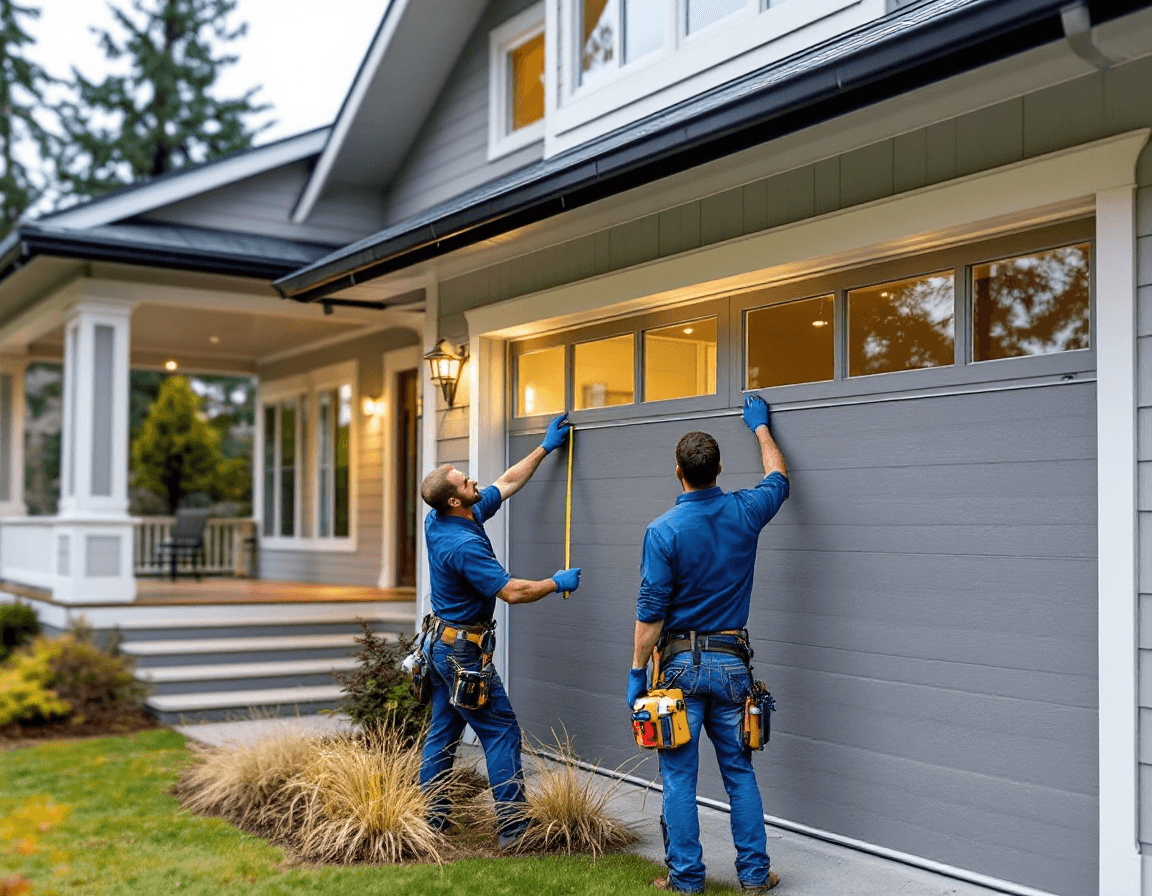
Garage Door Installation & Replacement in North Bend, WA is the right move when a door has reached the end of its useful life, whether it was damaged by a winter windstorm, has rotted at the bottom panels, or simply keeps breaking down. Homes in North Bend and the surrounding Snoqualmie Valley deal with a particular mix of conditions: steady rain from October through April, damp air that settles into the foothills, and cold nights that can drop well below freezing on clear winter mornings. A garage door in this area works harder than many people realize, and choosing the right replacement can make your home more comfortable, more secure, and easier to live with for the next two decades. Seattle Garage Door Fix installs new single and double garage doors throughout the North Bend area, and our technicians are licensed, bonded, and insured.
This page walks through the decisions that matter most before you order a new door. We cover the materials that hold up best in our climate, how to tell whether a repair still makes financial sense, and what insulation and style choices look like in practical terms. You will also find a clear picture of what installation involves and how project costs typically range, which runs from about $950 to $3,800 or more installed depending on the door, the materials, and the size of the opening. Our goal is to give you enough information to ask good questions and to feel confident about whatever path you choose.
If you are reading this because a door is already giving you trouble, you do not need to make every decision today. A knowledgeable technician can look at the door, the opening, the track, and the header, then explain your options in plain language. Use the sections below as a reference while you think it through, and call us at (888) 799-3819 whenever you want a second opinion.
Reading the Valley Weather: What North Bend Doors Must Survive
North Bend sits at the eastern edge of the King County lowlands, where the Snoqualmie River runs through the valley and the slopes of Mount Si rise right behind town. That position shapes the weather you see at home. Rain is frequent from late fall into spring, and the air often stays damp for days at a time, which means wood, steel, and even aluminum components are constantly exchanging moisture with their surroundings. Garages on sloped lots or near the foothills can also catch wind funneling along the valley floor, which puts extra stress on large panels and hardware.
Cold snaps add a different kind of pressure. On clear winter nights, temperatures in the foothill neighborhoods can dip well below freezing, and then warm up enough by afternoon for snowmelt and rain to soak the driveway again. This freeze-and-thaw cycle works into seams, weatherstripping, and the bottom edge of the door, gradually breaking down seals and encouraging moisture to sit against the panels. Over several seasons, that repeated stress is one of the main reasons a door that looked fine at first starts to sag, bind, or develop soft spots.
When you choose a replacement, you should think about how the door will behave across the whole year rather than just how it looks on installation day. A door that handles dry summers well may swell or warp during a wet February. A good installer will match the materials, the finish, and the weatherseal package to the conditions in your specific neighborhood. In North Bend, that often means prioritizing moisture resistance, solid bottom seals, and hardware that is rated for regular exposure to damp air.
Choosing Between Insulated Steel, Wood, Glass, and Aluminum
Each common door material brings a distinct set of strengths and tradeoffs, and the right answer depends on how you use the garage and how the home is built. Insulated steel is the most popular choice for North Bend homes because it balances durability, cost, and energy performance. A steel door with a polyurethane foam core resists dents from everyday bumps, handles moisture well when properly finished, and provides a noticeable improvement in temperature control for an attached garage. Many homeowners find that insulated steel is the most practical default for a daily-use door.
Wood doors offer warmth and character that steel cannot quite match, and they remain a strong option for homes with cedar siding or timber-accented exteriors. The challenge in our climate is maintenance. Wood must be sealed, painted, or stained carefully, and the bottom panels and rails need regular attention to prevent rot where water collects. Wood doors also tend to be heavier, which affects the springs and opener selection. If you choose wood, plan for a higher finish standard and periodic recoating, and ask for a sealed, engineered wood product when your budget allows.
Glass and aluminum designs suit homes that want more natural light or a modern profile. Aluminum framed doors with tempered or frosted glass panels can look sharp on contemporary houses, and they resist corrosion well. The tradeoff is insulation. Glass panels admit less heat resistance than solid insulated panels, so if your garage is attached to living space, you may want to look at insulated glass units, thermally broken frames, or a hybrid design that keeps glass to the upper section only. A careful installer will walk you through these details before you commit.
- Insulated steel: strong all-around performance, good insulation, low maintenance, wide style range
- Wood: excellent appearance and warmth, higher upkeep, best with a sealed or engineered product
- Glass and aluminum: bright, modern look with good corrosion resistance, insulation depends on glazing choice
- Composite and fiberglass: a middle option with good moisture resistance and a wood-like texture in many finishes
Carriage-Style Looks for Craftsman and Farmhouse Homes Near Mount Si
Many homes in and around Downtown North Bend have architectural details that deserve a door to match, including craftsman bungalows, farmhouse-style two-story homes, and newer builds designed to echo the rustic feel of the foothills. Carriage-style doors are a natural fit for these houses. They use decorative hardware, vertical or horizontal panel grooves, and window grilles to suggest a traditional swing-out carriage door while still operating on a modern sectional track system. Done well, a carriage-style door can add more curb appeal than almost any other exterior upgrade you can make to a garage.
Carriage styles are available in insulated steel with embossed wood-grain textures, in composite materials that hold a stain well, and in real wood for homeowners who want that exact warmth. Hardware matters as much as the panels. Faux strap hinges, decorative handles, and proper color coordination with trim and entry doors can make a plain garage look intentional. Before you pick a color, look at the siding, roof, and front door together, because the garage door occupies a large share of the front elevation and will strongly influence how the whole house reads from the street.
Carriage doors do bring some practical considerations. Decorative elements can collect rain and debris, so the finish and drainage details deserve attention. Window inserts should be double-glazed if the garage is heated or attached to living space. Also, while many carriage-style doors come in standard sizes, custom widths and heights may be necessary for older garages in the valley, which can affect lead time and cost. Ask your installer to confirm the opening dimensions carefully before ordering.
When Repair Stops Making Sense: Signs a Replacement Is Due
Not every noisy or sluggish door needs replacing. Many issues, including a worn opener, a misaligned sensor, or a broken cable, can be repaired at a reasonable cost. The question is whether the door itself still has enough life left to justify the investment. A door that is structurally sound but has a failing part is a repair candidate. A door whose panels, frame, and hardware are all aging at once is often a replacement candidate, even if each individual problem seems manageable.
Several signs point toward replacement. Repeated breakdowns over a short period, especially if you have already paid for multiple service calls on the same door, usually indicate that the system is wearing out as a whole. Visible rust at panel seams, soft or crumbling wood at the bottom rail, dents that have distorted the panel, and gaps that let light and drafts through all suggest the door is losing its ability to protect your garage. If the door has been damaged by a storm or a fallen branch and the frame or bracing is compromised, replacement is usually the safer and more economical choice.
- The door has needed repairs more than once or twice in the past year
- Panels show rust, rot, cracking, or delamination that cannot be sanded and sealed
- The door no longer seals against the floor or sides, letting in water, cold air, or pests
- The door is noticeably heavier, noisier, or slower than it used to be, and the cause is structural
- Parts are no longer available for the model, making repair slow and expensive
- A storm or impact has bent tracks, cracked panels, or damaged the header
If you are unsure, a technician can evaluate the door and give you a clear comparison of repair cost versus replacement cost. That conversation should cover how long the repaired door is likely to last and what you would gain from a new one in terms of insulation, security, and appearance.
Insulation, Seals, and Comfort for Attached Garages Under Cool Foothill Nights
An attached garage affects the rest of the house more than many homeowners expect. When the garage door is poorly insulated or badly sealed, cold air can flow into the space next to living areas, and that can make rooms near the garage feel chilly and drive up heating costs. For North Bend homes with attached garages, a well-insulated door is one of the most noticeable comfort upgrades you can make, particularly during the cold, damp months when the foothills cool off quickly after dark.
Insulation is measured in R-value, and higher numbers indicate better resistance to heat transfer. Insulated steel doors typically use a foam core that adds substantial thermal performance compared with a single-skin door, and the difference is most noticeable on the side of the garage that touches the house. Equally important are the weatherseals. Bottom seals, top and side seals, and tight-fitting panel joints keep out drafts, blowing rain, and small animals. Even a high-quality door will underperform if its seals are worn or misfitted, so ask for the full seal package to be replaced or verified during installation.
Comfort also depends on whether the garage is heated, insulated on its walls and ceiling, and used as a workshop or living space. A high-performance door in an uninsulated garage will help, but the best results come when the door and the structure work together. If you are planning other upgrades, such as insulating the garage ceiling or adding a heater, mention them when you request a quote so the door selection can match your plans.
Storm, Rot, and Rust: Damage Common to Our Humid Winters
Western Washington winters are hard on exterior building components, and garage doors are no exception. Windstorms can bend or dent panels, pull sections out of alignment, and damage the tracks and rollers. Heavy rain and falling debris can crack older wood panels, while persistent moisture is a major cause of rot in the lower rails and stile ends. Rust is a constant concern for steel doors that have chipped paint, scratches down to bare metal, or poorly sealed edges, because once corrosion takes hold it can spread under the finish.
Storm damage often looks minor from a distance but turns out to involve several hidden components. A dented panel may have bent a hinge or stressed a roller. A cracked section may have shifted the balance of the door, which places strain on the opener and springs. Because the springs and cables store significant tension, damaged or unbalanced doors can be hazardous to work on, and this is exactly the kind of job that should be handled by a licensed professional. Please do not attempt to adjust, remove, or replace torsion springs or cables yourself.
Rot and rust are slower but equally important. Look for soft wood that gives under a screwdriver, paint that bubbles or flakes, and white or reddish staining at seams. Addressing these early can sometimes extend the life of a door, but when damage is widespread, replacement is the more reliable path. Choosing a material and finish designed for moisture exposure, along with proper drainage and weatherseals, can prevent a repeat of the same problem with your new door.
Sizing, Openings, and Remodel Planning for Additions
Many North Bend homeowners reach out about garage door replacement while planning a remodel or addition. Maybe the garage is being widened to fit a modern vehicle, converted into a workshop, or extended to make room for storage. Each of these changes affects the door. A new opening may require a different width and height, and a structural change may alter the header, the framing, or the clearance above the door. Planning early avoids expensive surprises later in the project.
Accurate measurements are critical. Installers typically check the rough opening width and height, the headroom above the door, the sideroom on each side, and the depth needed for the track and any rear-mounted opener. Obstructions such as water heaters, ductwork, lighting, or stored items can limit how the door operates. If you are adding a second bay or converting a single-car garage into a double, the wall and header may need reinforcement, and that work should be coordinated with the contractor handling the framing.
Remodels also bring permitting questions. Depending on the scope of work, changes to a garage opening or structural elements may require approval from the City of North Bend. Before finalizing your plans, check with the city or ask your contractor how permits and inspections apply to your project. A licensed installer can help you understand what documentation is typically needed and how to plan the schedule around any required inspections.
What a Professional Installation Visit Covers
A proper installation is about much more than hanging a new panel set. A professional visit begins with an inspection of the opening, the existing hardware if any, the floor condition, and the header and framing. The installer should confirm that the chosen door matches the opening and that the track system, springs, and opener are correctly sized for the door's weight and dimensions. This is the point where any structural concerns, such as a sagging header or a damaged jamb, should be identified and discussed before work begins.
During installation, the technician assembles the sections, mounts the track, sets the springs, and balances the door. Balance is one of the most important steps, because a well-balanced door opens and closes smoothly and places less stress on the opener. Springs are high-tension components, and only trained technicians should install or adjust them. The installer will also set the limits, test the safety reversal system, and confirm that the photo-eye sensors are aligned and functioning. Finally, the door should be tested through several full cycles, with the seals checked for fit and any gaps addressed.
After the installation, you should receive a walkthrough of how the door operates, how to use the manual release safely, and what routine maintenance involves. Basic care includes keeping the tracks clean, lubricating moving parts with the recommended products, checking that the balance remains correct, and testing the safety reversal monthly. Here is a short checklist you can use as a reference:
- Test the auto-reverse feature by placing a board in the door's path and confirming it reverses on contact
- Inspect weatherseals each season and replace any that are cracked or flattened
- Look for loose hardware and tighten bolts with the proper tools
- Keep the tracks free of debris and check that the rollers move smoothly
- Never attempt to adjust, repair, or replace springs or cables yourself, and call a licensed technician instead
Budgeting From $950 to $3,800-Plus Without Surprises
Garage door replacement costs vary widely, and that is why our range runs from about $950 to $3,800 or more installed. The price depends on the door material, the insulation level, the style and hardware, the size of the opening, and whether any structural work is needed. A basic insulated steel single door with standard hardware will sit near the lower end of the range, while a large custom double door in wood or a premium carriage style with glass inserts will land higher. Specialty openings, unusual heights, and reinforcement work also influence the final number.
When you request a quote, ask for a line-item breakdown. A clear estimate should show the door, the hardware, the springs, the track, any opener work, the removal and disposal of the old door, and the installation labor. It should also explain warranties on the door panels, springs, and labor, since those coverages can differ significantly between products. If a quote seems unusually low, ask what is included and what might be added later. If it seems unusually high, ask which options drive the cost and whether a different material could meet your goals.
Think about the total value rather than the sticker price alone. A more insulated door can reduce heat loss from an attached garage, a sturdier door can avoid repeated repair calls, and a well-chosen style can strengthen curb appeal. Many homeowners find that the middle of the range offers the best balance of performance and cost, but the right answer depends on your home, your budget, and how long you plan to stay.
Permits, Openers, and Keeping Your New Door Safe Afterward
The final stage of a replacement project involves the opener, the safety systems, and the long-term care of your new door. If your existing opener is older or does not match the new door's weight and size, it may be wise to replace it at the same time. Modern openers offer quieter operation, better security codes, battery backup, and smartphone integration in many models. Matching the opener to the door avoids strain, reduces noise, and helps the system last longer.
Safety features deserve careful attention. Photo-eye sensors should be mounted at the correct height, aligned, and tested. The auto-reverse function must work reliably, and the manual release should be explained to everyone in the household, including children and guests who may use the garage. Remote controls and keypads should be configured with secure codes, and any old remotes from the previous door should be erased from the opener's memory. These steps take only a few minutes but make a real difference in day-to-day security.
Finally, keep records of your installation, warranty paperwork, and any permit or inspection documents. Schedule an annual check with a licensed technician, especially after a harsh winter or a windstorm, to catch small issues before they grow. If your door ever makes a loud bang, shifts unevenly, or the cables look frayed, stop using it and call for service. Taking care of the door now protects your investment and keeps your garage working reliably through many more North Bend seasons.
If you are ready to talk through options for a new door, or you simply want a professional opinion on whether your current door can be saved, Seattle Garage Door Fix is here to help. Call (888) 799-3819 to speak with our team about installation and replacement for homes across North Bend, Tanner, and the surrounding area. Our licensed, bonded, and insured technicians will assess your opening, explain your choices in plain terms, and give you a clear estimate with no pressure to decide before you are ready.