
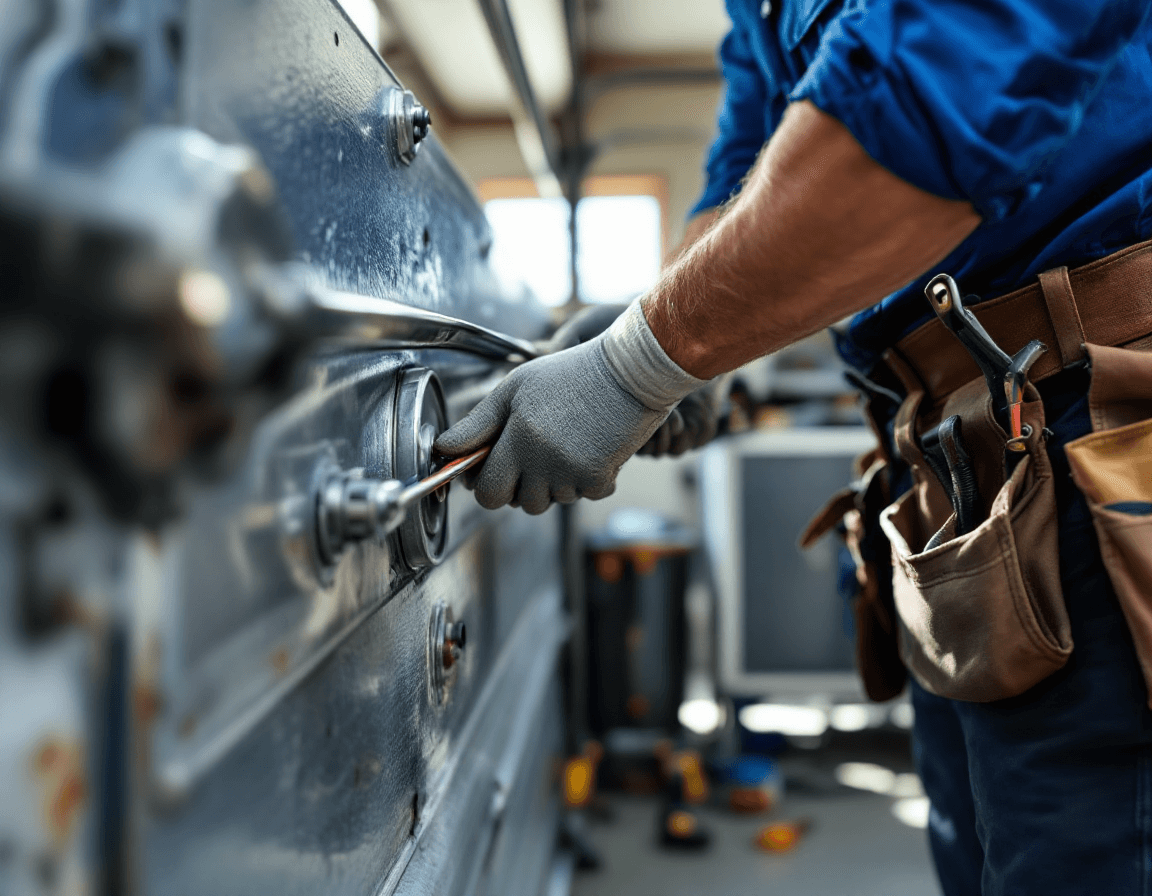
Garage door cable replacement in Issaquah, WA is one of the more common repairs we handle, and it's often the reason a door that worked fine last week suddenly sits half open or refuses to move. Issaquah's mix of older split-level homes near Gilman Village, newer builds up in Issaquah Highlands, and wooded lots on the slopes of Squak Mountain puts a lot of garage doors under steady wear from rain, humidity, and daily use. Homeowners across ZIP codes 98027 and 98029 call us after a cable has snapped, slipped off its drum, or started fraying at the top of the door.
This page explains what lift cables do, how to recognize trouble early, why the Pacific Northwest climate matters, and what a professional repair involves. Most cable replacements we perform fall within a $110 to $300 price range, depending on the door and what else needs attention. Knowing the warning signs and what the work includes will help you decide when to call, and why this is a job for a licensed technician rather than a weekend project.
Why Issaquah Garage Doors Tend to Show Cable Wear Sooner
Garage doors around Issaquah live in a damp environment for much of the year. Long stretches of gray, drizzly weather keep the air moist, and rain blowing under a door or splashing off a driveway can reach the lower hardware and work its way up the track. Steel lift cables are galvanized or coated to resist corrosion, but that protective layer wears thin over years of flexing, and moisture finds the weak spots quickly. Homes tucked under big evergreens or along shaded hillsides often stay damp longer after a storm, which speeds up surface rust.
Temperature swings add stress as well. Cold mornings in late fall and early spring make metal contract and make lubricant thicken, so the door works harder to lift. Those extra loads land on the cables, drums, and springs all at once. A door that feels fine in July can start grinding or shifting by January simply because the same hardware is being asked to do more work in cold, wet conditions.
Many homes in the area also have doors that have been in use for fifteen or twenty years, especially in older neighborhoods near downtown. Original cables from that era may have aged through multiple wet seasons without anyone inspecting them. If your door has never had its hardware checked, a visit from a qualified technician is a sensible way to find out where things stand before a cable fails on its own schedule.
Reading the Warning Signs Before a Cable Lets Go
Cables rarely fail without warning, even though a snap can feel sudden. Most of the time, the door has been giving you hints for weeks. The trick is knowing which hints matter. A door that starts to feel heavier when opened by hand, or that stops partway up and then continues, often means one side is carrying more load than the other, and the cable on that side is losing its strength.
Look at the cables themselves on a regular basis. Stand inside the closed garage and inspect the vertical lift cables on each side of the door, usually running from the bottom bracket up to the drum at the top corner of the door. Healthy cable looks uniform, with no kinks, no flattened sections, and no broken wire strands. Fraying appears as small hairs or loose wire ends sticking out, and it tends to show up near the bottom bracket or where the cable wraps the drum.
Here are common early warning signs that justify a service call:
- Fraying, kinks, or small wire ends sticking out from either lift cable
- Visible rust or chalky orange residue along the cable or drum
- The door sitting crooked, with one side noticeably higher than the other when closed
- Grinding, popping, or chattering noises during operation
- The door pausing or jerking partway through its travel
- Cable wrapping unevenly on the drum, or appearing to slip sideways
If any of these show up, schedule an inspection before the cable gives out. Catching wear early often means a straightforward replacement instead of a more involved repair that also damages the drum, bottom bracket, or track.
What a Snapped Cable Sounds and Looks Like
A broken lift cable usually announces itself with a loud crack or bang, sometimes compared to a gunshot in a quiet house. Many homeowners hear it from inside the kitchen or upstairs and assume something has fallen. What follows is typically a door that drops a few inches, hangs at an angle, or stops moving entirely. The opener may strain, whine, or simply refuse to run once it detects the door is no longer moving freely.
When you check the door after a snap, you'll often find the broken cable hanging loose from the drum or the bottom bracket. Sometimes the cable has come completely off the drum and is lying in a loose coil near the track. Other times the cable is still attached at one end but has parted at a point where it had been rubbing or kinking. Either way, the door is no longer balanced, and the remaining cable and spring tension can create an unpredictable situation.
This is exactly why the door should be treated as hazardous until a technician arrives. Keep children and pets away from the door area, and avoid parking a vehicle where it might be struck if the door shifts. Do not try to lift the door by hand, pull on loose cable, or climb into the track to reattach anything. If your opener has an emergency release cord, use it only to disconnect the opener, then leave the door alone and call a professional.
How Cables, Drums, and Torsion Springs Work Together
Most residential garage doors in the Issaquah area use a torsion spring system mounted on a horizontal shaft above the door opening. The springs store energy that counterbalances the weight of the door, which is what makes lifting it feel manageable. Lift cables connect the bottom corners of the door to cable drums at each end of the shaft. As the spring unwinds, it turns the shaft, the drums wind up the cables, and the door rises smoothly along its tracks.
Because the cables and springs work together, a problem in one part affects the others. If a cable is worn or has slipped off its drum, the balance between the two sides of the door changes, and the spring may be asked to do uneven work. If a spring is weak or broken, the cables may carry more load than they were designed for, which shortens their lifespan. A proper cable replacement looks at the whole system, not only the one cable that failed.
This is also why cable and spring work carries real risk. Torsion springs hold a large amount of stored energy even when the door looks still. Winding or unwinding a spring requires specialized tools, precise measurements, and training. Lift cables themselves are under tension, and a cable released under load can whip or snap. Our technicians are licensed and insured, and they handle this hardware every week, which is one reason we never recommend that homeowners attempt cable or spring work on their own.
Why a Lopsided Door Often Points to One Failing Cable
A door that hangs crooked or closes unevenly is one of the most common complaints we hear from homeowners in Issaquah Highlands and surrounding neighborhoods. You might notice a gap at the bottom on one side, a bottom panel that sits higher than the rest, or a door that binds in the track on one edge. Sometimes the problem only appears when the door is fully closed, and other times it shows up as the door travels upward.
Several things can cause this, but a cable that is stretched, frayed, or partially off its drum is a frequent culprit. When one cable carries less tension than the other, that side of the door lags behind, and the door tilts. Over time, the lagging side can bend tracks, damage rollers, or strain the opener. Continuing to run a lopsided door can turn a relatively simple cable replacement into a larger repair.
If your door shows this pattern, do not try to adjust the cable tension yourself. A technician will measure both cables, inspect the drums and bottom brackets, check the track alignment, and determine whether the cable, drum, or spring is responsible. In many cases, replacing the worn cable and resetting the drum restores level operation without needing additional parts.
Rust, Fraying, and the Wet Winter Factor
Corrosion deserves special attention in this part of Washington. Rust on a lift cable does more than look unsightly. It weakens the wire strands from the inside, so a cable can appear mostly intact while losing a significant share of its strength. Rust also tends to collect where cables bend around pulleys and drums, which are exactly the points that carry the most stress.
Fraying often begins where the cable rubs against the drum groove or the bottom bracket. Each cycle of the door creates tiny movements, and over many years those movements wear through the outer strands. A cable that is fraying at the drum may look fine from a distance but show obvious damage when you look closely with a flashlight. Regular visual checks, particularly in late winter after a long wet season, can catch this before a failure.
Lubrication matters too. Lightly lubricating the door's rollers, hinges, and springs can reduce friction, but cables should not be coated with heavy grease or oil, which can attract grit and accelerate wear. A technician will use the right products on the right parts during service. If you're unsure what to apply, ask for guidance during your appointment rather than guessing.
What Happens During a Professional Cable Replacement
A professional cable replacement starts with a thorough inspection rather than a simple swap. The technician will confirm which cable has failed, check the opposite cable for wear, examine the drums for grooves or cracks, and look at the bottom brackets, pulleys, and track sections that the cables interact with. They also check the springs and shaft for signs of strain, since a weakened spring can be the reason a cable failed in the first place.
Once the diagnosis is complete, the technician secures the door so it cannot move unexpectedly. Spring tension is handled using proper winding equipment and safety procedures, and the cable is released from the drum in a controlled manner. The new cable is sized to match the door's specifications and routed correctly through the pulley, drum, and bottom bracket. Both cables are then tensioned evenly so the door travels straight and level.
Before leaving, the technician tests the door through several full cycles, checks the balance by hand and with the opener, and confirms that the auto-reverse and safety sensors function as expected. A good service visit ends with a clear explanation of what was replaced, what was inspected, and what, if anything, you should watch for in the coming months. Our technicians are licensed, bonded, and insured, so you can have confidence in the work performed inside your garage.
Cable Drum Service and When the Drum Needs Attention Too
Cable drums are often overlooked, yet they play a central role in how smoothly the door operates. The drum has a grooved surface that guides the cable as it winds and unwinds, and it is attached to the shaft so it turns with the spring. When a drum becomes cracked, worn, or loose on the shaft, the cable can slip out of its groove, bunch up, or wrap unevenly. That is one reason homeowners sometimes see a cable tangled around the drum after a seemingly minor problem.
Drum service may include cleaning out debris, tightening set screws, replacing a damaged drum, or realigning the drum so the cable feeds properly. In many cases, a drum that looks slightly off will need to be addressed at the same time as the cable. Replacing a cable without checking its drum can lead to the same problem repeating within months. Tangled cable is also a sign that the door may have been opened or closed under unusual conditions, which is worth discussing with your technician.
Because drum work happens near the spring system, it belongs with a trained professional. If you notice the cable has wound unevenly, is piling up on one side, or has come partly off the drum, stop using the door and schedule service promptly.
Typical Costs and What Shapes the Quote
Most cable replacements we complete fall in the range of $110 to $300. That spread reflects the differences between simple jobs and more involved repairs. A single cable with an accessible drum and no other damage typically sits at the lower end of that range. Jobs that require replacing a drum, addressing a spring issue, or correcting track alignment usually land higher, because more labor and parts are involved.
Several factors influence the final quote. The size and weight of the door matter, since heavier doors use cables and springs with different specifications. The type of track configuration, the age of the hardware, and whether both cables need replacement all play a role. Access can also affect the price, particularly in garages with limited headroom or where the opener and storage racks crowd the work area.
We recommend asking for a clear written estimate before work begins. A reputable technician should explain what is included, what might change after inspection, and what the total is likely to be. If you're comparing options, focus on whether the quote includes a full inspection, proper spring and cable handling, and testing after installation, rather than only the lowest number.
Keeping Lift Cables Healthy Between Service Visits
Routine care can extend the life of your cables and help you spot trouble early. Once or twice a year, close the door and visually inspect both lift cables from inside the garage. Look for fraying, rust, kinks, and any sign that the cable is sitting differently on the drum. Also check that the door closes level and that the bottom seal makes even contact with the floor.
Keep the tracks clean and free of debris, leaves, and built-up grime, especially during the damp months when mud and moss can collect near the bottom of the door. Wipe away residue from the cables with a dry cloth rather than soaking them. Avoid hanging heavy items from the door or using it as a support for shelving, since added weight accelerates strain on the entire system.
Finally, pay attention to how the door sounds and moves. Any new grinding, uneven motion, or sudden jerk is worth investigating, even if the door still works. Addressing a small issue early is almost always less expensive and less disruptive than waiting for a snap that leaves your car stranded or the household without a usable garage entrance.
Neighborhood Notes for Homes Around Issaquah
Issaquah's neighborhoods each have their own character, and that affects how garage doors age. In Issaquah Highlands, many homes are relatively newer, with attached garages that sit close to shared pathways and landscaped areas. Doors in these homes often see frequent daily use, and their hardware benefits from periodic checks to keep up with the wear that comes from busy households.
Around Gilman Village, the older housing stock includes homes where garage doors have been replaced or repaired several times over the decades. Mixed hardware from different eras sometimes shows up during service, which makes a careful inspection especially important. Homes near the historic core may also sit on lots with less afternoon sun, meaning moisture lingers on the door longer after rain.
Homes on or near Squak Mountain often deal with more tree cover, leaf litter, and damp conditions. Needles and debris can work their way into tracks and drums, and shaded driveways stay wet longer. Doors in these areas benefit from regular cleaning and inspection, because moisture and organic material accelerate corrosion on cables and metal parts. Whether your home is near the Highlands, downtown, or up the mountain, a cable inspection once a year is a practical habit that pays off.
If you live anywhere in Issaquah or the broader area served by ZIP codes 98027 and 98029 and suspect your lift cable is failing, don't wait for the snap. Schedule a visit with a licensed technician who can diagnose the problem, explain your options, and restore safe, level operation to your door.
If your garage door is crooked, stuck, or you've heard a loud crack from the garage, call Seattle Garage Door Fix at (888) 799-3819. Our licensed, bonded, and insured technicians serve Issaquah and communities across Western Washington, and we'll inspect the cables, drums, and springs before recommending any repair. Please keep the area clear and avoid handling the door yourself until a professional has arrived.