
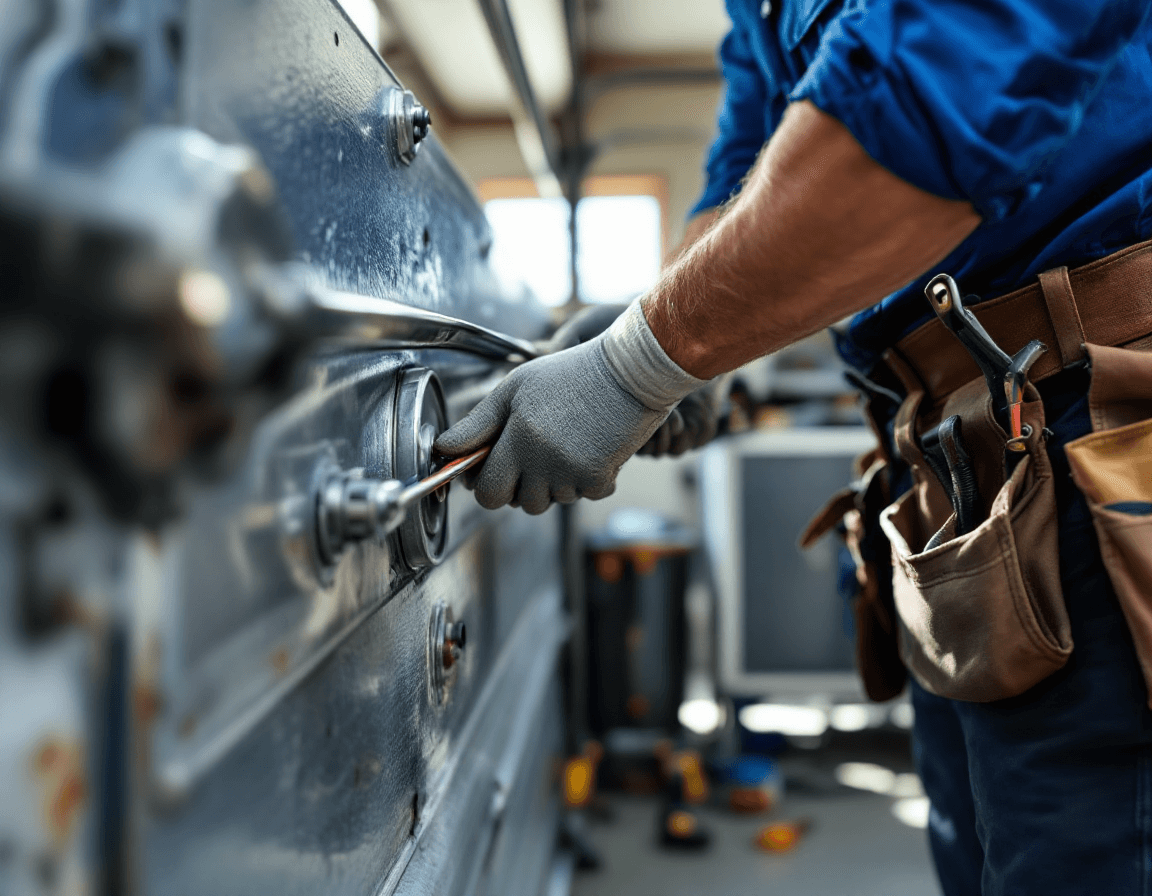
Garage door cable replacement in Renton, WA is one of the most common repairs we handle, and it's also one of the most important to get right. The lift cables are what carry the weight of your door as it rises and falls, so when one frays, snaps, or slips off its drum, the door can become unbalanced, unpredictable, and unsafe to operate. Many Renton homeowners first notice the problem when the door suddenly sags on one side or refuses to budge after a loud bang in the garage. Understanding what is happening at that moment can help you decide what to do next.
Renton sits in a part of King County where the weather is mild by national standards but persistently damp for much of the year. Long stretches of drizzle, morning fog off the lowlands, and humidity that lingers well into spring all work against steel cable. Garages in older Renton neighborhoods often have less ventilation than newer builds, so moisture settles on the cables and hardware and quietly starts the rust process. This page explains how cable systems work, what symptoms to watch for, what replacement involves, and why this job belongs in the hands of a trained, licensed technician.
Our goal here is practical. We want you to recognize the warning signs early, know roughly what to expect on cost, and understand the safety reasons behind leaving the tension hardware alone. Whether your home is near The Landing, up in the Highlands, out in Fairwood, or along the slopes of Talbot Hill, the core mechanics are the same. The details that matter most are the ones specific to your door, your drum, and your garage environment.
Why Renton Garage Doors Wear Their Cables Down Faster
Cable wear in the Puget Sound region rarely comes from a single cause. Steel lift cables are galvanized or coated to resist corrosion, but that protection gradually breaks down when the cable is repeatedly flexed around a drum while exposed to moisture. In a Renton garage that stays cool and damp through November and February, the coating can wear thin at the points where the cable bends most sharply. Once bare metal is exposed, surface rust starts, and rust roughens the strands so they grind against the drum groove with every cycle.
Temperature swings add another layer of stress. A cold morning followed by a warm afternoon can cause metal to contract and expand, which slowly fatigues the wire strands. Garages that also hold a second refrigerator, a water heater, or laundry equipment may have higher humidity levels than the rest of the house, and that extra moisture accelerates corrosion. Doors that are opened and closed many times a day, such as those serving a household with teenagers or a home-based business, simply put more cycles on the cable than a garage used once a week.
Door weight and balance matter too. When a spring is out of adjustment or a door has become heavier because of added insulation, the cables carry more load than they were designed for on every trip. We often find that a cable failure is the visible result of a longer-running imbalance. Replacing the cable without checking the rest of the system can leave the same stress in place, which is why a thorough inspection should always come before the new cable goes on.
Reading the Warning Signs Before the Door Quits
Most cable problems announce themselves well before the door stops working. The earliest clue is usually a change in how the door moves. You might notice a slight hitch or jerk as the door starts upward, or a faint scraping sound when it nears the top of its travel. Those sounds often mean a strand is catching on the drum or a section of cable is no longer seating evenly in its groove.
Visual signs are just as useful. Look at the cable where it wraps around the drum, and check the sides of the door near the bottom bracket for kinks, bright spots where the coating has worn away, or small rust-colored streaks. A fraying cable may show individual broken wires that stick out like tiny hairs. If the door sits lower on one side when closed, or if the bottom seal lifts unevenly when you open it, the cables may be stretched or no longer carrying equal load.
Watch for these common symptoms in your Renton garage:
- A loud snap or bang followed by the door dropping or refusing to move
- The door hanging crooked, lopsided, or sitting lower on one side
- Frayed strands, orange rust, or visibly thin spots along the cable
- A cable that appears to have jumped off the drum or wrapped unevenly
- The door closing unevenly, binding on one track, or pulling to one side
- Cable tangled or bunched around the drum with gaps in the wrap pattern
If you see any of these, treat the door as out of service until a technician has looked at it. Continuing to operate a door with a damaged cable can turn a manageable repair into a larger one, because a cable that lets go suddenly can strike the track, damage the drum shaft, or pull the door off its rollers.
What Happens When a Lift Cable Lets Go
When a lift cable fails, it does not usually fail gently. The cable is under significant tension from the springs, and once it parts, that stored energy releases quickly. People often describe the sound as a sharp crack or a gunshot-like bang, sometimes followed by a rattle as loose cable whips around inside the track. Many homeowners think the spring has broken, but the cable is usually the component that gave way first.
After a break, the door typically drops unevenly. The side with the intact cable may stay higher, while the side with the broken cable falls and rests at an angle. In some cases the door stays partly open and cannot be lowered without help. Trying to force the door up or down at this stage can bend the track, twist the drum shaft, or damage the opener. It is best to disconnect the opener and avoid putting your hands in the track area.
Cables that come off the drum create a different but equally serious situation. When a cable slips out of its groove, it may hang loosely or wrap across the drum in a tangled pattern. Because the drum is still connected to the spring system, the tension can shift unexpectedly if the door moves. That is why we always stress that cable and drum problems are not a weekend project for an untrained homeowner, no matter how simple the damage looks from the outside.
How the Cable, Drum, and Spring Work Together
Your garage door balance system is a team, and each part depends on the others. The springs store the energy that lifts most of the door's weight, the cables transfer that force to the bottom bracket, and the drums hold the cables in controlled wraps as the door moves. The drum is grooved so the cable winds in exact positions. If the groove is worn, the cable can ride up or stack unevenly, creating friction and a crooked lift.
On a typical torsion system, which is common in many Renton homes, the spring sits on a shaft above the door opening, and the drums sit at each end of that shaft. Cables run from the drums down to brackets on the bottom section of the door. Because the spring winds up tension to balance the door, cable work involves forces that can cause serious injury if mishandled. That is the core reason cable replacement is treated as a licensed-technician task.
Drum condition deserves attention during every cable repair. A cracked, worn, or misaligned drum will chew through a new cable quickly. We inspect the drum for grooves that have lost their shape, set screws that have loosened, and signs that the cable has been rubbing against the drum flange. Replacing the cable and ignoring a damaged drum is like changing a tire while leaving a flat rim on the wheel.
Practical Cost Expectations for Cable Replacement in Renton
Most cable replacements fall in the range of $110 to $300, and the final figure depends on several factors. A single cable repair on a standard residential door is usually at the lower end of that range, while jobs that involve both cables, drum service, or additional hardware tend to sit higher. Door size, cable length, and the condition of the surrounding parts all influence what the work requires. Accessibility in the garage can also affect labor time, especially in tighter layouts common in some older homes.
It helps to know that cable work and spring work are separate categories, and they are not priced the same way. Replacing a frayed cable does not automatically mean the springs need attention, but a technician should check spring condition during the visit. If a spring is also worn or the door is severely out of balance, you will want an honest explanation of the options before any additional work begins. A good technician will show you what they found rather than pushing unnecessary upgrades.
When you request an estimate, ask what the quote includes. A clear quote should cover the replacement cable, labor, a safety check of the door and opener, and a balance test after the repair. Be cautious of any price that seems dramatically lower than the range above without explanation, because cable work done cheaply can lead to repeat failures. Our pricing guidance here is a general reference, and the exact number will depend on your door and the inspection results.
A Typical Cable Replacement Visit, Step by Step
A cable replacement visit usually starts with a conversation about what you observed. We want to know when the door began acting strangely, whether you heard a bang, and whether anyone has tried to operate it since. That history helps us determine whether the cable failed from age, impact, or an imbalance problem that might also affect the new cable. We then inspect the door, both cables, both drums, the spring assembly, the tracks, and the opener connection.
Once the door is secured and the tension is safely managed, the technician removes the damaged cable and checks the drum groove and attachment points. The replacement cable is measured and fitted to the correct length, then routed through the bottom bracket and wound onto the drum in the proper pattern. Every step is performed with the door supported and the spring tension handled according to professional procedures. Rushing this stage is one of the main reasons DIY attempts go wrong.
After the new cable is installed, the door is tested through several full cycles. We check that both sides rise and close at the same height, that the tracks are aligned, and that the door does not bind or drift when released halfway. If the opener is connected, we confirm that its safety reversal features respond properly. The visit ends with a summary of what was replaced, what was inspected, and any maintenance you should watch for in the coming months.
Choosing Cable Materials That Hold Up in Damp Garages
Not all replacement cables are identical. Standard galvanized cable has been a reliable choice for decades, but in a humid Western Washington garage, the quality of the coating and the construction of the strands matter a great deal. We generally look for cable that is rated for the door's weight and cycle demands, and we consider the garage environment when recommending a specific product. A garage that stays damp year-round benefits from better corrosion protection than one that stays dry.
Cable length and ends also affect longevity. The swaged fittings at each end need to be secure, and the cable must be sized so the door hangs level without placing extra strain on one side. A cable that is slightly too long or too short can cause uneven lifting even when the drum is in good shape. Matching the cable to the specific door model and drum configuration is part of the job that homeowners rarely see but benefit from every day.
Replacement is also a chance to check the hardware connected to the cable. Bottom brackets, safety cables that run through the springs in some systems, and the anchor points on the drum all wear over time. Upgrading a worn bracket during the same visit may prevent a second service call later. The best time to address these details is while the door is already open for repair, rather than after another failure forces an emergency visit.
Why Spring and Cable Work Stay With a Licensed Pro
We cannot overstate the safety reasons behind professional cable work. Garage door springs hold enormous stored energy, and when the tension is released incorrectly, the force can cause severe injuries. Even a seemingly minor task such as removing a loosened cable can become dangerous if the spring is wound or the door is not properly supported. Licensed technicians are trained to control that energy and use tools designed for the job.
Common homeowner mistakes include clamping a cable without securing the door, attempting to unwind a spring with the wrong tools, and trying to reach over a door that could move suddenly. Some people attempt to replace a cable by lifting the door manually while it is partially disconnected, which can cause the door to fall unexpectedly. Those errors are the reason we recommend calling a professional at the first sign of cable damage, not after a DIY attempt has already gone wrong.
If you have already been working in your garage, step back and take a few precautions. Disconnect the opener, keep children and pets away from the door, and do not stand under or in front of the door while it is unbalanced. Leave the spring tension and the cable wraps alone, and call a licensed, bonded, and insured technician who can handle the repair safely and correctly. Your door is a large moving object, and treating it with respect protects you, your vehicles, and your family.
Neighborhood Notes from The Landing to Talbot Hill
Renton is a city of varied housing, and that variety shapes how garage doors age. Homes near The Landing often include a mix of older and newer construction, and many garages in that area see daily traffic as residents come and go for shopping, work, and errands. Doors in busier households tend to accumulate cycles faster, which means cables may need inspection on a shorter schedule than a garage used only occasionally.
In the Highlands area, many homeowners have settled into longer-term residences with two-car garages, where doors serve as both vehicle entry and general storage space. Those garages often hold tools, paint, and household items that can increase humidity and dust near the drum assembly. Fairwood, with its own mix of single-family homes, tends to have garages where a little extra attention to ventilation and drum lubrication pays off. Talbot Hill's slopes can also affect how a door sits in its opening, since uneven foundations and grading sometimes contribute to track misalignment that stresses cables over time.
No matter which part of Renton you call home, the most useful habit is to keep an eye on the door's balance and sound. Local weather, household routines, and garage layout all play a role, but a door that moves smoothly and sits level is a door whose cables are doing their job. When something changes, a quick inspection can catch a developing problem before it becomes a sudden failure.
Simple Habits That Extend Cable Life in Renton Homes
Good maintenance does not require specialized skills, and the most helpful steps are visual checks you can perform safely from the floor. Once a month, look at the cables without touching the spring assembly. Check for fraying, rust, bright worn spots, and any section that looks out of place around the drum. Make a note of anything unusual and mention it to a technician during your next service call.
Keeping the garage dry and ventilated is one of the most effective ways to protect cables from corrosion. Run a dehumidifier if the space stays damp, avoid storing wet items near the door, and make sure the floor drains properly if your garage has one. Good airflow reduces the moisture that settles on steel, which slows the rust that weakens cable strands. These habits cost little and reduce wear across the entire door system.
Consider scheduling a professional tune-up every year or two, especially if your door is more than a decade old or sees heavy daily use. During a tune-up, a technician can lubricate moving parts with the correct products, check drum condition, verify balance, and recommend cable replacement before a failure forces the issue. Preventive service is usually less disruptive than an emergency call, and it gives you a clear picture of your door's health.
Get Your Renton Garage Door Back in Balance
If your garage door is hanging crooked, a cable looks frayed or rusted, or a sudden bang has left the door stuck, the safest next step is to stop using it and call a professional. Seattle Garage Door Fix provides licensed, bonded, and insured cable replacement across Renton and more than 60 nearby cities in Western Washington. Our technicians handle cable, drum, and spring work with the care these components demand. Call (888) 799-3819 to describe what you are seeing, and we will help you understand your options and schedule a visit that gets your door moving safely again.