
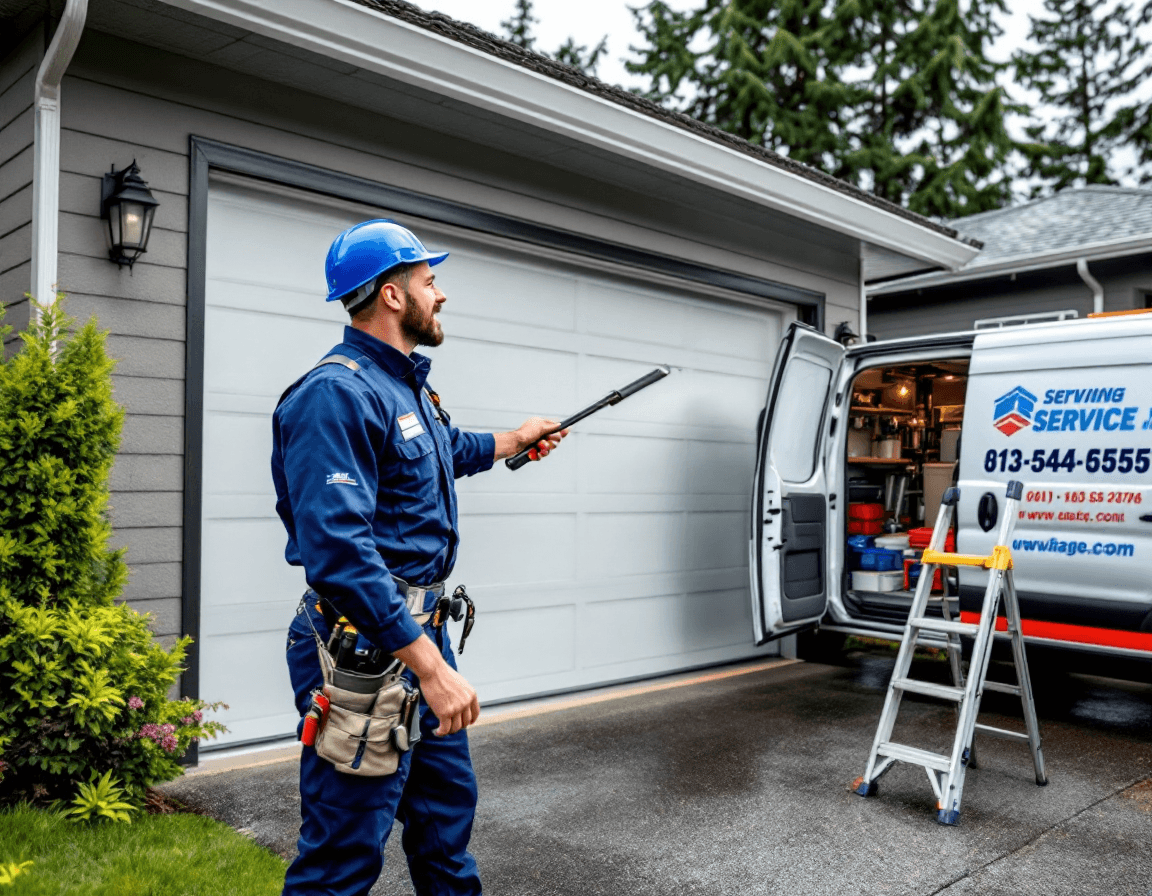
Garage door repair in Redmond, WA is rarely a single-problem job. A door that won't close, a remote that goes dead, or a panel that looks crooked usually has a root cause tied to the weather, the age of the hardware, or a part that has been quietly wearing down for months. Our technicians serve Redmond homes across ZIP codes 98052 and 98053, from the townhomes near Downtown Redmond to the family houses tucked into the hills above Education Hill. Each neighborhood has its own quirks, and knowing them helps us diagnose a door faster and explain the fix in plain terms.
This page walks through the most common reasons Redmond garage doors fail to open, close, or move smoothly, and what those failures usually mean. We cover the symptoms homeowners notice first, the safety boundaries that every homeowner should respect, and what a typical service visit involves. We also explain how pricing works, since most residential repairs in our service area fall between $95 and $450 depending on the parts and labor involved. Nothing here replaces an on-site inspection, but it should help you describe the problem accurately when you call.
If your door is stuck, noisy, or behaving strangely right now, you do not need to diagnose everything before reaching out. Keep people and pets clear of the door, avoid forcing it by hand, and read the sections below to see which symptoms match what you are hearing and seeing. The sooner a small issue is addressed, the less likely it is to damage springs, openers, or tracks. Our team is ready to help when you are.
Why Redmond Garage Doors Take a Beating From the Weather
Western Washington winters are mild by national standards, but they are long, wet, and humid, and that combination is hard on steel garage doors. Redmond receives a steady drizzle for much of the cooler months, and damp air settles into garages that are often unheated and poorly ventilated. Moisture gets into the bottom seal, pools along the track, and slowly promotes surface rust on hinges, brackets, and roller axles. Over several seasons, that corrosion makes parts stiffer and less forgiving.
Temperature swings matter too. On cool mornings, lubricant thickens and metal contracts, which can make a door drag at the start of its travel and then loosen up as the afternoon warms. Occasional cold snaps push the door's springs and opener motor harder than usual, and an opener that was already working near its limit may suddenly stall. Many homeowners first notice a problem during the first frosty week of the year, even though the wear started months earlier.
Moss and debris are a local factor as well. Redmond's mature trees and shaded lots mean leaves, needles, and grit collect in the track channels, especially on driveways that slope toward the garage. That debris can jam rollers, scratch the track, and interfere with the bottom seal. Regular rinsing and a quick check of the tracks each season can prevent many of the problems described on this page.
Reading the Early Warning Signs Before a Door Gets Stuck
Most garage doors give some notice before they fail completely. The trick is recognizing that a slight change in sound or movement is worth investigating. Catching the problem early usually means a simpler repair, a smaller bill, and less risk of the door coming down unexpectedly. We see homeowners who waited weeks after the first sign of trouble and ended up needing a full roller replacement when a lubrication and alignment check would have sufficed.
Common early signals include:
- The door pauses or hesitates for a second when it starts moving
- One side rises or lowers faster than the other
- A grinding or squealing noise appears at the same point in each cycle
- The opener runs longer than it used to before the door fully opens or closes
- Gaps show along the top, sides, or bottom when the door is closed
Any one of these items can point to something simple, like a dry roller or a loose bracket. Several together, however, often suggest a larger alignment or spring issue. If you notice more than one, schedule an inspection instead of waiting for the door to stop completely.
Photo Eyes, Wall Buttons, and Remotes That Stop Responding
When a door refuses to respond at all, the cause is not always mechanical. Modern openers use a pair of safety sensors mounted near the floor on either side of the opening. These photo eyes send an infrared beam across the doorway, and if the beam is blocked or misaligned, the opener will refuse to close the door. A sensor knocked out of place by a stored bike, a bumped recycling bin, or a dog brushing past can produce exactly this symptom.
Remote and wall-button failures often have simpler explanations. Remote batteries wear out faster in cold weather, and a wall keypad or switch can corrode in a humid garage. Sometimes the opener has simply lost its programmed codes after a power outage or a reset. Our technicians check the power supply, the wiring at the wall control, and the receiver before recommending any replacement, because the cheapest fix is often a few minutes of troubleshooting.
Before calling for service, you can check a few things yourself. Look at the sensor lenses for dirt or cobwebs, confirm both sensor lights are steady, and try a fresh remote battery. Keep in mind that if the lights blink or the door reverses when you try to close it, the sensors are doing their job and should not be bypassed. Disabling safety sensors is a serious hazard, and it is not a repair.
Doors That Reverse Before Reaching the Floor
A door that starts closing and then springs back up before it touches the ground is almost always responding to the auto-reverse system. Under normal conditions, the door should travel all the way down and only reverse when it meets resistance. If it reverses in midair, the opener is detecting an obstruction that may not be visible, such as a dropped object in the track, a sensor misalignment, or a door that is binding partway through its travel.
Another common cause is the force setting on the opener. Over time, a door that has become heavier from worn rollers or sagging hinges may exceed the factory force limits, causing the opener to think something is in the way. Adjusting the force without addressing the underlying friction may make the door hit harder than it should, which is why we recommend correcting the mechanical issue first. A balanced, smooth door needs less force and reverses only when it truly should.
Keep an eye out for debris in the track near the floor, especially pebbles, sand, or dried leaves that can get carried in on shoes and tires during rainy months. A door that closes slowly on one side, or that reverses only when it reaches a certain height, deserves a closer look at the tracks and rollers.
Crooked Panels and Doors Pulling Off Their Tracks
A door that looks crooked, sits lower on one side, or has pulled partially out of its track is one of the more serious symptoms we encounter. The door panels ride within vertical and horizontal tracks, guided by rollers that must sit squarely in the channel. When one roller comes out, bends, or breaks, the entire door can shift, and the weight it carries suddenly shifts onto the remaining rollers and hinges. Continuing to operate the door in this state can damage the tracks and the opener.
Redmond's sloped driveways and older homes on Education Hill can make alignment more complicated. A slightly out-of-level garage floor or a driveway that drains toward the door can shift the way the tracks sit over time, especially if the mounting brackets have loosened. Many homes in newer developments near Overlake and Marymoor have been built with different track configurations, including high-lift and low-headroom designs, so the correct adjustment varies from door to door. A technician needs to check the track geometry, not just the visible rollers.
If your door has come off its track, do not try to pry it back into place or force it with the opener. Disconnect the opener by pulling the emergency release cord only if you can do so safely with the door closed, and keep everyone clear of the opening. A door that has come off track is heavy and can fall unexpectedly. Call a professional to realign it and inspect the springs before anyone attempts to use it again.
Grinding, Squealing, and Banging Noises
Noise is the most common complaint we hear, and it is also one of the most useful diagnostic clues. A high-pitched squeal usually comes from dry metal rubbing against metal, often a roller bearing or a hinge pivot that has lost its lubrication. A grinding noise that changes with speed can indicate a worn roller, a gear problem in the opener, or debris lodged in the track. Banging or clunking usually means a loose bracket, a worn bottom bracket, or a roller that has jumped the track briefly.
Lubrication helps with many noises, but it is not a cure-all. Using the wrong product can attract dirt and make the problem worse, so we recommend a silicone-based or garage-door-specific lubricant rather than heavy grease on the rollers. Spraying the track channel can also cause buildup if overdone. A proper maintenance visit includes cleaning the tracks, checking each roller for wobble or flat spots, and tightening fasteners that have worked loose through repeated cycles.
Nylon rollers, which are common on many residential doors, are quieter than steel rollers but can wear out sooner in damp climates. Replacing worn rollers with sealed bearing rollers often reduces noise significantly. If a banging sound persists after lubrication, it is worth having the door inspected before the vibration cracks a panel or loosens a hinge further.
Doors That Slam Shut or Stall Halfway
A door that drops too quickly or slams against the floor is more than an annoyance. It can damage the bottom seal, crack the panel, and create a serious pinch hazard. When a door falls faster than expected, the usual cause is a spring that has lost tension, a cable that has begun to fray, or a broken spring that is no longer counterbalancing the door's weight. Springs and cables are under very high tension, and their failure can be dangerous, which is why we handle this work only with trained technicians and the proper tools.
A door that stalls halfway up or down often indicates an imbalance. If the springs no longer lift evenly, one side of the door may be heavier than the other, causing the opener to strain or stop. Sometimes the opener motor itself is weak, but in many cases the real culprit is the spring system. Operating a door that is stuck halfway can overheat the motor and wear out the drive gear, so it is best to stop using it and call for help.
In our experience, the cost of replacing a broken torsion spring is generally higher than a routine adjustment, but it is still far less than the damage a falling door can cause to a vehicle or a person. Treat any sudden drop, stall, or imbalance as a reason to stop and schedule service promptly.
Why Spring and Cable Work Belongs to a Licensed Professional
Torsion springs and extension springs store enormous amounts of energy when they are wound or stretched. Even a small door can have springs that hold hundreds of pounds of tension, and releasing that tension suddenly can cause serious injury. The same is true for lift cables, which can fray or snap under load and whip through the air. Many homeowners are tempted to try a spring replacement or cable repair themselves to save money, and that is exactly the situation where we strongly advise against it.
Professional technicians use winding bars, safety cables, and specialized tools designed to control spring tension during replacement. They also understand how springs are rated for a specific door weight and size, which matters when selecting replacement parts. Installing a spring with the wrong rating can leave the door out of balance and shorten the life of the opener. Our team handles spring and cable work as a licensed, bonded, and insured service, and we will always explain what we are doing before we begin.
If you see a broken spring, frayed cable, or visible gap in a coil, keep the door closed, avoid using the opener, and keep children and pets away from the area. Do not attempt to adjust the tension yourself, and do not cut or remove a spring. A short phone call can prevent a costly accident.
What Happens During a Typical Redmond Repair Visit
Every repair begins with a conversation about what you have noticed, when the problem started, and whether it is getting worse. Our technician then inspects the door, opener, sensors, springs, cables, rollers, hinges, and tracks, looking for the cause rather than simply treating the symptom. We check the door's balance by disconnecting the opener and lifting the door partway, which tells us whether the springs are doing their job. This step helps us avoid replacing parts that are not actually at fault.
Once the inspection is complete, we explain the findings in plain language and provide a clear estimate before any work begins. Many repairs can be completed in a single visit, particularly when the problem involves sensors, rollers, hinges, or track alignment. Larger repairs, such as spring replacement, may require ordering parts. We will tell you what to expect and when the work can be scheduled.
Typical steps on a service visit include:
- Reviewing the symptoms and history of the door
- Testing the opener, safety sensors, and control devices
- Inspecting springs, cables, and drums for wear or damage
- Checking rollers, hinges, brackets, and track alignment
- Adjusting or replacing components and confirming smooth, balanced operation
Before we leave, we test the door through several full cycles, confirm the auto-reverse and sensor functions, and walk you through anything you should watch for in the coming weeks.
Price Expectations and Keeping Repair Costs Under Control
Most residential garage door repairs we perform fall within a range of $95 to $450, depending on what is wrong and which parts are needed. Simple adjustments, sensor realignment, and lubrication are usually at the lower end, while roller replacement, bracket repair, and opener component work typically fall in the middle. Spring and cable replacements, along with larger track or opener repairs, can cost more, and we always provide an estimate before proceeding so there are no surprises.
Several factors influence the final price. The size and weight of your door, the type of opener, whether your door uses torsion or extension springs, and the availability of parts all play a role. Doors with specialty hardware or unusual track configurations may require additional labor. We find that homeowners who address small issues promptly tend to spend less overall, because minor wear rarely stays minor for long.
You can help keep costs down by scheduling a seasonal check before the rainy months arrive in the fall, cleaning the tracks periodically, keeping the sensors clear, and watching for the early warning signs described above. A door that is maintained regularly tends to run quietly and reliably, and it gives you more time to plan any needed repairs instead of responding to an emergency.
If your Redmond garage door is stuck, noisy, crooked, or refusing to respond, our team is ready to help. Call (888) 799-3819 to describe what you are seeing and hearing, and we will schedule a fast, reliable repair visit that fits your day. Our licensed, bonded, and insured technicians serve Redmond homes across 98052 and 98053, including Downtown Redmond, Overlake, Education Hill, and Marymoor, and we will give you a clear explanation and estimate before any work begins.