
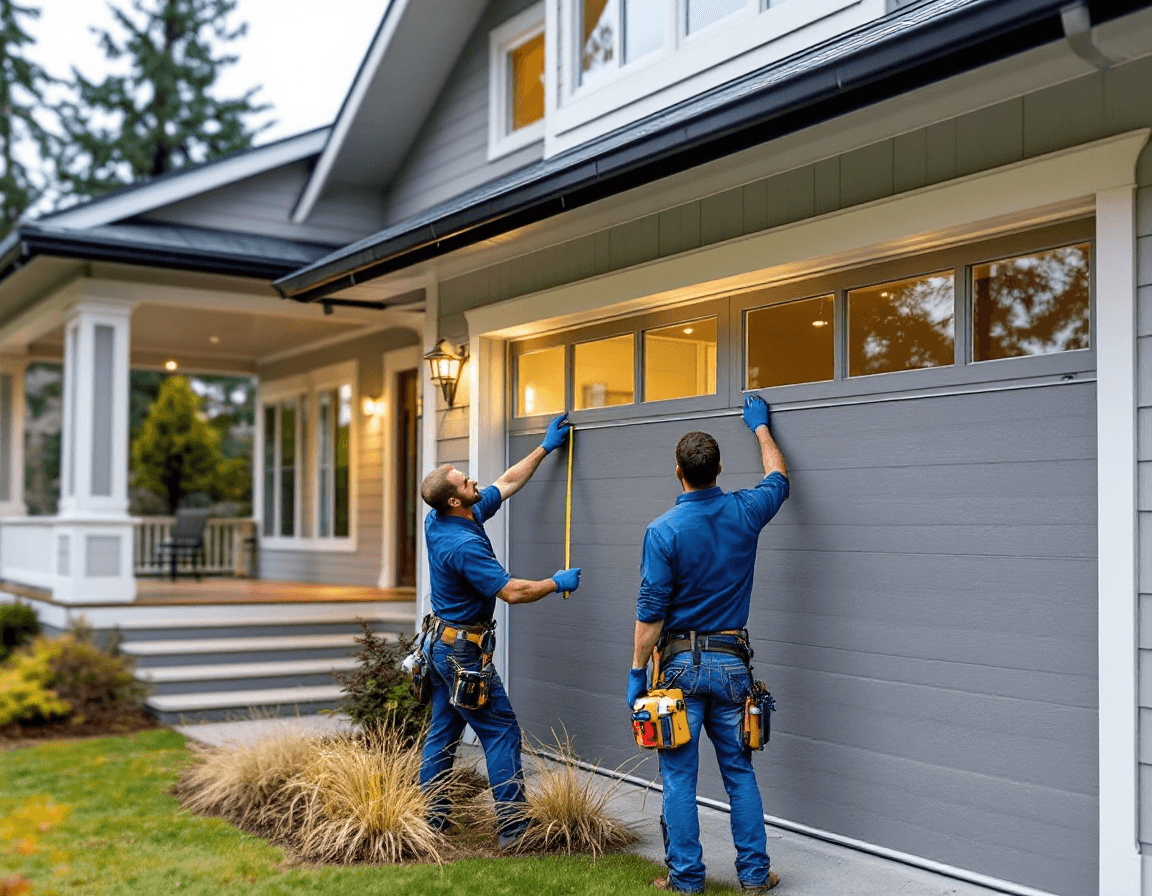
Garage door installation and replacement in Duvall, WA is one of the more practical upgrades a homeowner can make, and it often pays off in ways you notice every day. Duvall sits in the Snoqualmie Valley, where wet winters, river-valley humidity, and the occasional windstorm all put real stress on a garage door. When a door is damaged beyond repair, keeps failing, or simply no longer suits the house, replacing it is usually the smarter long-term move. This page explains how we approach that decision for homes in town and in the surrounding countryside.
Many of the homes we see in and around Duvall were built with a single or double garage that has been used as a workshop, a storage room, and a place to park, all at once. That kind of heavy daily use wears out springs, tracks, and panels faster than most people expect. Whether you live a few blocks from Main Street Duvall or out toward Cherry Valley on a larger lot, the door is one of the largest moving parts on your home's exterior. Choosing the right replacement means balancing function, durability, insulation, and appearance so the new door serves your household for many years.
Our team works on single and double garage doors in steel, carriage-style, wood, glass, and aluminum. We handle both straightforward swaps and more involved projects, such as adding a door during a remodel or enlarging an opening for a new vehicle. Installed pricing generally runs from about $950 to $3,800 or more, depending on the door style, materials, size, and hardware. The sections below walk through how to know when replacement makes sense, how local conditions shape the choice, and what to expect from start to finish.
Recognizing When a Duvall Door Has Reached the End of Its Useful Life
Not every noisy or sluggish door needs to be replaced, but some conditions are clear signals that repair will only delay the inevitable. Panels that are cracked, bent, or separated at the seams often cannot be restored to a safe, even alignment. When sections have been damaged in a windstorm or by a backing vehicle, the frame and track may also be out of square, which makes any new hardware fight the same problem. A door in that condition is more than an inconvenience; it can become a safety hazard.
Repeated breakdowns are another sign. If you have replaced a cable, a roller set, or a spring more than once in a few years, the door as a whole is telling you something. Older doors also tend to lose their balance over time, so the opener strains to lift a heavy panel and the motor overheats. A technician can measure the balance and inspect the rest of the system, but when the cost of ongoing repairs starts to approach the cost of a new door, replacement becomes the more sensible investment.
Water damage deserves special attention in this part of King County. Rust that has eaten through the bottom panel, rot in a wood door's lower rails, or delamination where the skin of an insulated door has lifted from its core all point to moisture that will keep spreading. Storm damage from falling branches or a heavy gust can also bend steel sections beyond repair. If you spot any of these, schedule an inspection before the next wet season makes the problem worse.
How Western Washington Weather Shapes Your Garage Door Choice
The Pacific Northwest climate is hard on garage doors in ways that are easy to underestimate. Long stretches of gray, damp weather keep wood and metal surfaces wet for months at a time, and the valley's humidity can be noticeable even in the drier parts of the year. Moisture gets into the bottom edge of the door, the weatherstripping, and any seams where paint has begun to fail. Over time, that combination encourages rot in wood and corrosion in steel fasteners and hinges.
Winter brings its own challenges. Cold nights followed by mild, wet days cause the panels to expand and contract, which can loosen fasteners and stress joints. Wind-driven storms can push rain sideways under a poorly sealed bottom seal, and falling debris from nearby evergreens can dent a door that has no protective overhang. Homes near the river or on lower ground may also see more persistent dampness in the garage slab, which affects the lower section of any door.
Because of these conditions, we tend to recommend materials and finishes with proven moisture resistance. Factory-finished insulated steel with a good polyurethane core and a durable baked-on coating handles wet seasons well and needs little upkeep. Aluminum with a powder-coated finish is another strong option, particularly for glass-panel designs, since it resists corrosion. Wood can be beautiful and authentic, but it requires a properly sealed finish and regular maintenance to hold up in this climate.
Choosing Between Steel, Wood, Glass, and Aluminum
Each material has a distinct personality, and the right choice depends on how you use the garage and how the house looks from the street. Insulated steel is the most common choice for good reason. It is strong, relatively affordable, available in many colors and textures, and easy to maintain. Modern steel doors can imitate the look of wood grain or carriage-style hardware convincingly, which makes them a practical compromise for homeowners who want traditional character without the upkeep.
Wood doors, whether cedar, fir, or engineered wood, deliver warmth and craftsmanship that many Duvall homeowners find appealing, especially on older houses or properties with a rural feel. They require careful finishing and periodic recoating, and they are heavier, which can affect opener selection and long-term hardware wear. Glass and aluminum designs work well when you want natural light in the garage or a more contemporary look. Glass panels should be specified with the right thickness and tempering for safety, and aluminum frames should be matched to the wind loads common in your area.
Our advice is to start with how the door will be used. A detached shop with heavy daily traffic may be best served by a sturdy insulated steel door with a strong frame. A home with a historic or farmhouse exterior may suit a carriage-style door in steel or wood with decorative hardware. A home office or workspace that needs daylight may benefit from a partial-glass design with insulated glazing. We can walk through sample finishes and sections during your estimate so you can see the options in context.
Insulation, Comfort, and Energy Efficiency in Duvall Garages
If the garage shares a wall with living space, or if you use it as a workshop through the cooler months, insulation matters more than many people expect. An uninsulated steel door conducts cold and heat readily, which makes the garage a poor buffer between the outdoors and the rest of the house. Upgrading to an insulated door can reduce drafts, make the space more comfortable to work in, and help keep adjoining rooms steadier in temperature.
Insulation ratings for garage doors are published by manufacturers, and it is worth comparing the listed figures rather than relying on general claims. Pay attention to the door's construction, including the core material, the thickness of the panels, and how well the seals and bottom weatherstripping close the gaps. A well-insulated door is only as good as its perimeter seals, so a new bottom seal and side jamb weatherstripping are often included in a good installation. Ask us to explain the differences between the models we carry so you can match the performance to how you use the space.
Energy savings vary widely depending on the size of the garage, how often the door opens, and whether the space is heated. Rather than promising a specific percentage, we focus on the practical outcome: a door that closes tightly, holds insulation in, and keeps moisture and drafts out. For many homeowners, that combination makes a noticeable difference in comfort during the long, damp months of the year, even if the utility savings are modest on paper.
Carriage-Style Looks for Duvall's Historic and Rural Properties
Carriage-style doors have become popular across the Snoqualmie Valley because they suit so many local homes, from older farmhouse-style houses to newer builds that aim for a classic look. These doors feature panel designs, decorative hardware, and often a faux hinge pattern that gives the impression of two separate swinging doors. In steel, they offer the durability needed for daily use. In wood or wood-look finishes, they add warmth and character that complements siding, stone, and traditional trim.
Getting the look right involves more than picking a style. The color should harmonize with your siding, trim, and roofing, which in our area often means earth tones, deep greens, and muted blues or grays that hold up well against gray skies. Hardware matters too. Decorative handles, hinges, and windows can change a door dramatically, and selecting finishes that match your exterior lights and house numbers helps the whole facade read as one design.
If your home has a covered driveway, a deep porch, or a narrow lot, panel depth and overall proportion matter. We measure the opening and consider how the door will look from the street, not just how it will operate. For homeowners who want an older appearance on a newer structure, a carriage-style door is often the single most effective upgrade for curb appeal.
Planning Openings, Sizing, and Remodel Additions
A new garage door is not always a straight swap. Homeowners who are adding a bay for a second vehicle, converting a single to a double, or building a garage addition need to plan the opening, header, and structural support carefully. Door size affects the opener, the springs, and the track system, so the measurements must be exact. A rough opening that is slightly out of square can cause uneven operation and early wear, which is why we verify every dimension before ordering.
Remodels present their own considerations. If the garage is being reconfigured as living space, a workshop, or an accessory unit, the door may need to be relocated, enlarged, or replaced with a model that includes a pedestrian entry door. We often coordinate with framers and contractors to make sure the header, sill, and clearances work together. Headroom, backroom space for the track, and the location of ceiling joists all influence which spring system and track configuration will fit.
Planning ahead saves money and frustration. If you are considering a remodel, let us see the plans early so we can recommend door sizes and hardware that will work with your timeline. Measuring twice and confirming with us before ordering helps avoid costly reordering, and it ensures the finished opening looks intentional from the outside.
What to Expect During a Professional Installation Visit
A professional installation follows a sequence designed to protect your home and set the door up for long, safe operation. Understanding the steps helps you know what to ask and what to watch for. While every project is different, most visits include the same core stages, and a well-run crew keeps you informed at each one.
- An on-site assessment that confirms the opening dimensions, header height, track clearance, and wall condition
- Review of the door style, insulation level, material, and hardware options, with samples where available
- Removal of the old door, including safe handling of the old springs and cables by trained technicians
- Preparation of the opening, correction of any frame or sill issues, and installation of new weatherstripping
- Assembly and installation of the new door, track, and hardware, with alignment checks at each stage
- Opener programming, safety reversal testing, and a walkthrough of how to operate and maintain the door
Safety is central to every step. Garage doors store significant spring tension, and the components involved can cause serious injury if handled incorrectly. That is why we treat spring work as a job for licensed, trained professionals and never recommend that homeowners attempt it themselves. Once the door is installed, we test the auto-reverse feature and photo-eye sensors so the system responds properly if something blocks the path.
Understanding the Investment: From $950 to $3,800-Plus
Pricing for installed garage doors in Duvall ranges from roughly $950 to $3,800 or more, and the spread reflects real differences in materials, size, and complexity. A standard single insulated steel door with basic hardware sits at the lower end, while a large double carriage-style door in wood or a glass-and-aluminum design can move toward the top of the range. Labor, removal of the old door, and any structural modifications also affect the final figure.
- Door size and configuration, including single versus double bays and custom widths or heights
- Material and finish, such as insulated steel, wood, aluminum, or glass, along with paint and stain options
- Insulation level and sealing package, including bottom seals and perimeter weatherstripping
- Hardware and style upgrades, such as decorative hinges, handles, windows, and carriage-style accents
- Opener selection, safety sensors, and smart-control features if you want them
- Structural or framing work needed to prepare the opening for a new or enlarged door
We provide a written estimate after reviewing the project in person, so the number you see reflects your actual door, opening, and goals. There is no single price that fits every garage, and we would rather explain the trade-offs clearly than quote a figure that does not match your situation.
Permits, HOA Guidelines, and Working With Local Rules
Some garage door projects require permits, particularly those involving changes to the structure, enlarged openings, or new additions. Whether a permit is needed depends on the scope of the work and the current rules of the City of Duvall or King County, so we recommend confirming with the appropriate permitting office before you commit to a plan. We can advise on what typically triggers a permit and help prepare the information you will need, but final determinations rest with the local authority.
If your property falls under a homeowners association or a community with architectural guidelines, check those requirements early. Many associations regulate door color, style, and materials to preserve a consistent streetscape. Submitting your selection for approval before ordering can prevent the frustration of installing a door that must be changed later. Bring any guidelines to your estimate appointment, and we will help you choose options that meet both the rules and your preferences.
Keeping paperwork organized also helps when you sell the home or make future upgrades. Warranty documents, installation records, and product specifications are useful references for future owners and contractors. We provide the information you need so that your records are complete from the start.
Why Spring and Cable Work Belongs in Licensed Hands
Every garage door relies on either torsion springs or extension springs, along with cables, drums, and lift hardware that carry heavy loads. These parts are under tension even when the door is closed, and mishandling them can cause sudden release, pinching, or serious injury. Many accidents happen during do-it-yourself repairs or when a homeowner tries to adjust a spring without the right tools and training. This is one of the most important reasons to rely on licensed professionals for any spring or cable work.
When we replace a door, we handle the old spring system with care, release tension safely, and install the correct components sized for the new door's weight and dimensions. Balance is checked after installation, because a door that is out of balance strains the opener, wears hardware, and can behave unpredictably. We also inspect the cables, drums, and bearings to make sure the whole system works together.
If you notice a broken spring, a frayed cable, or a door that drops suddenly, keep everyone away from the opening and call a qualified technician. Do not attempt to wind springs or disconnect hardware yourself. A few minutes of caution protects your family and your property, and it ensures the new door performs the way it was designed to.
Ready to Plan Your Duvall Garage Door Upgrade?
Whether your current door is beyond repair, you want better insulation, you are ready for a fresh look, or you are adding a door during a remodel, Seattle Garage Door Fix can help you choose the right option for your home and budget. Call (888) 799-3819 to schedule an in-home estimate, ask questions about materials and pricing, or discuss your project timeline. Our team serves Duvall and the surrounding King County communities with licensed, bonded, and insured installation you can rely on.