
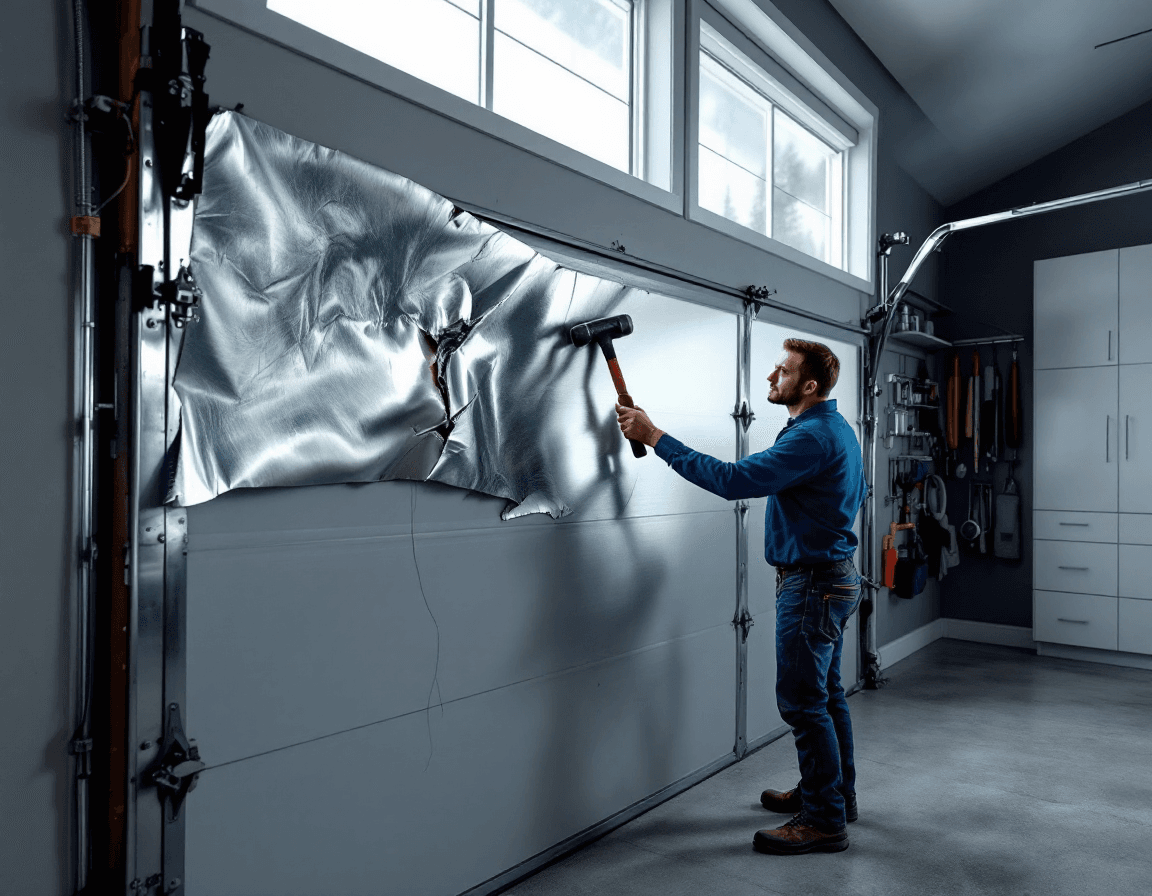
Garage door panel replacement in Duvall, WA is often the most practical fix when a single section of your door is dented, cracked, or waterlogged but the rest of the system still runs smoothly. Duvall sits in the Snoqualmie Valley, where homes along Main Street and the quieter streets out toward Cherry Valley share the same wet winters, cool springs, and driveways that see plenty of tight turns and early-morning backing. Those conditions wear on steel and composite panels in predictable ways, and a damaged section rarely stays a cosmetic problem for long. This page explains how we assess damaged panels, what replacement typically costs, and how to decide between repairing a section and replacing the door.
Many homeowners in the 98019 area call us after a single incident: a delivery truck clips the bottom panel, a tree limb drops onto the top section during a windstorm, or a child's bicycle leaves a crease that never quite pops back out. The door still opens, the opener still responds, and the first instinct is to live with it. That is a reasonable instinct for a small cosmetic dent, but it is not always the right one for a panel that has taken on water or started to separate at its seams. Knowing what to look for can save you from a larger bill later.
Our goal is to give you a clear, honest picture of your options. We are a licensed, bonded, and insured garage door repair company serving Duvall and more than sixty other cities across Western Washington. If you would like a technician to look at your door, call (888) 799-3819, and we will walk you through what we find before any work begins.
Reading the Damage Before You Order Anything
A panel that looks dented from the driveway may be far more serious once you look at it up close. Start by examining the damaged section in good daylight, running your hand along the edges and the seams where it meets the panels above and below. A dent that has creased the metal along a horizontal line often means the panel's internal structure has been compromised, even if the surface looks only slightly bent. Pay attention to hairline cracks in the paint or the coating, because these openings are where moisture gets in and starts the slow process of corrosion.
On insulated steel doors, which are common in newer Duvall construction, the panel is a sandwich of galvanized steel skins bonded around a foam core. When that outer skin is punctured or heavily dented, the foam can crack, shift, or absorb water, and the damage can extend well beyond the visible mark. Non-insulated steel and wood panels show damage differently, usually as bowing, splitting, or soft spots where rot has set in. Taking a few photographs before a technician arrives helps you remember exactly what happened and gives us a useful starting point for a quote.
It also helps to note how the door behaves. If the panel is slightly out of plane, you may hear rubbing along the track or notice that the door no longer seals evenly against the floor. Those signs suggest the damage is affecting the door's geometry, which matters when deciding whether to replace one section or the whole door. A panel that binds in the track is not something to ignore, because it places added strain on the rollers, hinges, and springs.
Why Valley Humidity Hides Rot Behind a Good Finish
The Snoqualmie Valley collects moisture in ways that surprise people who have not lived here long. Winter rain is steady rather than dramatic, and morning fog can sit on low ground for days at a time, which means a garage door may be damp far more often than it is dry. Even a door that looks pristine on the outside can hold moisture inside its bottom panel, especially if a previous impact compromised the seal or the weather stripping has worn thin. Over time, that trapped water works its way into wood cores, softens filler, and lifts paint from the edges.
Rust is the other common story. Galvanized steel resists corrosion well, but a scratch that exposes bare metal in a damp environment can begin to rust within a season, and the rust tends to spread under the paint rather than stopping at the visible spot. Homeowners often notice a bubbled patch of paint or a faint orange line along a crease and assume it is surface-level. Often it is not. When a technician probes the area and finds the metal thinning, replacement becomes the more durable choice.
Garages near Cherry Valley and along the rural roads outside the town center also face leaf litter, moss, and debris that accumulates at the bottom of the door. Those materials hold moisture against the lowest panel for long stretches, which is why bottom sections are the ones we replace most often in this part of King County. If your bottom panel shows staining, a soft texture when pressed, or a musty smell when the door is opened, treat those as warnings worth acting on promptly.
Matching an Old Panel to a Door That Has Faded
Matching a replacement panel is one of the more demanding parts of this work, and it is where many homeowners feel frustrated. Garage door manufacturers update their profiles, textures, and colors over the years, and a door installed a decade or two ago may no longer have an exact match in current catalogs. Even when the model is still available, sun exposure and weather can fade the existing finish, so a brand-new panel can look noticeably different next to the original sections. Those differences are most visible on sunny afternoons when the door is fully lit.
Our approach begins with identifying the manufacturer, the model series, the panel width and height, the number of panels, and the color code if it is listed on the door's label or the original paperwork. If the exact match is discontinued, we check whether a compatible profile is still produced and whether the color can be mixed or ordered closely enough to blend. In some cases, we recommend replacing a second adjacent section so the new and old panels look like a deliberate pair rather than a patch. That decision is always discussed with you before any order goes in.
Be realistic about how close a match can get. A panel that is a few shades off may still look fine from the street, while a panel with a different embossing pattern will stand out regardless of color. We will tell you plainly what we expect the result to look like, and if the match is not going to be convincing, we will say so before the work is done rather than after.
Repair or Replace: Making the Call on a Single Section
Not every dented panel needs to be swapped out, and a good technician should be willing to tell you when a repair is enough. Minor surface dents that have not cracked the coating, have not affected the panel's edges, and do not affect how the door tracks may be straightened or patched in some cases. Small scratches can be touched up to protect exposed metal. These are limited fixes, though, and they work best when the damage is caught early and the door remains structurally sound.
Replacement becomes the better option in several situations. A panel that has cracked through, separated from its frame, or been pierced should be replaced rather than patched. Panels with rot, deep rust, or water damage in the core generally need full replacement because the problem will return. A section that has been bent enough to bind in the track is also a candidate for replacement, since straightening it rarely restores the original alignment. When the damage affects more than one section, the cost comparison shifts, and a broader conversation about door age and condition becomes worthwhile.
Here is a practical way to think about the decision:
- Replace the panel if it is cracked, punctured, separated, or soft to the touch.
- Replace the panel if rust has spread beneath the paint or the metal has thinned.
- Consider a repair if the dent is shallow, the coating is intact, and the door still tracks evenly.
- Reassess the whole door if three or more sections are damaged, the springs are old, or the opener struggles with the added weight.
Each door is different, and the right answer depends on what we find when we inspect it in person.
What a Panel Replacement Typically Costs in Duvall
Our pricing for panel replacement generally falls between $250 and $800 per section, depending on the door. Several factors determine where a given job lands within that range. The size and insulation of the panel matter, since a larger insulated section costs more to source than a small non-insulated one. The availability of a matching profile and color also influences price, particularly when a panel must be special-ordered. Access and labor time can shift the total as well, especially when other components need attention during the same visit.
It helps to understand what the quote includes before you approve it. A typical estimate covers removing the damaged section, installing the replacement panel, checking the connecting hardware, and confirming the door tracks and seals correctly. If the inspection reveals worn rollers, a failing hinge, or a seal that needs replacing, those items will be listed separately so you can decide how to proceed. We do not want you to be surprised by a line item you did not expect, so we aim to explain each part of the estimate in plain language before work begins.
Keep in mind that a panel replacement is not a cheap substitute for a broader repair when the door has deeper problems. If the springs are worn or the door is very heavy from water absorption, adding a new panel to an aging system may not solve the underlying issue. A careful inspection protects both your budget and your safety by showing you the full picture rather than only the visible dent.
Safety Boundaries: What You Should Never Attempt Yourself
Panel replacement can look like a simple bolt-and-slide task, and many homeowners are tempted to try it alone after watching a video. The problem is that a garage door is a counterbalanced system, and the springs that lift it store enormous amounts of tension. Removing or adjusting a section can change how the door's weight is distributed, and if the door is not properly supported during the work, it can shift suddenly. Injuries from garage doors are serious, and the risk is not limited to the springs themselves.
We recommend leaving all spring-related work, cable work, and any task that involves releasing tension to a licensed professional. Those tasks require specialized tools, training, and an understanding of how each spring system is wound and secured. Even when a panel replacement appears to be purely cosmetic, the technician will need to support the door, check the lift system, and confirm that nothing has been disturbed in a way that creates a hazard. Treat that caution as part of the service rather than an upsell.
If you are unsure whether a task falls within safe DIY territory, the answer is almost always no for anything involving the springs, cables, or the door's lift mechanism. Simple tasks like wiping down panels, cleaning tracks, or checking that the door is disconnected from the opener before you touch anything are reasonable. Anything beyond that should be scheduled with a qualified technician who can verify the work is done safely.
A Short Checklist Before Your Technician Arrives
Preparing for a service visit makes the appointment faster and gives you more confidence in the result. Clear a path around the door so the technician can access the damaged section from both the inside and the outside. Note the approximate age of the door if you know it, along with any manufacturer name or label you can find on the inside of the top panel or on the side jamb. If you have photos of the original installation or previous repairs, having them on hand can help with color and profile matching.
It is also useful to tell us how the door has been behaving recently. Mention whether it has been slow to open, whether you hear grinding or popping, and whether the opener has seemed strained. Note any signs of moisture inside the garage, such as dampness on the floor or a musty odor near the bottom of the door. These observations help us decide whether the panel damage is isolated or part of a larger pattern of wear.
Finally, think about your priorities. Some homeowners want the closest possible match and are willing to wait for a special order. Others care most about getting the door functioning again quickly and are comfortable with a panel that is close but not perfect. Telling us what matters most helps us recommend the right path and set expectations before anything is ordered.
Frequently Overlooked Signs That the Door Needs More Than a Panel
A single damaged panel can sometimes be the first visible sign of a problem that extends beyond the section itself. Look for uneven gaps along the top or sides of the door, which may indicate that the frame has shifted after an impact. Check whether the door sits level when closed and whether it drifts open slightly when released partway. If the opener runs longer than it used to or the door reverses unexpectedly, the added weight of a waterlogged panel or misalignment may be the cause.
Inspect the rollers and hinges while you are checking the damaged area. Worn rollers can crack or flatten, and a bent hinge can transfer stress to the adjacent panels, causing new damage over time. Corrosion around hardware is common in our climate, and surface rust on hinges or brackets is worth addressing before it weakens the connection points. A technician can replace these components during the same visit, which often prevents a second trip and reduces the overall disruption to your household.
If the door is older and the springs show visible wear, such as gaps between coils or a stretched appearance, the panel replacement may be better paired with a conversation about the lift system. We will always discuss those items openly rather than adding them without explanation. Our aim is to keep your door safe, functional, and presentable without recommending work that does not serve your home.
Keeping Your Replacement Panel in Good Shape
Once a new panel is installed, a little routine care goes a long way in the Duvall climate. Rinse the lower sections periodically to remove road grime, leaf litter, and the moisture-holding film that builds up near the ground. Check the bottom seal and weather stripping every few months, since a worn seal lets water reach the lowest panel and undoes much of the protection a new section offers. Keep vegetation trimmed back from the door so branches and moss are not pressing against the surface through wet weather.
Inspect the paint or coating on any repaired area during the change of seasons. Small chips are easier to touch up early, before they become a corrosion point. If you notice a new dent, crack, or bubble, address it promptly rather than waiting for the next scheduled visit. Early action keeps a small problem from spreading into a second panel and turning a manageable repair into a larger project.
Finally, schedule an inspection every year or two, particularly if your door is more than ten years old or has taken an impact. A routine check lets a technician catch loose hardware, early rust, and seal wear before they cause larger issues. Regular attention is the most reliable way to protect your investment and keep the door looking like part of your home rather than a patched-together afterthought.
Ready to find out whether your damaged panel can be repaired or needs replacing? Call Seattle Garage Door Fix at (888) 799-3819 to schedule an inspection in Duvall. Our licensed, bonded, and insured technicians will assess the damage, explain your options in plain terms, and give you a clear estimate before any work begins.