
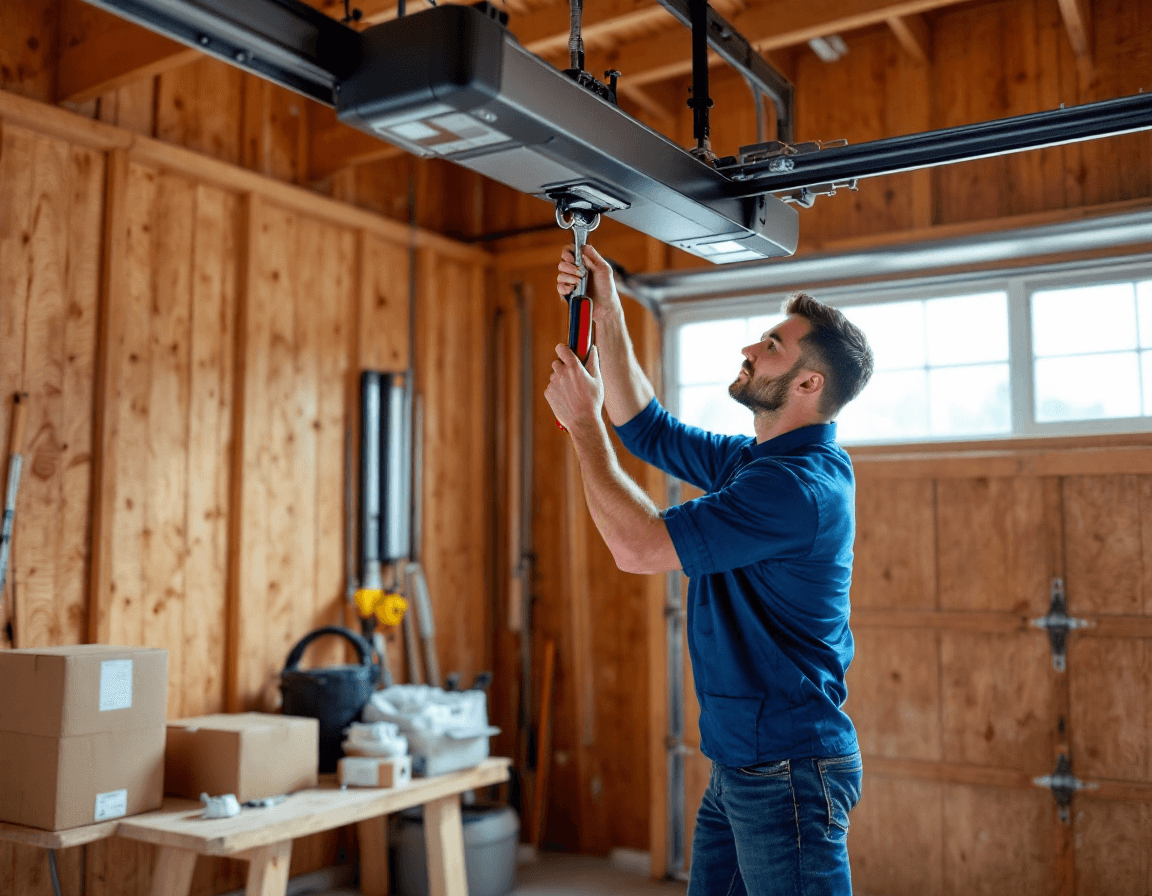
Garage door opener installation and replacement in Lynnwood, WA is one of the most useful upgrades a homeowner can make, and it often gets postponed longer than it should. Many households in Snohomish County keep the same opener for fifteen or twenty years, through wet winters, tree-lined streets, and the occasional windstorm that knocks out power for hours. By the time the unit starts grinding, stalling, or refusing to close, it has usually been working harder than it was designed to for a long time. Replacing it at the right moment protects your vehicles, your belongings, and your household's security.
If you live near Alderwood or the Lynnwood City Center area, you already know how quickly daily routines depend on being able to pull in and out of the garage. Commutes along the I-5 corridor, school drop-offs, and weekend errands all rely on a door that opens on the first press of a button. A sluggish opener adds small frustrations every day, and those frustrations tend to build until something fails at an inconvenient time. Our technicians serve homes across 98036, 98037, and 98087, and we see the same pattern repeatedly: a unit that worked fine for years suddenly needs attention that is better handled before the next storm season.
This page explains how to recognize when an opener has reached the end of its useful life, how to choose between belt-drive, chain-drive, and wall-mount models, and what to expect from a professional installation. It also covers the features that matter most in our climate, including rolling-code security, Wi-Fi control, and battery backup, along with a realistic look at pricing. Seattle Garage Door Fix is licensed, bonded, and insured, and every installation is handled by trained technicians who work on safety-critical equipment every day.
Reading the Signs Your Lynnwood Opener Is Wearing Out
Most openers do not fail without warning. They tend to announce their decline through small changes that are easy to overlook, especially if you only use the garage door a few times a day. A door that once reached the top of its track in a few seconds may now take noticeably longer, or it may pause halfway before continuing. You might also notice a new hum, a rattle that wasn't there before, or a clunk when the carriage reaches either end of its travel.
Reliability problems are often the strongest sign that replacement makes more sense than repair. An opener that works on Monday and refuses to respond on Thursday, or one that reverses for no apparent reason, may have worn gears, a failing logic board, or a motor that is struggling to deliver consistent force. In Lynnwood's damp winters, moisture can get into control boards and wiring connections, and what looks like a remote problem is sometimes a deeper electrical issue. A remote that works intermittently is worth testing, but it can also be a symptom of an aging receiver that needs to be replaced entirely.
Age itself is a meaningful factor. Older openers were built before many current safety and security standards became common, so a unit installed a decade or more ago may lack features that modern homeowners expect. When the cost of a major repair approaches the price of a new installation, replacement usually offers better value, because you receive updated components, a fresh warranty, and the peace of mind that comes with a system designed for today's use.
Belt Drive, Chain Drive, or Wall Mount: Choosing the Right Track for Your Home
Choosing the right drive style affects noise, maintenance, and how the opener fits your garage layout. Each option has strengths, and the best choice depends on how you use the garage, whether it shares a wall with living space, and how much noise you're willing to tolerate. Here is how the three main configurations compare for a typical Lynnwood home:
- Belt-drive openers use a reinforced rubber belt instead of a metal chain, which makes them noticeably quieter during operation. They are a strong choice for attached garages where bedrooms or home offices sit above or beside the door.
- Chain-drive openers are typically the most budget-friendly and are durable for heavier doors. They run louder than belt-drive units, but they handle a wide range of door weights and are commonly used in detached garages or workshop settings where noise is less of a concern.
- Wall-mount openers attach to the wall beside the door instead of the ceiling. They are useful when ceiling space is limited, such as in garages with low headroom, storage racks, or overhead lifts, and they keep the track area clear.
Your installer will measure the door's weight, the track configuration, and the available clearance before recommending a model. Some garages have older torsion springs or heavier wood-and-steel doors that need extra opener capacity, and a good technician will say so rather than pushing a unit that is underpowered. Matching the opener to the door is one of the most important steps in preventing early wear, and it is one reason a professional assessment is worth the time.
Rolling-Code Security and the Quiet Risk of an Older Opener
Rolling-code technology changes the access code each time you press the remote, which makes it much harder for someone to capture a signal and reuse it. Openers manufactured before this became standard often use fixed codes, meaning the same signal opens the door every time. That design made sense decades ago, but it is a real weakness today, particularly in neighborhoods where garages are often full of tools, bikes, and vehicles that are worth protecting.
Upgrading to a rolling-code opener closes that gap without changing how you use the door. Your remotes, keypad, and wall button will work as expected, and the system will simply become more resistant to signal capture. If you have an older unit, it is worth checking whether its remotes and keypad are still supported, since mixing old components with new control hardware can leave a security gap in place even after the opener itself is replaced.
Security also depends on the rest of the installation. A new opener should be paired with a clean, properly aligned safety sensor setup and a secure connection to the door track, and the emergency release should be tested and labeled clearly. Many homeowners forget that an unsecured garage door is an invitation for trouble regardless of the opener's age, so the installation visit is a good time to review locks, keypad placement, and whether the door is opening only when you intend it to.
Wi-Fi and myQ Control Without the Guesswork
Smart control has become one of the most requested features for garage door openers in Western Washington. Being able to check whether the door is closed from your phone, open it for a delivery driver, or receive an alert when the door has been left open is genuinely useful, particularly for households with variable schedules. Many modern openers support myQ-compatible control and can be linked to a smartphone app, although the exact features depend on the model you choose.
Setup is more than a download and a password. Your Wi-Fi signal needs to reach the garage reliably, which is not always the case in homes where the router sits on the opposite side of a house or where the garage is detached. Concrete walls, metal framing, and distance can all weaken the connection, and a technician can test signal strength during installation and recommend a simple fix such as relocating a network extender if needed. A reliable connection means the app responds when you need it to, rather than showing an offline message at the moment you're trying to close the door.
Smart features also come with responsibility. Share access only with people you trust, review the notifications you've enabled, and keep your app and account credentials secure. We recommend setting up user profiles intentionally during installation so that family members, cleaners, or house guests can be given access and then removed later without confusion. A thoughtful setup makes the system more convenient and more secure at the same time.
Battery Backup for Lynnwood's Windstorm and Outage Season
Power interruptions are a fact of life during the fall and winter months in the Puget Sound area. Wind events can bring down lines, and a long outage can leave a standard opener unable to move the door at all. Without battery backup, you may find yourself stuck inside or outside the garage, or forced to pull the emergency release and lift a heavy door by hand, which is not safe in every situation.
A battery backup unit keeps the opener working during short outages and gives you the option to open or close the door while the house is dark. Backup systems are especially helpful for households with electric vehicles that need to be charged or moved, for people who rely on the garage as their main entrance, and for anyone who wants reliable access during emergencies. Many homeowners find that the backup battery also reduces the stress of unexpected outages, since the door remains usable when the rest of the neighborhood is running on candles and flashlights.
Battery life depends on how often the door is cycled and how the unit is maintained. Batteries wear down over time, so they should be inspected periodically and replaced according to the manufacturer's recommendations. During installation, your technician will confirm that the backup system is wired correctly, tested under load, and explained to you so you know what the indicator lights mean and when a replacement will be needed.
How a Lynnwood Installation Visit Typically Unfolds
Knowing what happens during an installation helps you plan your day and set realistic expectations. Most replacements involve removing the old opener, checking the door and track, installing the new drive unit, mounting the rail or wall bracket, connecting safety sensors, programming remotes, and testing the full cycle. Depending on the configuration and any additional features, the visit typically takes a few hours, and your technician will walk you through each step.
Here is what a typical visit includes:
- Inspection: Checking the door balance, track alignment, rollers, hinges, and the condition of the existing wiring and outlet.
- Model selection: Confirming the right drive type and horsepower for your door weight and garage layout, then reviewing battery backup and smart control options.
- Installation: Mounting the opener, attaching the rail or wall bracket, routing the power and sensor wiring, and securing the unit so it runs quietly.
- Programming and testing: Setting travel limits, force settings, remotes, keypads, and app connections, then testing the door in both directions multiple times.
- Walkthrough: Showing you how to use the emergency release, how to operate the app, and what routine checks to perform.
You should expect the technician to explain each choice and answer your questions before anything is finalized. If something in your existing setup, such as worn springs, damaged cables, or an unbalanced door, needs professional attention, you will be told clearly and offered the option to address it at the same visit or later.
What Drives the $275 to $650 Price Range
Our installed pricing for garage door openers generally falls between $275 and $650, and the final number depends primarily on the opener model you select. Entry-level chain-drive units sit near the lower end, while quieter belt-drive models, wall-mount configurations, and units with built-in battery backup and advanced smart features typically fall higher in the range. The installation itself is a consistent part of the cost, and the difference is usually driven by the hardware and features you choose.
Several factors can influence where your project lands within that range. Door size and weight matter because heavier doors may need a more powerful motor. Garage layout matters because ceiling clearance can determine whether a rail or wall-mount system is the practical choice. The number of remotes, keypads, or additional accessories you want will also shift the total. Your technician should provide a clear quote that lists the opener model, included features, and any items that are separate from the base installation before work begins.
We believe homeowners should understand exactly what they are paying for. A quote should identify the specific model, the drive type, the warranty information provided by the manufacturer, and any optional upgrades. If a technician recommends a repair rather than replacement, you should hear the reasoning and have the chance to compare costs before deciding. Transparent pricing is a fair expectation, and it helps you choose the option that best fits your budget and your household's needs.
Keeping Your Lynnwood Opener Reliable Through Damp Winters and Dry Summers
Western Washington's climate is kind to lawns but tough on mechanical systems. Winters bring persistent moisture, cool temperatures, and occasional condensation inside the garage, while summers can be mild but still create temperature swings that affect lubricants and electronics. These conditions do not destroy a well-installed opener, but they do reward consistent care. A little attention each season can extend the life of your new unit and prevent small issues from becoming expensive ones.
Simple habits make a difference. Test the auto-reverse feature and safety sensors monthly by placing an object in the door's path and confirming the door reverses. Keep the sensor lenses clean and aligned, since dirt and cobwebs are common in garages. Check that the emergency release still works, and make sure the door moves smoothly by hand when disconnected. Look for signs of rust or debris on the rail, and keep the area around the opener free of stored items that could block airflow or interfere with the unit.
Routine service visits are also useful. A technician can inspect the drive, check the belt or chain tension, review the door balance, and look for early wear before it becomes a breakdown. This kind of preventive attention is often the difference between an opener that serves you well for many years and one that fails at the first cold snap.
Safety Lines: What Your Technician Handles and What You Should Leave Alone
Garage doors are heavy, and the forces stored in their springs and cables can cause serious injury if mishandled. An opener installation is a project that should be left to a licensed professional, particularly when it involves electrical connections, track adjustments, or any work near the spring system. Our technicians are trained to recognize hazards, follow safe procedures, and stop work when conditions are unsafe, and we strongly advise homeowners to avoid attempting these tasks alone.
There are, however, several things you can safely do yourself. You can test the auto-reverse function, keep the sensors clean, check that the remotes are working, and operate the emergency release as described in the owner's manual. You can also keep the door track clear of stored items and notice unusual sounds or movements, then report them promptly. Anything involving torsion springs, lift cables, drum adjustments, or wiring inside the wall or ceiling belongs with a qualified technician.
If your door is making alarming noises, has a broken spring, or will not stay open on its own, do not try to force it. Disconnect the opener only if you are certain it is safe to do so, keep people and pets clear of the door, and call a professional. Quick, careful response protects your household and prevents further damage to the door and the opener.
Calling Seattle Garage Door Fix for Your Lynnwood Opener
If your garage door opener is loud, slow, unreliable, or simply past its useful life, now is a good time to schedule an evaluation. Whether you need a quiet belt-drive model for a home office above the garage, a wall-mount system for a crowded ceiling, or a smart opener with battery backup for outage season, our team can recommend the configuration that fits your home and your budget. Call Seattle Garage Door Fix at (888) 799-3819 to schedule your Lynnwood installation or replacement, and we will walk you through the options and provide clear, upfront pricing.