
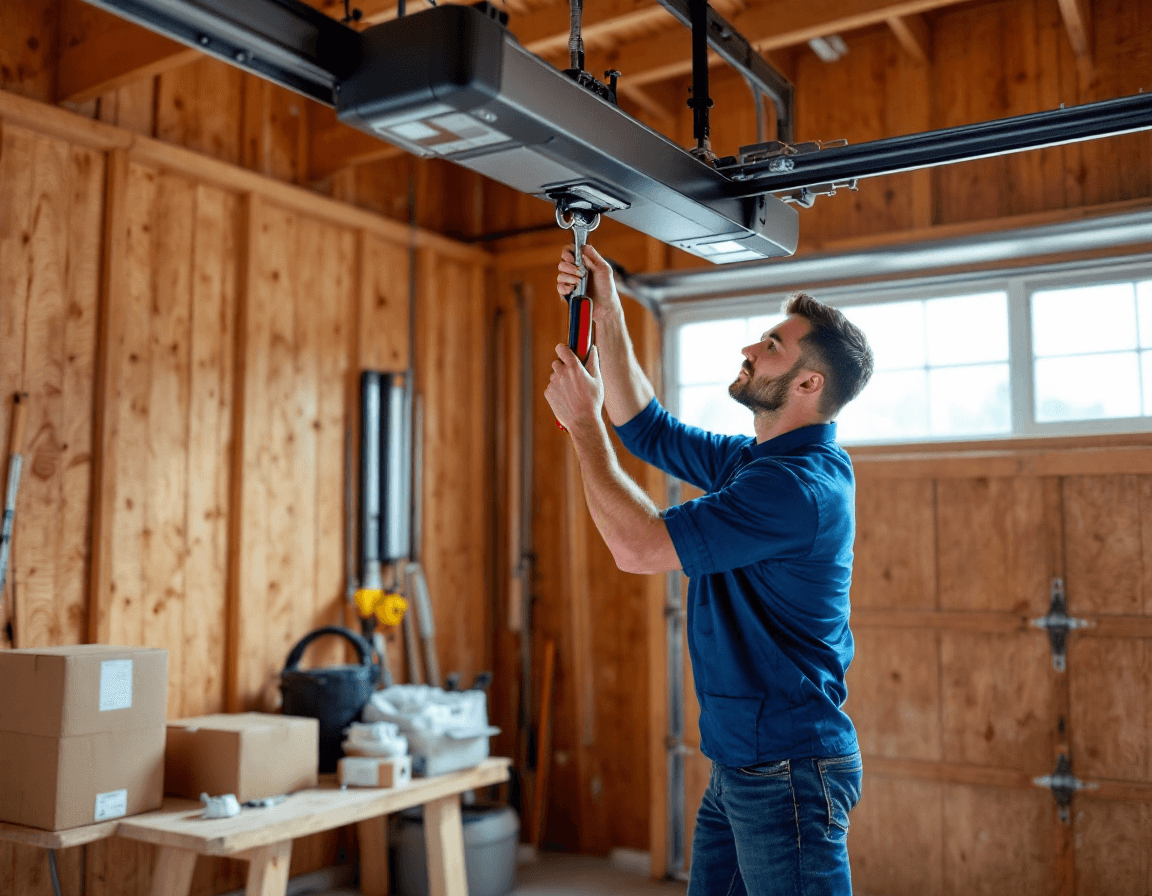
Garage door openers in Brier take a beating from wet winters, damp air, and the occasional windstorm that knocks out power for hours. If your opener has started grinding, stalling halfway up, or ignoring your remote, it may be time for Garage Door Opener Installation & Replacement in Brier, WA. Seattle Garage Door Fix installs belt-drive, chain-drive, and wall-mount openers, including smart models with Wi-Fi and myQ control and optional battery backup. Installed pricing typically runs from $275 to $650, depending on the opener model you choose and the work your garage needs.
Many Brier homes have attached two-car garages built in the 1980s, 1990s, and 2000s, and a large share still run the original opener or a unit from a previous owner. Those motors were designed for a different generation of remotes, sensors, and expectations. A replacement is often less about one broken part and more about bringing the whole system up to current standards for safety, security, and convenience. This guide walks through how to tell whether your opener is worth repairing, which drive style suits your space, and what a professional installation should include.
Whether you are a longtime resident near the park or a newer homeowner in a neighborhood close to Brier Park, the goal is the same: a reliable door that opens when you need it, closes safely every time, and keeps working when the lights go out. The sections below explain what to expect so you can make a confident decision before a technician arrives.
Why Brier Garages Wear Openers Down Faster
The Pacific Northwest climate is hard on mechanical systems that were never meant to sit in damp air for months at a time. Brier's cool, wet winters bring condensation, and that moisture finds its way into wiring junctions, limit switch housings, and the circuit board inside the opener head. Over several seasons, corrosion on terminals can create intermittent faults that look like a remote problem but are actually electrical. Temperature swings between cold mornings and warmer afternoons also cause the door's metal and the track to expand and contract, which increases the load on the opener.
Garage layouts in the area add their own stress. Many Brier garages are relatively deep, with long tracks and heavy insulated doors, and some have low ceilings above the door that limit where a traditional rail can be mounted. When an opener is forced to lift a door that is out of balance, it works harder than it should. A worn spring or a sticky track can make a healthy motor appear weak, so it helps to consider the entire system rather than blaming the opener alone.
Wind is another local factor. Winter storms roll through Snohomish County with enough force to bring down branches and lines, and outages can last long enough to matter. An opener that cannot be operated during a power loss may leave you stuck in or out of the garage, which is one reason battery backup has become a common upgrade in the area. We will cover that in more detail later, but it is worth keeping in mind as you evaluate your current unit.
Telling a Failing Opener From a Repairable One
Not every complaint means you need a new opener. A dead remote battery, a misaligned photo-eye, or a loose belt can often be corrected with a basic adjustment. The challenge is knowing when repairs keep making sense and when the motor is simply worn out. Frequent service calls, a unit that has been repaired several times, or parts that are no longer available can all point toward replacement.
Several signs suggest your opener has reached the end of its useful life:
- The motor runs loudly, grinds, or vibrates noticeably more than it did a few years ago.
- The door reverses or stops partway without an obvious obstruction, even after the track has been cleaned and aligned.
- The unit no longer responds to any remote, keypad, or wall control, and the receiver board appears to be the problem.
- The opener hums or clicks without moving the door, which often signals a failed gear, capacitor, or drive component.
- The door opens noticeably slower than it used to, or the motor strains and cuts out near the top of its travel.
If the door itself is balanced, the tracks are straight, and the opener still struggles, the motor may be the bottleneck. Replacing an aging opener also gives you the chance to install modern safety reversal features and a current receiver, which older units often lack. In many cases, the cost of two or three repair visits approaches the price of a new installation, so it is worth weighing those numbers honestly.
Belt Drive, Chain Drive, or Wall Mount: Choosing the Right Motor for Your Garage
The drive style you choose affects how quiet the opener runs, how much maintenance it needs, and how much ceiling space it consumes. Belt-drive openers use a reinforced rubber belt instead of a metal chain, which makes them noticeably quieter inside the house. For homes where the garage shares a wall with a bedroom or a home office, belt drive is usually the most comfortable option. The belt also tends to run smoothly without the sharp rattle some chain units produce.
Chain-drive openers are the traditional workhorse. They are typically the most budget-friendly models and handle heavy doors well, which makes them a practical choice for garages with solid wood or heavy insulated steel doors. They are louder during operation, so they may suit a detached garage or a home where noise is less of a concern. Chain-drive units also require periodic lubrication, which is a simple task but one that many owners forget.
Wall-mount openers attach to the side wall of the garage rather than the ceiling. This design frees up overhead space, which is valuable in garages where storage racks, bike hoists, or ceiling-mounted lighting already occupy the area. Wall-mount installs do require a sturdy, properly framed wall, and a technician will verify that the mounting location can carry the load and that the rail alignment will work with your door's torsion setup. Once installed correctly, a wall-mount unit can be an excellent solution for low-clearance garages where a standard rail would not fit.
Rolling-Code Security and Why Older Remotes Fall Behind
Early garage door openers used fixed codes, meaning the remote sent the same signal every time. That design made it possible for someone with a simple scanner to capture the code and reuse it. Rolling-code technology changed the picture by generating a new code for each use, so a captured signal cannot easily be replayed. If your opener predates rolling-code security, or if its remote is stuck on an older fixed-code protocol, your garage may be more vulnerable than you realize.
Replacing the opener is one of the most effective ways to bring security up to date. A modern unit uses rolling-code encryption and can be programmed with new remotes, keypad entries, and smartphone access under your control. A professional installation also clears out old remotes that may still be paired with the system, which is a step many homeowners overlook after a move or a change in household members. If a former tenant, contractor, or family member still has a remote, the new installation should eliminate that access.
Current openers also include safety features that older models may lack. Modern units are designed to reverse the door if an object interrupts the photo-eye beam or if the door encounters resistance while closing. Those sensors should be aligned, tested, and confirmed as part of any installation. Security and safety go hand in hand, and a new opener gives you both in a single upgrade.
Smart Wi-Fi and myQ Control in a Garage Surrounded by Fir Framing
Many Brier homeowners want to open and close the garage from their phones, check whether the door is up while they are away, or let a delivery driver in on a schedule. Smart openers make that possible through Wi-Fi connectivity and compatible apps. Models that support myQ allow remote monitoring, alerts, and integration with some home automation platforms. Setup is generally straightforward, but connectivity is the part that most often causes frustration.
The garage is frequently the farthest point from the router, and in Brier's older wood-framed homes, walls and insulation can weaken the signal considerably. Metal shelving, appliances, and even a car full of metal can also interfere with reception. Before choosing a smart model, it is worth checking the Wi-Fi signal strength in the garage with a phone or a simple speed test. If the signal is weak, a mesh extender placed in the house or a small access point near the opener can make a significant difference. A technician can help you test the location during the visit so the opener is not left offline after installation.
Smart control should never replace the physical safety checks that every opener requires. The door should still reverse when obstructed, the photo-eyes should be clean and aligned, and the unit should be configured so that remote operation is paired with your own security preferences. Make sure you know how to disable remote access if you sell the home or hand over a device, and keep your app account protected with a strong password and two-factor authentication where available.
Battery Backup for Winter Windstorms and Power Interruptions
Power outages in Snohomish County often come with wind, rain, and fallen branches, which is exactly when you may need to get a car out of the garage or reach the house safely. A battery backup kit allows the opener to operate for a limited number of cycles when mains power fails, giving you a way to open the door manually through the remote, wall control, or keypad. The exact number of cycles and runtime depend on the battery, the model, and the door's weight, so it is best to confirm specifics with the technician before purchase.
Battery backup is not a substitute for a working manual release. Every installation should include a clearly marked emergency release cord within reach, and homeowners should know how to use it safely. Pulling the release while the door is closed and the vehicle is inside the garage can allow the door to drop unexpectedly if the spring system is weak or out of balance, so it is wise to have the door inspected whenever the release has been used more than once or the door feels heavy. If the emergency release is stiff, damaged, or hard to reach, a technician can replace or reposition it during installation.
Battery backup works best when paired with a modern opener that is designed to accept the kit. Some older units cannot accept an add-on battery, which is another reason replacement may make more sense than retrofitting. A professional installation will confirm compatibility and mount the battery in a location that stays protected from moisture and temperature extremes, which matters in a region where the garage can feel cold and damp for much of the year.
What a Typical Installation Visit Covers
A professional opener installation should be more than unbolting the old unit and bolting in a new one. A thorough visit begins with an inspection of the door, tracks, springs, cables, hinges, and rollers to make sure the system is safe to operate. The technician will check whether the door is balanced, whether the tracks are aligned and secure, and whether the existing hardware is worth keeping. Those checks protect both the new opener and the people who use the garage every day.
A standard visit generally includes the following steps:
- Measuring the door, track configuration, and ceiling clearance to confirm the correct drive type and rail length.
- Removing the old opener and inspecting the mounting hardware, header bracket, and wiring.
- Installing the new opener, connecting it to power, and setting travel limits so the door stops at the correct open and closed positions.
- Aligning and testing the photo-eye sensors and confirming that the door reverses when obstructed.
- Programming remotes, keypads, and smart-device access, and removing any old remotes that should no longer have access.
- Testing battery backup, if installed, and demonstrating the emergency release so you know how it works.
Spring and cable work falls outside the scope of a simple opener swap in many cases. Torsion springs and lift cables store significant energy and can cause serious injury if handled improperly. If the door needs spring replacement, cable repair, or track realignment, those repairs should be performed by a licensed professional with the proper tools and training. Never attempt to adjust or remove a spring yourself, no matter how confident you feel about the job.
Pricing From $275 to $650 and What Changes the Number
Installed pricing for garage door openers in the Seattle area generally falls between $275 and $650, and the final figure depends primarily on the opener model. Basic chain-drive units sit at the lower end of that range, while premium belt-drive and wall-mount models with smart features and battery backup typically cost more. The price reflects the hardware, the labor needed to mount it properly, and the accessories that come with the unit.
Other factors can affect the total. A garage with a low ceiling may require a wall-mount or a specialized rail, and a heavier door may call for a more powerful motor. If the existing wiring is outdated or the outlet is not positioned correctly, a technician may need to add or relocate power. Adding battery backup, extra remotes, keypads, or a Wi-Fi extender will also change the final figure. A written estimate before work begins should break down these costs so there are no surprises.
It is also worth asking whether the door itself needs attention before the new opener goes in. A door that is out of balance or has worn rollers can shorten the life of even a premium motor. Addressing those issues early often costs less than replacing an opener twice. A good installer will explain what is recommended, what is optional, and what can wait, so you can prioritize based on safety and budget.
Safety Checks Before and After the New Opener Goes In
Safety should guide every garage door project, and an opener replacement is a good time to confirm that the entire system behaves as it should. Before the new unit is installed, the technician should check the door for obvious hazards such as cracked panels, loose hinges, frayed cables, or springs showing signs of stress. Any door that moves unevenly or stops in an unexpected position should be evaluated before the opener takes on additional work.
After installation, the photo-eyes should be tested by placing an object in the door's path and confirming that the door reverses. The auto-reverse feature should also be checked when the door meets resistance on the way down. Keep children and pets clear of the door during testing, and avoid standing under a moving door at any time. Homeowners should also review the owner's manual for the specific model, including how to test safety reversal monthly and how to disengage the opener safely.
Regular maintenance helps keep the system safe over time. Wipe the photo-eye lenses, keep the track clear of debris, and listen for new noises that may signal wear. A simple visual check every few months can catch problems early. If the door begins to bounce, drift, or fail to stay open on its own, stop using it and contact a licensed technician rather than attempting repairs yourself.
Scheduling Your Opener Replacement in Brier
If your opener is loud, slow, unreliable, or no longer secure, Seattle Garage Door Fix can help you decide whether a repair or replacement makes the most sense. We serve Brier and more than 60 other cities across the greater Seattle and Western Washington area, and our technicians can help you compare belt-drive, chain-drive, and wall-mount options, discuss smart features and battery backup, and explain what a full installation involves. Before any work begins, you will receive clear pricing so you know what to expect.
Start by noting the symptoms you have seen: noise, stalling, remote problems, power-outage concerns, or the desire for smart control. Take a photo of the opener, the door, and the ceiling above the door if you can, since those details help determine the right model. If you are unsure whether the door itself is safe to operate, avoid using the emergency release more than necessary and let a technician inspect the system before relying on it.
For a free conversation about your Brier garage and the right opener for your home, call Seattle Garage Door Fix at (888) 799-3819. Our team can answer your questions, outline your options, and schedule a visit at a time that works for your household.