
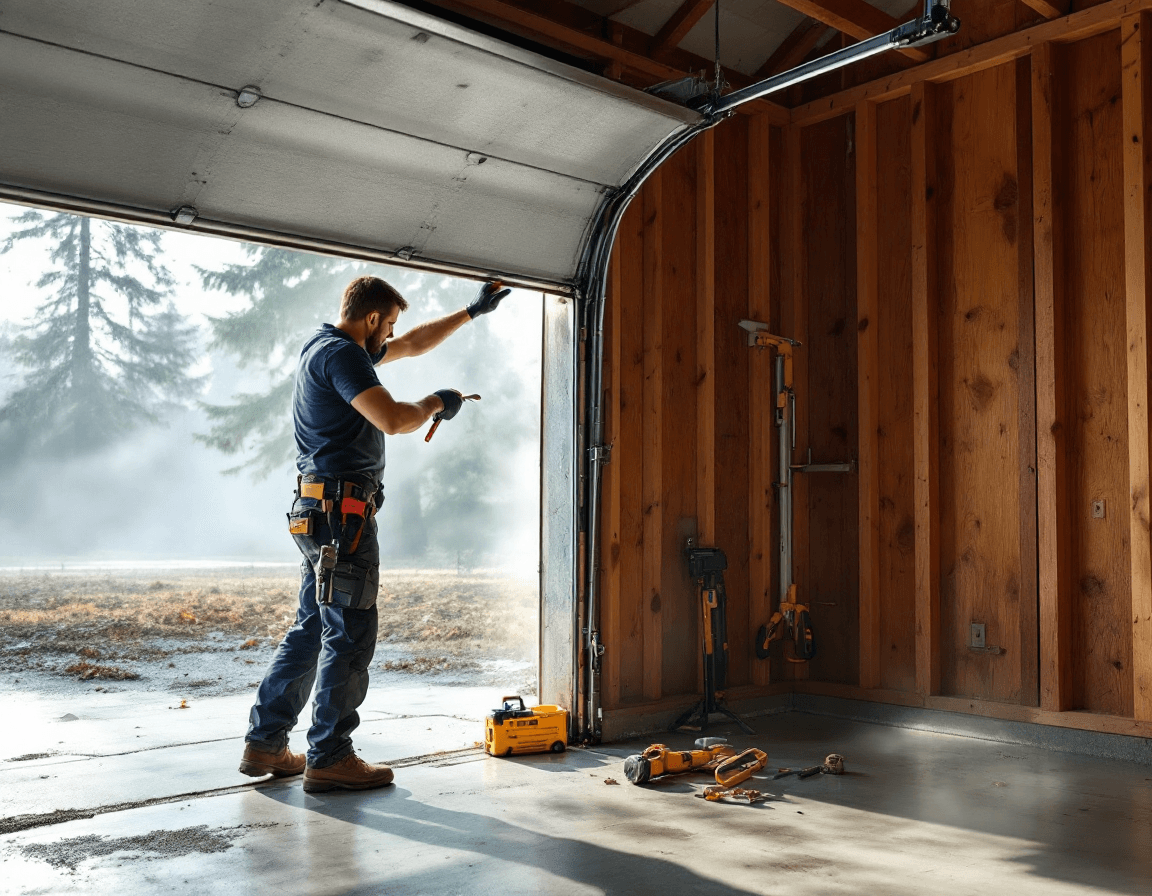
Off-track garage door repair in Brier, WA is one of the more common calls we handle, and it is also one of the easiest to make worse. When a door slips out of its tracks, the panels, rollers, and hinges are all under stress, and a few well-meaning attempts to fix it can turn a $125 realignment into a much larger job. Brier sits in the middle of Snohomish County's wooded residential streets, and many of the homes here have older two-car doors that have spent decades opening and closing through wet winters and dry summers. Those conditions wear on hardware in predictable ways, and knowing what to look for can help you act before a minor problem becomes a jammed door.
This page explains how off-track problems develop, what the symptoms look like, and what a licensed technician typically does to get a door running square again. It also covers the parts of the job that homeowners should never attempt on their own, especially anything involving the torsion or extension springs that hold most of a door's weight. We have written it for homeowners in Brier and the surrounding 98036 area who want a clear picture before they pick up the phone. Everything here reflects general practice in the field, and every door is different, so a technician's inspection on site always comes first.
If your door is off its track right now, the most important step is to leave it alone and keep people away from it. Call (888) 799-3819 and describe what you are seeing, including whether the door is leaning, whether one side is higher than the other, and whether any springs look loose or broken. We can usually tell you over the phone whether the situation looks like a simple realignment or something that needs a same-day visit.
Reading the Early Warning Signs Before the Door Leaves Its Track
Most doors do not fall off their tracks without warning. In the weeks before a derailment, homeowners often notice small changes that are easy to dismiss, such as a slight grinding noise near one side, a door that seems to hesitate for a second at the top of its travel, or a visible gap between the bottom seal and the floor that was not there before. These are signals that one side of the door is starting to carry more load than the other, which usually means a roller is catching, a track bracket has loosened, or a section of track has shifted out of plumb.
It helps to check the door's movement once a month. Open it slowly by hand only when it is fully disconnected from the opener, and watch whether it rises evenly from both sides. If one edge lifts ahead of the other, or if the top section wobbles against the header, the door is already drifting out of alignment. Stop there, and do not force it, because continuing to operate a misaligned door is the most common way a roller pops out completely.
Keep a short note of anything unusual, including the date and the side of the door involved. This small habit gives a technician useful information and often shortens the diagnosis, which can matter when a door is out of service and the household is relying on the garage for daily access.
Why Brier's Wet Winters and Damp Air Pull Tracks Out of Line
The Pacific Northwest climate is hard on garage door hardware, and Brier's damp winters are a major reason many local doors develop alignment problems over time. Rain, fog, and humidity keep steel track and mounting hardware exposed to moisture for months, and surface rust can weaken the bolts that anchor the track to the wall and ceiling. When those fasteners loosen or corrode, the track can shift slightly under the weight of the door, and that shift is often enough to start a slow derailment.
Wood components are affected too. Many homes in the area have wood door frames, headers, or wood-backed panels, and seasonal swelling and shrinking can push a header out of square. When the header moves, the vertical track is no longer parallel to the door's path, and the rollers begin to ride at an angle. Over a wet season, that angle can become pronounced enough to pull a roller out of the track entirely.
Cold snaps add a different kind of stress. When temperatures drop quickly, the steel of the door and track contracts, and the door can bind or stick at the bottom seal where it has frozen to the concrete. Forcing a door that is stuck in this way is a frequent cause of bent track sections, so if the door refuses to move after a cold night, let it warm up and call for an inspection rather than pushing harder on the opener.
Rollers That Have Popped Out and Why They Do
Rollers are small, but they carry a large share of the work. Each roller rides inside the track and guides the door through its arc, and most residential rollers are either steel with sealed bearings or nylon with a steel stem. When a roller wears down, cracks, or loses its bearing lubrication, it can start to bind, and a bound roller is much more likely to jump the track when the door is pushed or pulled.
Nylon rollers are common on doors that are a few years old, and they tend to wear flat on one side after repeated use. A flattened roller can stop turning smoothly, and that drag pulls the door to one side. Steel rollers with worn bearings can produce a rough grinding or squeal before they fail. In either case, a technician will usually replace the damaged roller and inspect the neighboring rollers, since one failure often indicates that the others are close behind.
Sometimes a roller pops out because the track itself has a gap or a loose joint where the roller passes over. This is why we never simply shove a roller back into place without checking the track it rides in. Reseating a roller without inspecting the track is a temporary fix at best, and the door is likely to derail again within days.
When the Door Is Jammed and Will Not Move in Either Direction
A jammed door is one of the most stressful situations homeowners face, particularly when the car is inside or the household needs the garage for everyday access. The door may be wedged at an angle, sitting partly open and refusing to go up or down, or it may be locked in a half-lifted position with one side higher than the other. Whatever the position, the first rule is that the door should stay where it is until a licensed technician has looked at it.
The reason is safety. Torsion springs, which are mounted above the door on most residential systems, store enormous tension. Extension springs along the sides of the track store tension as well. A jammed door may be relying on those springs to hold its weight in an unexpected way, and attempting to free it by lifting, pulling on cables, or tapping the track with a hammer can cause a sudden release. We have seen homeowners injured this way, and it is a risk that no realignment is worth.
Do not climb onto the door or try to lift a corner by hand. Disconnect the opener only if you can do so safely from the ground, and keep children and pets well clear of the opening. If the car is trapped inside, do not try to drive it out under a partly raised door. Call for service and let the technician free the door with the proper equipment.
Bent, Dented, and Separated Track Sections After an Impact
Track sections are made from thin steel, and they are designed to be precise. Even a modest impact can bend a section enough to throw the rollers off their line. Vehicles that clip the door while backing out, delivery trucks that brush the driveway edge, and yard equipment that strikes the lower track are all common causes. Sometimes the damage is obvious, with a visible dent or a kink in the rail. Other times the bend is slight and only shows up as a faint wobble when the door moves.
A separated track section is more serious. If the joint between two sections has pulled apart, the rollers can drop into the gap and the door can sag or lean. Separated sections often come with damaged brackets or stripped fasteners, and the wall or ceiling anchors may need to be reset. A technician will measure the track, straighten what can be straightened, and replace what cannot be safely corrected.
If a vehicle has hit your door, take photos of the track and the door panels before anything is moved. Note the date and any visible marks on the vehicle or the wall. This documentation can be useful for insurance purposes, and it helps the technician understand the full extent of the impact, which is not always apparent from the outside.
- Signs that a track section has been bent or separated include a visible kink, a gap at a joint, rollers that ride noticeably higher or lower on one section, and a door that rises unevenly.
- Signs that a roller has come out include a door leaning to one side, a roller hanging visibly outside the track, and a grinding or scraping noise near the top corner.
- Signs that the door is out of square include an uneven gap at the bottom seal, panels that do not line up at the seams, and a door that stops at a different height on each side.
How a Technician Typically Realigns a Door on Site
When a technician arrives for an off-track call, the work usually starts with a safety assessment before any part of the door is touched. The tech will confirm that the springs are intact, check whether the door is supported, and determine whether the opener is still connected. If there is any sign that the springs are damaged or that the cables have slipped, the technician will secure the door and plan the repair around that hazard.
Next, the technician inspects the track, rollers, hinges, and brackets. Each track section is checked for plumb and level, and the vertical and horizontal runs are measured to confirm they are parallel. Loose bolts are tightened, damaged brackets are replaced, and bent sections are straightened or swapped out. Worn or cracked rollers are replaced with new ones that match the door's design, and the rollers are checked to make sure they turn freely in the track.
Once the track is correct, the door is reseated and tested through several full cycles, both by hand and with the opener. The technician watches for binding, uneven lift, or noise, and adjusts the balance if needed. Balance adjustments on torsion-spring systems are work for a licensed professional only, because the spring tension involved is significant. A properly aligned door should travel smoothly from the bottom seal to the top of the header without any side-to-side drift.
What the $125 to $400 Range Usually Covers
Our typical price range for most off-track repairs is $125 to $400. The final figure depends on what is damaged, how many components need attention, and how much time the job requires. A door that has popped one roller and needs a bolt tightened will usually fall toward the lower end of that range. A door with several damaged rollers, a bent track section, and a loose bracket will land higher, since the work involves more parts and more labor.
Several factors push the price up. Replacing a track section involves more material and time than straightening one. Doors with unusual hardware, older systems that require special parts, or tracks mounted into damaged framing can take longer to correct. Jobs that uncover a broken spring or a damaged cable often shift into a separate repair category, since springs and cables are handled with the same care as any spring work and may require additional parts and a separate discussion about cost.
We believe in giving homeowners a clear picture before any work begins. A technician should explain what they found, what they recommend, and why, and you should feel comfortable asking questions before approving the repair. If a more extensive fix is needed, you will hear about it up front rather than discovering it on your invoice.
Keeping a Door Square Through the Seasons in Snohomish County
Prevention is worth a few minutes each season, especially in a climate where rain and temperature swings are part of normal life. Start by looking at the tracks in the fall, before the heavy rains set in. Check that the bolts holding the track to the wall and ceiling are snug, and look for any rust streaks or flaking on the steel. Light surface rust can be cleaned with a rag and a bit of rust-inhibiting spray, but any track that looks bent or cracked should be inspected by a professional.
Lubrication matters, but it should be applied carefully. Use a silicone-based or lithium-based lubricant on the rollers and hinges, and avoid spraying oil into the track itself, since it can collect dust and grit. Wipe away excess lubricant so it does not drip onto the floor or stain the door. The bottom weather seal should also be checked, because a cracked or hardened seal can let water pool and freeze, which adds to the binding problem during cold snaps.
Finally, watch how the door behaves through the year. Note any change in sound, speed, or smoothness, and schedule an inspection if the door begins to hesitate or drift. Catching a loose bracket in October is far easier than dealing with a derailed door in January, when the driveway is wet and the household is trying to get out the door on time.
Driveway Layout and Clearance Issues That Lead to Off-Track Damage
Many homes in Brier have driveways that are tight, sloped, or shared with neighbors, and the layout can contribute to off-track problems. A car that is parked too close to the door may get bumped during loading and unloading, and a vehicle that turns sharply at the edge of the apron can strike the lower track. Narrow garages with limited side clearance also make it harder to keep the door centered as it travels, which places extra strain on one side of the mechanism.
Sloped driveways present their own challenges. When the garage floor is not level with the approach, the bottom of the door may hit the threshold unevenly, and repeated stress at one corner can gradually pull a track out of plumb. If you notice that the door seems to meet the floor at an angle, or that the bottom seal wears faster on one side, have the threshold and track checked together.
Parking habits matter too. Keeping a few feet of clearance on either side of the door, and avoiding the temptation to push a car against the track while carrying groceries or equipment, can prevent many common impacts. A small set of wall-mounted bumpers or floor markers can help drivers judge their position without thinking about it each day.
Choosing a Qualified Crew for an Off-Track Call in Brier
When a door is off its track, you want a crew that works safely and explains the job clearly. Look for a company that is licensed, bonded, and insured, since spring and cable work carries real risk, and you should never have to take someone's word for their qualifications without asking. A reputable company will be willing to tell you who is performing the work and how they are trained, and it will not pressure you into a larger repair than the situation calls for.
Ask about the scope before the technician begins. A good estimate describes what is being fixed, what parts may be needed, and what the expected range looks like. If you are told that a spring or cable is involved, ask how that will be handled and whether it will be quoted separately. A technician who takes the time to answer these questions is usually the same one who will leave the door running properly when the job is finished.
Seattle Garage Door Fix serves Brier and more than 60 other communities across the greater Seattle and Western Washington area. Our technicians are licensed, bonded, and insured, and we always recommend that spring and cable work be left to licensed professionals. If your door is off its track in Brier, or if you are seeing any of the warning signs described above, call (888) 799-3819 and we will help you decide the safest next step, whether that is a same-day visit or a scheduled inspection at a time that works for your household.