
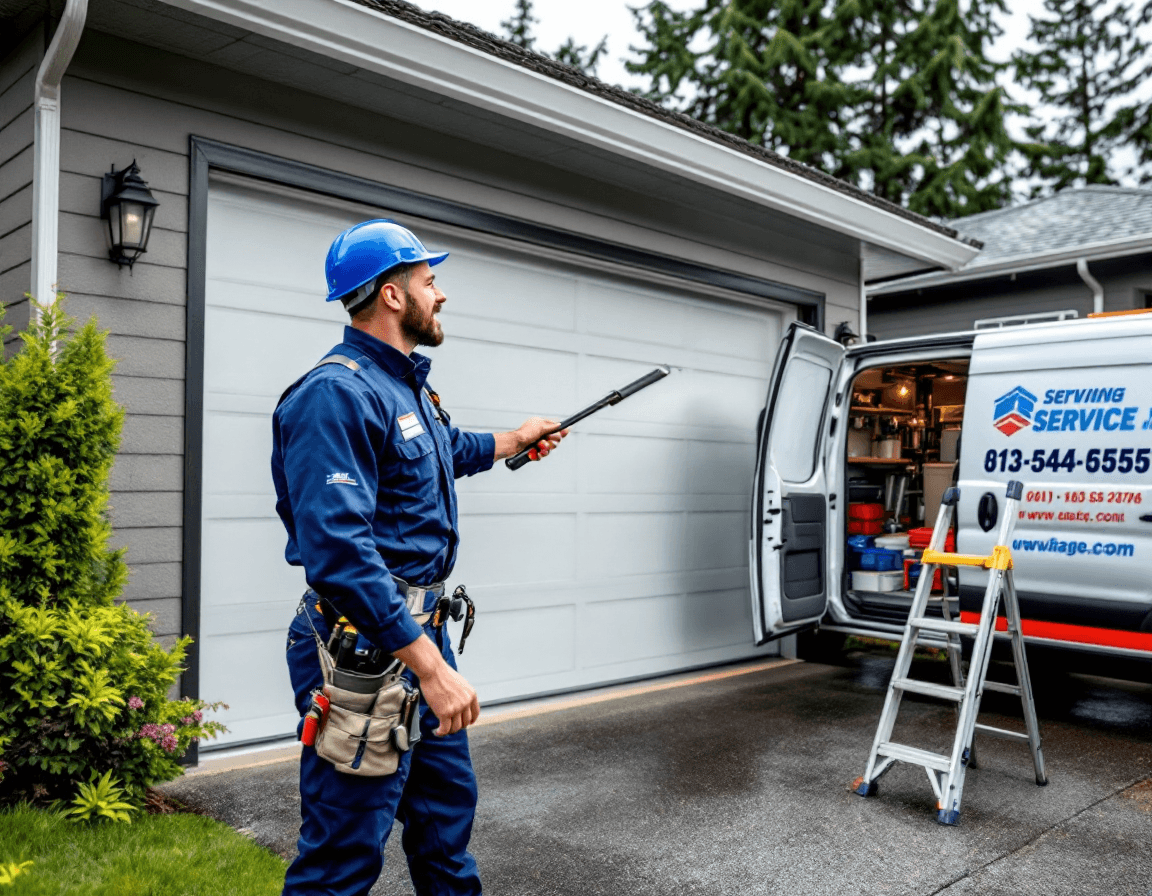
Garage Door Repair in Mukilteo, WA is often the fix that keeps a household's daily routine running, whether you're heading to the ferry terminal at 6:30 a.m. or pulling the car in after a long shift at the Boeing campus in Everett. A garage door that won't open, closes unevenly, or makes a sudden racket can turn an ordinary morning into a scramble. Our technicians work throughout Mukilteo and the surrounding Snohomish County communities, and we respond quickly when a door stops doing its job.
Mukilteo homes sit in a particular kind of environment. Salt air drifts in from Possession Sound, rain settles in for long stretches from late fall through early spring, and the marine humidity works its way into hardware, weatherstripping, and wood framing. Those conditions don't usually cause a dramatic failure overnight. Instead, they gradually loosen fasteners, corrode rollers, and warp door panels until something finally gives. Understanding how the local climate affects your door is the first step toward spotting trouble early.
This page explains the most common symptoms we see in Mukilteo garages, what they usually mean, which ones you can check safely yourself, and when it's time to call a licensed technician. Our typical residential repairs fall in the range of $95 to $450, though the final figure depends on what we find once we inspect the door. Call us at (888) 799-3819 if your door is giving you trouble today.
Why Mukilteo Garage Doors Wear Differently
Homes near the water face a steady, low-level assault that inland garages rarely experience. Salt-laden air settles on steel tracks, bearings, and hinges, and it speeds up oxidation on the zinc coating that protects galvanized parts. Over several years, a roller that once glided quietly can start to grind because its bearing has seized with grit and corrosion. Even garage doors that are sheltered under a covered driveway tend to show this wear sooner than the manufacturer's brochure might suggest.
Moisture is the other half of the picture. Wet winters mean the wood trim, insulated panels, and weatherstripping around the door are constantly cycling between damp and dry. Wooden sections can swell, and the seal along the bottom may stiffen or crack. When the bottom seal no longer meets the floor evenly, the door's sensors and balance can behave differently, which is why a moisture-related problem sometimes shows up as a sensor fault or an uneven close.
Temperature swings matter too, though Mukilteo rarely sees the deep freezes that affect eastern Washington. A cold snap can make lubricants thicken, which makes the opener strain harder, and a rapid warm-up can cause metal to expand and contract just enough to shift tracks that were already slightly out of alignment. If your door seems fine in July but struggles in January, the seasonal pattern itself is a useful clue for the technician.
Noises That Signal a Problem: Grinding, Squealing, and Banging
Garage doors are supposed to make some noise, but there is a difference between normal operating sounds and noises that point to a failing part. A steady, high-pitched squeal usually means a roller or hinge is dry, worn, or corroded. A grinding sound that changes as the door travels often points to a bearing or a roller stem that is starting to break down. A sharp bang at the top or bottom of the travel can indicate a loose bracket, a track that has shifted, or a panel that is no longer sitting square.
We often hear homeowners describe a rhythmic clicking or thumping that appears after a rainy stretch. In many cases, moisture has worked into the track joints or a loose roller has begun to skip over a track seam. Left alone, that skipping will wear the roller stem and eventually the track itself, turning a small repair into a larger one. Paying attention to when the noise occurs, rather than just whether it occurs, gives the technician a head start on diagnosis.
It is also worth noting when a noise appears alongside a change in how the door moves. A squeal that comes with a door that stops halfway up deserves prompt attention, because the combination often signals that the opener is working against resistance it shouldn't be facing. Ignoring that combination tends to stress the motor, the drive, and the spring system all at once.
When the Door Reverses Before It Reaches the Floor
Few garage door behaviors frustrate Mukilteo homeowners more than a door that starts to close, then rises again just before it touches the ground. This is almost always the safety reversal system doing its job. Modern openers are designed to stop and reverse if they detect an obstruction, and the most common trigger on a residential door is the photo-eye sensor pair mounted a few inches above the floor on either side of the opening.
Before assuming the sensors have failed, check whether something is blocking the beam. Cobwebs, dust, a bicycle wheel leaning against the wall, or a pile of recycling bins can all break the beam. Salt residue and rain spatter can also cloud the sensor lenses over time, especially on a home with exposed exterior walls. Wipe both lenses gently with a dry cloth, make sure the indicator lights on each sensor are steady rather than blinking, and check that the wires haven't been pinched or chewed by pests.
If the sensors are clean and aligned but the door still reverses, the cause may be the opener's force setting, a track that is out of square, or a bottom seal that is catching on an uneven slab. Garage floors in older Old Town homes are sometimes sloped or patched, and a door that is set for a perfectly level floor may read a bump as an obstruction. A technician can adjust the travel limits and force settings and confirm that the door tracks cleanly from top to bottom.
Doors Stuck Halfway, Crooked, or Off Track
A door that stops partway up or down, or that closes at a noticeable angle, is telling you that something is out of balance or out of alignment. Common causes include a track that has shifted slightly, a roller that has popped out of its channel, a cable that has frayed or slipped on its drum, or a section that has been bent by a bump from a vehicle. Mukilteo driveways are often tight, and a sideswipe during a parking maneuver can bend a track just enough to cause binding.
A door that looks crooked from the street or from inside the garage deserves a careful look, but the repair itself requires training and the right tools. Spring tension and cable tension store a great deal of energy, and attempting to adjust them without the right equipment can cause serious injury. For that reason, we recommend that homeowners do not attempt to loosen, tighten, or remove springs or cables under any circumstances.
Things you can safely observe include whether the tracks look bent, whether gaps have opened along the sides or top, and whether the door sags in the middle when it's half open. Take a few photos from the driveway and from inside the garage, noting which side seems low. Those observations help the technician arrive prepared, and they often shorten the visit.
Remotes, Wall Buttons, and Openers That Seem Dead
When the remote or wall button does nothing, the first suspects are usually simple: dead batteries in the transmitter, a tripped breaker for the opener outlet, or a wall button with a loose wire at the terminal. Check the remote's battery and try the wall button before assuming a larger failure. If the opener's indicator light is off, look at the outlet and the breaker panel. If the light is on but the door won't respond, the problem may be in the logic board or the radio receiver.
Mukilteo's damp conditions can affect the wall station and the opener's electrical connections over time. Condensation can get into a wall button mounted on an exterior wall, and corroded contacts can cause intermittent operation that comes and goes with the weather. Intermittent problems are harder to diagnose because they may disappear the moment a technician arrives. Note when the button fails, whether it's raining, and whether the remote works from a different distance or angle.
Sometimes the remote and wall button both work, but the door won't move. In that case, a disconnected trolley, a stuck release cord, or a jammed rail can prevent the carriage from engaging the door. A technician will check the trolley, the rail, and the drive system before concluding that the opener itself needs replacement, which often saves homeowners money.
Slamming, Sudden Drops, and Doors Moving Too Fast
A door that slams shut or drops quickly rather than lowering in a controlled manner is a sign that the balance system is no longer supporting the weight properly. This is one of the more serious symptoms because a door that falls without control can injure people or damage vehicles. If you notice a sudden drop, keep everyone clear of the opening and call a technician promptly rather than trying to rebalance the door yourself.
Balance problems often develop gradually. A spring that is losing tension, a cable that is fraying, or a drum that has slipped can all change how the door behaves over weeks or months. Many homeowners notice that the door feels heavier to lift manually or that it jerks at one point in its travel. Those early signs are worth addressing before the spring or cable fails outright.
Because the springs and cables are under high tension, this is a repair that belongs entirely in the hands of a licensed professional. Our technicians carry the tools and training needed to safely assess and replace these components, and we will explain what we found and what it will take to restore smooth operation.
Springs and Cables: Why These Jobs Belong to Licensed Hands
Torsion springs and extension springs are the heart of a garage door's balance system, and they are among the most hazardous parts in a residential garage. A spring that is wound or released incorrectly can cause serious injury, which is why we always recommend licensed professionals handle any spring or cable work. This includes winding, unwinding, replacing, or adjusting springs, as well as replacing lift cables or drum assemblies.
Some homeowners try to save money by ordering a spring online and installing it themselves. We understand the impulse, but the risks are significant. Springs must be matched to the door's weight, height, and cycle expectations, and the wrong replacement can fail early or strain the opener. A technician will measure the door, confirm the correct specifications, and install the new spring with the right winding bars and safety equipment.
Cables and drums also need professional attention. A frayed cable can snap without warning, and a drum that has slipped can leave the door hanging unevenly. If you see a cable hanging loose, a drum that has shifted, or a spring with visible gaps in the coils, stop using the door and call us. Keeping the door closed and manually locked until a technician arrives is the safest approach.
Here is a short list of things homeowners can safely do before a visit, and things they should never attempt:
- Safe to do: Replace the remote battery, wipe the photo-eye lenses, check the breaker for the opener outlet, and clear debris from the tracks and floor.
- Safe to do: Take photos of the door, the tracks, and any visible gaps to share with the technician.
- Never do: Attempt to wind, unwind, adjust, or remove a torsion or extension spring.
- Never do: Cut, tie, or re-hang a cable, or try to free a stuck door by forcing the cable or the drum.
Harbour Pointe and Newer Mukilteo Homes
Many homes in the Harbour Pointe area and other newer neighborhoods come equipped with modern belt-drive or chain-drive openers, insulated steel doors, and integrated smart-home features. These systems are quieter and more capable than older models, but they also introduce electronic components that can be sensitive to power fluctuations, Wi-Fi interference, and firmware issues. A door that suddenly stops responding to a smartphone app may have a connectivity problem rather than a mechanical failure.
Newer doors often have tighter tolerances, which means small shifts in the track or the wall can have a larger effect on performance. A door that was installed perfectly may drift slightly after a few seasons as the house settles. When a technician checks a newer door, they will often verify that the track is plumb, the rollers are seated correctly, and the opener's travel limits still match the door's actual height.
Homeowners in these neighborhoods sometimes ask whether a repair will void a warranty. In general, a licensed technician can perform repairs that keep the door within manufacturer guidelines, and we are happy to explain what parts we use and why. If you have questions about your specific door or opener, have the model number and purchase date handy when you call so the technician can plan for the right parts.
Older Homes in Old Town and Detached Garages
Old Town Mukilteo has a character all its own, with older homes, narrower lots, and in some cases detached garages that have been in place for decades. These structures often feature older single-panel or early sectional doors, hand-me-down openers, and framing that has settled or shifted over time. A door that worked fine for years may start to bind once the header or the wall has moved slightly.
Detached garages in older neighborhoods face their own challenges. Exposure to wind and rain can accelerate weathering on the door's bottom seal and on the wood trim. Uneven or sloped driveways can also stress the door when it reaches the floor, and the old floor slab may not be as flat as a modern pour. In these situations, a technician may recommend adjusting the bottom seal, re-shimming the track, or upgrading the opener to handle the door's weight more smoothly.
Because older doors and openers can be harder to find parts for, we usually start with a careful inspection to determine what can be repaired and what would be better replaced. We will explain the trade-offs clearly so you can decide what makes sense for your home and budget. Honest advice is part of the job, and we would rather tell you a repair is not worth it than sell you a fix that won't last.
What a Typical Repair Visit Looks Like
When you call with a garage door problem, we'll ask a few questions to understand the symptoms: whether the door is making noise, whether it's moving unevenly, whether the remote and wall button respond, and when the problem started. Those answers help us decide what tools and parts to bring. We also ask about the door's brand and approximate age if you know it, since that information can make the visit more efficient.
During the visit, a technician will inspect the door from top to bottom. That includes the springs and cables, the drums, the rollers, the hinges, the tracks, the opener, the safety sensors, and the wall station. We check the balance of the door, the alignment of the tracks, and the travel and force settings on the opener. We explain what we find as we go so you understand the reasons behind any recommendation.
Once the diagnosis is complete, we'll provide a clear estimate before beginning work. For most residential repairs, the total falls between $95 and $450, depending on the parts needed and the complexity of the job. You will know the price before we start, and you will have the option to approve the work or discuss alternatives. Our goal is to restore smooth, safe operation without surprises.
Preventing Problems Through the Mukilteo Seasons
A few simple habits can extend the life of your garage door and catch small issues before they become expensive ones. In the spring, after the wettest months have passed, take a few minutes to look over the tracks, rollers, and weatherstripping. Remove any debris from the track channels and check for rust or flaking on the metal. Wipe down the sensor lenses and look for signs that the bottom seal is cracking or pulling away.
Lubrication is useful, but it should be applied carefully. Use a silicone-based or lithium-based lubricant on the rollers, hinges, and the opener's chain or rail as the manufacturer recommends, and avoid heavy grease that attracts grit. Do not spray lubricant into the sensors or onto the springs. Our technicians can recommend a maintenance schedule matched to your door and the conditions near your home.
Finally, pay attention to the way your door sounds and moves through each season. A small change in noise or speed often shows up weeks before a larger failure. If something feels different, call us early. A quick visit to address a worn roller or a misaligned sensor is almost always more affordable than waiting until the door is stuck open or closed.
Our crews serve Mukilteo and the surrounding Snohomish County communities, and we are ready to help when your door stops working the way it should. If your garage door won't open or close, reverses unexpectedly, makes alarming noises, or sits crooked in its tracks, call Seattle Garage Door Fix at (888) 799-3819. We'll explain what we find, give you a clear price before any work begins, and handle spring and cable work safely with licensed professionals.