
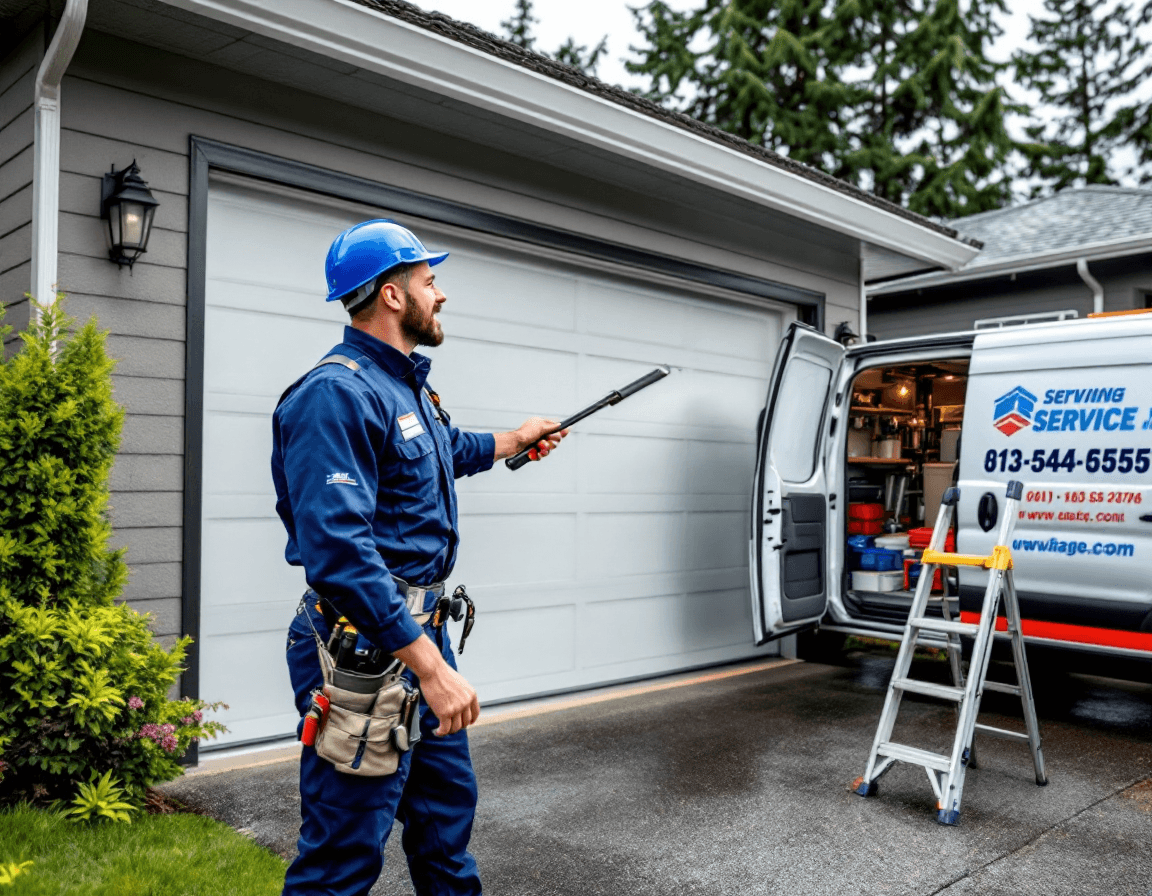
Garage Door Repair in Edmonds, WA is a service many homeowners need sooner than they expect, because the same damp, salty air that makes Puget Sound views so appealing also works steadily against metal, springs, and motors. Our technicians see the results across the city, from the older ranch homes near the Edmonds Waterfront to newer townhomes around the Perrinville area. A door that hesitates, grinds, or refuses to close is rarely a random failure. It is usually the visible end of wear that started months earlier.
This page is written for homeowners in Edmonds and nearby neighborhoods within ZIP codes 98020 and 98026. It explains what the common symptoms usually mean, which ones you can safely check yourself, and when the job belongs with a licensed technician. You will also find a realistic picture of what a repair visit involves and how pricing typically works. Our goal is to help you make a clear decision, not to push a repair you do not need.
If your door is giving you trouble right now, call us at (888) 799-3819. We are licensed, bonded, and insured, and we can usually discuss the symptoms over the phone before we arrive. Read on for the details that will help you describe the problem accurately and avoid a second trip.
Salt Air, Drizzle, and What Edmonds Garages Actually Endure
Edmonds sits on the Sound, which means many garages receive a steady dose of moist, slightly salty air, especially on west-facing homes and blocks closest to the water. Over time that air settles onto steel tracks, hinges, and rollers, where it encourages surface rust and corrosion that quietly stiffens moving parts. The problem is not dramatic at first, but a track that has developed a rough, orange film will drag on rollers and make the motor work harder than it was designed to. Homes a few blocks inland tend to see less direct salt exposure, yet the moisture from our long gray stretches still reaches everywhere.
Our winters bring frequent rain, cool nights, and dampness that lingers in attached garages for days at a time. Cold mornings thicken lubricants that were fine in summer, so a door that glided smoothly in August may feel sluggish in January. Wood garage doors and older wooden frames can swell after prolonged wet weather, causing the panels to rub against weatherstripping or the jamb. Even steel doors can develop mildew along the bottom seal when water sits against them after a storm.
Because of this climate, many Edmonds homeowners notice problems in clusters rather than all at once. A rusty track may come first, followed by a noisy roller, and then a door that reverses for no obvious reason. Catching the early signs while the repair is still small usually saves money and avoids a stranded car in the morning. Think of the first unusual sound or slowdown as your door asking for attention before the weather makes the situation worse.
Reading the Noises Your Door Makes Before It Quits
Garage doors are loud by nature, so it can be hard to tell a normal clatter from a warning sign. A healthy door produces a fairly even rolling sound as the rollers travel along the tracks, with a brief hum from the opener. Problems tend to announce themselves through specific noises that repeat in the same spot every time the door moves. Paying attention to the pattern is often the fastest way to narrow down the cause.
Grinding and squealing usually point toward dry or contaminated rollers, worn bearings, or a track that has picked up debris and corrosion. Banging or popping that happens at the top or bottom of the travel can mean a loose bracket, a worn hinge, or a roller that has come partly out of its track. A rhythmic thump, sometimes described as a clicking or knocking, often comes from a roller stem that has worn an oval shape or a cable that is not seated correctly on its drum. A high-pitched whine from the opener may indicate a failing motor bearing or a drive chain that needs adjustment.
Here are the noises we hear most often in Edmonds garages, along with the general direction each one tends to point:
- Squealing that starts when the door first moves: often dry or rusted rollers or hinges that need proper cleaning and lubrication.
- Grinding through the middle of the travel: commonly worn bearings or debris caught in the track.
- Loud bang at the top of the door: frequently a loose bracket, a worn hinge, or a stop that has shifted.
- Rhythmic clicking or knocking: often a roller stem or cable issue that deserves prompt inspection.
- Whining from the opener housing: possibly a motor bearing or chain tension problem that needs professional adjustment.
Noises that come with visible movement, such as a door that tilts, shudders, or drops in one spot, should be treated as more urgent. Stop using the door until someone has looked at it.
When the Door Reverses Before the Floor
A door that starts down, gets about a foot from the ground, and then bounces back up is doing exactly what it was designed to do, which can be frustrating when you are trying to close it. Modern openers use a safety reverse system that detects obstacles and stops the door if something interrupts its path. The most common cause in our service area is a photo-eye sensor pair that is misaligned, dirty, or blocked. Sun glare through a garage side window can confuse the sensors, and spider webs or leaf debris on the lenses are more common than most people expect in damp Edmonds garages.
Before calling for service, check the sensors mounted near the floor on each side of the door. The two small units should face each other, and the indicator light on each should be steady rather than blinking. Wipe the lenses gently with a soft cloth, and make sure nothing is sitting on the floor in the beam path, including a bin, a pet bowl, or a bag of recycling. If the lights are blinking or one sensor is noticeably out of line, a small adjustment may solve the problem without any part replacement.
If the sensors look fine and the door still reverses, the issue may be in the travel limits or the force settings on the opener. Over time the door's balance can change, and an opener that was set years ago may now read normal resistance as an obstruction. Adjusting these settings requires some care, because incorrect force settings can create a safety hazard. A licensed technician can test the reverse function, confirm the balance, and set the limits correctly so the door closes fully and safely.
Crooked, Uneven, or Hopping Off the Track
A door that looks lopsided, sits higher on one side, or seems to pull toward one corner is telling you that the two sides are no longer working together. Garage doors rely on matched springs, cables, and rollers to lift evenly, and a difference of even a few turns in tension or a small misalignment can make the door lean. Homeowners sometimes notice a gap at the top of one side or a bottom seal that touches the floor on one end but not the other. These are signs to stop operating the door until it has been inspected.
Off-track doors are one of the more serious categories of repair. When a roller pops out of the track, the door can bind, sag, or even jam at an angle, and forcing it can bend the track or damage the panels. We see this problem most often after a roller wears through, a track bolt loosens, or an impact from a vehicle or a stored item knocks the section out of alignment. Never try to pull a door back onto its track by hand or with a ladder while the opener is connected, and keep children and pets well clear of the area.
Uneven movement can also come from a worn cable or a spring that has lost tension on one side. Cables and springs store a great deal of force, so any work on them belongs to a licensed professional with the right tools. Our technicians will check the drum alignment, the cable condition, and the spring balance, and they will tell you plainly whether the door can be safely repaired or needs replacement components. Please do not attempt to wind, unwind, or remove a torsion spring yourself, since stored tension can cause serious injury.
Stuck Halfway: What to Do (and Not Do) With a Jammed Door
A door that stops partway up or down and refuses to move is one of the most stressful situations for a homeowner, especially when the car is on the other side. The first step is to stop pressing the button repeatedly, since continued attempts can strain the opener and worsen the damage. Look for an obvious cause such as a tool, a box, or a bicycle caught in the track, and make sure nothing is touching the door from the outside. If the door is partly open, the emergency release cord may let you move the door manually, but it should only be used when the door is closed and the opener is disconnected from power.
Please avoid lifting the door forcefully or tugging hard on the cord while the door is under load, because a sudden release can cause the door to drop or swing unpredictably. If the door is jammed on its track or has slipped off a roller, it is best left alone until a technician can inspect it. Jams often come from broken cables, a bent track, or a spring that has failed, and each of these situations involves stored energy. Keep people and pets away from the door until the problem is resolved.
When you call, describe exactly where the door stopped, whether it is open or closed, and whether you heard a snap, bang, or grinding sound before it jammed. That information helps our technicians prepare the right parts and tools for the visit. In many Edmonds homes, we can arrange a same-day or next-available appointment when the door is stuck, so that the garage can be secured and used again quickly.
Remote Dead, Wall Button Silent? Start With the Simple Checks
When the remote or wall button seems to do nothing, the problem is often much simpler than the opener itself. Start by checking the remote's battery, since a weak battery can work intermittently at close range and fail entirely once the weather turns cold. Make sure the remote is paired with the correct opener and that it has not been reset during a power outage or a recent battery change. If other remotes in the house still work, the issue is likely in the individual device rather than the opener.
Next, check the wall button and its wiring. Many wall controls are connected by low-voltage wire that can be pinched, cut, or corroded, especially in garages where moisture collects around the wall plate. Look for a hanging or damaged wire near the button, and make sure the button's cover is firmly seated so dust and humidity do not enter the housing. If the wall button lights up but nothing happens, the problem may be in the opener's logic board or in a safety circuit that has tripped.
Power is another easy check. Confirm that the opener is plugged in, that the outlet has power, and that the breaker has not tripped. Some openers also have a lockout feature that disables button and remote operation, which can be activated accidentally. If you have tried these steps and the opener still will not respond, it is time for a technician to test the receiver, the logic board, and the safety circuit. Most of these repairs fall within the typical service range, and we will explain the options before doing any work.
Slamming Shut Too Fast and Other Balance Problems
A door that drops quickly, slams onto the floor, or seems to fall rather than close smoothly is usually telling you that the spring balance is off. A properly balanced door should stay in place when you release it halfway up and should move with steady, controlled motion in both directions. When the balance shifts, the opener has to work against the door's weight in ways it was not designed to handle. Over time this can damage the opener, the cables, and the bottom seal.
Slamming can also come from a worn or broken spring, a cable that has slipped, or an opener whose down-force settings are too strong for the current door weight. Because Edmonds homes often have a mix of heavy insulated steel doors and older lighter panels, a mismatch between the door and the hardware is not unusual after a previous repair or upgrade. Insulated doors add weight, and moisture can make some panels heavier over time, so the original balance may no longer be accurate. A technician can measure the door's behavior and recommend the correct adjustment or component replacement.
If you notice a door that drops hard, avoid standing directly beneath it and keep children and pets clear of the travel path. Do not try to adjust the springs or cables yourself, since the tension involved can cause serious injury even when the work appears minor. Our licensed team handles spring and cable work with the proper tools and safety procedures, and we will explain whether the door needs a simple tune-up or a more complete repair. Taking care of balance problems early protects the entire system from premature wear.
What a Typical Edmonds Repair Visit Looks Like
Most residential visits begin with a conversation about the symptoms, including when the problem started, whether it happens every time or only in certain conditions, and whether any noises or movements accompanied it. Describing the door's behavior in detail helps the technician arrive with the right tools and possibly the right parts. Homeowners who can answer questions such as "Does it reverse only in the evening?" or "Did the noise start after the last storm?" often shorten the diagnostic time considerably. We also appreciate knowing about any recent work, such as a new opener or a replaced remote.
Once on site, the technician will inspect the door, tracks, rollers, hinges, cables, springs, and opener, and will test the safety sensors and reverse function. The inspection focuses on safety first, so anything that presents a risk will be explained and addressed before routine adjustments. In many cases, the door can be lubricated, tightened, aligned, or adjusted during the same visit. When a part needs replacement, the technician should show you the worn component and explain why it failed, so you can make an informed decision.
Here is what to expect in a typical visit:
- A brief discussion of your symptoms and any recent changes to the door or opener.
- A safety inspection of the door, tracks, springs, cables, and sensors.
- Testing of the opener, remote, wall control, and reverse function.
- A clear explanation of the problem, the recommended repair, and any alternatives.
- Written pricing before work begins, so you can approve the repair with confidence.
We aim to finish most routine repairs in a single visit, and we will tell you ahead of time if a special-order part is needed. Our technicians are licensed, bonded, and insured, and they follow proper procedures for any work involving springs or cables.
Pricing Honestly: Where the $95 to $450 Range Comes From
Most residential garage door repairs we complete fall within a range of $95 to $450, depending on the symptom, the parts involved, and the complexity of the job. A sensor realignment, a roller replacement, or a remote and receiver adjustment often sits near the lower end of that range. Repairs that involve cables, a broken spring, or a drive component generally cost more because they require additional parts and more labor time. Each quote should be specific to your door, not a generic estimate.
Several factors shape the final cost. The size and weight of the door matter, as do the type of opener and whether the door is standard steel, insulated, wood, or a specialty design. Access to the work area can also affect labor time, particularly in older Edmonds garages where clearance around the tracks may be tight. Parts availability matters too, since some older door models require custom components that take longer to source.
We believe homeowners should understand the reasons behind a quote before approving any work. Ask the technician to explain what is broken, what the repair involves, and whether there are less expensive options that will still provide reliable operation. For larger repairs, you should feel comfortable asking about the expected lifespan of the replacement parts and what maintenance will help them last. A transparent conversation up front is one of the best ways to avoid surprises.
Keeping Repairs Small: Maintenance That Suits Our Weather
The most effective way to avoid expensive repairs is to keep the door's moving parts clean, lubricated, and free of corrosion. In Edmonds, a practical routine often includes wiping the tracks once or twice a year, removing grit and salt residue, and applying a silicone-based or manufacturer-approved lubricant to the rollers, hinges, and bearings. Avoid heavy grease or oil on the tracks, because they can attract dust and become sticky in cold weather. Check the weatherstripping along the bottom and sides, since a worn seal lets water and cold air into the garage and can accelerate rust on lower panels.
Pay attention to the door's behavior during the seasonal changes that define our climate. As fall rain arrives, watch for sluggish movement, new noises, or signs of moisture around the opener and wall control. In late winter, check for rust streaks on the tracks and any swelling in wooden panels. A quick visual inspection every few months takes only a few minutes and often reveals small problems before they grow into service calls.
Some maintenance tasks should always be left to professionals. Adjusting springs, replacing cables, and addressing drum or bracket issues involve stored tension and require specialized tools. Routine lubrication and visual checks are safe for most homeowners, but if anything looks bent, cracked, or out of alignment, stop and call a licensed technician. Scheduling a professional inspection every year or two can catch developing problems and keep your Edmonds garage door working reliably through the wet months.
If your garage door is making new noises, reversing unexpectedly, or refusing to close, call Seattle Garage Door Fix at (888) 799-3819 for prompt, licensed service in Edmonds and the surrounding ZIP codes 98020 and 98026. We will listen to your symptoms, explain your options clearly, and give you a written quote before any work begins. The sooner a small problem is addressed, the less likely it is to become a larger repair.