
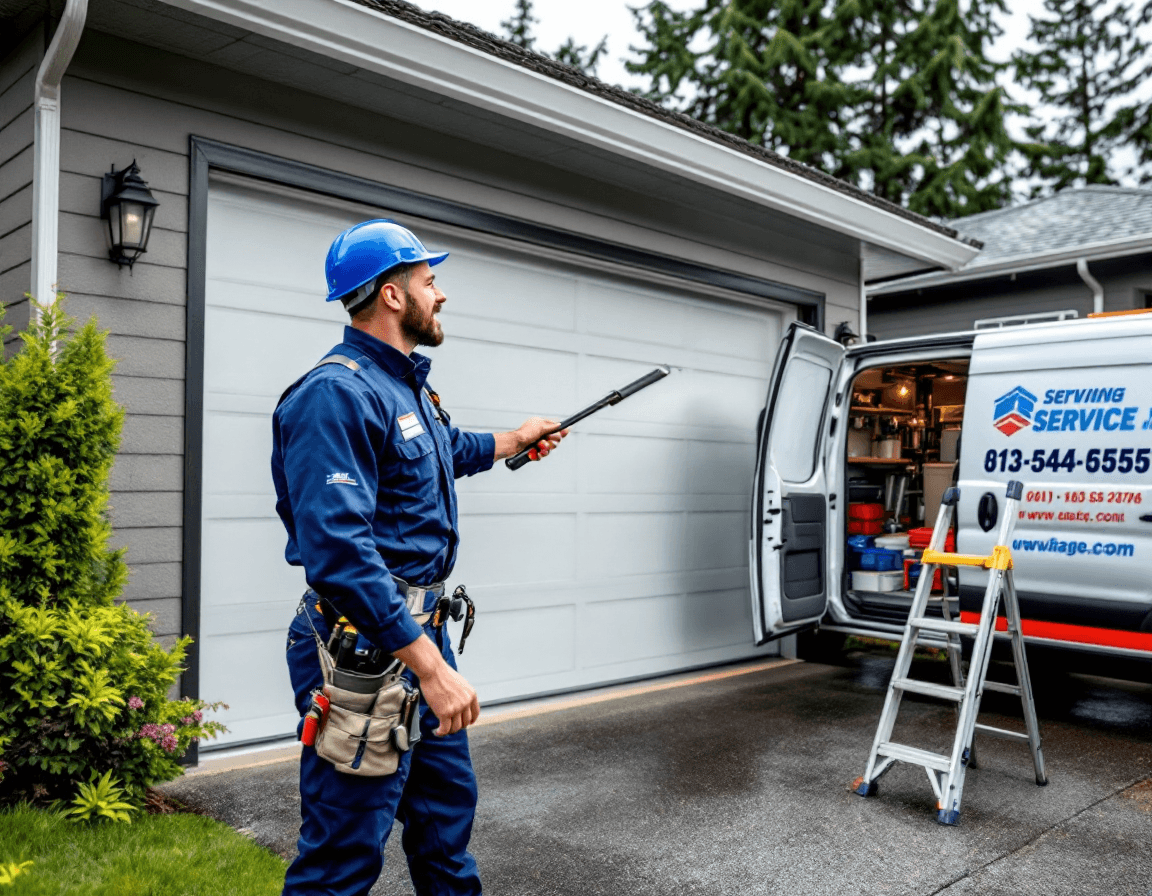
Garage door repair in Woodway, WA is a common need for homeowners on this wooded bluff above Puget Sound. A door that stops partway, refuses to close, or rattles like a loose gutter can disrupt a morning commute fast, and in a community where many garages double as the main entrance to the house, that disruption is felt right away. Seattle Garage Door Fix provides fast, reliable residential repair for Woodway homes, and our technicians arrive ready to diagnose the problem rather than guess at it. This page explains the most frequent problems we see here, what they usually mean, and when it makes sense to call for help.
Woodway's character shapes how garage doors age. Many homes sit among tall conifers and deciduous trees, with driveways that climb or drop at angles that were never designed around modern door hardware. A door that has been opening and closing in damp, shaded conditions for years will behave differently than one in an open, dry subdivision. We approach every call with that local reality in mind, asking about the orientation of the garage, how long the door has been in service, and whether the problem began after a storm, a freeze, or a long stretch of rain. Those details often point us toward the cause before we touch a single bolt.
How the Woodland Setting Changes What Your Door Experiences
Walk through any Woodway neighborhood after a wet week and you will notice the moss on the north side of roofs and the needles collecting in every corner of the driveway. That organic debris does more than look untidy. It settles into tracks, gets pulled into rollers, and holds moisture against steel in places where air never reaches to dry it. Over time, a track that looks clean from a distance can have packed grit in the corners where the rollers ride, and that grit increases friction and makes the door labor.
Shade matters too. A garage that sits under dense canopy rarely gets the sun needed to dry the bottom seal and the lower panels after rain, so the bottom edge of the door can stay damp for days. Moisture encourages surface rust on hinges, roller stems, and the steel tracks themselves. We often find that a door which seemed fine in summer starts groaning in November, not because anything broke, but because corrosion slowly raised the resistance on the moving parts.
Temperature swings add another layer. Puget Sound winters bring stretches of cold, damp air that thickens lubricant and makes cheap rollers less forgiving, followed by milder spells that let everything expand again. Springs, cables, and the opener's motor all feel that cycling. When we inspect a door in Woodway, we pay close attention to how the components have been holding up through several seasons instead of only looking at what is failing today.
Reading the Early Warnings Before a Door Quits
Most garage doors give some notice before they stop working entirely. The trick is recognizing that the small annoyances are early signals rather than quirks to ignore. Homeowners who catch a symptom in its first week usually face a simpler, less expensive repair than those who wait until the door is jammed open at 6 a.m. with the car stuck inside.
Here are the signs our technicians most often hear described on Woodway service calls:
- The door hesitates or stutters for a second before it starts moving in either direction.
- The opener runs longer than usual, or the door seems to strain near the top or bottom of its travel.
- A faint squeal appears when the door begins to lift, then disappears once it is moving.
- The door drifts slightly to one side during travel, leaving a visible gap along one edge.
- Auto-reverse engages even when nothing appears to be in the path.
Any one of these can have a simple cause, like a dry roller or a misaligned sensor. Several at once suggest the system needs a full look. We encourage homeowners to note when the symptoms happen, whether it is only on cold mornings or after the first rain, because that pattern helps us narrow the diagnosis quickly.
When the Door Reverses Before It Reaches the Floor
A door that starts down, gets about halfway, and then bounces back up is one of the most common complaints we handle in this part of Snohomish County. The behavior is intentional. Garage openers are designed to reverse when the safety system senses an obstruction, and a misread signal can make an empty doorway look blocked. In many Woodway garages, the culprit is the photo-eye sensors mounted near the floor on either side of the opening.
Those sensors are small, but they do a big job. They send an invisible beam across the doorway, and if the beam is interrupted during closing, the door reverses. Spider webs, dust, sun glare through a side window, or a sensor knocked slightly out of alignment by a bumped broom or a stored bicycle can all trigger a false reverse. Wiring that has been chewed by pests or stressed at a connector can produce the same result. Our technician will check that the sensors face each other squarely, that both indicator lights are steady, and that the wiring is intact before considering anything more involved.
If the sensors look fine and the door still reverses, the closing limit or force settings may need adjustment. Openers manage how much effort the motor applies when the door meets resistance, and those settings can drift after a period of cold weather or a change in the door's balance. Adjusting limits is generally a straightforward task, but it should be done carefully so the door still stops reliably if something truly is in the way.
Grinding, Squealing, and Banging on Damp Mornings
Noise is the symptom that worries homeowners most, and it is also the one that tells us the most. A low grinding sound usually points to the opener's drive mechanism, the trolley, or a gear that has worn unevenly. A high-pitched squeal often comes from rollers, hinges, or a pivot point that has run dry. A sharp bang at the top or bottom of travel can mean a loose bracket, a worn stop, or a roller that is no longer seated correctly in its track.
Woodway's damp climate makes these noises more pronounced. Metal parts that were lubricated during the last tune-up can lose their film after a wet season, and the first cold snap can make old grease stiffen. We usually begin by cleaning the track, checking that every roller turns freely, and inspecting hinge bolts and brackets for looseness. Proper lubrication uses a silicone or lithium-based product on moving parts and avoids heavy grease on the tracks, which tends to collect grit and make the problem worse.
Banging deserves attention rather than a quick spray of lubricant. A door that knocks against its stops or slaps the track has an alignment or balance issue, and running it that way can crack panels or strip the opener's mounting. If you hear a bang followed by a sudden drop or a door that suddenly looks lopsided, stop using it and schedule a repair before it causes further damage.
Uneven Movement, Gaps, and a Door That Looks Crooked
A door that rises unevenly, with one side lagging behind the other, is telling you something about its balance. Garage doors rely on springs to carry most of their weight, and when one side of the system is weaker or more worn than the other, the door will lean, tilt, or rack as it travels. Homeowners often notice a visible gap at the top corner or a bottom seal that no longer meets the floor evenly across the opening.
Woodway homes with older doors are especially prone to this. Panels can flex over years of use, and hinges can loosen where they attach to the door, letting the whole section drift out of square. Track misalignment is another frequent cause, particularly if a vehicle has bumped the lower track or if the mounting brackets have worked loose in the wall or ceiling. We measure the track, check the level and plumb of each section, and examine the cable drums and spring tension to determine what is actually causing the tilt.
It is important to understand that a door that is visibly crooked, sagging, or pulling away from its track should not be forced. Attempting to lift a door by hand or to push a bent section back into place can cause injury and can damage the opener. These symptoms usually require the attention of a licensed technician, especially when cables or springs are involved.
A Door Stuck Halfway or Jammed in the Track
Few things are more frustrating than a door that stops in the middle of its path and refuses to move in either direction. Often the cause is simpler than it appears. A roller may have jumped its track, a cable may have slipped off a drum, or debris may have wedged into the track at the point where the door stopped. The opener may also have lost its position memory after a power interruption, which can cause it to stop short while it tries to recalibrate.
Our first step is always to make sure the area is safe. We disconnect power to the opener, keep hands and vehicles clear of the door, and examine the track for obstructions. If a roller has come out of its channel, we check whether it can be reseated safely or whether the track itself has been bent. Any time a cable is loose or a spring is involved, the repair moves into specialized territory, and it should be handled by a licensed professional rather than by a homeowner working alone.
Many stuck doors can be resolved in a single visit. The technician clears the track, reseats the rollers, resets the opener's travel limits, and tests the door through several full cycles. That testing matters, because a door that moves once may still bind on the next cycle if a component is about to fail.
Remotes and Wall Buttons That Stop Responding
A remote that does nothing, or a wall button that seems to be ignored, can make a perfectly healthy door feel broken. Before assuming the opener has failed, it is worth checking a few basics. Remote batteries are the most common issue, especially in a home where remotes sit in a car visor through a cold, damp winter. The opener's antenna wire should hang straight down, and the wall button's wiring should be intact and free from corrosion at the terminals.
Woodway's weather can also affect the wall control. Moisture around an exterior or poorly sealed interior wall can corrode low-voltage connections, and a loose connector can cause intermittent failure. Some openers have a lockout or vacation setting that disables remote and wall control, and it is easy to activate one accidentally while working in the garage. Checking the opener's control panel and any keypad settings may reveal the cause without a service visit.
When these basics do not solve the problem, the receiver board inside the opener may need attention, or the wall control may need replacement. We carry the common components for the major opener brands and can usually diagnose the fault during the first visit. Reprogramming a remote is a quick task, and we are happy to show homeowners how to do it so they can manage their own system afterward.
Doors That Slam Down Faster Than They Should
A door that drops rapidly toward the floor is a safety concern and should be addressed promptly. Under normal conditions, a properly balanced door descends at a controlled pace, with the opener guiding it and the springs supporting its weight. When the door falls too quickly, the cause is often a broken or worn spring, a damaged cable, or a drum that is no longer holding tension evenly.
In Woodway, we sometimes see this after a period of freezing weather, when a weakened spring finally gives way during a cold morning. Springs are under very high tension, and their failure can be sudden and loud. A door that has slammed once is already compromised, and it may fail again while you are standing near it. Keep people and pets away from the opening, do not attempt to adjust or replace the springs yourself, and call for service promptly.
Spring and cable replacement is among the most hazardous jobs in garage door work. The springs store enough energy to cause serious injury if released improperly, and cables under tension can whip or snap. For this reason, Seattle Garage Door Fix recommends that all spring and cable work be performed by a licensed, insured professional with the right tools and training. Homeowners should never attempt these repairs alone, regardless of how capable they feel with other home projects.
What a Typical Woodway Repair Visit Involves and What It Costs
Many homeowners want to know what to expect before a technician arrives, so here is a general picture of how our service visits typically unfold. We begin with a conversation about the symptoms, including when they started and whether anything changed beforehand, such as a storm, a power outage, or a vehicle bumping the door. The technician then inspects the door, opener, sensors, tracks, rollers, hinges, and balance, and explains what we find before starting any work.
Most residential repairs fall within a range of $95 to $450, depending on the cause and the parts involved. A simple sensor realignment or track adjustment usually sits at the lower end of that range, while a full opener component replacement or a more involved balance repair may land near the top. We aim to give you a clear explanation of the work and the cost before we proceed, so there are no surprises when the job is complete.
Common repairs we perform in Woodway include:
- Realigning or replacing photo-eye safety sensors and their wiring
- Reseating and replacing worn rollers, hinges, and track sections
- Adjusting opener travel limits and force settings
- Diagnosing and repairing remote, keypad, and wall control faults
- Lubricating moving parts with products suited to damp Pacific Northwest conditions
Why Spring and Cable Work Belongs in Licensed Hands
Because spring and cable work carries real risk, it deserves its own discussion. Torsion springs and extension springs hold most of the weight of a garage door, and they must be wound or replaced with precise tension. Cables must seat correctly on their drums, and the entire system must be balanced so the opener is not forced to do work it was never designed to handle. Getting any of these steps wrong can injure someone or damage the door beyond repair.
Our technicians are licensed, bonded, and insured, and they follow established safety procedures when working on high-tension components. If your door shows signs of spring failure, cable fraying, or a drum that has slipped, please keep the door closed where possible, avoid standing beneath it, and contact us for service. We will explain the options, recommend the safest approach for your specific door, and make sure the work is completed correctly the first time.
Keeping a Woodway Door Working Through Puget Sound Winters
The best garage door repair is often preventive care, and a few simple habits can extend the life of your door considerably. Wipe the tracks and rollers once or twice a year to remove grit and needles, and check that the bottom seal still meets the floor. Keep the photo-eye sensors clean, and make sure nothing is stored in a way that could block their beam. Test the auto-reverse feature periodically by placing a small object in the doorway, and confirm that the door reverses as expected.
In a wooded setting like Woodway, it also helps to keep vegetation trimmed away from the garage opening and to make sure gutters drain away from the door's footprint. Water that pools near the threshold can seep into the bottom panel and the track mounts over time. A quick seasonal inspection each fall, before the heaviest rains arrive, gives you a chance to catch loose hardware, worn rollers, or early corrosion while the repair is still small.
If your door has begun showing any of the symptoms described on this page, do not wait for it to fail completely. Seattle Garage Door Fix serves Woodway and the surrounding Snohomish County communities, and our technicians are ready to diagnose the problem, explain the options, and get your door moving smoothly again. For fast, reliable garage door repair in Woodway, WA, call (888) 799-3819 today and let us take a careful look at your door.