
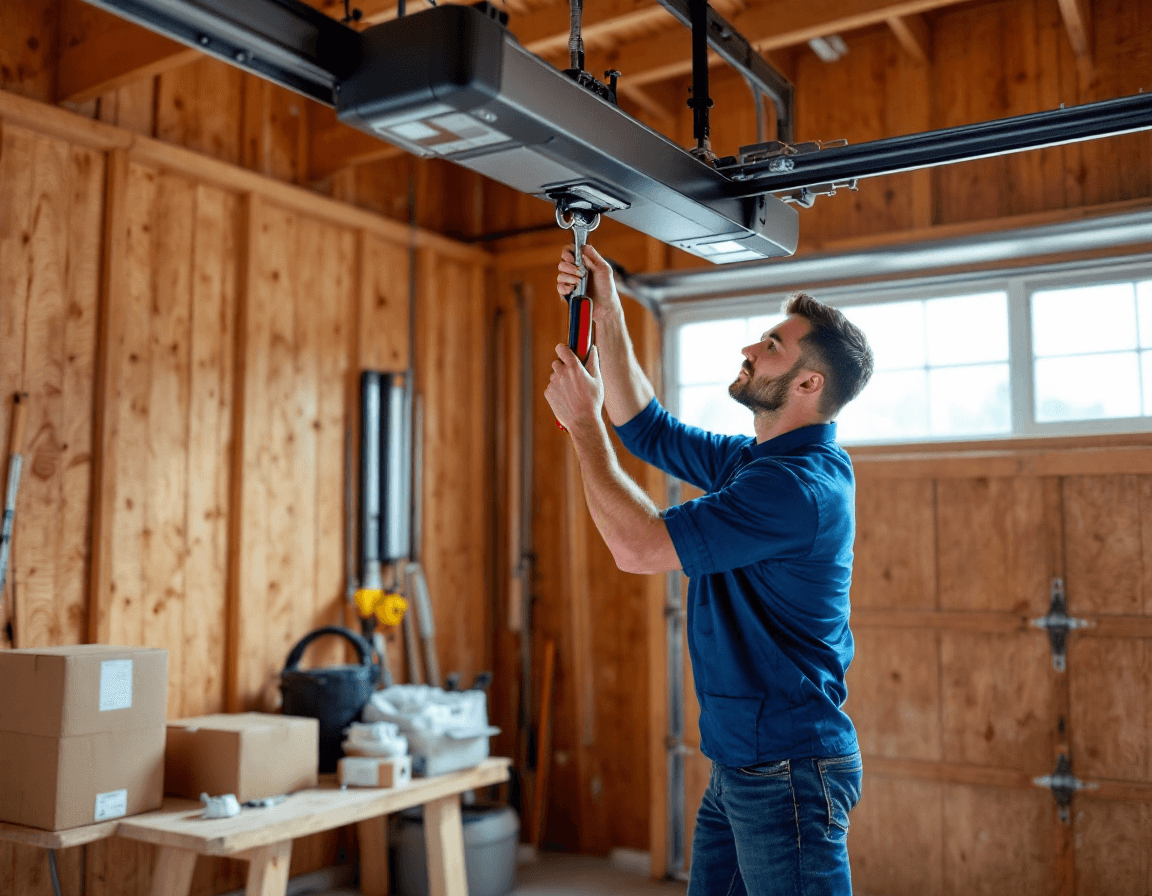
Garage Door Opener Installation & Replacement in Woodway, WA is one of the most practical upgrades a homeowner on the hillside can make, because the opener is the part of the system you use every single day. Woodway is a quiet, tree-lined community in south Snohomish County, and many of the garages here were built decades ago with openers that were never designed for the way we live now. If your opener groans, stalls halfway down, or simply stopped responding to the remote last winter, the problem is probably not your door but the motor and logic board that control it. Our team installs belt-drive, chain-drive, and wall-mount smart openers, with battery backup options, for homes throughout the area.
Replacing an opener is more involved than swapping a box on a ceiling bracket. The right unit depends on the weight and size of your door, the height of your garage ceiling, how your tracks are mounted, whether you want Wi-Fi control from your phone, and how much noise you can tolerate above a bedroom or home office. Those choices affect your comfort and security for the next decade or more. This page walks through the decisions we help Woodway homeowners make, from recognizing a failing unit to understanding what an installed price actually includes, so you can plan with confidence instead of guessing.
Woodway homes sit among mature evergreens and deciduous trees, and the Puget Sound air carries moisture and salt for much of the year. Those conditions are harder on electronics and metal hardware than many people realize. A good installation accounts for the damp winters, the occasional windstorm that knocks out power, and the reality that a garage on a sloped lot may see more frequent use than you expect. We approach each job with those local factors in mind, and we explain our reasoning as we go.
Reading the Signs Your Opener Has Reached the End
Most openers do not fail overnight. They give you warnings for months, sometimes years, and homeowners often adjust without noticing. The door takes longer to close, the motor hums louder than it used to, or the light flickers during movement. You may find yourself pressing the wall button twice because the first press did not register, or you may notice the door reversing for no clear reason when it meets a slight resistance from a cold track.
Pay attention to patterns rather than single events. If the opener works well one day and stalls the next, the cause could be a worn gear, a failing capacitor, a tired logic board, or a sensor problem that a technician can diagnose in one visit. When repairs start stacking up, the economics shift quickly. Replacing a worn part on a 15-year-old unit can cost a meaningful share of what a new opener would cost, and you still end up with an aging motor.
- Door pauses, reverses, or stops midway without an obvious obstruction
- Grinding, clicking, or a loud rattle that wasn't there before
- Remote controls that work only when you stand close to the door
- Wall button or keypad that no longer responds consistently
- Light fixture that dims dramatically or flickers during operation
Why Belt-Drive Suits Quieter Woodway Evenings
Belt-drive openers use a reinforced rubber or polymer belt in place of a metal chain to move the trolley along the rail. The difference you hear is immediate. A belt glides where a chain clacks, which matters a great deal if your garage shares a wall with a bedroom or if your home sits on a quiet residential street where early-morning and late-evening noise carries. Many homeowners choose belt-drive simply because they want the door to open without announcing it to the whole neighborhood.
Belt-drive units also tend to run smoother over time, since there is less metal-on-metal contact and less lubrication required. That said, a belt is not maintenance-free. Belts can stretch or loosen, and they should be kept at proper tension so the trolley does not slip. During installation we set the belt tension, check the rail alignment, and confirm that the mounting brackets are solid. These steps are easy to overlook in a rushed job and show up later as noise or slippage.
Belt-drive is often the better fit for attached garages in tighter subdivisions and for homes where the living space sits directly above the garage. It is also a good match for owners who plan to add a smart controller and want the whole system to feel modern and refined. If your priority is the lowest possible noise level, ask us to demonstrate the difference during your estimate so you can judge for yourself.
Matching Chain-Drive, Belt-Drive, and Wall-Mount Options to Your Garage
Choosing a drive style is only part of the decision. The mounting method matters just as much, especially in older Woodway garages where ceiling joists may be irregular or where storage racks limit the available space. A ceiling-mount opener hangs from the garage ceiling and works well when there is adequate headroom above the door. A wall-mount unit attaches to the wall beside the door and frees up overhead space, which is valuable when you store bikes, kayaks, or seasonal gear on the ceiling.
Chain-drive openers remain a strong choice for heavier doors and for homeowners who want a durable, budget-friendly mechanism. Chains are robust and handle wear well, though they are louder than belts and benefit from periodic lubrication. Wall-mount units often use a belt or a screw-style drive, and they are a good option for garages with limited headroom or for carriage-style doors that need a specific arm configuration.
When we evaluate your garage, we look at the door's weight and construction, the height of the top of the door when fully open, the condition of the tracks, and the location of any light fixtures or ductwork. We then recommend the drive and mounting style that will work reliably for your space rather than the one that is simply most expensive. An honest recommendation sometimes means choosing a mid-range unit that fits your door well over a premium model with features you will never use.
Rolling-Code Security and Why Older Remotes Put You at Risk
Older openers often used fixed-code remotes, which send the same signal every time you press the button. That signal can be captured and replayed by someone with inexpensive equipment, which means a determined intruder could potentially open a door that relies on fixed-code technology. Rolling-code systems change the transmitted code with every use, making replay attacks far more difficult. If your opener is more than about fifteen years old, there is a real chance it lacks this protection.
Security is not only about remote signals, though. A reliable opener also needs working safety reversal sensors, a properly tensioned door, and a locking mechanism that you use consistently. We check each of these during a replacement, and we recommend that homeowners disable the wall button when they travel or when a house sitter is present. Many newer units let you manage paired remotes and keypad codes, so you can remove access for a former roommate or contractor without changing the entire system.
Security upgrades also help you sleep better during extended absences. In a neighborhood with mature trees and quiet streets, it is easy to assume a garage is safe because nothing has happened yet. Rolling-code technology is a simple, meaningful layer of protection that costs little more than a basic unit, and it is one of the strongest reasons homeowners choose to replace an aging opener before it fails completely.
Smart Wi-Fi and myQ Control Without the Guesswork
Smart openers let you open, close, and monitor your garage from a phone, and many Woodway homeowners find this feature genuinely useful. You can check whether the door closed after you left for an appointment, let a delivery driver in on a specific window, or allow a family member to access the garage without handing over a physical remote. Compatibility with myQ and similar ecosystems is common on current models, and the app experience varies between brands.
Wi-Fi control depends on your home network, so we check signal strength at the garage before recommending a smart unit. A garage that sits far from the router or behind thick walls may need a mesh extender or a placement adjustment to keep the connection stable. We also help you set up notifications, shared user access, and scheduled closing if you want that level of control. Each of these features is optional, and a basic unit with a smart add-on can be a sensible middle ground.
Smart features are only valuable when they stay reliable. We walk through the app setup with you on installation day, confirm that the door responds correctly from your phone, and explain what happens if the internet goes down. In most systems the remote and wall button continue to work locally, but you should understand exactly how your model behaves before you depend on it for daily routines.
Battery Backup for Woodway's Windstorm Outages
Pacific Northwest windstorms can knock out power for hours, sometimes longer, especially when falling branches take down lines in wooded areas. A garage door that cannot open during an outage becomes a serious inconvenience, particularly if you need to leave for work, evacuate, or reach a vehicle inside. Battery backup is one of the most useful add-ons for homes in the area, and it is far easier to include during installation than to retrofit later.
Battery backup systems are sized to run the opener for a set number of cycles when grid power is gone. Capacity varies by model, and the battery needs periodic checks and eventual replacement, usually every few years depending on use and temperature. We install backup batteries in a location that protects them from moisture and extreme heat, and we show you how to test the system so you know it will work when you need it.
- Confirm your opener model supports a compatible backup battery before purchase
- Test the backup function at least once a year by simulating an outage
- Note the battery replacement date on your calendar or in your home maintenance log
- Keep the manual release cord accessible in case the battery is depleted
Moisture, Salt Air, and Keeping Electronics Dry
Woodway's damp winters and the marine air that drifts up from the Sound create conditions that can corrode terminals, fog up sensor lenses, and encourage mildew on exposed wiring. Even a garage that feels dry inside can experience condensation on metal surfaces when temperatures swing overnight. These factors affect the lifespan of an opener more than many homeowners expect, and they should be considered when choosing and placing a unit.
During installation we look for signs of moisture intrusion around the garage door frame, check that the power outlet is protected and up to current standards, and make sure the opener housing is positioned to avoid direct drip lines. We use corrosion-resistant hardware where appropriate and seal wiring connections so they stay clean over time. If we notice a damp or poorly ventilated garage, we will tell you plainly, because condensation can shorten the life of any electronics, not just an opener.
Good ventilation and a little routine care go a long way. Wiping down the rail, keeping the door seals free of debris, and watching for rust on hinges and brackets all help the system last longer. These habits matter more in a wooded setting, where leaves, needles, and fine dust collect in the garage and settle onto the opener motor and sensors.
What a Professional Installation Actually Includes
A complete opener installation involves much more than mounting the motor and plugging it in. Our technicians begin by inspecting the existing door, tracks, and springs to confirm the door is balanced and moves freely by hand. An opener cannot compensate for a door that binds, so if we find a problem with the door hardware, we explain it before proceeding. This step protects both the new opener and the people who use the garage every day.
Next comes mounting and alignment. We attach the rail, trolley, and motor unit, set the travel limits so the door opens and closes at the correct points, and install the safety reversal sensors near the floor on each side of the opening. We program the remotes, wall control, and any keypad, and we configure smart features if you have chosen a connected model. Finally, we test the door through multiple cycles, check the auto-reverse function, and walk you through the controls.
Every installation ends with a clear explanation of how to operate the system, how to use the manual release safely, and what maintenance the unit needs. We leave you with the information you need to keep the opener running well, and we are glad to answer follow-up questions after the job is complete.
Pricing Between $275 and $650 and What Shapes the Final Number
Our installed pricing for opener replacement ranges from $275 to $650, and the exact figure depends primarily on the opener model you select. Basic chain-drive units sit near the lower end of that range, while belt-drive and wall-mount smart models with battery backup generally fall toward the upper end. The price reflects the equipment itself, the labor to install and program it, and the testing needed to confirm safe operation.
Other factors can influence the total. A garage with a non-standard door, a damaged track, or an outdated electrical outlet may need additional work, and we will discuss any such issue before making changes. Choosing a battery backup or a specific smart ecosystem also affects the final number. We provide a written estimate that breaks down the opener, labor, and any optional features so you can compare options without surprises.
When you request a quote, it helps to know a few details: the approximate width and height of your door, whether it is a single or double door, how old your current opener is, and whether you want Wi-Fi control or backup power. With that information, we can narrow down the right model quickly and give you a realistic picture of what the installation will cost.
Where Our Work Stops and Licensed Specialists Take Over
Garage door openers are powered machines that interact with heavy doors under spring tension, and safety has to come first on every job. Opener installation and replacement are within the scope of our technicians, but certain components require a licensed specialist. Torsion springs, extension springs, and cable systems store enormous amounts of energy, and an improper adjustment or a mishandled spring can cause serious injury. We never recommend homeowners attempt spring or cable work on their own.
If we find a worn spring, a frayed cable, or a damaged drum during an opener visit, we will stop and explain the hazard. Our licensed team can address those repairs, or we will coordinate with a qualified specialist for the work. We would rather tell you something inconvenient than rush a job and create a risk for your household. Our technicians are licensed, bonded, and insured, and that commitment extends to every stage of the project.
Please also remember that an opener is only one part of a working system. Keeping the door balanced, the tracks aligned, and the safety sensors clear of debris is part of the same responsibility. When in doubt about any spring, cable, or track component, call us before you attempt a repair yourself.
Sometimes Repair Still Makes Sense, and We'll Say So
Not every struggling opener needs replacing. A unit that is only a few years old may benefit from a logic board replacement, a new remote, or a sensor realignment. We would rather repair a solid unit than sell you a new one you do not need, and we will walk through the numbers honestly. If the repair cost is modest and the opener is otherwise in good condition, a targeted fix may serve you well for years.
The decision usually comes down to age, reliability, and what you want from the system. If your opener lacks rolling-code security, cannot support battery backup, or is so loud that it disrupts your household, replacement often delivers more value than repair. If the unit is newer and the problem is isolated, repair may be the better choice. Either way, we will explain the tradeoffs clearly so you can make a confident decision.
Whichever path you choose, the goal is a garage door that opens smoothly, closes securely, and responds when you need it. Homeowners across Woodway trust us to give straightforward advice and to do the work carefully, and we bring that same approach to every opener job.
If your garage opener is loud, slow, unreliable, or simply past its useful life, we are ready to help. Call Seattle Garage Door Fix at (888) 799-3819 to schedule an inspection or request an estimate for opener installation or replacement in Woodway. We will look at your door, explain your options, and recommend a setup that fits your home, your budget, and the way you use your garage.