
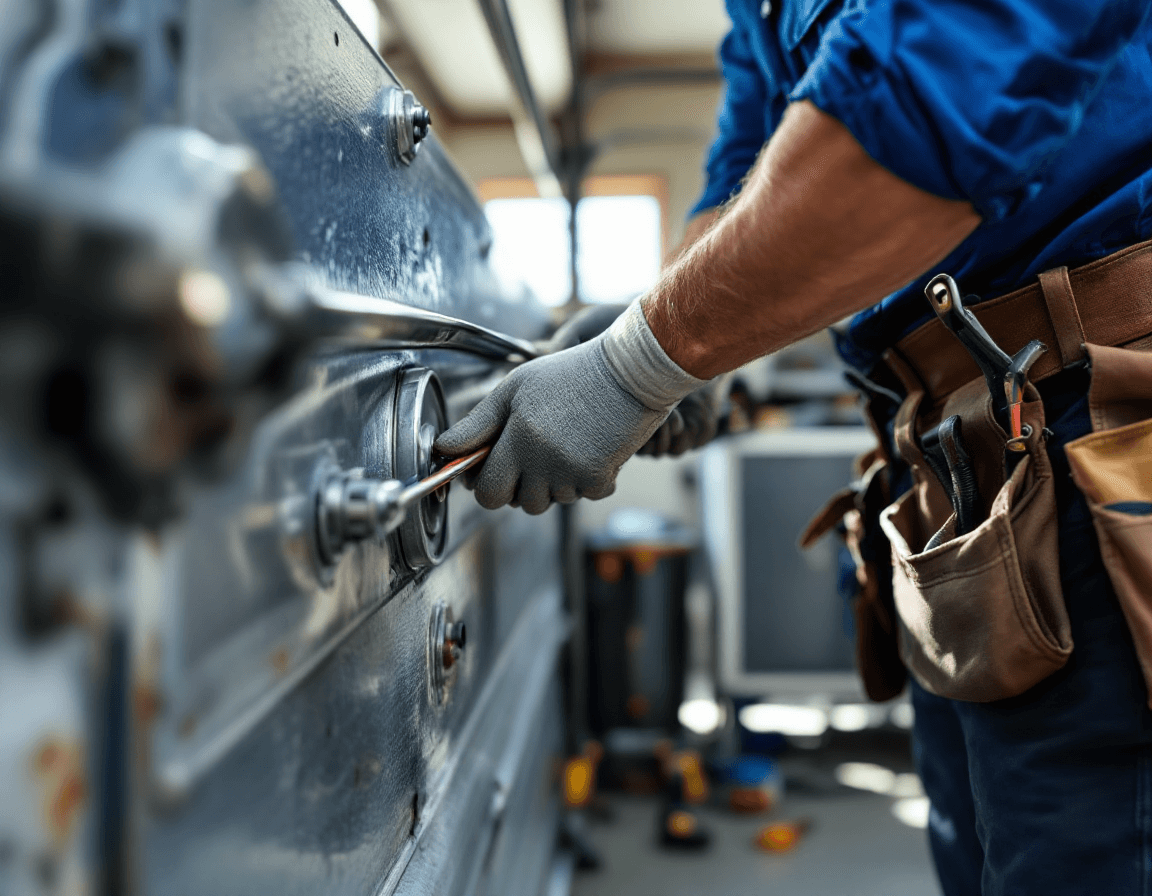
Garage Door Cable Replacement in Woodway, WA is one of the most frequent repairs we handle for homes tucked into the wooded hillside of this small Snohomish County town. Many homeowners first notice a problem when a single loud bang echoes through the garage, followed by a door that sits half open and refuses to move. Lift cables are quiet workhorses until they fail, so the first sign of trouble is often a sudden surprise rather than a gradual warning.
Woodway's setting makes cable health a little more interesting than in flat, dry neighborhoods. Homes here sit among mature conifers and deciduous trees, with driveways that often catch needles, fir cones, and wet leaves for much of the year. Add the damp air that drifts in from Puget Sound and the long stretches of gray, drizzly weather typical of the Pacific Northwest, and you have conditions that quietly work on steel cables, drum grooves, and mounting hardware. This guide explains what those cables do, how to recognize wear before a failure, and what a safe, professional repair involves.
Our goal is practical: help you understand what you are looking at, decide when it is time to call, and know what a fair price range looks like. Lift cable work involves high-tension springs and heavy components, so we will be direct about where a homeowner should stop and a licensed technician should take over. If you are reading this with a door that is currently stuck, you can skip ahead to the safety section and then call us at (888) 799-3819.
What a Lift Cable Really Does Inside Your Garage Door
Every sectional garage door relies on a pair of lift cables, one on each side of the door, that run from the bottom corner of the bottom panel up to a grooved drum at the top of the vertical track. As the door opens, the cables wrap around the drum and lift the weight of the panels, while the springs above the door do most of the heavy lifting. Think of the cables as the connection that translates spring tension into smooth, level motion. When both cables carry equal load, the door rises straight and settles evenly in the closed position.
Because the cables are always under load, they are built from braided steel strands designed to bend around the drum thousands of times over the life of the door. The cable itself is only part of the picture. Each cable terminates in a fitting that anchors it to the bottom bracket, and it seats in a fixed groove on the drum so the wraps stack in order. If any part of that chain loses its alignment or integrity, the door will show it through uneven movement, noise, or a complete stop.
Understanding this basic arrangement helps you describe problems accurately when you call. A cable that has snapped at the bottom fitting behaves differently from one that has jumped off the drum at the top. Both situations can leave a door stuck, but they point to different causes and different repair steps. A knowledgeable technician will check both ends, the drum, and the spring system before recommending a fix.
How Woodway's Damp Air and Wooded Setting Wear Down Cables
The biggest enemy of steel cable in this part of Washington is moisture that lingers. Woodway's wooded lots tend to hold dampness under tree cover, and the marine air that moves up from the Sound during fall and winter can keep cables wet for days at a stretch. Over time, that moisture encourages surface rust to form in the tiny gaps between strands. Rust does not just look bad; it weakens the cable by reducing the cross-sectional strength of each strand, which is why a cable can look fine from a distance and still fail under load.
Salt and grime from the road add another layer of wear. Homes on the bluff sometimes see road spray and dust carried in on tires, and the fine grit settles onto the lower track and cable runs. When the door cycles, that grit acts like an abrasive, slowly wearing the outer wires of the cable each time it bends around the drum. Pine needles and wet leaves that fall into the garage threshold can also get caught in the track, adding friction that forces the cable to work harder than it was designed to.
Temperature swings matter too. A cool, damp morning followed by a warm afternoon can cause the metal to contract and expand, which slightly changes how the cable seats on the drum. Over many cycles, that movement can gradually shift the wraps and leave one side under more tension than the other. When you pair this with the steady moisture of a wooded setting, it is easy to see why cable problems in Woodway often appear after a long wet season rather than suddenly on a dry summer day.
Listening for the Snap: What a Broken Cable Sounds Like
Most homeowners remember the sound of a cable failure vividly. It is usually a sharp crack or bang, sometimes loud enough to make you think something hit the house, followed by a sudden lurch of the door. The door may drop a few inches, tilt to one side, or stop halfway up with an unnerving silence. Many people describe it as the moment the garage suddenly felt wrong, even before they looked at the door.
The sound often comes from the cable snapping under tension and whipping through the track. Because the spring system is still pushing or pulling, the released energy can create a startling noise and movement. If you hear a snap while the door is in motion, stop using the opener immediately. Do not try to force the door open or closed, and keep people and pets clear of the door path and the track area.
After a snap, the door will almost always need professional attention. Sometimes the door can be secured in place temporarily, but that should only be done by a licensed technician who can safely lock the door and check the spring system. Snapped cables frequently reveal other problems, such as worn drums, bent tracks, or springs that have lost their balance. Treat the event as a signal to schedule a full inspection rather than a quick fix.
Reading a Door That Hangs Crooked or Lopsided
A garage door that sits unevenly is one of the clearest signs that something in the cable system has changed. Look at the bottom edge of the door when it is closed. If one side sits lower than the other, or if the gap at the floor is noticeably wider on one end, the cables may be stretched, slipping, or unevenly wound on the drum. A crooked door is not just a cosmetic issue; it puts extra strain on the opener, the tracks, and the remaining cable.
Watch the door as it travels. A healthy door rises and falls with both sides moving at the same pace. If one side climbs faster or lags behind, the cables may be carrying unequal loads. You might also notice that the door binds on one side near the top of the track or hesitates before settling. These patterns often appear gradually, which is why many homeowners in Woodway assume the door is simply getting older until a cable finally gives way.
Do not try to level the door by adjusting the cables yourself. Cable tension is tied directly to spring tension, and the wrong adjustment can cause serious injury. What you can do is document the problem: take a photo of the gap at the floor, note which side is lower, and record when you first noticed the change. Those details help a technician diagnose the issue faster and confirm whether the cable, drum, or spring is the root cause.
When a Cable Jumps Off the Drum or Tangles on It
Cables that come off the drum usually do so because something allowed the wraps to shift. The most common cause is a cable that has stretched or frayed to the point where it no longer seats correctly in the drum grooves. Another cause is a worn or damaged drum that has lost its groove shape, or a cable that was installed with slight misalignment. Once a cable jumps, it may twist, pinch against the track, or wrap over itself, making the door stop or sag.
A tangled cable is especially risky. When loops and kinks form around the drum, the cable can bind, bend sharply, or lock the door in place. Some homeowners see a loose slack section hanging from the drum or notice the cable sitting outside the groove when they peek at the top of the track. If you see this, avoid touching the cable or the drum, and do not attempt to pull the door down by hand to reset the wraps.
Drum service is often part of the repair when a cable has come off or tangled. A technician will inspect the drum for wear, check the set screws and bearings, and confirm that the cable is seated in the correct position. Replacing just the cable without checking the drum can lead to another failure within a short time. We include drum evaluation in our cable work for that reason, and we will explain what we find before recommending any additional parts.
Frayed Strands and Rust: A Practical Inspection Checklist
You do not need special tools to notice early warning signs of cable wear. Some visible clues are worth checking a few times a year, especially after a wet season. A careful visual check can help you decide whether to schedule service before a failure happens. Keep your hands clear of the spring system and the drum while you look, and do not run the door with the opener while you inspect.
- Look for fine broken wires or a fuzzy, hairy texture along the cable, which can signal strands breaking apart.
- Check for orange or brown rust spots, especially near the bottom bracket and where the cable meets the drum.
- Notice any kinks, flat spots, or bulges in the cable, which often point to uneven loading or past damage.
- Observe whether the cable sits neatly in the drum grooves when the door is closed, without gaps or overlapping wraps.
- Watch for grit, leaves, or pine needles lodged in the track near the cable path.
If you find any of these signs, note where and when you saw them. Light surface rust in a sheltered garage may not require immediate action, but frayed strands or deep rust on a cable that carries daily loads should be looked at promptly. A technician can measure the wear and tell you whether replacement is the right call. Many homeowners find that a preventive visit costs far less than an emergency call after a snap.
Why Cable Work Usually Involves More Than the Cable
It is tempting to think of cable replacement as a simple swap, but a safe repair depends on the full lift system. The cables are tied to the springs, the drum, the bottom brackets, and the track alignment. When one part fails, it often stresses the others. A cable that snapped may have been overloaded because a spring lost tension, or a drum may have worn unevenly and caused the cable to fray on one side. A thorough technician will evaluate the whole system instead of replacing a single component and hoping for the best.
Springs deserve special attention. Torsion springs and extension springs store enormous energy, and they must be balanced and tensioned correctly for the door to operate safely. A spring that is fatigued or out of balance can make the door heavier or lighter on one side, which in turn affects the cables. Because spring work carries serious risk, it should always be performed by a licensed professional with the right equipment. Even a seemingly minor spring adjustment can cause injury if it is done without proper training.
Bearings, rollers, and track hardware also influence cable performance. Worn rollers can cause the door to travel unevenly, which pulls on the cable and encourages fraying. Loose track bolts can allow the door to sway, shifting the cable path over time. A professional inspection often reveals these supporting issues, and addressing them at the same visit can extend the life of the new cable and keep the door running smoothly through Woodway's wet winters.
Understanding Cable Replacement Pricing for Woodway Homes
For most lift cable replacements, our typical pricing falls in the range of $110 to $300. The final number depends on the door, the condition of the drum, and whether related parts need attention during the same visit. We believe homeowners should understand what drives the cost before they approve any work, so we explain the factors on site and provide clear options when a repair involves more than one component.
Several details can push a job toward the lower or higher end of that range. The size and weight of the door, the type of spring system, and the number of cables affected all matter. If the drum is worn or the track needs alignment, the job will take longer and may require additional parts. Access can also play a role, since some garages in wooded lots have tight layouts or limited clearance that makes safe work more time consuming.
- Door size and weight, which affect cable length and load requirements.
- Whether one cable or both cables need replacement to keep the door balanced.
- Drum condition and whether drum service is needed alongside the cable.
- Spring system type and whether any spring work is required for safe operation.
- Track, roller, or bracket issues discovered during the inspection.
We will always explain the reasoning behind any recommendation, and you are free to ask questions before work begins. Our goal is to restore safe, balanced operation without adding unnecessary repairs.
Safety Lines You Should Never Cross on Your Own
Garage door cables and springs are among the most dangerous parts of a home repair. Even a small cable under tension can cause serious injury if it releases unexpectedly, and spring systems can store enough energy to cause harm when handled improperly. For that reason, we strongly recommend that homeowners leave cable and spring work to licensed professionals. Attempting these repairs without training can lead to broken bones, lacerations, or worse.
There are simple steps you can take to stay safe while you wait for service. Disconnect the opener power if the door is making unusual noises, and keep the door closed if it is stable. Do not stand under a door that is hanging crooked or partly open, and keep children and pets well away from the track. If the door is stuck in a raised position, use caution and avoid pulling on any cable or spring component.
Never attempt to clamp, wrap, or re-route a cable yourself, even if you have seen it done online. Cable tension is calibrated to the spring system, and an improvised fix can fail suddenly. A licensed technician will secure the door safely, release tension using proper procedures, and install the correct cable with the right fittings. Calling a professional is the safest and most reliable path, especially when a cable has already snapped or come off the drum.
Keeping Cables Healthy Through Woodway's Wet Seasons
Good habits can extend cable life and reduce the chance of a surprise failure. Start by keeping the garage floor and tracks clean. Sweep out pine needles, leaves, and grit from the door path, and wipe down the lower track occasionally. Since moisture is the main enemy in this region, make sure the garage stays as dry as possible by addressing leaks, improving ventilation, and keeping the door seals in good shape.
Lubrication is another important part of maintenance, but it must be done carefully. Use a lubricant recommended for garage door components, and apply it to hinges, rollers, and tracks rather than to the cables themselves. Some lubricants can attract dirt or leave residue that accelerates wear, so ask a technician which products they recommend. Avoid spraying lubricant directly onto the spring system.
- Schedule a professional inspection at least once a year, ideally before the wet season begins.
- Test the door's balance periodically by disconnecting the opener and lifting the door partway by hand, then checking whether it stays in place. If it drifts or drops, call for service rather than adjusting it yourself.
- Keep vegetation trimmed back from the garage entry so debris does not accumulate on the track.
- Check the door seals and weatherstripping to reduce moisture entering the garage.
- Note any new sounds, uneven movement, or visible rust, and call for service promptly.
These habits will not eliminate wear, but they will help you catch problems early and protect the cables from unnecessary stress.
Scheduling Cable Service for Woodway and the 98020 Area
If your garage door is showing any of the symptoms described here, it is a good time to schedule service. Our team serves Woodway and the surrounding Snohomish County communities within ZIP code 98020, and we understand the conditions that affect garage doors on wooded lots and bluff-top properties. We arrive ready to inspect the cables, drum, springs, and track, and we will explain what we find before any work begins.
When you call, it helps to describe what you have noticed. Tell us whether you heard a snap, whether the door is crooked, or whether a cable is visibly off the drum. Mention how long the problem has been present and whether the door is currently stuck open or closed. This information helps us plan the visit and bring the right parts, which can shorten the time your garage is out of service.
Please do not wait until the door fails completely. A cable that shows fraying or rust can often be replaced before it causes a larger problem, and early service is usually more straightforward. If you are unsure whether your situation is urgent, call us and we will help you decide the next step. You can reach our team at (888) 799-3819 to schedule a licensed technician for your Woodway garage door cable repair.