
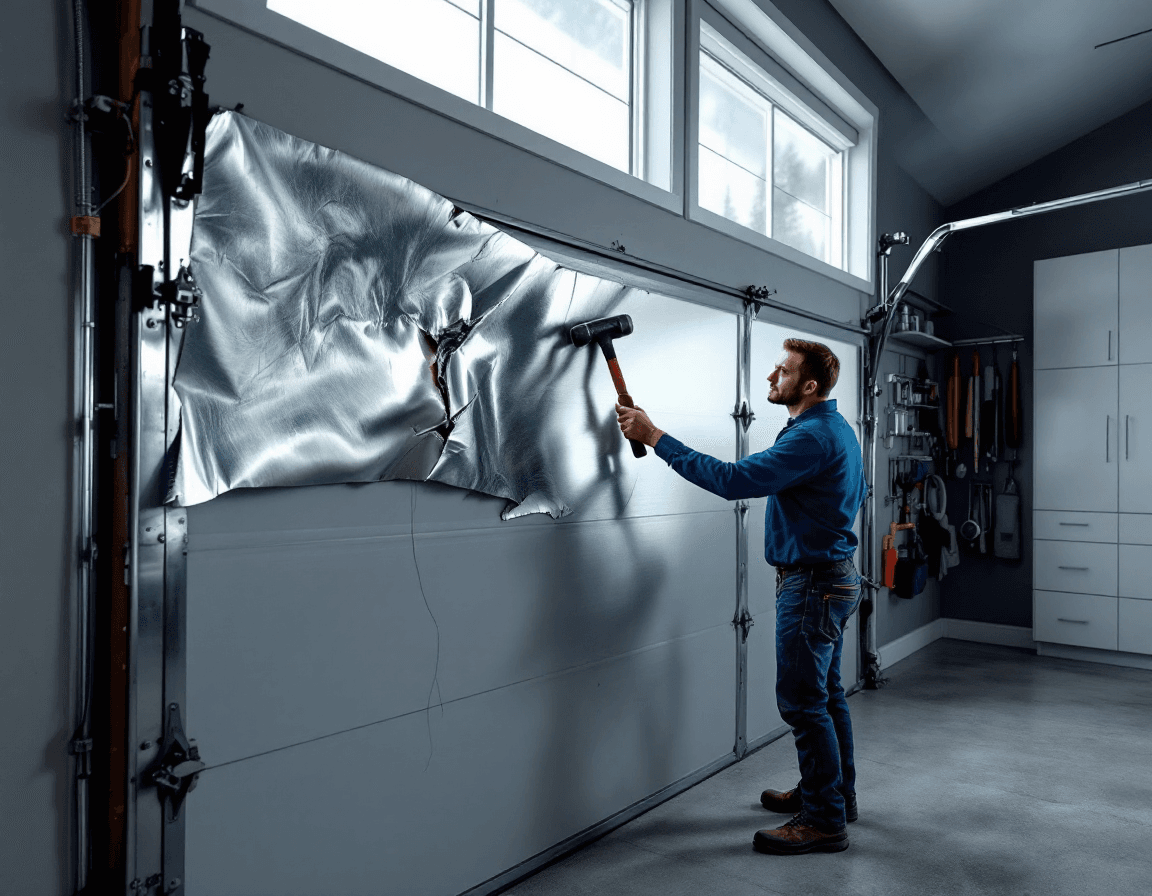
Garage Door Panel Replacement in Woodway, WA is often the right fix when one section of your door is damaged but the rest of the system still works well. Woodway sits on the bluff above Puget Sound in south Snohomish County, and many homes here have garages that take daily weather, tree debris, and tight driveway maneuvers. A single dented or cracked panel can make an otherwise solid door look neglected, and it can let water and cold air into the garage. Replacing the affected section is usually far cheaper than replacing the whole door.
This page explains how panel replacement works, what damage typically calls for it, how matching a discontinued color or texture is handled, and how to decide between patching the problem and swapping the section out. It also covers realistic pricing and what happens on a service visit. Our goal is to help you make a clear, informed decision, whether you call us or simply want to understand what you are looking at.
Every door is different, so the details below are general guidance from a technician's perspective rather than a promise about your specific door. A proper inspection is the only way to know which sections are involved and whether the springs, cables, track, and opener are in good condition. Read on for the local context that shapes these decisions.
Why Woodway Garage Doors Take a Particular Beating
Woodway's wooded lots are part of its character, and they are also part of why garage doors here wear out in specific ways. Overhanging branches drop sap, needles, and sometimes whole limbs onto driveways and roofs, and a heavy limb landing against a door can crease a panel in a single event. Fallen leaves that sit against the bottom of the door trap moisture for weeks at a time during the wet months. Homes near the woodlands also see more shade, which means door surfaces stay damp longer after rain and dew.
The Pacific Northwest climate adds its own pressure. Winters bring long stretches of drizzle and cold, and the temperature swings between daytime and overnight can cause steel panels to expand and contract in a way that stresses seams and paint. Salt air carried in from the Sound, especially on windy days, settles on exposed metal and speeds up corrosion along edges and fasteners. Over a decade or two, these conditions can turn a small chip into a rust spot and a rust spot into a section that no longer holds its shape.
Driveway layout matters too. Many Woodway properties have sloped approaches and tight turnarounds, so vehicles sometimes clip the lower panels when backing out. Garage doors also get bumped by bicycles, lawn equipment, and kids' sports gear more often than people realize. When you put these factors together, it is common for a technician in this area to find one or two panels showing the damage while the rest of the door remains sound.
Reading the Damage: Dents, Cracks, and Hidden Rot
Not every dent calls for a new panel. A shallow dimple in a steel skin with the paint intact may be cosmetic, while a sharp crease, a split along a seam, or a crack that runs through the insulation core usually means the section has lost its structural integrity. Start by looking at the door in daylight from a few feet back and then up close, running your hand along the surface. Note whether the damage is confined to one panel or extends across a horizontal seam into a neighboring section.
Hidden rot is the more worrying category. Wood-core doors, and some older steel doors with wood trim or wood-framed sections, can soften from the inside long before the outer surface looks obviously wrong. Press gently along the lower edge and the trim, and listen for a dull or spongy response. Insulated steel panels can also trap moisture between the skin and the foam core, leading to rust that appears as bubbling paint or streaks running down from a fastener hole.
When you inspect the door, look for these signs that a panel needs attention:
- A crease or dent deep enough to show a sharp line, or one that has cracked the paint so bare metal is exposed
- Splits or separations along the seam where two panels meet
- Bubbling paint, orange or brown streaks, or flaking near screw holes and the bottom edge
- Soft, crumbling, or discolored wood on a wood-core panel or trim piece
- Gaps that let light show through when the door is closed, which suggests the panel has bowed or shifted
If you find several of these signs on a single section, that panel is a strong candidate for replacement rather than repair.
Water at the Bottom Edge: The Quiet Problem Behind Rust
The bottom section of a garage door is the most exposed part of the entire assembly. It takes splash from the driveway, puddles that collect in the threshold, and debris that is pushed against it by wind. In a region as wet as Western Washington, the lowest panel often stays damp for long periods, and that moisture finds its way into seams, hinges, and fastener holes. Over time the bottom edge can develop rust, delamination, or swelling that spreads upward into the panel.
Water damage at the bottom is also tied to weatherstripping and threshold condition. If the bottom seal is cracked or missing, water can run under the door and wick into the lowest panel from below. A door that has been sitting with its bottom edge against a damp concrete floor for years is particularly vulnerable. Replacing a damaged bottom section without addressing the seal is a common mistake, because the new panel will simply be exposed to the same conditions.
A technician will usually check the bottom seal, the threshold, and the drainage pattern on the driveway side before recommending a panel swap. Sometimes a simple seal replacement and a bit of cleanup protect a panel that is only surface-stained. Other times the rust has already worked through the core, and the section needs to come out. The honest answer depends on how deep the damage goes.
Backing Accidents and the Single Panel Problem
A backing accident is one of the most common reasons homeowners need a single panel replaced. A car bumper, a trailer hitch, or a pickup tailgate can dent one section badly while the rest of the door is untouched. Because the impact is localized, people often assume the door is fine except for a cosmetic blemish. In reality, a bent panel can throw the door out of balance, pull on its neighboring sections, and cause the rollers or track to bind.
After an impact, check whether the door still moves smoothly and whether it closes fully and evenly. A door that hesitates, jerks, or sits crooked after a collision may have a track or roller issue that needs attention alongside the panel. Do not attempt to bend a dented panel back into shape yourself, and do not try to force a stuck door open or closed. Stored tension in the springs is dangerous, and a damaged door can move unpredictably.
It is also worth documenting the incident. If the damage came from a vehicle collision, your insurance carrier may have an interest in the repair, and a clear photo record helps. Our technicians can note the condition of the surrounding sections, the track alignment, and the operator when they assess the panel, so your records reflect the full scope of what was affected.
Matching a Panel You Can't Find Anymore
One of the most frustrating parts of panel replacement is finding a match. Garage door styles change over the years, manufacturers discontinue colors, and many older Woodway homes have doors that were installed by a builder with a finish that no longer appears in current catalogs. A section that is a slightly different shade of brown or a different embossed texture will stand out immediately, and that visual mismatch can be just as bothersome as the original dent.
Matching starts with identifying the door. Look for a manufacturer label, usually inside the top or bottom edge of a panel or on the back of a section, and note the model series, the panel width, the number of ribs or grooves, and whether the door has windows or decorative trim. Note the exact paint color if you can, and bring a clean sample or photo in daylight. A reputable technician will compare the door against available replacement sections from current inventory and, when needed, from distributor stock that still carries the original finish.
Sometimes an exact match is possible, and sometimes the closest option is a near match that looks good from the street. In certain cases, the best result is to replace more than one section so the change is less noticeable, or to refinish an entire door to unify the color. Be realistic about expectations: a new panel will look newer than the surrounding sections for a while, and weathering will gradually narrow the difference. Clear communication about what can and cannot be matched prevents disappointment.
What a Single Section Typically Costs Here
Our typical pricing for panel replacement in this area falls between $250 and $800 per section. Where a section lands in that range depends on several factors. Standard steel panels from common manufacturers tend to sit at the lower end, while insulated sections, wood-core panels, doors with glass or decorative inserts, and discontinued finishes usually cost more. The width and height of the panel, along with the labor needed to disassemble and reassemble the surrounding sections, also influence the total.
Price is not the only consideration. A less expensive section that does not match well, or one that does not fit the door's original hardware, can cost more in the long run through repeated visits. Ask whether the quote includes removal of the old section, installation of the new one, reconnection of hinges and rollers, and a test of the door's balance and travel. Those steps are part of doing the job correctly, and they should be spelled out before work begins.
Keep in mind that a quote depends on an on-site inspection. Replacing one panel may reveal that the spring system, cables, or track need attention, and those repairs are separate from the panel itself. We will always explain what is required and what is optional, so you can decide how to proceed with full information.
Repair or Replace: A Practical Decision Guide
Deciding whether to repair a damaged section or replace it comes down to how far the damage has spread and whether the panel can still do its job. A minor surface scratch or a small chip in the paint can often be touched up with a matching finish. A shallow dent with no cracking may be pushed out or left alone if it does not affect operation. Full replacement makes sense when the damage compromises structure, insulation, or the panel's connection to its neighbors.
Use this quick checklist to guide your thinking:
- Repair is usually reasonable when the paint is damaged but the metal is intact, the dent is shallow, and the panel still sits flush with its neighbors.
- Replacement is usually the better choice when the panel is cracked through, rotted, rusted through, or visibly bowed out of line.
- Replacement is also recommended when the panel's insulation is saturated or when moisture has reached the core.
- If more than one panel shows significant damage, replacing the set may cost less than repeated single repairs.
- If the door is very old and the finish cannot be matched, a full door assessment may be more economical than piecemeal swaps.
No single rule fits every door. A technician who understands the specific model, its age, and its condition can give you a realistic recommendation, and that recommendation may differ from what you expected. We would rather tell you a simple repair will hold than sell you a replacement you do not need.
When the Mechanics Work but the Face of the Door Does Not
Many homeowners in Woodway notice that their garage door still opens, closes, and reverses on command, but one panel looks wrong. This situation is common and reassuring in one sense: the operator, track, and springs may be healthy, so the problem is confined to the surface. Still, a damaged panel should not be ignored, because it can worsen over time, let in water and drafts, and reduce the door's insulation value.
A good inspection separates the cosmetic from the structural. Even when the mechanics are fine, a technician should check the panel's attachment points, the hinges at the seam, and the rollers that run along that section. A panel that has been struck can put uneven stress on those components, and a small problem caught early is much cheaper to fix than a roller failure that leaves the door stuck open. It is also a good moment to check the weatherstripping along the seams around the damaged section.
If the door is functioning well, the panel replacement can be scheduled at a time that works for you without rush. There is no need to delay forever, but a planned repair often allows for better matching, a cleaner installation, and fewer surprises than an emergency call.
Keeping a New Panel Looking Right for Years
A replacement panel will last longest when it is protected from the conditions that caused the original damage. In Woodway, that starts with keeping the bottom of the door clear of leaf litter, moss, and standing water. Trim back overhanging branches so they do not scrape or drop limbs onto the door, and clear gutters and downspouts so runoff does not wash over the lower section. A quick rinse with a garden hose during dry spells removes salt and sap before it can bond to the paint.
Inspect the bottom seal and threshold at least once a year, especially before the wet season begins. Replace worn weatherstripping promptly, since a gap at the bottom invites water and debris. Check the seams between panels for early signs of separation, and look for small paint chips near fasteners that could allow moisture in. Catching these issues early keeps a single section from becoming a larger project.
Avoid harsh abrasive cleaners and power washing at close range, which can strip paint and force water into seams. Use a mild detergent and a soft brush, and rinse thoroughly. If you plan to repaint, use a finish that is rated for exterior steel and suitable for coastal or damp environments, and test a small area first. A well-maintained door looks better and performs better, and it gives your replacement panel the best chance of blending in.
What Happens During a Panel Replacement Visit
A panel replacement visit typically begins with a walkthrough of the door and the damage. The technician will identify the model and section, confirm whether a matching panel is available, and check the operation of the door with the opener engaged and disengaged. The condition of the springs, cables, rollers, and track will be evaluated as part of the assessment, because the state of those components affects how the new section will sit and perform.
Safety comes first in every step. Spring and cable work is dangerous, and it should only be performed by a licensed, trained professional with the right tools. Torsion springs and cables store large amounts of tension, and mishandling them can cause serious injury. If your door needs any spring or cable work, it should be handled by a licensed technician, not by a homeowner with a set of tools and a video. Our crews follow strict procedures for that work, and we will explain every step before we begin.
Once the new section is in place, the door is tested for balance, smooth travel, and proper closure. The technician will confirm that the seals are seated, the hardware is tight, and the panel lines up with its neighbors. You will receive a clear explanation of what was replaced, what was checked, and any maintenance recommendations for the months ahead.
Garage door panels in Woodway take a real beating from weather, trees, and daily life, but a damaged section does not have to mean a new door. With a careful inspection, a good match, and a clear understanding of costs, panel replacement can restore your door's appearance, protect your garage, and extend its useful life. If you are looking at a dented, rusted, or cracked panel, we are glad to take a look and walk you through your options. Call Seattle Garage Door Fix today at (888) 799-3819 to schedule an inspection and get a straightforward recommendation for your Woodway home.