
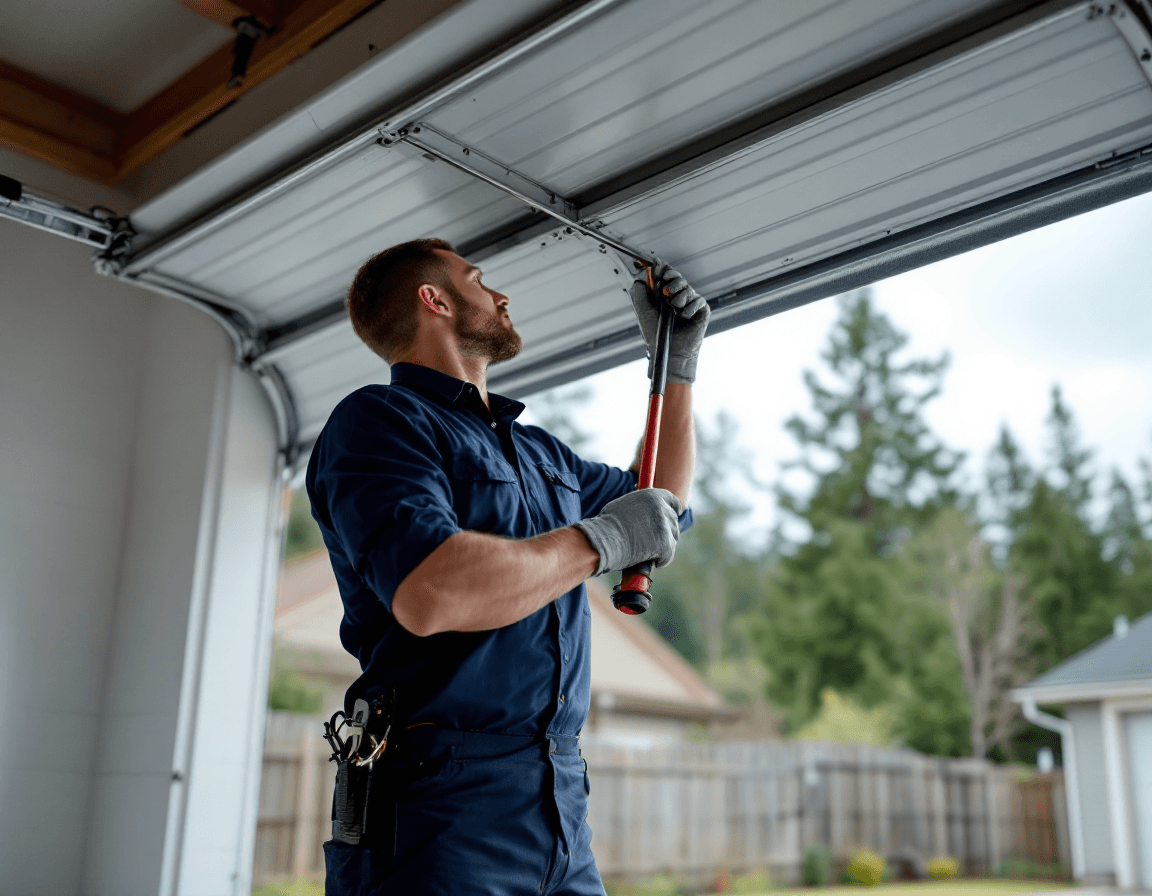
Garage Door Spring Replacement in Woodway, WA is one of the most common repairs we handle on the bluff-top homes and wooded lots that give this small town its character. Springs carry most of the weight of your door, so when one fails, the whole system feels it right away. Homeowners often describe the moment as a sharp crack from the garage, followed by a door that suddenly will not budge. This page explains what that failure looks like, why it happens so often in our part of Snohomish County, and how a licensed technician handles the repair from start to finish.
Woodway sits in a setting that is different from many other Seattle-area communities. Homes here tend to have longer driveways, sloped approaches, and garages that open toward tree-lined streets with heavy canopy overhead. Many properties back up to the Woodway woodlands, where moss, needles, and seasonal leaf litter collect on roofs and gutters and eventually find their way near the garage. Those conditions affect more than appearance, because moisture and grit work their way into hinges, rollers, and spring hardware over time. Understanding how your door responds to this environment makes it easier to catch problems early.
This guide is written for homeowners who want clear answers rather than sales language. We cover the warning signs we see most often, what the inside of a torsion coil tells a technician, how extension springs differ, and why a door can open a few inches and then stop. We also walk through the spring replacement process, typical pricing, high-cycle upgrade options, and the safety rules that matter most. If your door is stuck or making a noise you do not recognize, read on, and then call a licensed professional rather than attempting the repair yourself.
What a Snapped Spring Sounds Like From Your Woodway Kitchen
Most homeowners never forget the first time a spring breaks. The noise is loud and sudden, often described as a gunshot or a heavy metal bang that makes people jump from the kitchen or the couch. Because the sound seems to come from everywhere at once, many people initially wonder whether a car hit the house or a tree came down. A quick look into the garage usually settles the question, although the door itself may be sitting in a half-open or fully closed position with the opener still humming.
Not every spring failure is that dramatic. Some springs weaken gradually, producing a grinding or popping sound as the door starts its travel. Others give a single metallic snap and then leave the door sagging at an odd angle. In Woodway, we have seen both patterns in homes where the door has been used several times a day by commuters, teenagers, and contractors coming and going from the driveway. Frequent cycling adds up, which is why a spring that has been quietly fatiguing for years can finally let go on an ordinary weekday morning.
Here are the symptoms that most often point to a spring problem rather than an opener or track issue:
- A loud bang from the garage, sometimes followed by a rattling sound as loose parts settle
- A door that refuses to lift or feels extremely heavy when you lift it by hand
- A visible gap in the torsion spring coil, often near the center bracket
- A door that opens a few inches and then stops, or reverses partway through its travel
- An opener that strains, hums, or clicks while the door barely moves
- Cables that have come loose or are hanging slack after a spring break
- A door that closes too fast, drops unevenly, or sits crooked in its frame
If you notice any of these, avoid repeated attempts to force the door open. Continuing to operate a door with a broken spring can damage the opener, bend tracks, and put additional strain on cables that may already be frayed.
Reading the Torsion Coil: Gaps, Rust Bands, and Stretched Coils
A torsion spring is the long, tightly wound coil mounted on a steel shaft above the closed door. It stores the energy that counterbalances most of the door's weight, and it does so through a precise amount of twist that is set at installation. When a torsion spring breaks, the coil often shows a visible gap where the wire has separated, and the gap is usually easiest to spot near the center bracket or at one end of the coil. Some homeowners see a small, clean space between coils, while others find a jagged split with a few inches of wire pulled loose.
Rust deserves special attention in Western Washington. Our damp, mild winters keep metal surfaces moist for long stretches, and rust can form in a band across the coil even before a visible break appears. When a technician sees a rust band, they check how deeply the corrosion has penetrated the wire, because surface rust alone does not always mean failure is imminent. Deep pitting, flaking, or a dull, rough texture across several coils usually signals that the spring has reached the end of its useful life. Replacing it before it breaks prevents a second, more dangerous failure during daily use.
Stretching is another sign that often gets overlooked. An older torsion spring can lose tension gradually, and the coils may look slightly spread apart compared with the originals on the shaft. A spring in this condition can still look intact while failing to lift the door properly. Homeowners sometimes notice the door sitting lower than it used to, or the bottom seal dragging across the floor. A technician measures the spring, checks the cone-end hardware, and confirms whether the tension has dropped to the point that replacement is the only sensible option.
Because a torsion spring is wound under very high tension, it should never be adjusted, loosened, or removed by a homeowner. The energy stored in a single spring can cause serious injury if released unexpectedly. Our technicians use winding bars and proper safety procedures, and they treat every torsion job as a controlled process rather than a quick swap.
Why Woodway Winters Wear Springs Faster Than You Expect
Woodway's climate is one of the main reasons springs wear sooner here than many owners anticipate. Western Washington winters bring long periods of rain, fog, and high humidity, and garages in wooded areas often stay cool and damp even on sunny days. Moisture settles on steel components, and without regular attention it works its way into the coil and the shaft bearings. Over several seasons, that combination can weaken the spring's temper and accelerate corrosion.
Salt air adds another layer of stress for homes closer to the water and for properties where prevailing winds carry marine moisture up from Puget Sound. Even when the salt is faint, it settles on exposed hardware and speeds up oxidation, particularly on the bracket bolts and the cable drum assembly. Garages with open gaps at the bottom of the door or ventilation that draws in damp air tend to show the most corrosion. Homeowners in these conditions often find that a spring which looked fine at a yearly check needs replacing well before its expected cycle count.
Temperature swings matter too. Our nights can drop into the low thirties in winter while daytime highs stay mild, and metal contracts and expands as those changes occur. That movement can loosen bolts, shift brackets, and create stress points in the coil. A spring that is already fatigued from years of use can crack under those conditions, which is why many of our Woodway spring calls happen on cold, damp mornings rather than during summer heat.
Practical steps help. Keep the garage door bottom seal in good repair, run a dehumidifier in very damp garages if the space is enclosed, and wipe down exposed springs and hardware a few times a year with a light lubricant that is safe for the coil. Avoid spraying lubricant directly onto the opener's motor or onto the door's painted surfaces. A simple seasonal inspection by a licensed technician can catch early corrosion before it turns into a costly break.
Extension Springs on Older Woodway Homes
Not every garage door uses a torsion system. Many older homes in our area, including some properties built before the more recent wave of residential construction, still have extension springs running along the horizontal tracks on either side of the door. Extension springs stretch as the door lowers and pull it back up as it opens, and they are usually paired with a safety cable running through the center of each spring. When one of these springs breaks, the door often drops suddenly or hangs unevenly, and the broken ends can whip if the safety cable has been damaged.
Extension springs are more common than people realize, and they behave differently from torsion springs when they fail. A broken extension spring typically shows a visible gap or a stretched, misshapen loop, and the door may feel heavy only on one side. The safety cable, which is designed to keep the spring from flying loose, must be inspected at the same time. If the cable has frayed, kinked, or pulled out of its anchor, it needs replacement along with the spring.
Extension spring repair is not a casual task, even though the parts look simpler than a torsion coil. The springs carry significant tension, and the door must be secured with clamps before any work begins. Our technicians check the track alignment, roller condition, and cable routing as part of the job, because a misaligned track can overload a new spring and cause it to fail again. Homeowners should never attempt to unhook or replace an extension spring while the door is partially open or unsupported.
If your home has an older door with extension springs, ask a technician whether an upgrade to a torsion system makes sense for your situation. The decision depends on the door's weight, the headroom above the opening, and how often the door is used. A licensed professional can walk through the options without pressure and explain the trade-offs clearly.
When Your Door Stops Mid-Lift: Balance Problems Explained
A door that opens a few inches and then stops is one of the most frustrating symptoms we hear about. Many homeowners assume the opener has failed, but in most cases the real issue is balance. A properly balanced door should rest in place when you lift it partway, with the spring carrying most of the weight. If the door stays put only at the bottom and drifts downward when released halfway up, the spring tension is no longer matched to the door's weight.
Balance problems often stem from a spring that has lost tension or a broken spring that has not yet been fully replaced. When one torsion spring breaks on a double door, the remaining spring cannot distribute the load evenly, and the door may tilt or stall. Even a single-spring failure can cause the door to bind in its tracks, especially if the rollers have worn or the hinges have shifted. Because these symptoms overlap with opener faults, a technician usually tests the door manually before deciding whether to work on the opener, the springs, or both.
Opener strain is another clue. When the springs are failing, the opener must work much harder to lift the door, and the motor may hum, overheat, or trip its safety circuits. Running the opener under these conditions can damage the gear assembly and the logic board, which turns a modest spring repair into a larger bill. We recommend stopping the opener and calling for help as soon as you notice the door struggling.
Balance is also affected by door weight changes. Adding heavy insulation, a new window kit, or a decorative panel can shift the door's weight enough to throw off the original spring setting. In Woodway, where many homeowners upgrade their garages during renovations, we often find that a previously balanced door has drifted out of spec after a remodel. Rebalancing the door during a spring replacement helps restore smooth operation and reduces wear on the entire system.
Cables, Drums, and the Hidden Damage After a Break
When a torsion spring breaks, the lifting cables attached to the drums on either end of the shaft can slacken, jump off their grooves, or become kinked. Many homeowners do not notice this damage until they look closely at the drum assembly, which is tucked above the door and easy to overlook. Loose cables are a safety concern because they can tangle or snag, and they may prevent the door from closing evenly. A broken spring that goes unrepaired for several days can also lead to cable fraying, which weakens the entire lifting system.
Drums themselves can crack or slip on the shaft after a sudden break. A slipped drum may stop the door at an angle, while a cracked drum can release cable tension unpredictably. These components are small but critical, and a technician inspects them every time a spring is replaced. The cable ends should be checked for wear, and the cable ferrules should be secured properly so they do not pull loose under load.
Hidden damage often appears in the tracks as well. A door that drops suddenly can bend track sections, shift the roller alignment, or pull a bracket out of its mounting hole. Our technicians examine the tracks, the hinges, and the bottom roller brackets during every spring job. Catching these problems early keeps the repair from turning into a repeat call a few weeks later.
Homeowners should avoid pulling on loose cables or attempting to reattach them. The cable may appear simple to fix, but it is still under tension from the remaining spring, and a sudden release can cause injury. Keep children and pets away from the door area until a technician arrives, and leave the door in its current position rather than forcing it up or down.
High-Cycle Springs: Worth the Upgrade for Busy Households
Standard springs are rated for a specific number of cycles, where one cycle equals one full open and close of the door. High-cycle springs are manufactured with heavier-gauge wire and different tempering, which allows them to handle more repetitions before fatigue sets in. For busy households in Woodway, where the garage may be the main entrance for school runs, contractor visits, and frequent trips for groceries or yard work, a high-cycle upgrade can be a sensible investment.
High-cycle options are not automatically necessary for every home. A door that is opened only a few times a week may perform well with standard springs for many years, while a family that uses the garage several times a day may see a shorter lifespan. We help homeowners estimate their household's usage and recommend a spring rating that fits. Our goal is to avoid overselling while still explaining the benefits of extra durability when the door works hard every day.
When high-cycle springs are installed, the door must still be balanced precisely. A heavier spring rating does not fix a door that is out of alignment, and it can create new stress if the rest of the system is worn. We check the rollers, hinges, and track before installing the upgrade, and we confirm the final tension with a careful test cycle. This approach keeps the door smooth and extends the life of the opener as well.
Some homeowners choose to upgrade during a broader garage door tune-up, especially if the door has been in service for many years. Replacing aging rollers, lubricating the hinges, and updating worn cables at the same visit can reduce the chance of future breakdowns. These combined repairs are often more cost-effective than separate service calls spread across several months.
What a Spring Replacement Visit Involves Step by Step
A typical spring replacement visit begins with a conversation about what the homeowner has noticed. Technicians ask when the problem started, whether the door made a noise, and whether the opener has been working normally. This information helps narrow the diagnosis, and it allows the technician to bring the right parts, tools, and safety equipment to the house. Clear communication at the start saves time and reduces surprises later.
Next, the technician inspects the door manually and visually. They check the springs, cables, drums, tracks, rollers, hinges, and opener connection, looking for signs of wear and damage that may not be obvious from the garage floor. They also test the door's balance by lifting it partway and observing how it behaves. If the door is secured in a position that could drop unexpectedly, the technician uses locking pliers or clamps to hold it safely before any spring work begins.
The replacement itself is performed in a controlled sequence. The technician releases tension using proper tools, removes the broken or weakened spring, installs the new spring with matching specifications, and reconnects the cables and drums. Each step is checked before moving forward, and the door is tested several times to confirm smooth operation. Once the spring is in place and balanced, the technician verifies that the safety reversal system responds correctly when an object is placed in the door's path.
Before leaving, the technician explains what was done, what parts were replaced, and whether any additional maintenance is recommended. Homeowners receive guidance on how to watch for warning signs and when to schedule a follow-up. This final walkthrough is a good moment to ask questions, because a well-informed homeowner is better prepared to protect the door over time.
Pricing Ranges, Parts, and What Shapes Your Final Bill
For most garage door spring replacements, the price typically falls between $180 and $450. The exact cost depends on several factors, including whether the door uses torsion or extension springs, how many springs need replacement, the size and weight of the door, and whether high-cycle springs are chosen. Doors with heavier construction, such as insulated steel or wood carriage-style doors, often require springs with higher tension ratings, which can influence the final figure.
Parts and labor make up the bulk of the cost. Torsion springs, cables, drums, and bearings each have different prices, and a technician may recommend replacing related components when they show wear during the inspection. We explain these recommendations before performing additional work, and homeowners are free to decline optional items if they prefer to address them later. Transparent pricing helps families plan the repair without feeling rushed.
Additional services may appear on the estimate if the inspection reveals other problems. Rebalancing the door, replacing worn rollers, or repairing a bent track can add to the total. Some homeowners bundle these repairs with a seasonal tune-up to reduce overall costs and avoid repeat trips. Asking for an itemized breakdown is a good way to understand exactly what you are paying for.
Keep in mind that the lowest price is not always the best value. A spring installed without proper balancing, or with mismatched specifications, can fail again within months and lead to additional expenses. Choosing a licensed, bonded, and insured technician protects your home and gives you a clear point of accountability if questions come up later.
Safety Rules Every Woodway Homeowner Should Keep
Garage door springs store enormous amounts of energy, and that energy can cause serious injury if handled incorrectly. Homeowners should never attempt to wind, unwind, adjust, or remove a torsion spring, and they should never try to disconnect an extension spring while the door is under load. Even experienced DIYers can be hurt when a winding bar slips or a cable releases unexpectedly. Spring work belongs to licensed professionals who have the proper tools and training.
Simple precautions reduce risk while you wait for service. Keep people and pets away from the door area after a spring breaks, avoid standing directly beneath the door, and do not attempt to lift a door that is stuck or hanging unevenly. Disconnect the opener by pulling the emergency release cord only when it is safe to do so, and leave the door in place until a technician arrives. These steps protect everyone in the household while the repair is scheduled.
Regular safety checks also matter. Test the auto-reverse feature every month by placing a flat object in the door's path and confirming that the door reverses when it contacts the object. Check the photo-eye sensors near the floor, and make sure they are aligned and free of obstructions. If the door fails these tests, call a licensed technician promptly rather than adjusting the sensors or reversal settings yourself.
Finally, respect the limits of DIY work. Lubricating hinges and rollers, sweeping the track, and tightening exposed hardware are reasonable homeowner tasks when done carefully. Spring adjustments, cable replacement, and track realignment are not. When in doubt, pick up the phone and let a professional take a look.
Keeping Springs Healthy Through Our Damp Seasons
Preventive care is one of the best ways to extend spring life in Woodway's damp climate. A seasonal inspection, ideally scheduled in early fall before the rainy months settle in, gives a technician the chance to check for early rust, loose hardware, and worn cables. During the visit, the technician can lubricate moving parts, tighten brackets, and confirm that the door's balance has not drifted. Catching small issues now helps prevent a sudden break on a cold January morning.
Homeowners can support that care with a few simple habits. Keep the garage door tracks clear of leaves, pine needles, and debris that collect after storms, since blockages can strain the rollers and springs. Wipe down the springs and shaft a few times a year with a dry cloth to remove grime, and apply a light lubricant designed for garage door hardware rather than general-purpose oil. Avoid overloading shelves or hanging heavy items on the door, because extra weight changes the balance over time.
Ventilation and moisture control make a noticeable difference in enclosed garages. Good airflow reduces condensation on metal surfaces, and a dehumidifier can help in spaces that stay persistently damp. Sealing gaps around the garage door frame and replacing a worn bottom seal can keep wind-driven rain and moisture from reaching the springs. These improvements also support the rest of the house by reducing drafts and improving energy efficiency.
Above all, pay attention to changes in how the door moves. A new squeak, a slight tilt, or a door that seems slower than usual is worth investigating before it becomes a failure. Early attention is far less expensive than emergency service, and it gives you more control over scheduling. If you notice any change, a licensed technician can evaluate the door and recommend the right course of action.
If your garage door is stuck, noisy, or showing any of the warning signs described here, Seattle Garage Door Fix is ready to help Woodway homeowners get back to safe, reliable operation. Our licensed, bonded, and insured technicians can diagnose the problem, explain your options clearly, and complete spring replacement with careful balancing and attention to safety. Call (888) 799-3819 today to schedule your visit, and please do not attempt spring work yourself while you wait.