
Garage Door Installation & Replacement in Mukilteo, WA is a bigger decision than most homeowners expect, because a new door affects how your home looks from the street, how warm your garage stays through a gray November, and how safely your family moves in and out every day. Mukilteo sits right on the shoreline of Possession Sound, and its neighborhoods range from the historic blocks near the ferry terminal to newer planned communities like Harbour Pointe. Those differences mean a door that works well in one part of town may not be the right fit in another, so replacement is worth planning carefully.
When a door is damaged beyond repair, the choice is usually made under pressure. A panel has cracked after a windstorm, a section has rotted at the bottom, or the springs have snapped and the opener is struggling to lift a door that no longer balances. Our crews see plenty of homeowners who call after a problem has already disrupted their week. This page is meant to help you slow down enough to make a good choice, whether you need a like-for-like swap or you are thinking about upgrading insulation, style, and hardware all at once.
Installed prices for new single and double garage doors in our service area typically fall between $950 and $3,800 or more, depending on the door's construction, the materials, the size of the opening, and the hardware you select. We walk through those variables below, along with the local conditions that shape which options make sense in Mukilteo. Throughout, we point out where a licensed professional is essential, because spring and cable work can cause serious injury when handled without proper training and equipment.
Where Mukilteo Garages Take the Beating
Mukilteo's weather is mild by national standards, but it is persistent in ways that wear down a garage door faster than many people realize. Winters bring long stretches of drizzle and low cloud, and the air rarely dries out completely between storms. Moisture gets into wood panels, swells the edges, and invites rot along the bottom rail where water pools against the threshold. Steel doors handle damp air better, but they can develop surface rust wherever the paint has chipped and salt-laden air has settled on the exposed metal.
Wind is the other factor. Exposed slopes and open lots near the water catch gusts coming off the Sound, and a strong blow can flex a large single door enough to crack panel seams or pop a section from its track. Double doors are especially vulnerable because they present a wider surface area to wind, and the center stile and bottom seal take more stress over time. We see many doors that look fine from the driveway but have bent struts or loose hinges that only show up after a rough winter.
Older homes near Old Town often have garages that were built decades ago with openings that do not match modern door sizes or header specifications. Some have uneven slabs or framing that has settled over the years. When you replace a door in one of these structures, the installer needs to check for square, plumb, and level openings before the new door ever leaves the truck. Skipping that step is one of the most common reasons a new door binds, rattles, or wears out early.
Matching the Door to Your Home's Character
A garage door accounts for a large share of the front elevation on many homes, so style deserves as much attention as performance. Traditional Mukilteo homes, including many of the older craftsman-style and cottage-style houses near the waterfront, often look best with carriage-style doors. These doors use horizontal panels, decorative hardware, and grid or flush-glass details that echo the look of old swing doors. Carriage-style steel models give you that appearance with a surface that resists dents and weather far better than solid wood.
Newer homes in planned neighborhoods such as Harbour Pointe tend to suit cleaner, more modern lines. Flush panels, horizontal window bands, and aluminum framing with tinted glass can give a home a contemporary profile without looking out of place. Some homeowners pair a modern glass door with exterior lighting and a refreshed entry path, which lifts the whole frontage. If your home has a mix of materials, such as cedar siding with stone accents, look at door colors that bridge both, like warm grays or deep bronze-tone finishes.
Color and sheen are worth testing in person and in daylight. A dark color can look striking on a sunny afternoon and then appear heavy under overcast skies, which is the norm for much of the year here. Ask for sample panels or photos of installed doors on homes similar to yours, and look at them at different times of day. A door should complement your house's trim, roof, and front walkway rather than competing with them.
Insulated Steel, Wood, Glass, and Aluminum Compared
Each material has its own strengths, and the right one depends on how you use the garage, what look you want, and how much maintenance you are willing to do. Insulated steel is the most common choice for residential replacements because it offers a strong balance of durability, insulation, and price. Modern steel doors use a core of polystyrene or polyurethane foam bonded between steel skins, and insulation ratings are generally expressed as R-values that vary widely by model. Quality steel doors can also be finished in woodgrain textures that look convincing from the street.
Wood doors offer a warm, handcrafted appearance that many homeowners love, especially on historic or craftsman-style houses. They do require regular sealing and painting, and in a wet climate like ours they need proper finish maintenance to resist moisture. Solid wood can be a good option when you want a custom look and are prepared for upkeep, but many homeowners in our area choose engineered wood or composite panels that give the look of timber with better stability. Wood is heavier than steel, so balance and opener selection matter.
Glass and aluminum doors suit homes that want more natural light and a sleek profile. Glass panels can be clear, frosted, or tinted, and aluminum framing resists corrosion, which makes it a practical choice near saltwater air. Insulation is the trade-off: single-pane glass conducts heat and cold, so if the garage is attached to living space or you use it as a workshop, look for insulated glass units with low-emissivity coatings. Ask whether the glass is tempered, since it reduces the hazard of breakage if a ball or branch strikes it.
For an insulated steel or composite door, you can use this quick checklist when comparing quotes:
- Confirm the insulation type and the rated R-value listed by the manufacturer, not just a general claim of "energy efficient."
- Ask whether the door includes weather seals along the sides, top, and bottom, and whether the bottom seal is replaceable.
- Check the panel thickness and steel gauge, since thicker, heavier-gauge steel usually resists dents better.
- Look at the finish warranty and whether it covers coastal or high-humidity conditions.
- Compare the track and hardware specification, especially for double doors and taller openings.
Hardware That Survives Salt Air and Drizzle
Hardware is where many garage doors quietly fail. Hinges, rollers, tracks, and brackets bear the weight and motion of the door every time it moves, and they are often made from materials that corrode when exposed to moisture and salty air. Nylon rollers with sealed ball bearings tend to run quieter and handle damp conditions better than cheaper alternatives, while galvanized steel or powder-coated components resist rust more effectively. If you live closer to the water, ask specifically about corrosion-resistant hardware rather than assuming it is standard.
Track alignment and bracing are equally important. Wind loads on a large door can push the track out of square, and if the bracing is inadequate the door may wobble or stick. Wind bracing kits and reinforced track sections help keep a door stable during gusts, which is particularly useful for wider openings and doors facing open exposure. Ask your installer to verify that track brackets are fastened into solid framing rather than into thin trim or weakened drywall.
Hardware also affects safety. Springs, cables, and drums store large amounts of energy, and they should only be serviced by trained technicians with the correct tools. A replacement door should come with a balanced set of springs sized for its weight, and the installer should test the door's balance before you begin using it daily. If the door feels heavy or drops unevenly, stop using it and call a professional. Do not attempt to wind or adjust springs yourself, because a mistake can cause severe injury.
Measuring Your Opening for a Clean Fit
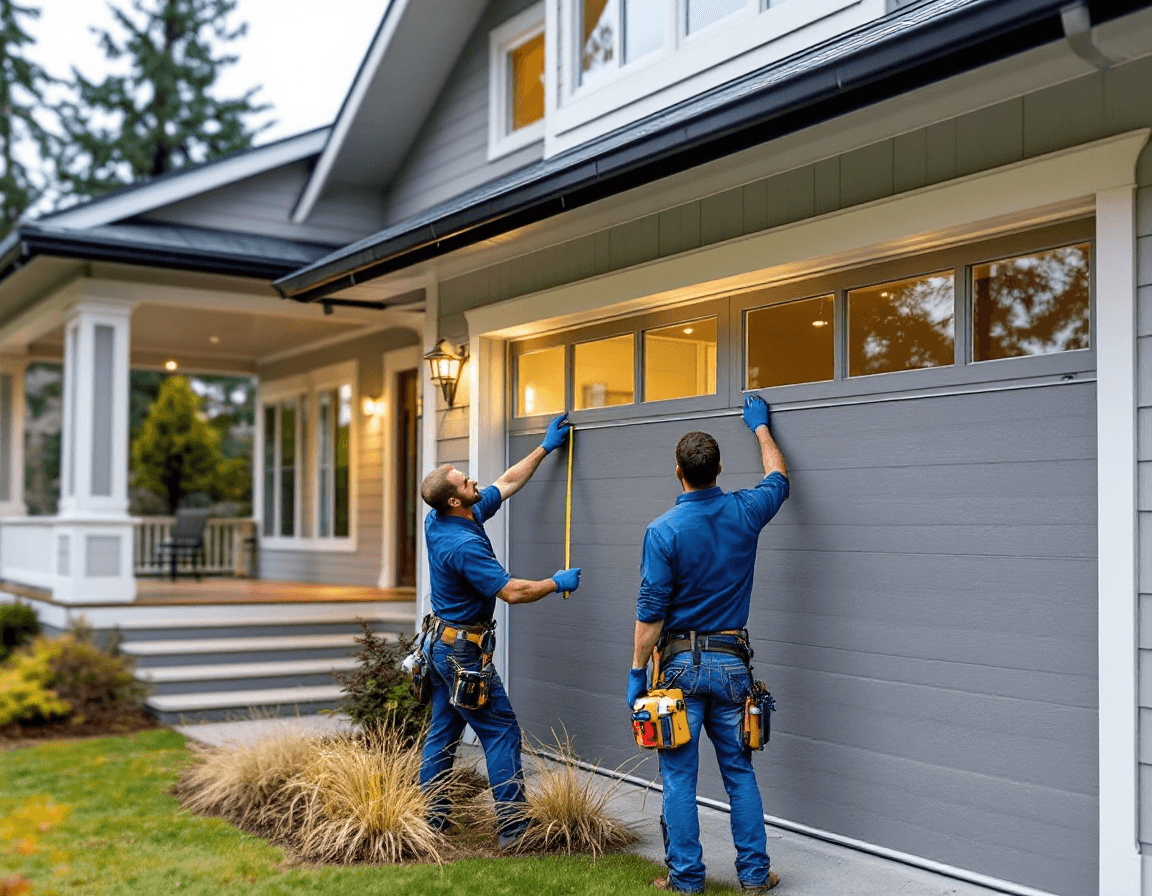
Accurate measurement is the foundation of a good installation. The door's width and height are not the same as the rough opening in your garage wall, and standard door sizes do not always match older framing. Our technicians measure the width between the jambs at several points, the height from the floor to the header, and the depth of the headroom above the opening. They also check for obstructions such as light fixtures, ductwork, or openers that might interfere with the new door's travel.
Be sure to note any changes you want before the order is placed. Upgrading from a single to a double door, or from a standard height to a taller model for a lifted truck or RV, requires new framing considerations and sometimes a different track system. Some homeowners also want to change the door's swing or add a pedestrian door, and those decisions affect the opening layout and the cost. If you plan to finish or insulate the garage, mention it early, because it may influence the door choice and the seal details.
Here is a simple list to gather before calling for an estimate:
- Measure the rough opening width at the top, middle, and bottom, and record the smallest number.
- Measure the height from the garage floor to the underside of the header, and note any slope in the slab.
- Record the headroom above the opening and the side room on each side of the door.
- Photograph the existing door, opener, and track so the technician can see how the system is mounted.
- Note whether the garage is attached to living space, since that affects insulation priorities and fire-rating preferences.
Understanding What Shapes the Price
The range of $950 to $3,800 or more reflects real differences in the door and the work involved. A basic insulated steel single door in a standard size generally sits at the lower end, while custom wood, large glass sections, aluminum framing, or double doors with high-end hardware move the price upward. The labor for removal and disposal, track modifications, and any framing corrections also plays a role. We always itemize quotes so you can see exactly where your money goes, rather than presenting a single lump number with no explanation.
Several factors commonly affect the final number. Door size and construction are the most obvious, but the opener and its compatibility with the new door can matter too. If your current opener is aging or does not meet current safety requirements, you may want to upgrade it at the same visit. Custom colors, decorative hardware, and special insulation packages add cost, and so does any structural work needed to bring an opening up to standard. Here are common line items that influence a quote:
- The door panel itself, including material, insulation level, and finish.
- Track system, bracing, and any wind-load reinforcement.
- Springs, cables, drums, and balancing, performed by licensed technicians.
- Removal and haul-away of the existing door and hardware.
- Opener inspection, safety sensor alignment, and optional opener upgrades.
- Any framing or header adjustments required for a proper fit.
Because pricing depends on so many details, the most useful estimate comes from an in-person measurement and inspection. Phone quotes can give you a ballpark, but an on-site visit lets the technician check the opening, the slab, and the framing, then recommend options that match your budget and goals.
Permits and Inspections in Mukilteo
Replacing a garage door in like-for-like fashion often involves less paperwork than a major remodel, but requirements can vary depending on the scope of work. Changing the size of an opening, altering the header, or converting part of the garage into living space may trigger permit requirements from the City of Mukilteo. Because local rules change and depend on the details of each project, check with the city's planning or building department before work begins. A licensed contractor can usually tell you whether a permit is likely and handle the application if needed.
Insulation and energy requirements can also come into play when a door is part of a larger project. Washington's state energy code may apply to certain alterations, and it is worth confirming how your specific project is classified. If you are adding a new door as part of a garage addition or remodel, the permit review will look at the overall plan rather than the door alone. Keeping your contractor involved from the start helps avoid delays later.
Inspections protect you as well as the City. A proper inspection confirms that the framing, header, and installation meet code, which matters for resale and insurance records. When we install a door that requires a permit, we coordinate the inspection timeline and make sure the work is documented. If you are unsure whether your project needs a permit, asking before you sign a contract is far less stressful than fixing a problem after the fact.
A Day on the Job: What Our Installation Crew Does
A typical replacement starts with protecting the work area and removing the old door safely. Our crew disconnects the opener, secures the door, and carefully removes the spring system using proper tools and procedures, because the tension in those springs can be dangerous. The old door is then taken down section by section, and the tracks and hardware are removed or reused depending on the new system. The garage floor and surrounding trim are protected so that the work does not leave scratches or dust on the interior.
Once the opening is clear, the technician checks the jambs, header, and floor for square and level. Any issues are corrected before the new door is set, because even a small error can cause binding or uneven wear. Tracks are installed and aligned, and the new door panels are assembled and hung on the rollers. The springs are installed and balanced at this stage by a licensed professional, and the door is tested for smooth travel in both directions before the opener is connected.
The final steps include adjusting the opener's up and down limits, testing the auto-reverse safety feature, and confirming that the photo-eye sensors are aligned and working. We also check the weather seal at the bottom and along the sides, since a good seal is one of the most effective ways to improve comfort and reduce drafts. Before we leave, we walk you through how the door operates, what routine maintenance it needs, and what to watch for in the coming months.
Caring for a New Door in a Damp Climate
A new door performs best when it is maintained on a regular schedule. In Mukilteo, that starts with keeping the bottom seal and weatherstripping clean and checking them for cracks or flattening after winter. A simple wipe-down with mild soap and water every few months removes salt residue and grime that can slowly degrade finishes. For wood or composite doors, check the paint or stain and touch up any chips promptly before moisture finds its way in.
Hardware needs attention too. Look at the rollers, hinges, and track once or twice a year for signs of wear, and tighten any loose fasteners carefully. A light coat of lubricant recommended by the manufacturer can keep moving parts quiet, but avoid spraying lubricant onto the springs or cables, since it can attract dirt and make inspection harder. If you notice the door sticking, jerking, or sitting unevenly, stop using it and schedule a service visit rather than trying to force it.
Safety checks should be part of your routine. Test the auto-reverse feature by placing a small object in the door's path, and confirm that the door reverses when it contacts the object. Make sure the photo-eye sensors are aligned and clean, and keep children and pets clear of the door during operation. If the door shows signs of spring fatigue, such as sagging or uneven movement, call a licensed technician, because spring and cable repairs should never be a do-it-yourself job.
Refreshing Curb Appeal and Planning Around a Remodel
Many homeowners in Mukilteo replace a garage door as part of a broader update, whether that means new siding, a fresh coat of paint, or a planned addition. Timing matters here. If you are building an addition or remodeling the garage, it is often smart to finalize the door selection early so the framing, electrical, and insulation work can be coordinated around it. Waiting until the end can lead to awkward compromises in size, color, or hardware that do not look as intentional as they could.
For curb appeal, small details can make a big difference. Pairing the new door with updated house numbers, a wall sconce, or a simple planting strip can make the entry feel cohesive. Consider how the door's color interacts with your roof and siding, and whether a matching or complementary entry door would tie the look together. A new door on a tired facade can transform the whole front of the home, especially when the rest of the exterior is in good condition.
If the garage is attached to living space or will become part of a remodel, ask about insulation strategy and the thermal performance of the entire garage wall, not just the door. Sealing gaps around the door frame, insulating the header where appropriate, and choosing a door with a strong R-value can all help make the space more comfortable. A well-planned replacement supports the rest of your project and avoids the expense of revisiting the same work later.
Replacing a garage door in Mukilteo is a practical decision with lasting effects on your home's appearance, comfort, and safety. Whether you need to stop repeated breakdowns, respond to storm or rust damage, or modernize a tired entrance, a careful assessment will show you the options that fit your home and budget. Call Seattle Garage Door Fix at (888) 799-3819 to schedule an in-person measurement and inspection, and let our licensed team walk you through the choices for your Mukilteo property.