
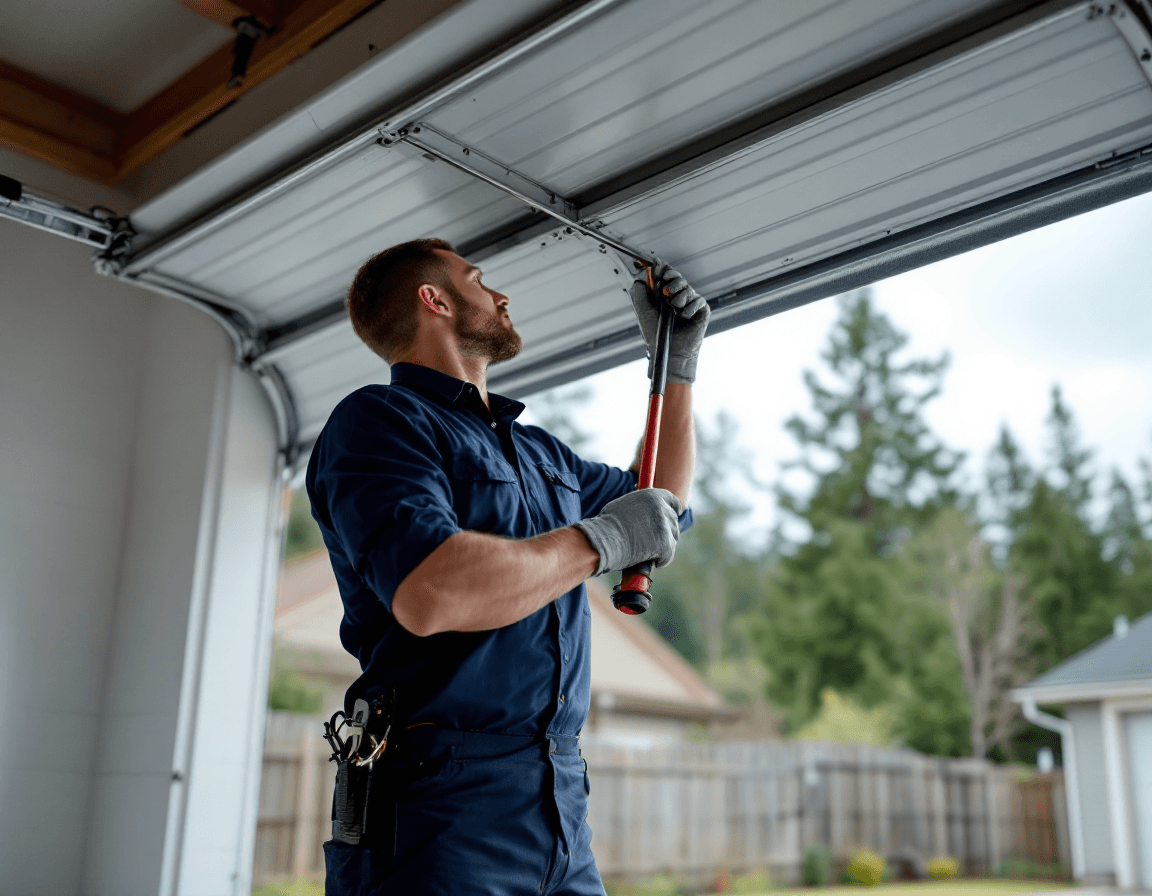
Garage door spring replacement in Woodinville, WA is one of the most common repairs we handle, and it is also one of the most urgent. The springs carry most of the weight of a typical residential door, so when one fails, the door can become impossible to lift by hand and dangerous to operate. Homes across Woodinville, from the older subdivisions near the city core to newer builds on the outskirts, use the same basic spring systems, but the way they wear depends on the local climate, the door's size, and how often the household opens it. Understanding what is happening inside that mechanism helps you decide what to do next.
Most Woodinville homeowners first notice a problem in one of two ways: a sudden, startling bang from the garage or a door that simply refuses to move. Either way, the spring has usually been losing strength for months or years before it finally gives out. Metal fatigue builds slowly, and the final failure often happens on a cold morning when the door is already under stress. This guide walks through the warning signs, the local factors that accelerate wear, the difference between spring types, and what a proper replacement involves. It also explains where the job stops being a reasonable project and becomes one for a licensed technician.
Our goal is to give you enough detail to make a confident decision, whether you are planning ahead or dealing with a door that is stuck open right now. If you are in the 98072 or 98077 ZIP codes, or anywhere else in the greater Woodinville area, the sections below are written with your conditions in mind.
Reading the Warning Lights Before the Spring Breaks
Springs rarely fail without giving some indication first, and recognizing those early signals can save you from a stranded car and a damaged door. A door that has begun to weaken usually shows a pattern rather than a single symptom. Pay attention to how the door behaves over several days, not just during one open-and-close cycle. Small changes add up quickly when they appear together.
- A loud bang from the garage, often sounding like a gunshot, which signals a spring has snapped
- A door that won't lift, or that feels extremely heavy when you lift it by the handle
- A visible gap or separation in the torsion spring coil above the door
- A door that opens a few inches and then stops, or reverses unexpectedly
- An opener that strains, hums, or clicks while the door barely moves
- Cables that have gone slack, jumped off their drums, or hang unevenly after a break
- A door that slams down too fast or closes crooked, leaning to one side
Any one of these signs deserves attention, but a combination is more telling. An opener that runs normally on a balanced door will work hard to lift a door with a weak spring, and that extra load can burn out the opener's motor or gears. If the door has started to drift or stop partway, the spring has likely lost enough tension that the opener's force limits are being reached. The safest response is to stop operating the door and call for service rather than continue to test it.
Why Western Washington Weather Shortens Spring Life
The Pacific Northwest climate is gentle compared with many parts of the country, but it has its own effect on garage door hardware. Woodinville winters bring long stretches of damp air, frequent rain, and occasional hard freezes that cause metal to contract. Springs are made of steel, and moisture combined with temperature swings can accelerate surface corrosion and weaken the metal over time. A spring that has rusted along its coils may lose tension unevenly and fail sooner than one kept in a drier environment.
Cold mornings create a particular risk. Metal stiffens when it gets cold, and a spring that has been slowly losing strength may hold for months in mild weather and then give way during the first hard frost of the season. Many technicians see a noticeable cluster of spring failures during the first cold snap of late fall and again in early spring when moisture is at its peak. Homes with attached garages can be a bit warmer, but garages that share walls with unheated space or that open directly to the outdoors experience the full range of temperature changes.
Humidity also affects the door's other components. Rollers, hinges, and bearings can swell or pick up grit, which forces the spring to work harder to move the door. That added friction is not the primary cause of a spring failure, but it does increase the load on the spring. Lubricating moving parts once or twice a year, using a silicone or lithium-based product rather than heavy grease, helps reduce this strain and gives your springs a better chance of reaching their rated life.
Torsion or Extension: Matching the Spring to the Door
Residential garage doors in this area use one of two main spring systems, and knowing which you have will shape your repair. Torsion springs are mounted on a steel shaft above the door opening. They twist to store energy and are generally the more common choice on modern doors because they are quieter, more balanced, and safer when they fail. Torsion systems are usually easy to identify by the single long shaft running across the header, with cones on each end and cables wrapping around drums.
Extension springs run along the horizontal tracks on either side of the door, stretching as the door lowers and contracting as it rises. Many older Woodinville homes still have extension systems, especially on doors installed before torsion designs became standard. Extension springs are typically fitted with a safety cable running through the center of each coil, which is designed to contain the spring if it breaks. Even so, a broken extension spring can still release energy suddenly, so it is never a job for a homeowner to handle alone.
Choosing the right replacement depends on the door's weight, height, track radius, and the spring system it was designed for. A replacement that is slightly too strong or too weak can cause the door to balance poorly, strain the opener, or wear out other parts faster. Technicians measure the door, check the cable drums, and confirm the spring's wire size and inside diameter before ordering parts. A careful match is one of the reasons a professional replacement costs more than a quick guess from a parts shelf, and it is also why the result lasts.
What a Broken Spring Does to the Rest of the System
A snapped spring is rarely an isolated problem. When a torsion spring breaks, the tension that held the door's weight suddenly disappears, and the cables that were wound around the drums can slacken, slip, or unwind unevenly. In some cases the cable drum itself cracks or the cable frays where it was under strain. Technicians often find that a single broken spring has also damaged a bearing plate, a lift cable, or a section of track that was bent when the door dropped.
Extension spring failures can produce a different pattern of damage. A door held up by extension springs may tilt or sag at one corner when a spring lets go, and the rollers can jump out of the track on that side. The uneven load can bend the track or pull the hinges out of alignment. Because these components work together, replacing only the spring without checking the cables, drums, rollers, and track can leave the door unbalanced and ready to fail again.
This is one reason a thorough repair includes a full inspection. After the broken spring is removed, a technician checks the cables for fraying, kinks, or cracks in the swaged ends, and inspects the drums for wear or damage. The bearings, brackets, and center bearing plate are examined as well. When cables have come loose after a break, they must be reseated carefully on the drum and tensioned to match the new spring. Doing this incorrectly can cause the door to fall or jam, which is another reason to leave this work to trained hands.
The Case for High-Cycle Springs in Busy Households
Standard builder-grade springs are designed for a typical number of cycles, meaning one full open and close. Households that use the garage as their main entrance, that run several vehicles through it each day, or that have teenagers coming and going on varied schedules can wear through standard springs faster than expected. Many homeowners are surprised to learn that a spring's rated life is a planning figure rather than a guarantee, and that frequent use is one of the most common reasons a spring fails early.
High-cycle springs are manufactured from heavier-gauge or specially treated wire and are engineered to handle a substantially higher number of cycles than standard options. They cost more upfront, but for busy families they often make sense because they reduce how often the spring has to be replaced. Your technician can recommend the appropriate option after reviewing how you use the door, the door's weight, and the size of the opening. Not every home needs a high-cycle spring, but for many Woodinville households with active schedules, the added durability is worth discussing.
Choosing a high-cycle spring does not change the importance of correct installation and balancing. A premium spring that is installed on a door that is out of balance will still wear quickly, so the upgrade works best when paired with a careful setup. We recommend asking whether the cables, drums, and bearings are in good condition before the new spring is installed. That way, the spring you pay for has a healthy system to support it.
Setting the Balance So the Door Lifts Evenly
Balance is the quiet hero of a well-functioning garage door. A balanced door stays put when you let go of it halfway up, rises smoothly without jerking, and closes without slamming. An unbalanced door places extra strain on the opener, wears out the rollers and tracks, and can cause the cables to fray. After a spring replacement, the door must be balanced so that the new tension matches the door's actual weight.
Technicians check balance by disconnecting the opener and lifting the door manually, then observing whether it stays in position at different heights. If the door drifts up or down, the spring tension needs adjustment. Torsion springs are adjusted by winding them in measured increments, and this work requires the correct winding bars and a clear understanding of how much tension the spring is carrying. Extension springs are adjusted by changing their position or the lift cables, depending on the system.
Precise balancing also protects your opener. When the door is balanced, the opener only needs to guide the door rather than fight its weight. That means less wear on the drive, a quieter operation, and a lower chance of an opener failure happening in the same season as the spring. Once the new spring is installed and balanced, the technician should test the safety reversal system, confirm the door stops and reverses correctly when it meets an obstruction, and make sure the auto-reverse sensors are aligned.
Understanding What Shapes the $180–$450 Range
Most spring replacements we perform fall within a price range of $180 to $450, but the final figure depends on several factors. The type of spring, whether it is standard or high-cycle, has a direct effect on parts cost. The size and weight of the door matter as well, since heavier doors need stronger springs. A two-car door with a wide opening will generally require a more substantial spring setup than a single-car door.
Other factors can push the job toward the middle or upper end of the range. If the cables, drums, or bearings are damaged, they will need to be replaced along with the spring. Doors that have been left partially open for an extended period sometimes need track adjustments or roller replacements to restore smooth operation. Older homes may have custom hardware that requires specialty parts. Accessibility can also play a role, since a high ceiling or a tight garage may take more time to work in safely.
We provide a clear explanation of the work before any parts are installed, so you know what is included and what might be recommended. A quote should cover the spring, labor, balancing, and a check of the cables and related hardware. If an additional issue is discovered during the repair, a responsible technician explains the situation and what it would cost to address it, and does not proceed without your approval. Keeping communication open protects both you and the quality of the finished work.
Hillside Driveways and Older Woodinville Homes
Woodinville's geography adds some variety to garage door work. Homes on the slopes of Hollywood Hill and in neighborhoods with sloped driveways sometimes have doors that sit at unusual angles relative to the floor, or garages built into hillsides with limited headroom. These conditions can change how a door is loaded and how cables run, which is why a technician should look at the entire door assembly rather than only the spring. A door that appears level from the driveway may still have an uneven load that becomes noticeable after a spring fails.
Homes near Cottage Lake and in the older parts of the community may feature earlier garage door designs, sometimes with extension springs, heavier wooden doors, or custom track layouts. Older hardware can be a challenge to match, and sometimes the best path is a carefully chosen modern replacement spring that fits the existing system. A technician familiar with older residential doors will know which parts are still available and which adjustments are needed to keep the door safe. Taking time with an older system protects both the door and the people who use it.
Properties in the Woodinville wine country corridor can have a mix of home styles, from ranch-style houses to larger custom builds with multi-door garages. Multi-car doors often carry more weight and place greater demands on paired springs, which must be matched precisely. If one side of a double door fails, the other side is usually under additional strain and should be inspected at the same time. Replacing both springs together is often more efficient than returning for a second repair a few months later.
Safety Boundaries Every Homeowner Should Respect
Garage door springs store a large amount of energy, and that energy can cause serious injury if it is released unexpectedly. The force inside a torsion or extension spring is significant, and a spring breaking during adjustment or removal can cause cuts, broken bones, or worse. For that reason, spring and cable work should always be performed by a licensed, bonded, and insured professional who has the training and tools to do it safely.
There are several things a homeowner should never attempt. Do not try to wind, unwind, or adjust a torsion spring without the proper winding bars and training. Do not remove or loosen spring hardware while the door is under tension. Do not climb a ladder to work on a spring while the door is partially open or the opener is still connected. If a door has fallen or a spring has broken, keep everyone away from the door, disconnect the opener power if it is safe to do so, and call for service.
Safe homeowner tasks are limited to simple checks and routine care. You can visually inspect the springs for gaps or rust, look at the cables for fraying, lubricate hinges and rollers, and test the auto-reverse feature by placing a flat object in the door's path. If any of these checks reveal a problem, the next step is a professional visit. Treating the spring as a component that requires expert handling will keep your household safe and your door working for years.
Scheduling Service Across Woodinville and the 98072 and 98077 Areas
Our technicians serve Woodinville and surrounding communities across the greater Seattle and Western Washington region, including the 98072 and 98077 ZIP codes. Because spring failures often happen without warning, we recommend scheduling service as soon as you notice symptoms rather than waiting for the door to fail completely. A door stuck halfway open can leave a garage exposed and a car vulnerable, and a door that has dropped can cause further damage if it is forced.
When you call, have a few details ready. Note the approximate width and height of the door, whether it is a single or double unit, and what you observed before the problem began. Mention whether you heard a loud bang, whether the opener is still running, and whether you can see a gap in the spring coil. This information helps the technician arrive prepared with the right parts, which can shorten the visit and reduce the number of trips required.
If you are planning ahead rather than responding to an emergency, consider scheduling a spring inspection as part of your seasonal maintenance, especially before the wet winter months. A proactive visit can identify a weakened spring before it fails and gives you time to compare options, including high-cycle upgrades, without pressure. Whether your garage door is due for a routine check or has already stopped working, a licensed technician can explain the options clearly and help you restore safe, balanced operation. For prompt help with garage door spring replacement in Woodinville, call Seattle Garage Door Fix at (888) 799-3819 and let us take a careful look at your door today.