
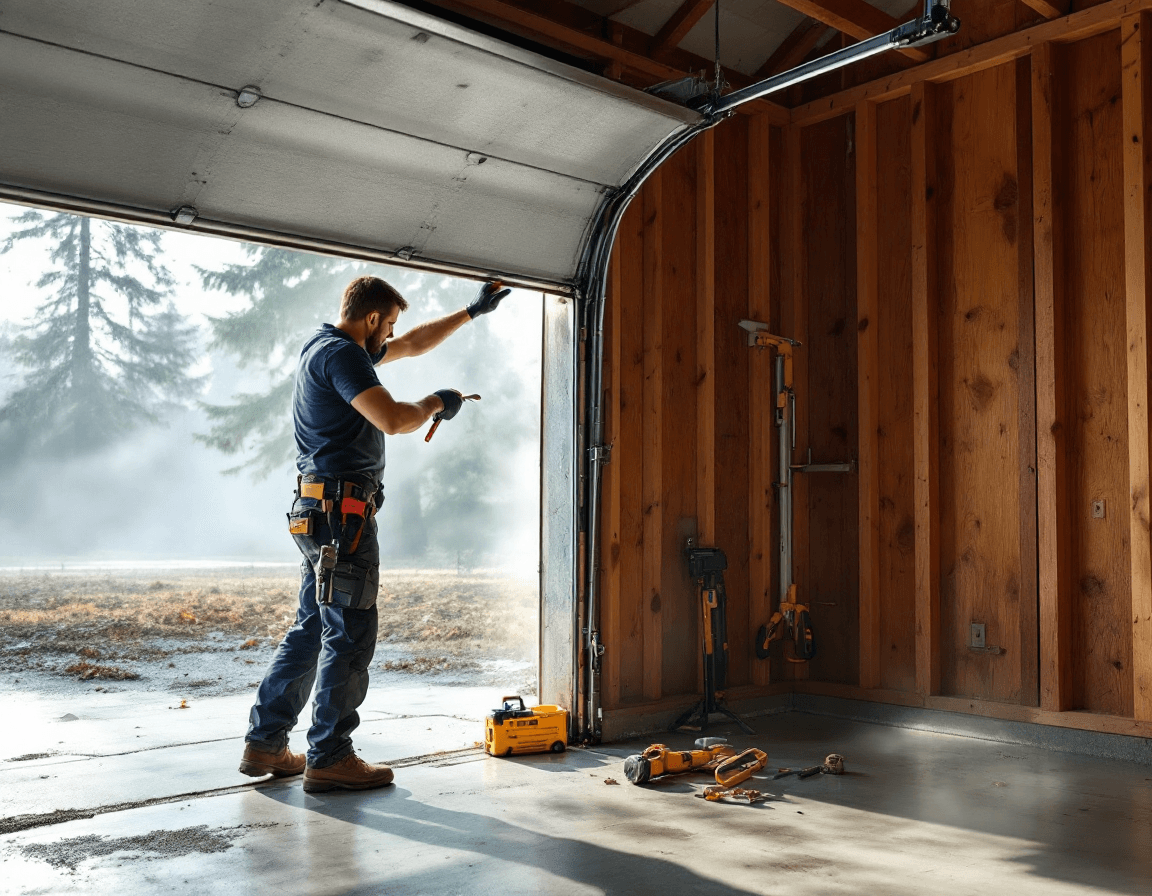
Off-track garage door repair in Shoreline, WA is one of the most common calls we take from homeowners between Richmond Beach and North City, and it is also one of the most misunderstood. A door that has jumped its track can look like a major failure, yet many of these problems are caused by a roller that slipped out of its channel or a track section that shifted by a fraction of an inch. The good news is that most off-track repairs are straightforward when they are caught early and handled by a technician who knows how a garage door is meant to sit. Our crews serve homes across the 98133, 98155, and 98177 ZIP codes, and we see the same patterns repeat across the city's mix of older ranch homes, split-levels, and newer infill houses.
Shoreline's housing stock shapes how these problems show up. Many garages here were built decades ago, often with single-car openings, older track assemblies, and door panels that have spent years absorbing rain, humidity, and the occasional windstorm rolling in off the Sound. Over time, small misalignments accumulate until one wet January morning the door simply refuses to roll. This guide explains what an off-track door looks like, why it happens in our climate, what a proper realignment involves, and what you can reasonably expect to pay. It also covers the safety points that matter most, because a door that has left its track can be dangerous to handle without the right equipment.
Whether your door came off in the middle of a rainstorm or has been crooked for a few weeks, the sooner it is inspected, the more likely the fix will be limited to realigning and re-seating components rather than replacing them. Most off-track repairs fall in a range of about $125 to $400, depending on what the inspection uncovers. The sections below walk through the details so you know what to look for and what questions to ask before a technician begins work.
What a Derailed Door Looks Like from the Driveway
Most homeowners first notice an off-track door in one of a few ways. The door may sit visibly lower on one side, with a noticeable gap between the bottom seal and the floor, or the top section may look tilted as if it were leaning slightly out of plumb. Some doors make a grinding or scraping sound before stopping, while others simply stop partway up and refuse to move in either direction. Any of these signs suggests that at least one set of rollers is no longer riding inside the track channel.
It helps to look at the door from the inside of the garage with the lights on. Check whether the vertical track on each side is parallel to the door edge, and whether the gap between the door panel and the track looks even from top to bottom. A gap that is wider at the top than the bottom, or the reverse, often means the track has shifted or one side of the door has dropped. Pay attention to the horizontal track overhead as well, since a bent section there can cause the door to wander sideways even when the vertical tracks look fine.
Do not try to force the door back into place by pushing on the panel or pulling hard on the bottom edge. A door that is partly off track can shift suddenly, and the weight of an uncounterbalanced panel is considerable. If the door will not move at all, leave it where it is, keep people and pets clear of the opening, and call for service. Forcing it can bend the track further, damage the rollers, or stress the springs and cables in ways that turn a simple realignment into a larger repair.
Why Shoreline Winters Pull Doors Out of Line
Western Washington winters are long, wet, and rarely dramatic, which is precisely why their effects can sneak up on a garage door. Steady rain, damp mornings, and the constant humidity of a Puget Sound winter cause wood panels to swell, and steel panels can flex as temperatures rise and fall. When a door that was already sitting slightly out of square is asked to roll through a swollen opening, it can catch on the track and nudge a roller partway out of its channel. Once a single roller is out, the weight of the door transfers to the rest of the set, and the problem tends to grow with every cycle.
Wind is the other factor that matters here. Shoreline sits in an exposed corridor where strong gusts can push against a large door panel, especially on the wide double-car doors that are common on newer homes. A gust that hits a door while it is partly open or closing can deflect the panel enough to pop rollers loose or push a track section out of alignment. Homeowners often do not connect a windy night with a door that is suddenly crooked the next morning, but the mechanical stress is real, and it is one of the reasons we recommend a quick inspection after any major storm.
Seasonal temperature swings also loosen hardware over time. Bolts that were snug in August can back off slightly after months of expansion and contraction, allowing track brackets to drift. The result is often a door that works fine for most of the year and then begins to bind during the wet months. Checking the track bolts once or twice a year, and having a technician look at alignment before the rainy season peaks, can prevent many of these surprises.
Coastal Air, Salt Spray, and Rust Near Richmond Beach
Homes closer to the water in Richmond Beach and the bluffs above it live with a different set of conditions. Salt-laden air, though much milder than on the open coast, still accelerates corrosion on exposed steel. Galvanized track and steel hinges can develop surface rust that roughens the inside of the track channel, causing rollers to stick and grind. Over time, rust can also weaken the mounting points where the track attaches to the wall or ceiling, which makes the track more likely to shift under load.
When a technician inspects a door in this part of Shoreline, we look closely at the track channels for rough spots, flaking metal, and any section where the finish has worn through. Rust that is caught early can often be cleaned, treated, and protected, and the track can be realigned without replacement. Rust that has eaten into the metal, however, may mean a section needs to be swapped out, since a compromised track will not hold alignment for long. We also check the rollers themselves, because a worn or pitted roller can ride unevenly and cause the door to drift out of its path.
Maintenance makes a noticeable difference in coastal-adjacent neighborhoods. A light lubricant applied to the rollers and hinges, rather than to the track surface itself, helps reduce friction without attracting grit. Wiping down the track after heavy wind-driven rain removes salt residue that would otherwise sit in the channel for weeks. These are small habits, but they extend the life of the hardware and reduce the chance that a routine winter will turn into an off-track call.
Reading the Track: Bent, Dented, and Separated Sections
The track is the backbone of the entire system, and when it is damaged, the door cannot stay aligned no matter how many times it is reset. Bent track is often caused by a vehicle backing into the door, a ladder or bicycle striking the lower channel, or a moving box that catches the edge during a delivery. A bend may be subtle enough that the door appears to move normally at a glance, but close inspection shows a gap that narrows and widens as the door travels. Dents can have a similar effect by creating a pinch point that snags the rollers.
Separated track sections are a more serious concern. Where two sections of track join, the connecting brackets and bolts hold the channel in a continuous line. If those joints loosen, pull apart, or are bent at the seam, the rollers can drop into the gap and pop out of the track entirely. A technician checks each joint, measures the spacing, and looks for signs that the track has been pried or stressed. Many separated joints can be re-secured and straightened, but badly deformed sections are usually replaced, since attempting to hammer a seriously bent channel back into shape rarely holds.
Track repair is usually the most time-consuming part of an off-track service call, and it is the step where experience matters most. Straightening a channel requires the right tools and a feel for how much pressure the metal can take before it kinks further. A technician also needs to confirm that the track is level, plumb, and square to the opening, because a track that is perfectly straight but tilted will still cause the door to bind. Getting these measurements right is what keeps the door running smoothly after the visit.
Rollers That Have Popped Out, and Why They Do
Rollers are small, but they carry a surprising share of the door's weight as it moves along the track. Each roller rides inside the channel, usually on a steel or nylon wheel, and is attached to a hinge that connects one panel to the next. When a roller pops out, it is typically because the track has been bent just enough to open a gap, because the roller stem has worn or cracked, or because the door was forced past a binding point. Once a roller is out, the adjacent rollers take on more load and can follow it out quickly.
Nylon rollers, common on many older doors in Shoreline, can become brittle or flattened over time, especially when they have been exposed to temperature extremes or to years of heavy use. Steel rollers can seize if they have not been lubricated, causing the wheel to stop turning and drag along the track. Either problem can cause the door to jump or skew as it moves. A technician will check each roller for flat spots, cracks, play in the stem, and smooth rotation before deciding whether to re-seat it or replace it.
Re-seating a popped roller is one of the simplest repairs in the trade, but it should only be done with the door fully stopped and secured. Replacing worn rollers is also a routine task that often costs less than people expect, and it is one of the best ways to improve how a door rides. When rollers are replaced, it is wise to inspect the hinges they attach to, since a worn hinge can allow the roller to shift sideways and pop out again. Upgrading to sealed or higher-quality rollers is an option that many homeowners find worthwhile, particularly in damp areas.
Hillside Driveways, Tight Garages, and Off-Track Risk
Shoreline has a good deal of topography, and that affects garage doors in ways that flat-lot homeowners may not expect. Homes in Innis Arden and on the sloping streets that climb toward Echo Lake often sit on driveways that drop or rise noticeably toward the garage. Where the garage floor is not level with the approach, the door can see uneven loads, and the bottom panel may ride slightly askew as it opens. Over time, that imbalance can push rollers toward the edge of the track and make off-track events more likely.
Older garages in North City and throughout the city's mid-century neighborhoods sometimes present tight clearances. The space between the top of the door and the ceiling, known as headroom, may be limited, and the side room needed for the track may be narrow. When the track has been installed with minimal clearance, even a small bend or a shifted bracket can bring the rollers into contact with the wall or the ceiling joists. Technicians pay close attention to these conditions because the fix often involves adjusting the track geometry rather than simply reseating rollers.
Homes with converted or expanded garages also deserve a careful look. A door that was installed for one configuration may have been adapted for a longer or wider space, and the track may not be fully supported in its new arrangement. If you have made any changes to your garage, or if the door has started to drift only after a remodel, mention it when you call. That context helps the technician anticipate the cause and determine whether the problem is mechanical wear or a structural mismatch.
When a Vehicle Impact Changes Everything
A car or truck that clips a garage door is one of the most common causes of sudden off-track failure, and it is often accompanied by the most visible damage. A driver who misjudges the opening, a reversing vehicle that drifts sideways, or a delivery truck that scrapes the frame can bend the track, dislodge rollers, and even crack the lower panel. Because the impact may happen quickly and feel minor from inside the car, homeowners sometimes do not realize how much damage has occurred until the door refuses to move.
After an impact, the first priority is safety. Keep everyone away from the door, avoid using the opener until the door has been inspected, and do not attempt to lift a damaged panel by hand. Take photos of the track, the panel, and the surrounding wall for your records, especially if you plan to contact an insurance adjuster. If the impact also damaged the vehicle, document that as well, since both sets of photos help clarify what happened.
A technician evaluating a vehicle-impact door will check the entire assembly, not just the track that is visibly bent. Impacts can transfer force to the springs, cables, and drum, and a seemingly minor misalignment may hide a compromised spring or cable. Those components carry significant tension, and any work on them should be left to a licensed professional. If the inspection reveals spring or cable damage, the technician will explain what is needed and provide a separate quote, since those repairs are priced differently from a standard realignment.
What Happens During a Typical Off-Track Visit
An off-track service call usually begins with a conversation about what happened, when the door first stopped working, and whether any noises or sudden movements preceded the problem. The technician then inspects the door from both inside and outside the garage, checking the tracks, rollers, hinges, panel alignment, and mounting brackets. This inspection is not a formality, because the cause of the derailment determines the repair, and a quick reseat without understanding the root cause often leads to a repeat call.
Once the cause is identified, the technician will typically follow a sequence like the one below:
- Confirm the opener is disconnected and the door is secured before any hands-on work begins.
- Inspect the spring and cable system for visible damage, and stop immediately if tension or fraying is found.
- Measure the track for level, plumb, and square, and note any bends, dents, or separated joints.
- Re-seat or replace rollers, and check hinges for wear that may have contributed to the derailment.
- Straighten or replace damaged track sections, re-tighten brackets, and verify smooth travel through the full range of motion.
- Test the door several times in both directions and confirm the auto-reverse safety feature responds correctly.
Once the repair is complete, the technician should walk you through what was done, what was found, and what, if anything, you should watch for in the coming weeks. A good visit ends with a door that travels smoothly, sits level in the opening, and closes without gaps. If the technician recommends additional work, such as replacing a worn spring or cable, that recommendation should come with a clear explanation and a separate estimate.
Pricing Off-Track Repairs Without the Guesswork
Most off-track repairs we perform fall in a range of about $125 to $400. That spread reflects the reality that a door popped out by a single roller is a very different job from a door with a bent track, a separated joint, and a damaged hinge. The final price depends on how many rollers need attention, how much track has to be straightened or replaced, and whether the inspection reveals any additional issues that need to be addressed during the same visit.
Several factors tend to push a repair toward the higher end of the range. The first is the extent of track damage, since replacing a full section costs more than straightening a small bend. The second is the number of rollers and hinges involved, particularly on wide double-car doors. The third is accessibility, because doors in tight garages or with limited headroom can take longer to work on safely. Each of these points is something the technician will explain before any work begins, so you can make an informed decision.
Spring and cable work is handled separately and is not included in the standard off-track range. If the inspection shows a broken or severely worn spring, or a frayed cable, the repair will be quoted on its own, because those components require specialized tools and carry significant tension. We always recommend a licensed professional for this work, since attempting it without training can cause serious injury. Asking for an itemized explanation of the quote is a reasonable step, and a trustworthy technician should be glad to provide one.
Safe Steps You Can Take Before the Technician Arrives
While you wait for service, there are a few practical steps that keep you and your household safe. Keep the area around the door clear of vehicles, bicycles, and stored items, and keep children and pets well away from the opening. If the opener is still connected, consider disconnecting it from power or using the manual release only if you are certain the door is not in danger of falling, since a crooked door can drop suddenly when it is released. When in doubt, leave the door where it is and simply avoid using it.
It is also useful to gather information that will speed up the diagnosis. Note the date and time the door first failed, the weather that day, and any sounds you heard before it stopped. If a vehicle or object struck the door, take photos and make a brief written note. If you have a recent receipt or service record for the opener or door, have it handy, because the model and installation details can help the technician anticipate what parts may be needed.
Finally, resist the temptation to tighten or loosen track brackets on your own. Those bolts hold the track under tension and alignment, and changing them without the right tools can make the problem worse or create new hazards. Leave the adjustments to a licensed technician who can measure, verify, and test the door after every change. A short wait is far safer than a repair that starts out as a simple realignment and turns into a more serious incident.
Keeping the Door Tracked Through the Next Rainy Season
Once a door has been realigned, a few simple habits can help it stay on track through the next wet season. Test the door monthly by watching it open and close fully, listening for scraping, and checking that the bottom seal meets the floor evenly. Clean the tracks periodically to remove grit, leaves, and salt residue, and apply a light lubricant to the rollers and hinges as recommended by the manufacturer. These steps take only a few minutes but can catch small problems before they become derailments.
Schedule an inspection at least once a year, ideally before the heaviest rain arrives in late fall. A technician can check track bolts, roller condition, hinge wear, and the balance of the door, and can recommend adjustments that prevent the kind of drift that leads to off-track events. After a major windstorm or any vehicle impact, arrange an inspection even if the door still appears to work, since hidden misalignment can develop quietly and show up weeks later.
If your door has come off track more than once, it is worth asking whether an underlying cause has not yet been addressed. Recurring derailments can point to worn rollers, a damaged track section that was only partially corrected, or a balance problem that needs professional attention. Solving the root cause is almost always less expensive in the long run than repeated emergency calls, and it gives you a door that operates quietly and reliably through Shoreline's wet winters.
If your garage door has jumped its track, rollers have popped out, or the door is jammed or crooked in the Shoreline area, call Seattle Garage Door Fix at (888) 799-3819. Our licensed, bonded, and insured technicians serve Richmond Beach, Echo Lake, North City, and surrounding neighborhoods, and we will inspect the door, explain what we find, and give you a clear quote before any work begins. Please do not attempt to force the door or handle spring or cable components yourself. Call today, and let us get your door rolling safely again.