
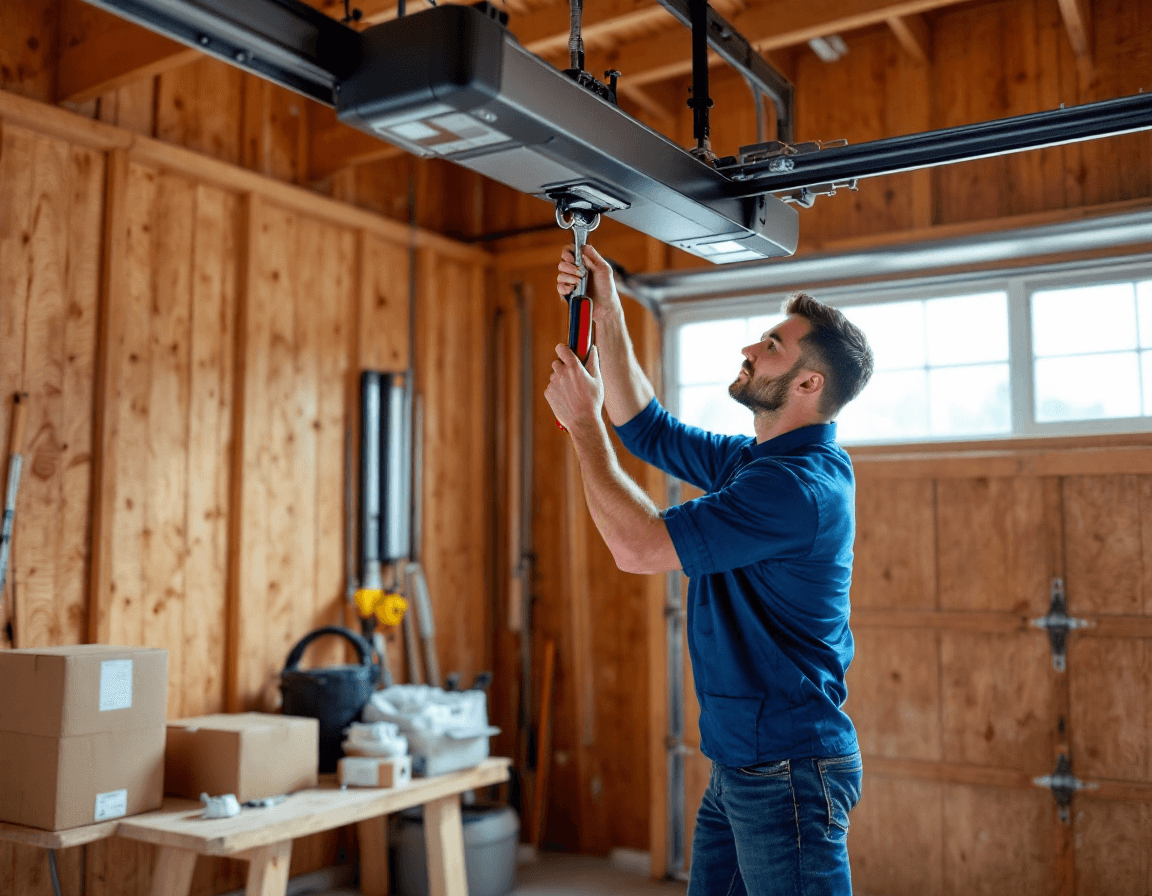
Garage Door Opener Installation & Replacement in Shoreline, WA is one of the most practical upgrades a homeowner can make, and it often delivers more daily value than people expect. Many Shoreline households still run an opener that was installed a decade or more ago, and by then the motor may be grinding, the travel may be jerky, or the remote may have stopped responding after a rainy week. A replacement unit can bring quieter operation, modern safety sensors, and features like smart phone control and battery backup that older models simply never had. This page explains when replacement makes more sense than repair, how the main drive types compare, and what to expect from installation in our service area.
Shoreline sits in north King County, and its neighborhoods share a common set of conditions that affect garage hardware. Winters are long and damp, summers are mild but occasionally dry, and wind-driven rain can push moisture into any gap in a garage door seal. Homes in the Richmond Beach area are closer to Puget Sound and pick up more salt air, while homes around Echo Lake and North City tend to see steady humidity through the cooler months. Those differences matter when you choose an opener, because the electronics, wiring, and mounting hardware all respond to moisture and temperature swings over time. A well-chosen unit installed correctly will hold up far better than a mismatched one bolted onto a door that was never balanced properly.
Our technicians serve homeowners across dozens of communities in Western Washington, including the 98133, 98155, and 98177 ZIP codes that cover much of Shoreline. Whether you live in a 1960s rambler with a single-car garage or a newer two-car home with a taller door, the replacement process follows the same logic: confirm the door is safe and balanced, select an opener that fits the door's weight and your usage, and install it with clean wiring and correctly set limits. If you are ready to talk through options, call (888) 799-3819 and a team member can help you narrow the choices before anyone visits your home.
Recognizing When an Old Opener Has Reached the End
An opener rarely fails all at once, and most Shoreline homeowners notice a pattern of small problems before a complete breakdown. You might hear a harsh clunk when the door starts moving, notice the door pausing halfway up, or find that the unit reverses for no obvious reason. Some openers stop responding to the wall button during wet weather, which often points to a corroded terminal, a failing logic board, or a radio receiver that has drifted out of tune. These symptoms are frustrating, but they are also useful clues about whether the unit deserves another repair or a full replacement.
Repairs make sense when the motor is solid and only a single part, such as a limit switch or a worn sensor, is faulty. Replacement makes more sense when several components are failing at once, when the motor is noisy or overheating, or when parts are no longer available for the model you own. A useful rule is to compare the cost of the repair against a new installed unit in the $275 to $650 range, then factor in the age of the existing opener. If the old unit is more than ten years old and already needs work, a new one usually offers better value because you also gain modern safety features and a warranty on the new hardware.
Keep an eye on the safety reversal system as well. Modern openers rely on photo-eye sensors near the floor and force-sensing logic that stops or reverses the door when it meets resistance. If a sensor is misaligned or the unit fails to reverse reliably, that is a safety concern regardless of how well the rest of the system works. Replacing an aging opener is a good moment to verify that the entire safety chain is functioning as designed.
Comparing Belt-Drive, Chain-Drive, and Wall-Mount Options
Choosing the right drive style is the most important decision in an opener replacement, and each design suits different homes. Chain-drive openers are the traditional workhorse. They are typically the most affordable and handle heavy doors well, but they operate with more noise because the metal chain travels over a metal track. For a garage that shares a wall with a bedroom or a home office, that noise can become a daily annoyance.
Belt-drive openers use a reinforced rubber belt instead of a chain, and they run noticeably quieter. Many Shoreline homeowners choose belt-drive for attached garages in older neighborhoods where living spaces sit close to the door, and the smoother motion also tends to feel gentler on the door hardware. Belt-drive units generally cost more than chain-drive versions, but the difference is often worth it for a family that uses the door several times a day. Wall-mount openers mount the motor on the wall beside the door rather than on the ceiling, which can free up overhead space in garages used for storage, bikes, or a workbench.
A practical way to decide is to look at three things: how loud the existing opener is, how much overhead clearance you have, and how heavy your door is. Tall or insulated doors often need a stronger motor, and a technician can confirm the right horsepower rating during a site visit. Ceiling space is another factor, because some homes with sloped or low ceilings are better served by a wall-mount design.
- Chain-drive: lower purchase price, sturdy for heavy doors, louder during operation.
- Belt-drive: quieter and smoother, a strong choice for attached garages and frequent use.
- Wall-mount: saves ceiling space, useful for crowded garages and low-clearance installations.
Rolling-Code Security and Why Older Units Are a Liability
Security is one of the strongest reasons to replace an older opener, and it is often overlooked until someone raises it. Early openers used fixed-code transmitters, meaning the signal from the remote was the same every time you pressed the button. A device that captured that signal could replay it later and open the door without permission. Rolling-code technology solves this by changing the transmitted code each time the remote is used, so a recorded signal is useless for another attempt.
If your opener is more than about fifteen years old, there is a good chance it lacks rolling-code protection or uses an outdated version of it. Many Shoreline homeowners discover this only after a neighbor mentions a break-in in a different part of town, or after reading about vehicle and garage remote vulnerabilities. Replacing the opener is the most direct way to bring the system up to current standards. It also gives you a chance to review which remotes, keypads, and key fobs still have access, and to remove any old transmitters you no longer use.
Security also depends on how the rest of the system is configured. Keep the keypad code private, avoid leaving remotes in a car parked on the street, and consider disabling any wall button access you do not need. A technician can walk you through these settings after installation so the new unit is protecting your home rather than just opening it.
Wi-Fi and myQ Control Without the Headaches
Smart features are one of the most popular reasons Shoreline homeowners upgrade. A Wi-Fi-enabled opener lets you check whether the door is closed from a phone, open or close it remotely, and receive alerts if it has been left open longer than you expected. Systems compatible with myQ control, for example, allow family members to share access without handing over a physical remote. These conveniences are especially appealing for households where kids come and go on different schedules or where a caregiver needs occasional access.
Wi-Fi reliability is the detail that makes or breaks a smart opener in practice. Garages are often at the far edge of a home's network, and a weak signal can cause delayed commands or dropped connections. Before installation, it is worth checking the signal strength in the garage with a phone, and a range extender or mesh node may be needed in larger or detached-feeling spaces. Our technicians test the connection during installation so the unit is reliable when you actually need it.
Smart features also bring a consideration about updates and account security. Use a strong, unique password for your app account, enable two-factor authentication if the platform offers it, and remove access for former tenants or household members. A smart opener is only as secure as the account that controls it, so treat the app login with the same care you give your home's front door key.
Battery Backup for Winter Windstorm Outages
Power outages in Shoreline are most likely during the stormy months, when wind pushes through the trees along the bluffs and near the lake and into overhead lines. A garage door that cannot open during an outage can become a real problem, especially if you need to leave the house, bring a vehicle out for an emergency, or get back in after dark. Battery backup kits are designed to keep the opener working for a limited number of cycles when the grid goes down, and they are a valuable addition for households that rely on the garage as a main entry.
Battery backup options vary by manufacturer and model, and the number of door cycles a battery can provide depends on door weight, opener type, and battery capacity. Some units include a backup battery as a standard feature, while others offer it as an add-on. The battery also needs periodic attention, because it can weaken over time, particularly in damp garages where temperature and humidity change with the seasons. Plan to test the backup function every few months and replace the battery according to the manufacturer's guidance.
Battery backup is not a substitute for manual operation, and every homeowner should know how to use the emergency release cord. That cord disconnects the door from the opener so you can lift it by hand during an outage. Pull it only when the door is fully closed, and be aware that a door with a worn or damaged spring system can drop suddenly when released. If the door is heavy, hard to lift, or stuck, stop and call a licensed technician rather than forcing it.
Richmond Beach Salt Air and Echo Lake Humidity: Protecting Your Hardware
Local environment shapes how long an opener and its accessories last, and it is worth thinking about this before choosing a model. Homes near Richmond Beach are closer to the saltwater and can see a faint salt film on exposed metal over time, particularly on exterior brackets, screws, and sensor housings. Salt accelerates corrosion, so stainless or galvanized hardware and a well-sealed sensor bracket are worth requesting. Even a homeowner who does not live directly on the water may notice rust on the door track if the garage faces a windy exposure.
Homes around Echo Lake and in the broader interior of Shoreline face a different challenge. Persistent winter humidity, combined with temperature swings between cool nights and mild days, can cause condensation on the opener housing, the wiring connections, and the logic board. Good ventilation, a dry storage practice that keeps stored items away from the opener, and a periodic look at the wiring for green residue or loose connectors all help. When a unit is installed, the technician checks that cable runs are protected and that the power outlet is grounded and sheltered from splashing or drips.
Door seals and weatherstripping also influence how well the opener works. A worn bottom seal lets water and cold air into the garage, which can reduce the performance of the sensors and make the door feel heavier than it should. Replacing the seal alongside the opener is a small addition that often improves comfort and protects the new equipment. Ask your technician to inspect the seal and the track alignment at the same visit.
North City and Echo Lake Homes: Fitting a New Opener to Your Setup
Shoreline's housing stock is varied, and the right opener for a home in North City may not be the best choice for one near Echo Lake. Older houses sometimes have garages with low ceilings, unusual track configurations, or doors that were replaced at a different time than the original opener. A careful installer measures the clearance above the door, checks the track geometry, and confirms the door's weight and spring system before recommending a model. This prevents the frustrating experience of buying a unit that does not fit the space or cannot lift the door smoothly.
Attached garages present their own considerations. If the garage shares a wall with a living area, a belt-drive or well-insulated design may be the most pleasant choice, and the installer can discuss how the motor's noise will travel through the framing. Detached garages in larger lots usually have more flexibility, but they may require longer wiring runs and a safe outlet placement. In either case, the technician should confirm that the power supply, the receiver location, and the wall button placement make sense for daily use.
Installation is also a good time to update the remotes and keypad. Many older systems have multiple transmitters that no longer match the new receiver, and it is easier to re-pair everything during the same visit. Reviewing the remotes, programming a keypad code, and setting the auto-close timer, if your model supports one, helps the new opener feel like a complete upgrade rather than a simple swap.
What a Professional Installation Covers and What It Costs
A professional opener installation involves more than mounting a motor and plugging it in. The process typically includes inspecting the door balance and tracks, confirming the safety reversal system, mounting the rail and motor securely, wiring the sensors and wall control, programming remotes, and testing the travel limits and force settings. A good installer will also explain the features of the new unit and show you how to use the emergency release and the battery backup if your model includes one.
Pricing for installed openers generally falls between $275 and $650, and the final number depends on the opener model you select, the drive type, and any additional components such as battery backup or smart modules. Simpler chain-drive installations on standard doors tend to sit near the lower end of that range, while belt-drive or wall-mount units with advanced smart features cost more. Specialized needs, such as a heavier custom door, can also affect the final price. Ask for a written estimate that breaks down the equipment and labor so you can compare options fairly.
Be sure the installation includes a test of the complete system before the technician leaves. You should see the door open and close smoothly, the safety sensors reverse the door when interrupted, and the remotes and app respond reliably. A brief walkthrough of the settings and a copy of the manufacturer's manual are signs of a thorough job.
Pricing Factors That Shape the Final Number
Understanding what drives the price helps you make a confident decision. The opener model is the biggest factor, since motor strength, drive type, noise rating, and smart capabilities all change the cost of the unit itself. Battery backup adds to the total, and so do smart modules or Wi-Fi bridges if they are not already built in. The condition of the door also matters, because a door that needs spring adjustment, track alignment, or hardware replacement before the opener can work properly may add to the labor.
Installation complexity can shift the price as well. A standard single-car garage with an accessible ceiling is usually straightforward, while a garage with low clearance, a sloped ceiling, or an unusual door layout may require additional brackets or a different mounting approach. Wiring needs are another variable, especially if a new outlet must be added for the opener. A thorough estimate should account for these conditions up front rather than surprising you at the end of the job.
Ask whether the quote includes a warranty on both the unit and the labor. Warranty terms differ by manufacturer and by installer, and knowing them ahead of time makes it easier to compare offers. Keep your receipt and the model number in a safe place, since you will need them if you ever have to make a claim.
Safety First: Leave Spring and Cable Work to Licensed Technicians
An opener replacement is a manageable project for a qualified technician, but it is not the same as handling the door's spring and cable system. Torsion springs and extension springs store a great deal of energy, and improper handling can cause serious injury. Cables can snap under tension, and a door that has lost its balance can fall unexpectedly. These components should only be adjusted, replaced, or repaired by a licensed, bonded, and insured professional who has the proper tools and training.
If you notice that your door is unbalanced, uneven, or slow to open, do not attempt to adjust the springs yourself. Disconnect the opener and call for service rather than forcing the door by hand. Even when the opener is the component being replaced, a technician should check the spring and cable system at the same visit so that the new opener is not working against a door that is already under strain. A balanced door protects the opener, extends its life, and keeps the entire system safe for everyone who uses the garage.
Our team follows safe work practices on every installation, and we will tell you plainly when a door needs more than an opener swap. If you have questions about whether your garage is ready for a new unit, or if your current opener is giving you trouble this week, call (888) 799-3819 to speak with someone who can help you choose the right path for your Shoreline home.