
Garage Door Installation & Replacement in Lake Forest Park, WA is often the most practical upgrade a homeowner can make to the house's front face, its energy use, and its day-to-day reliability. Lake Forest Park sits in north King County between Shoreline, Kenmore, and Bothell, and many of the homes here were built in the decades when a single-wide or double-wide steel door was the standard choice. Those doors have now spent years absorbing wet winters, summer humidity, and the occasional windstorm rolling off Lake Washington, and many are reaching the point where repair no longer makes financial sense. If you are reading this page, you are probably weighing whether your current door can be saved or whether it is time to start fresh.
This page walks through the decisions that matter most: when replacement is the right call, which materials hold up best in our climate, how insulation and efficiency factor into the choice, and what a typical installation involves from measurement to final adjustment. We also cover the local considerations that shape a project in Lake Forest Park, including wind ratings, permit questions, and how a new door fits into a remodel or addition. Pricing is included so you can plan your budget, with the understanding that every home is different.
Our technicians serve the 98155 area and the surrounding neighborhoods, from homes close to Lake Forest Park Towne Centre to properties in the quieter pockets near Sheridan Beach. Whether you have a single-car garage in a split-level or a wide two-car bay in a newer build, the goal is the same: a door that closes square, seals well, opens smoothly, and looks like it belongs on your house. The sections below are meant to help you think through that process before a technician ever comes out to measure.
When Repair Stops Making Sense on an Older Door
Most garage doors do not fail all at once. They give warning signs over months or years, such as a slow opening speed, a panel that bows under its own weight, or a track that needs frequent adjusting. Some of those issues are minor and easily corrected, but there is a point where a door is simply worn beyond the value of further repair. Knowing where that line sits can save you from throwing good money after a door that will keep finding new ways to fail.
A useful rule of thumb is to look at the pattern rather than any single problem. If you have needed service calls every season for the last two or three years, and each repair addresses a different component, the door as a whole is aging out. Panels that have dented, cracked, or separated along their seams usually cannot be replaced individually without a mismatch in color and texture, which is why an aging door often has to be replaced entirely. Sections that have lost their insulation foam or whose end caps have pulled away also tend to signal that the structure has lost its integrity.
Replacement also becomes the better path when the door no longer closes against the weather seals or when the opener is struggling to lift it. An opener that strains is putting extra load on the entire system, and forcing a heavy, out-of-balance door can shorten the life of the motor, the rail, and the hardware. If your door is more than fifteen or twenty years old and needs its third or fourth significant repair, it is worth getting a quote for a new unit alongside the repair estimate. Comparing the two side by side often makes the decision much clearer.
Reading the Damage: Rot, Rust, and Storm Harm in Our Wet Climate
The Pacific Northwest is famous for its rain, and garage doors feel that moisture more than almost any other part of the house. Wood doors are the most vulnerable, because prolonged dampness can soften the bottom rail, swell the panels, and invite fungal rot that spreads quietly behind paint. Homeowners often notice the problem only when the paint begins to blister or when a section of trim crumbles under a thumb. By then, the damage may extend further into the structure than it appears from the outside.
Steel doors face a different challenge. Galvanized steel resists corrosion well, but scratches, chips in the paint, and the constant condensation that forms on a cold morning can start rust at the bottom edges and in the panel seams. Rust that appears along the bottom section or around hinges is a sign that moisture is getting trapped where the door meets the floor. Aluminum resists rust but can be dented by wind-blown debris, and cheaper aluminum doors may show fatigue at the joints after years of temperature swings.
Storm damage is its own category. Winter wind events and falling branches from mature trees, which are common throughout this part of King County, can crack panels or bend tracks in a single afternoon. A door that has taken a serious hit may look repairable from the front, but its internal bracing, springs, and track alignment may be compromised. If a storm has damaged your door, have a licensed technician inspect it before you attempt to operate it, because a bent track or a damaged spring can make a seemingly minor issue dangerous.
Choosing Between Insulated Steel, Carriage Style, Wood, Glass, and Aluminum
Material is where your priorities come into focus. Insulated steel is the most common choice for Lake Forest Park homes, and for good reason. A steel door with an injected foam core offers strong insulation, dent resistance, and a wide range of finishes, and it typically costs less than custom wood. Modern steel doors can be textured to resemble wood grain, which gives you a traditional look without the maintenance burden of real timber.
Carriage-style doors have become popular on homes with a traditional or craftsman character. These doors use decorative hardware and grid patterns to mimic the appearance of old-fashioned swing-out barn doors, though they operate as modern sectional doors. They pair well with stucco, lap siding, and cedar accents, and they can add noticeable curb appeal. Carriage styles are available in both steel and wood, and the material choice affects both price and upkeep.
Wood doors offer warmth and character that few other materials can match, but they require regular sealing and painting to stay protected from our rain. Cedar and other naturally resistant species perform better than softer woods, and a well-finished wood door can last for decades. Glass and aluminum options work well for homeowners who want natural light or a contemporary look, though glass panels reduce insulation compared with solid steel unless they are specified with insulated glazing.
Here are a few questions that help narrow the choice:
- How much maintenance are you willing to do each year, including repainting or resealing?
- Does your home have a traditional, modern, or mixed architectural style?
- Is the garage attached to living space, and does insulation or quiet operation matter more?
- Do you want natural light in the garage, or would solid panels better suit your needs?
- What is your overall budget, and are you planning to keep the house long enough to justify a premium material?
Energy Efficiency in a Garage That Shares a Wall With Your Home
Many Lake Forest Park homeowners do not realize how much heat escapes through an uninsulated garage door. In an attached garage, the door is often the largest single opening on the home's exterior, and a poorly sealed or thin-skinned door can allow cold air to pour into the space behind the wall that adjoins the living area. That draft can make rooms near the garage feel chilly and push the furnace to work harder during the long, damp months of the year.
When you compare doors, look at the insulation rating the manufacturer publishes, usually expressed as an R-value, and pay attention to the quality of the weather seals along the top, sides, and bottom. A door with a solid insulated core, good perimeter seals, and a tight bottom seal will perform far better than a thin single-skin panel of similar appearance. Insulated doors also reduce the amount of condensation that forms on the inside surface during cold snaps, which helps protect stored items and reduces the rust risk discussed earlier.
Energy savings vary depending on how the garage is used, how well the rest of the house is sealed, and whether the garage is heated. It is wise to be realistic rather than relying on any specific savings figure from a brochure. The most reliable gains usually come from combining a well-insulated door with sealed gaps around the garage entry door and the wall between the garage and the house. A technician can inspect those areas during your appointment and point out simple improvements that complement the new door.
Matching the Door to Your Home's Architecture and Curb Appeal
Your garage door is one of the largest visual elements on your home, and it often sets the tone for the entire front elevation. A door that clashes with the siding, roof pitch, or trim can make an otherwise well-kept house look dated, while a thoughtfully chosen door can make it feel updated without any other changes. Lake Forest Park has a wide mix of styles, from mid-century ranches and split-levels to newer homes with contemporary lines, so there is no single answer that fits every house.
For homes with brick or stone exteriors, a classic raised-panel steel door in a neutral color often looks most natural. Homes with cedar siding or cottage detailing tend to suit a carriage-style door or a wood-look steel panel with simple grid windows. Contemporary homes with flat lines and large glass areas may benefit from aluminum or full-view glass doors in dark finishes that echo window frames. Paint colors can also be coordinated with trim, front doors, and gutters to create a cohesive look.
Sometimes the best approach is to bring a sample of your siding or roofing shingle to the consultation. Color and sheen look very different under the gray skies typical of our region than they do in a showroom under bright lights. Seeing the options in natural daylight helps you avoid surprises once the door is installed. Your technician can also show you how different panel designs and window placements change the proportions of the door, which matters on a home with a narrow or wide garage opening.
Wind Ratings, Permits, and Local Considerations That Shape the Project
Western Washington's winter windstorms are a real factor in door selection. Many manufacturers offer wind-load ratings that describe how a door performs under pressure, and for homes in exposed or tree-lined sites, choosing a door with an appropriate wind rating can reduce the risk of panel failure during a major storm. Ask your technician to explain the rating options for your specific door and whether the track and bracing system is designed to match the door's rated performance.
Permit requirements depend on the scope of the work and the specific rules in effect at the time of your project. Replacing a door in a similar opening is often straightforward, but changes to the size of the opening, structural modifications, or work involving the wall between an attached garage and the home can require review. Fire-separation requirements may also apply to attached garages, so ask about these before you order materials. Your installer can tell you what applies to your property and help coordinate any inspection steps with the City of Lake Forest Park.
Homeowners associations and neighborhood covenants can also influence color, style, and sometimes the height of a door. If your property is in a community with design guidelines, review them before you finalize your choice. A short conversation with the association or a quick look at the approved palette can prevent the frustration of having to change a door after installation.
Walking Through a Typical Installation From Measurement to Final Adjustment
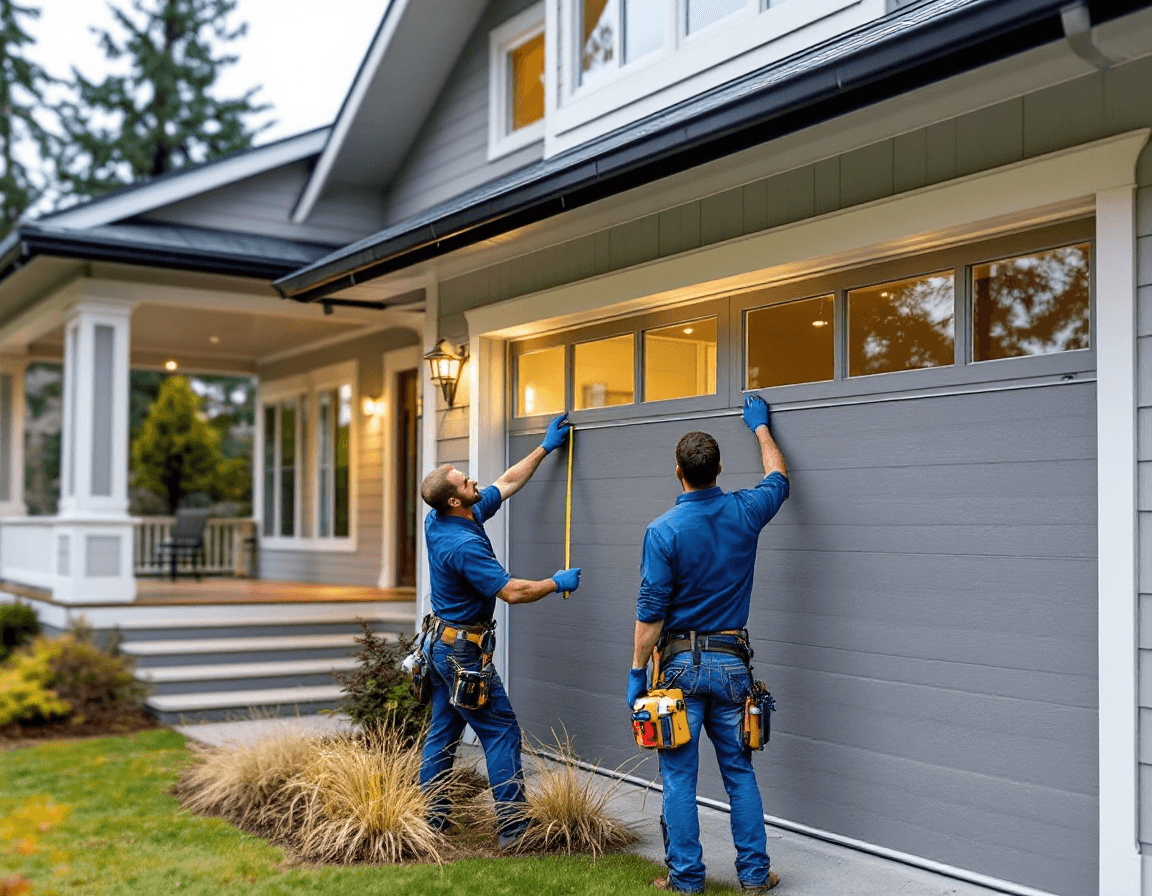
A well-run installation begins long before the old door comes down. A technician will measure the rough opening at several points, check for level and plumb, inspect the header and side jambs, and confirm the clearance above the door for the track and opener. These measurements determine whether a standard-size door will fit or whether a custom size is needed. They also reveal problems such as a sagging header or a floor that slopes toward the driveway, which can affect how the new door operates.
Once the order is confirmed and the door arrives, the removal and installation process generally follows a sequence. The old door is carefully disassembled, with spring tension released by a licensed technician, and the old tracks and hardware are removed. The new track system is installed and aligned, the door sections are assembled, the springs are set to the correct balance, and the opener is connected and programmed. Weather seals, bottom seals, and any trim are then fitted to close the gaps around the new door.
The final stage is testing and adjustment. The technician will run the door through several full cycles, checking that it opens and closes smoothly, that the auto-reverse feature responds correctly, and that the door seals evenly along the bottom and sides. Any balance or alignment issues are corrected before the appointment ends, and you will receive a walkthrough on how to operate the door safely and what to watch for in the weeks that follow. A quality installation should leave you with a door that feels solid and quiet from the first day.
What Affects the Price, and What a $950 to $3,800+ Range Really Covers
Installed costs for new single and double garage doors in our area generally fall between $950 and $3,800 or more, depending on the door and materials. Those figures include the door itself and professional installation, but the final number depends on several variables. A basic insulated steel door in a standard single-car size will sit near the lower end of that range, while a custom wood, carriage-style, or large glass door on a double-wide opening will push toward the top and beyond.
Several factors drive the price up or down. The material and its insulation rating are the biggest contributors, followed by the door size, the complexity of the design, and the hardware package. Wind-rated doors, heavier-gauge steel, and upgraded opener systems add cost but can improve long-term performance. Structural work, such as correcting a damaged header or replacing old tracks that cannot be reused, can also change the final figure. Your quote should break these items out clearly so you can see what is included.
It is wise to ask whether the quote includes removal and disposal of the old door, all hardware and seals, and a warranty on both the door and the installation labor. Warranty terms differ by manufacturer and by installer, and a clear written explanation is far more useful than a verbal assurance. Getting a detailed estimate allows you to compare options honestly, rather than choosing based on a single headline price.
Remodels, Additions, and Adding a Second Door to Your Lake Forest Park Home
Garage doors play a major role in remodels and additions, and the right door can help a project feel integrated with the rest of the home. When a family converts part of a garage into living space or builds an addition that changes the footprint, the door may need to be relocated, resized, or removed entirely. In those cases, the installation plan should be coordinated with the contractor handling the framing, roofing, and exterior finish, so the new door fits the revised elevation.
Some homeowners want to add a second door, perhaps for a workshop bay or a side-entry garage that improves access to a backyard or driveway. This can be a practical solution for homes on narrower lots where a single wide door would be impractical. Adding a door requires careful attention to structural support, electrical access for the opener, and clearances from existing walls and landscaping. A technician can evaluate whether the existing framing supports a new opening and what modifications would be necessary.
Remodels also offer an opportunity to upgrade the garage's overall performance. If the walls are being opened up for new insulation or finished surfaces, it may be the right time to choose a more efficient door and seal the perimeter more thoroughly. Coordinating these decisions early can save time and reduce the risk of rework once the finish materials are in place.
Keeping a New Door Performing Through Our Wet, Mild Winters
A new garage door will serve you best with simple, consistent care. Our climate brings frequent rain, damp mornings, and the occasional cold snap, so a short seasonal routine goes a long way. Wipe down the door panels periodically to remove salt, pollen, and grime from the driveway, and keep the bottom seal clean so it can compress evenly. Check the weather seals for cracks or gaps, particularly after a windy season, and address any issues before they allow water or cold air into the garage.
Lubrication and visual checks are also worth doing a few times a year. Apply a silicone-based lubricant to the rollers, hinges, and track as directed by the manufacturer, avoiding heavy greases that attract grit. Watch for signs that the door is out of balance, such as jerky movement, a sudden drop, or the opener straining, and have those concerns addressed promptly. Keeping the area around the door clear of debris and trimming overhanging branches can also reduce the risk of storm damage.
Spring and cable systems deserve special mention. The springs that counterbalance a garage door carry enormous tension, and working on them without the proper training and tools can cause serious injury. Do not attempt to adjust, repair, or remove torsion springs, extension springs, or cables yourself. Always rely on a licensed, bonded, and insured professional for any spring or cable service, because the forces involved are significant and the consequences of an error can be severe.
Getting Started With Your Garage Door Project in Lake Forest Park
Choosing a new garage door is a meaningful investment in your home's comfort, security, and appearance, and it is worth taking the time to get the decision right. Start by assessing your current door honestly, noting the recurring problems and the age of the components. Then consider the material, insulation, style, and wind performance that fit your home and your budget. A clear plan makes the consultation more productive and helps you compare quotes on equal terms.
Our team at Seattle Garage Door Fix serves homeowners across Lake Forest Park and the surrounding communities, offering licensed, bonded, and insured installation for single and double doors in insulated steel, carriage-style, wood, glass, and aluminum. We will measure your opening, explain the options in plain language, and provide a written estimate that shows exactly what is included. If your door is damaged beyond repair, you want better efficiency, or you are planning a remodel, we are glad to help you find the right fit.
To schedule a consultation or ask a question about your Lake Forest Park garage door, call Seattle Garage Door Fix at (888) 799-3819 today.